
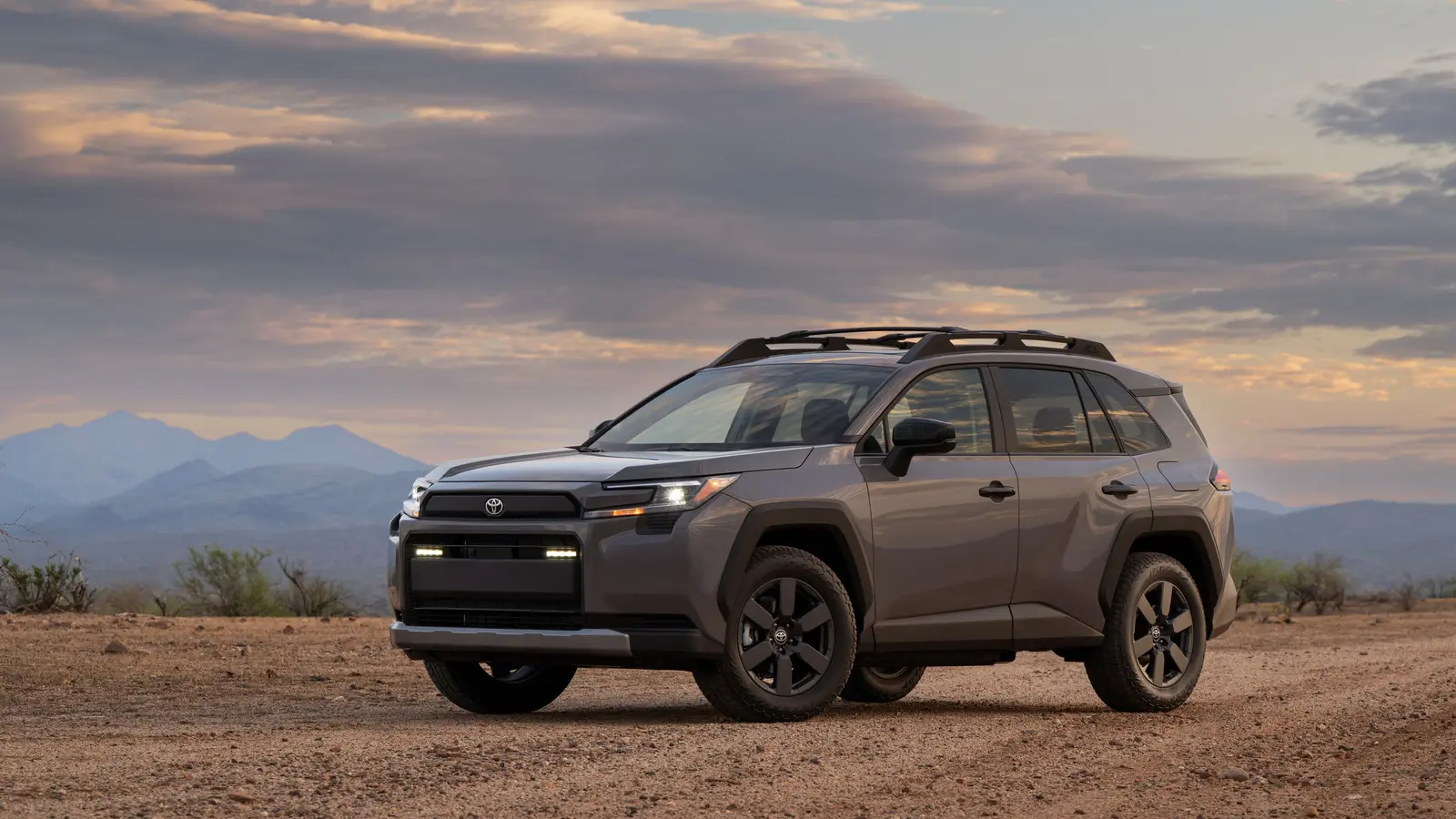
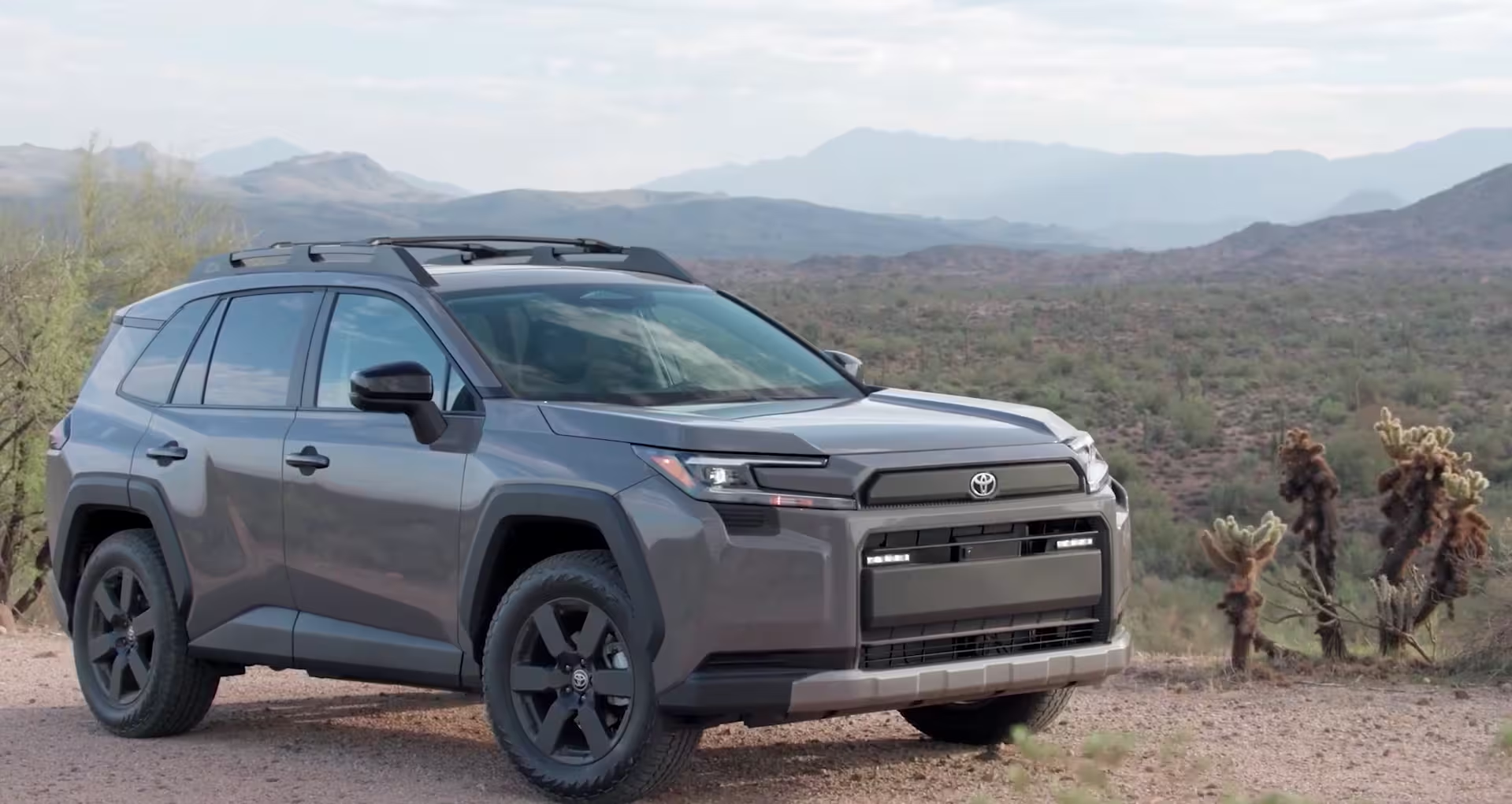
The sixth-generation RAV4 arrives as a hybrid-only family, and the Woodland is no longer a limited buzz model. It is now a permanent trim with its own badging, hardware and tuning. Think all-terrain tires, raised rails with crossbars, a distinct front end with Rigid fog lights, a factory tow receiver, and a cabin that is built to be used. We spent time off road and on road in the 2026 RAV4 Woodland Hybrid to see how far the capability goes, what it gives up compared to street-biased trims, and whether it really is the sweet spot for weekend explorers who still spend most miles on pavement.
What is the Woodland now
The Woodland used to be a special edition. For 2026 it graduates to a regular, named trim in the RAV4 lineup. That matters because Toyota commits to its identity with unique badging, a dedicated wheel and tire package, standard roof hardware, and a feature mix that favors utility over glitz. It is not a rock crawler. There are no steel skid plates and no locking differentials. It is a soft roader with smart choices where most owners will notice them.
Headline changes for Woodland
Standard electronic all-wheel drive
All-terrain tires on 18 inch wheels
About half an inch more ride height than a standard hybrid, 8.5 inches total ground clearance
Split hammerhead grille with integrated Rigid Industries LED fog lights
Raised roof rails with crossbars included
Factory tow receiver fitted, rated up to 3,000 to 3,500 lb depending on market equipment and rating
1,500 W AC power outlet in the cargo area
Woodland branding inside and out
Note on power: the Woodland Hybrid uses Toyota’s fifth-generation hybrid system. Combined output is 236 hp for the hybrid AWD. That is up on the outgoing hybrid. If you want plug-in capability, it is offered on other trims. The car in this drive is the standard full hybrid, not the plug-in.
Walkaround: design that looks ready and avoids gimmicks
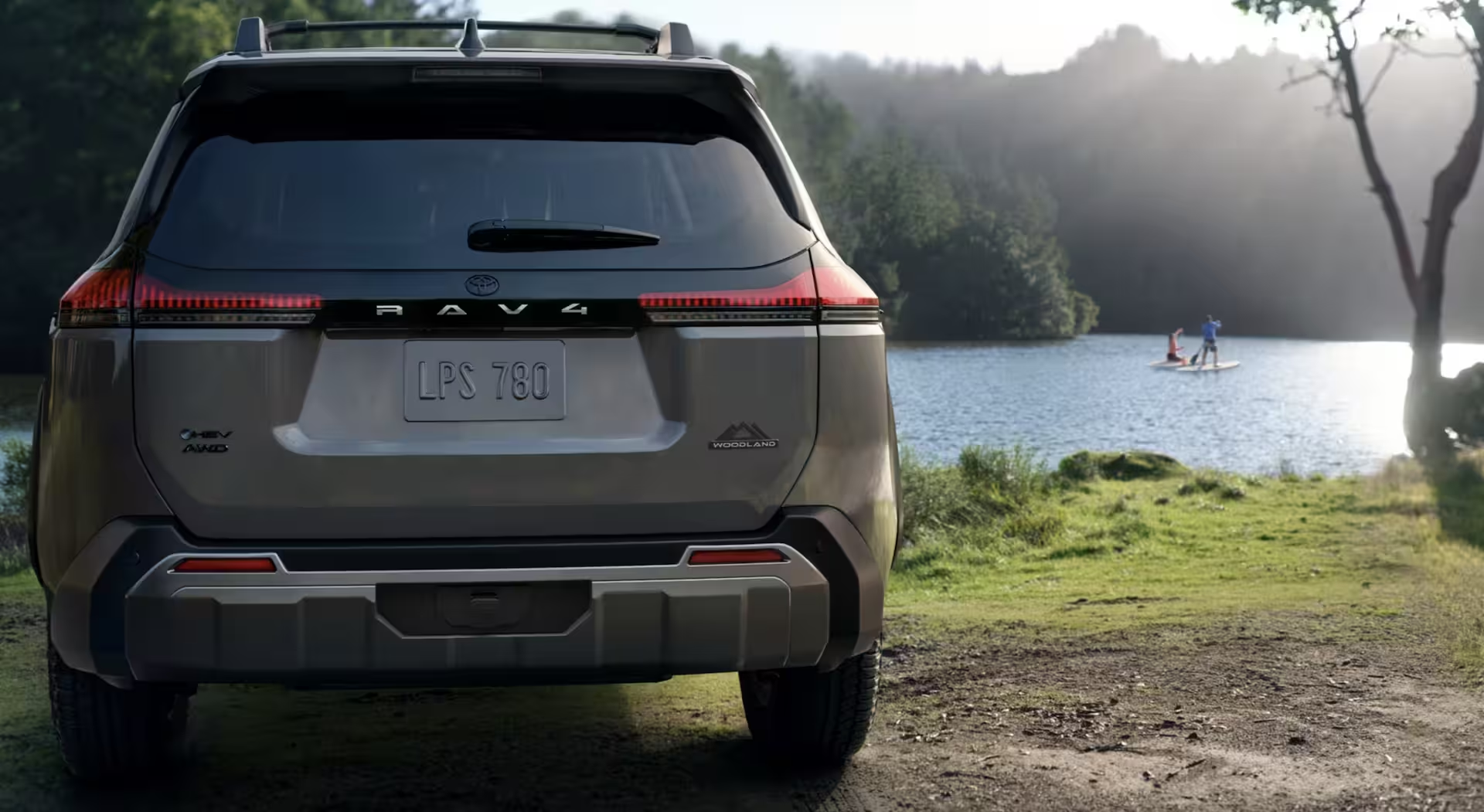
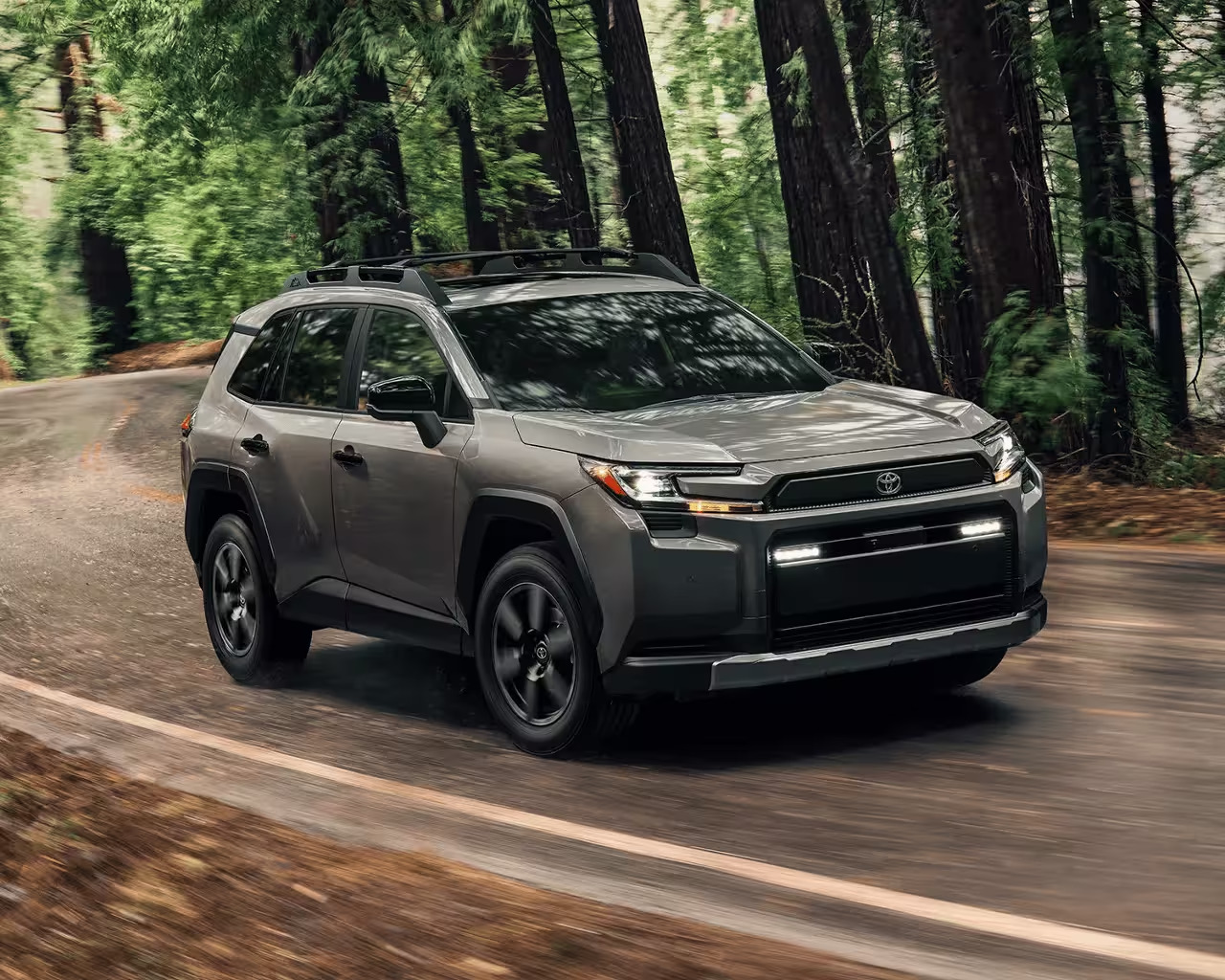
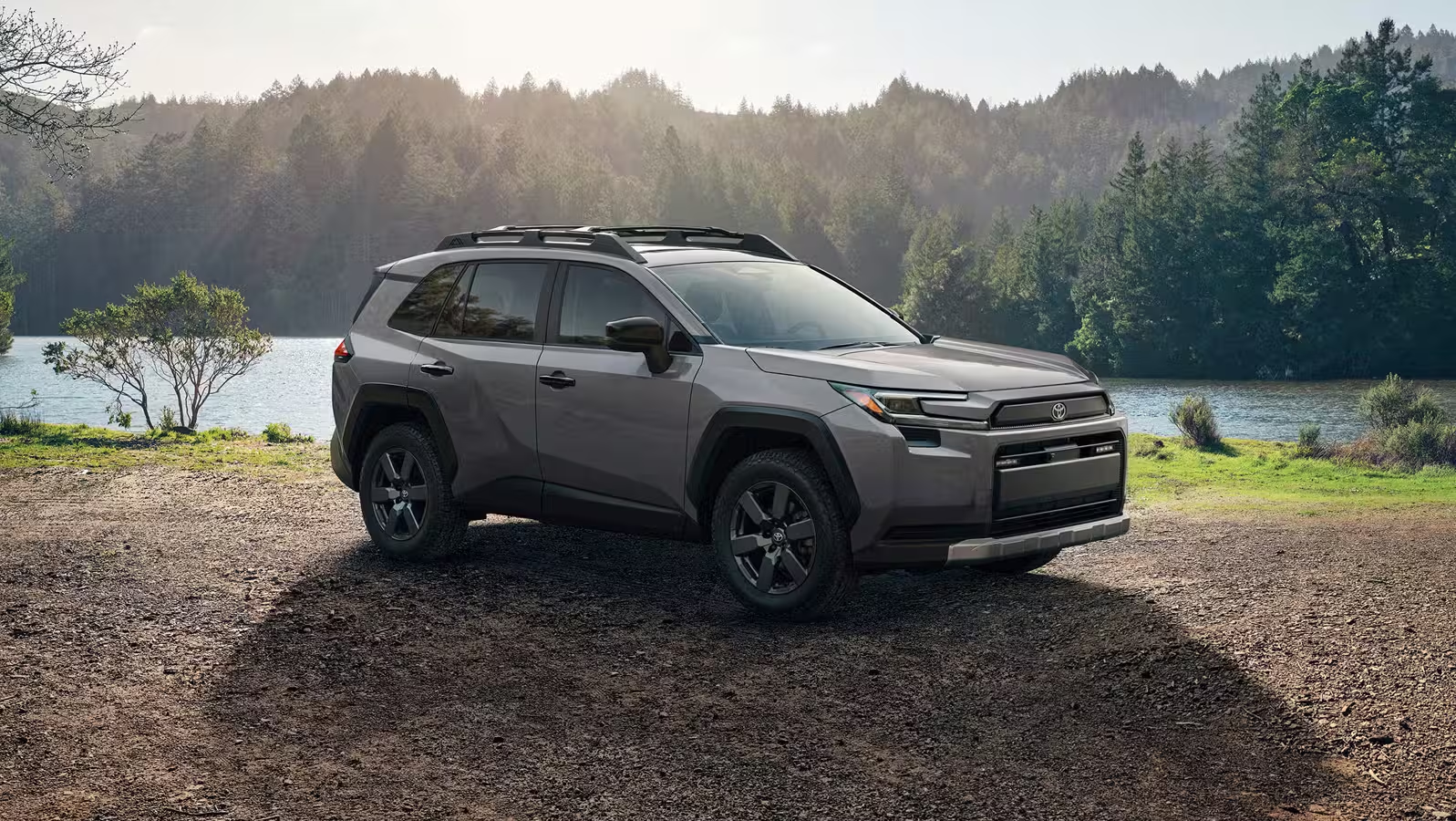
The Woodland looks different because functional parts are front and center. The split hammerhead grille frames bright Rigid LED fog lights. The lower bumper has a silver garnish and the hood surfacing is more muscular to match the squared front. Parking sensors are integrated up front and in back.
Around the sides you get unique 18 inch six-spoke wheels with all-terrain rubber. The tires have a taller sidewall than street tires, which contributes to the extra ground clearance and helps soak up sharp edges when the pavement ends. Toyota retains black cladding around the arches and sills. It is there to take small brush scrapes so painted surfaces do not have to.
Roof hardware is standard. The raised rails with crossbars are not dress-up parts. You can actually load boxes, bikes, boards or a kayak without visiting the accessory aisle first. There is also a small detail note from this tester. The mirrors and door handles use a glossy finish while the lower cladding is matte. It looks sharp, but gloss can show trail pin-stripes more easily. If you run tight trails, consider protection film.
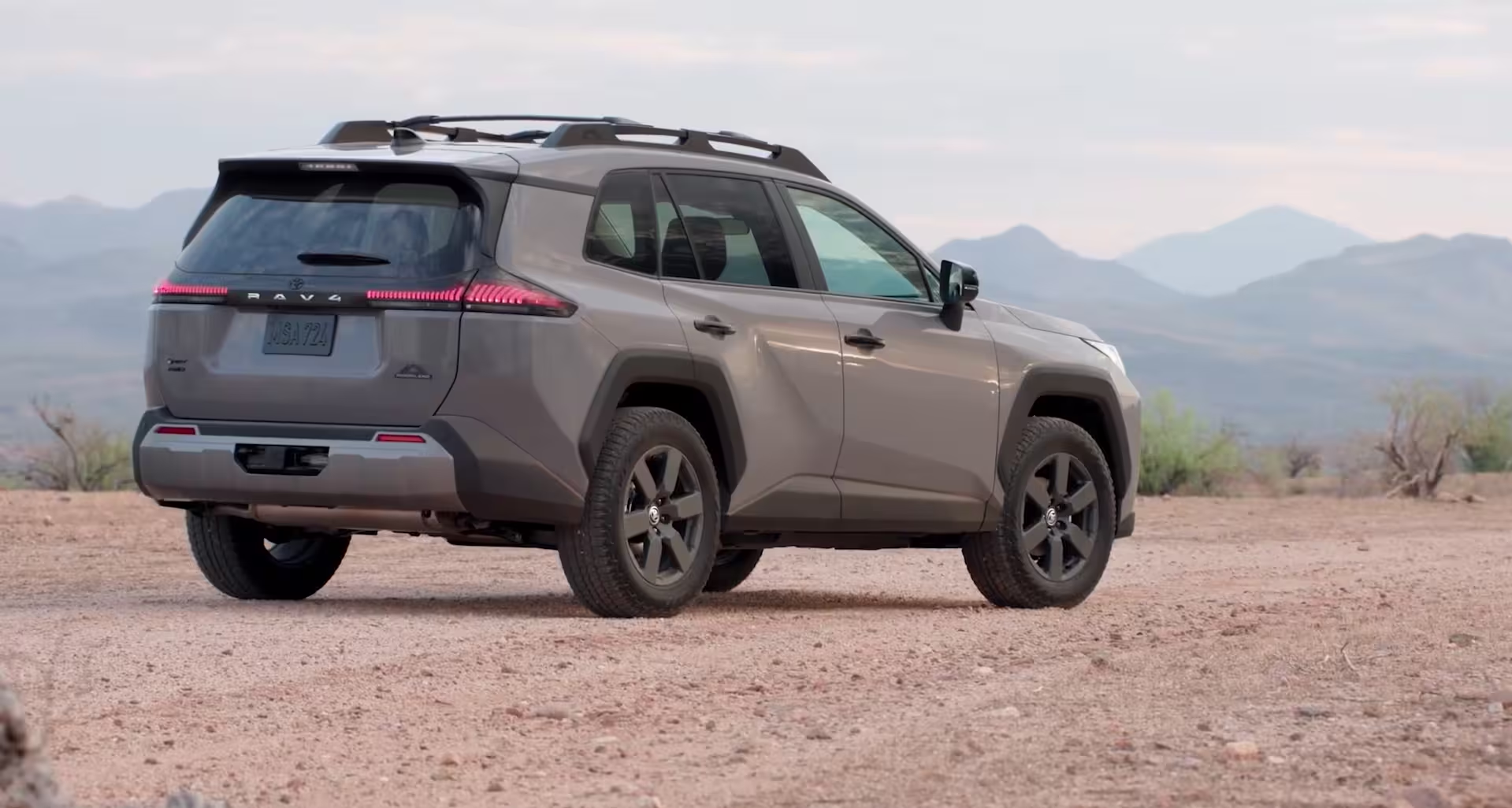
At the rear you will see the Woodland badge, the factory receiver tucked neatly below, and a nearly vertical tailgate that maximizes cargo height. The tailgate can be ordered hands free. Toyota widened the detection zone for easier foot kicks when your hands are full.
Off road impressions: quiet torque and honest limits
We spent about 40 minutes off pavement and the Woodland surprised more than once. Hybrid torque delivery is very quiet and very immediate. The car meters power in a way that makes low speed work easy. There is no waiting for a turbo to build or a transmission to decide. You prod the pedal and it goes.
Where are the limits
Ground clearance. At 8.5 inches the Woodland clears ruts and small ledges, but deep breakover crests or rocky steps will ask more height.
Underbody protection. There are no steel skid plates from the factory. Pick your line carefully and carry a spotter on technical sections.
Tires. The all-terrain set is a smart middle ground. They bite on dirt and gravel and stay civilized on the highway. For mud bogs or jagged rock gardens you would pick a more aggressive tire, but that is not the Woodland’s mission.
If you stay within those bounds, the Woodland feels calm and capable. The electric rear axle and traction logic work with the tire’s open tread to keep progress steady on loose surfaces.
On road review: the daily part of the brief
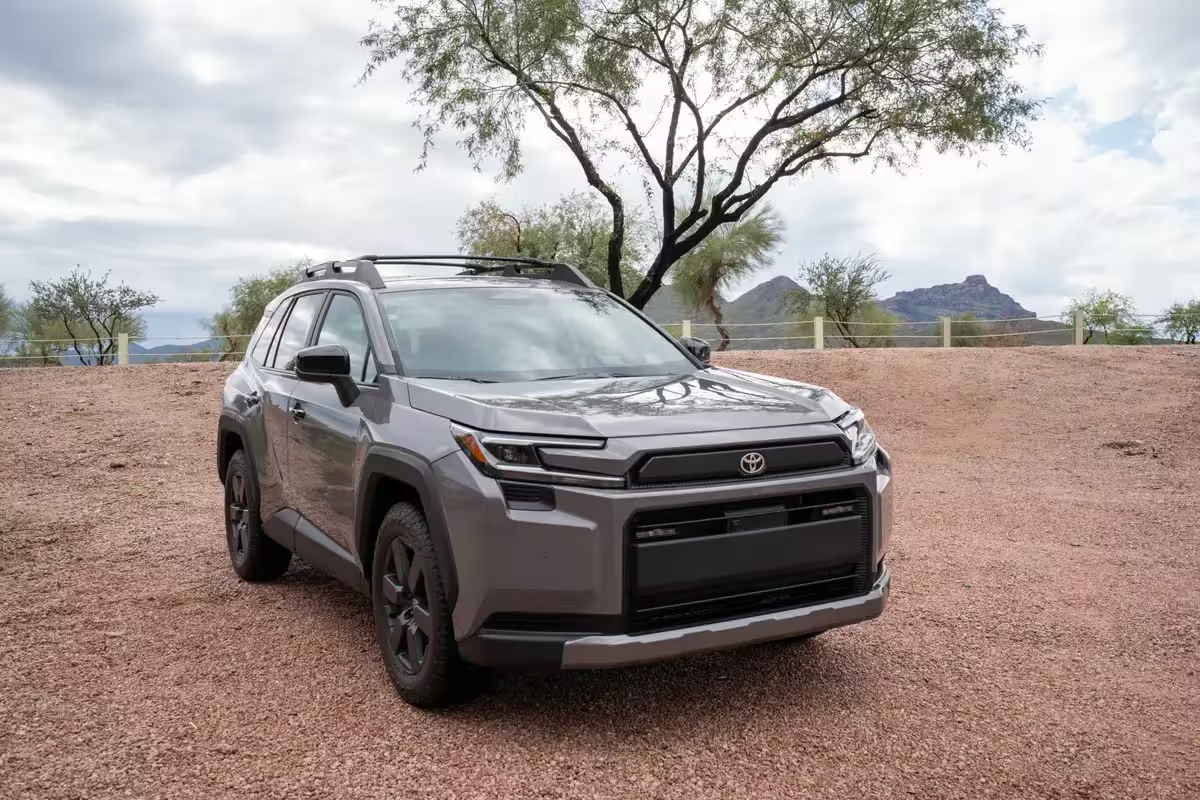
Most RAV4 miles are on pavement. That is where the Woodland still needs to be good, and it is.
Ride and noise
The taller sidewall helps. Impacts are rounded off and the car avoids the clatter some crossovers develop on expansion joints. All-terrain hum is there on certain asphalt textures but volume is lower than expected. The hybrid powertrain stays muted unless you dig deep into the throttle, and even then the sound level is lower than the previous generation.
Steering and control
The steering feels calmer on center than older RAV4s. Turn-in is predictable and body roll is present but well checked. Compared to a street-tuned XSE with 20s, the Woodland feels lighter on its feet and more honest in feedback. Grip on dry pavement is strong enough that you can roll into the throttle mid corner without a squirrelly exit.
Powertrain response
Toyota’s fifth-generation hybrid system is about smoothness and instinctive response. Press the accelerator and electric torque fills the first beat so the car feels eager without drama. The engine’s handoff is seamless enough that you will often need the gauge cluster to see what is doing the work. Owners report combined economy around the 40 mpg mark with the right driving mix, which is part of why a hybrid-only lineup makes sense in 2026.
Interior tour: practical, durable, and a bit outdoorsy
Open the door and the Woodland’s theme continues inside.
Materials and design
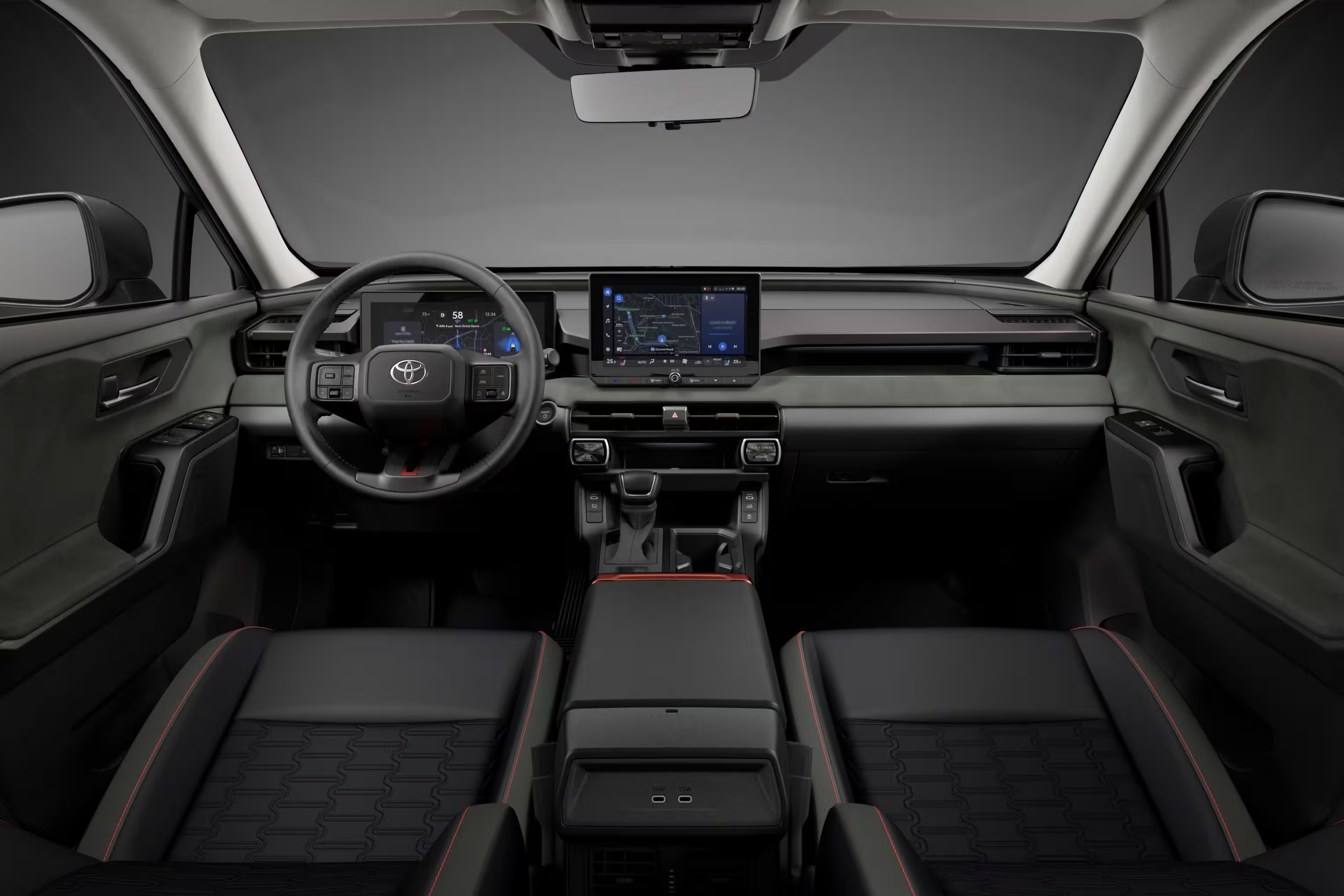
Soft-touch zones where your arms rest, sturdier plastics where scuffs happen, and SoftTex seats that wipe clean. Woodland adds sage green and orange accents on the seats, door cards and steering wheel for a subtle outdoors cue.Seats
Front seats are heated. The driver’s side is powered in this build and the passenger seat is manual. The seats are not perforated on the Woodland shown here. In hot, humid weather that can mean sweaty backs. If you live in a hot region, that is the main comfort caveat. Support is otherwise very good for long days.Infotainment
This vehicle carries a 10 inch center touchscreen. Other trims can spec larger screens, but the 10 inch unit works well and fits the dash without visual clutter. The system supports wireless smartphone mirroring, and there is a wireless charger on this tester. The 12.3 inch fully digital gauge cluster is crisp and configurable, finally bringing the RAV4’s driver display up to modern expectations.Controls and shifter
There are real knobs for volume and temperature, and a traditional PRND shifter you can rest your hand on. It sounds small until you daily the car. The tactile confidence matters.Drive modes and trail views
The Woodland has Trail and Snow modes, and the camera suite steps up when you select Trail. You can call side views, forward and rear projections, and a composite view that visualizes under the car’s nose. There are pitch, dive and roll readouts similar in concept to what you see in Toyota’s larger SUVs. It is the most useful 360 system in the RAV4 family right now.Second row and cargo
Rear passengers get vents and USB-C ports. The rear seats fold fully flat, which makes packing easy. Under the cargo floor sits a real spare tire, and beside it the 1,500 W AC inverter outlet that can power camp gear, coolers, and battery packs. It is a standout Woodland feature because it brings practical power to the tailgate without an aftermarket hack.Glass
This build has a standard sunroof rather than a panoramic roof. It keeps weight down and headroom up.
Technology and safety
Toyota’s driver assistance stack is one of the best behaved in the class when tuned well. The Woodland runs Toyota Safety Sense 4.0 and the experience in this car backs up the brochure.
Lane Tracing Assist is smooth and not grabby. You do not feel like you are fighting it.
Dynamic Radar Cruise Control tracks speed changes cleanly.
Pre-Collision detection covers vehicles, pedestrians, cyclists and motorcyclists and brakes if you miss the warning.
Blind Spot Monitor and Rear Cross Traffic Alert are standard on Woodland.
Available equipment on upper trims includes a 3D panoramic monitor and lane change assist. The Woodland’s camera suite is already one of the most functional for trailhead maneuvering.
Some convenience bits remain basic on this tester. Side mirrors are not auto-dimming and the rearview mirror is the manual dimmer type rather than the framed digital display you will find higher up the range. If you want maximal convenience, price out an XSE with the comfort packages. If you want durable utility, the Woodland’s spec makes sense.
Powertrain deep dive
Architecture
2.5 liter naturally aspirated four-cylinder from the Dynamic Force family
Hybrid transaxle with electric motors up front
A dedicated rear electric motor for eAWD, so there is no mechanical prop shaft
Output
236 hp combined for the Woodland Hybrid AWD
Instant electric torque masks small gear changes and keeps response linear
Efficiency
Toyota indicates improved combined economy versus the outgoing hybrid
Real world results vary with tire type and temperature. The all-terrain set costs a bit of highway economy but pays for itself in traction where pavement ends
Plug-in note
The Woodland identity is tied to the conventional hybrid shown here. If you want a plug-in PHEV RAV4 with extended EV range and available DC charging in some specs, you will be shopping other trims. A plug-in Woodland would be a compelling future variant, but that is not the car in this review.
Towing and utility
Toyota fits a factory tow receiver to every Woodland. The rating on this tester is up to 3,000 lb, and in some markets RAV4 hybrids are listed up to 3,500 lb when properly equipped. Always check the specific placard, cooling package and local rules. The hybrid’s smooth control at very low speed makes backing a small trailer into a tight space easier than you might expect.
The 1,500 W inverter in the cargo area is more than a party trick. It will run an electric pump, charge e-MTB batteries, power lights at a campsite, or keep laptops and cameras going through an event day.
Equipment quirks worth noting
The Woodland’s exterior fog lights are the good ones. Bright, useful, and integrated. They instantly set the look apart from the dinky round units on some trims.
The headlamps on this unit are not the premium projectors from upper trims. Output is still solid, but if you commute long distances at night on unlit roads, check the headlamp option codes for your region.
Seats are not perforated in this tester. In hot climates that can be a real comfort trade.
Screens. This Woodland carries the 10 inch center screen. Other trims can be optioned with larger units. Functionally the 10 inch is fast and readable.
Mirrors. No auto-dimming side mirrors here. The rearview mirror is manual dim. Not deal breakers, but worth knowing.
Comparison table: Woodland vs key RAV4 trims
| Item | Woodland Hybrid | XSE Hybrid | GR Sport PHEV |
|---|---|---|---|
| Powertrain | 2.5L hybrid eAWD | 2.5L hybrid eAWD | Plug-in hybrid eAWD |
| System output | 236 hp | 236 hp | Up to 324 hp |
| Tires | All-terrain, 18 in | Street, 19 to 20 in | Summer performance, 20 in |
| Ground clearance | 8.5 in | About 8.0 in | About 7.5 in after 15 mm drop |
| Roof hardware | Raised rails with crossbars | Rails optional, no crossbars by default | No rails |
| Tow receiver | Factory included | Available by package and region | Not rated on many markets |
| Underbody protection | None from factory | None | None |
| Camera suite | Trail views with pitch and roll | 360 available | 360 available, sport overlays |
| Seats | SoftTex, heated, non-perforated | SoftTex or leather, options for perforation | Alcantara-like mix, sport bolsters |
| Sunroof | Standard sunroof | Panoramic available | Not available |
| Personality | Adventure utility | Urban polish | Driver focused performance |
Figures and feature availability vary by market.
Specs snapshot
Engine 2.5 liter inline-four, hybrid system generation 5
Combined output 236 hp (Woodland Hybrid)
Drivetrain electronic AWD with dedicated rear motor
Transmission hybrid transaxle
Wheels and tires 18 inch wheels with all-terrain tires
Ground clearance about 8.5 inches
Tow rating up to 3,000 to 3,500 lb depending on configuration
Power outlet 1,500 W AC inverter in cargo area
Displays 10 inch center screen in this tester, 12.3 inch digital gauge cluster
Safety Toyota Safety Sense 4.0 with lane tracing, radar cruise, pre-collision detection, blind spot monitoring, rear cross traffic alert
Ownership notes and costs
Fuel
Hybrid economy is the Woodland’s quiet superpower. Even with all-terrain tires, owners will typically see very friendly numbers if they avoid aggressive highway speeds and keep pressures correct.Tires
All-terrain sets can be a little pricier and heavier. Rotate on schedule, align after any trail impacts, and run the correct pressure for highway work to avoid cupping and noise.Maintenance
Toyota hybrids are known for low running costs. The hybrid pack and eAWD rear motor remove some traditional wear parts and add simplicity in others. ToyotaCare covers scheduled maintenance for 2 years or 25,000 miles in many regions. Hybrid components carry extended coverage, and the traction battery is often covered for up to 10 years or 150,000 miles depending on market.Accessories
If your trails are rocky, investigate dealer or aftermarket skid plates once the parts catalog catches up. A light aluminum front skid can add peace of mind without adding much weight.
Pros and cons
Pros
Real upgrades for the way people actually adventure
Quiet, instant hybrid torque off road and in town
All-terrain tires with extra clearance that do not ruin road manners
Standard rails with crossbars, factory tow receiver, and a 1,500 W inverter
Trail camera views with pitch and roll that genuinely help
Cons
No skid plates and no extra ground clearance beyond 8.5 inches
Non-perforated seats can feel sticky in hot weather
No premium projector headlamps on this specific build
Convenience deletes like non auto-dimming mirrors on some Woodland specs
Verdict
The 2026 Toyota RAV4 Woodland Hybrid earns its place in the permanent lineup by doing the practical things right. It looks the part without plastic theatrics. It moves with quiet confidence on dirt because hybrid torque makes low speed work easy. It rides well on pavement because the tire choice is sensible. It comes with the hardware you would buy anyway, from rails and crossbars to a tow receiver and a big cargo inverter. Add the best trail camera suite in the family and you have a compact SUV that covers school days and trail days with equal ease.
If you want a plug-in, a panoramic roof, or every convenience mirror and memory feature, there are trims that speak your language. If you want the useful kind of rugged, the Woodland is the RAV4 that finally bakes that in from the factory.

“I cover automotive innovation, electric vehicles, and the future of mobility — where technology meets sustainability.”

Discussion
Leave a Comment