
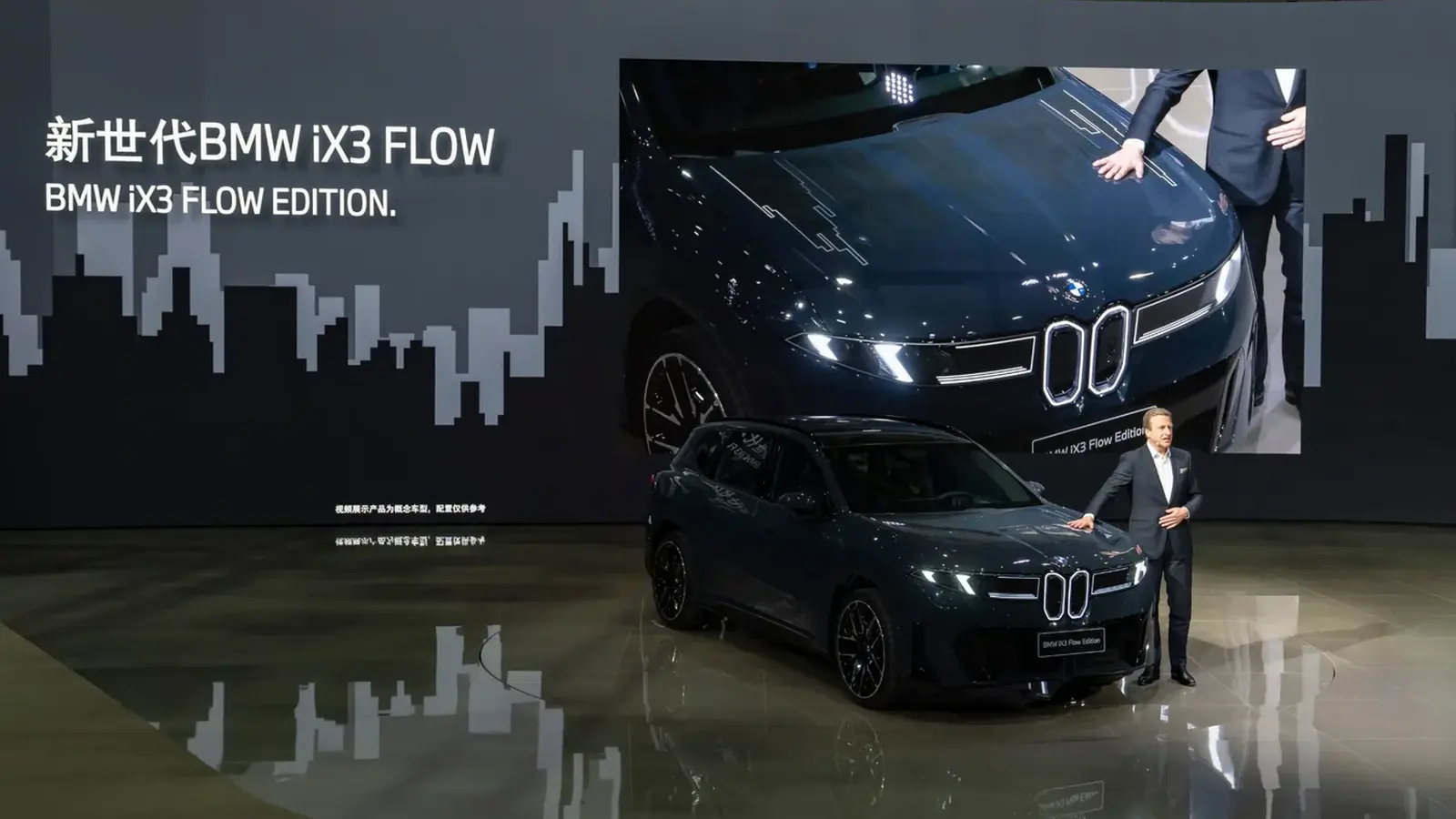
Car paint has spent more than a century pretending to be permanent. Pick a color, sign the order form, live with it. BMW clearly thinks that idea is starting to look a little dusty.
At the 2026 Beijing Auto Show, the German brand pulled the wraps off the BMW iX3 Flow Edition, an electric SUV fitted with E Ink Prism body technology. This is not another motor show party trick hiding behind smoke, mirrors, and a carefully worded press release. BMW says the system has been integrated into a series-ready production vehicle, bringing color-changing car surfaces much closer to the road than they have ever been before.
That matters. For years, programmable body panels sounded like the kind of thing designers sketched for future mobility presentations, usually alongside glass lounges on wheels and steering wheels that disappear into the dashboard. The iX3 Flow Edition feels different because it takes E Ink's low-power display technology and builds it into the actual vehicle structure, including the bonnet, after passing automotive durability and safety requirements.
The show car trick that refused to stay a trick
BMW has been warming us up for this moment. The iX Flow shown at CES 2022 made headlines by switching between light and dark exterior tones using electrophoretic panels. Then came the i Vision Dee in 2023, a more expressive concept that pushed the idea toward animated surfaces and digital personality. Both were fascinating. Both also lived safely in the concept-car universe, where almost anything can happen if the lighting is flattering enough.
The iX3 Flow Edition is the next step because it narrows the gap between spectacle and showroom. Instead of simply demonstrating what E Ink could do on a static concept, BMW has worked with E Ink to package Prism technology for a real automotive application. Curved panels, weather exposure, vibration, temperature swings, manufacturing tolerances, and crash safety are not glamorous subjects, but they are the difference between a clever demo and something a customer might one day park in a driveway.

In plain English, BMW is testing a future where the exterior of a car is no longer just sprayed metal or plastic. It becomes a programmable surface.
The science behind it is quietly elegant. E Ink Prism uses electrophoretic technology, with tiny microcapsules containing charged color particles. Apply an electrical signal and those particles move, changing what the eye sees on the surface. The clever part is that power is mainly needed only during the change itself. Once the new color or pattern is set, it can remain in place without constantly drawing energy.
For an electric vehicle, that is a big deal. Nobody wants a color-changing SUV that quietly nibbles away at driving range just to look clever outside a coffee shop. Low energy demand gives this technology a better chance of becoming useful rather than merely theatrical.
More than a mood ring on wheels
The easy joke is to call the BMW iX3 Flow Edition a mood ring for the EV era. Fair enough. BMW is leaning into personalization, offering eight curated animation styles that let drivers alter the look of the vehicle depending on setting, taste, or mood. A restrained pattern for a business district. Something bolder for a weekend event. A cooler tone under harsh sunlight. You get the idea.
But the bigger story sits beneath the styling drama. Dynamic exterior surfaces could eventually support thermal management by helping a vehicle reflect or absorb heat depending on the weather. A lighter surface may help reduce cabin heat in summer. A darker finish could theoretically help retain warmth in colder conditions. That kind of thinking fits neatly into the efficiency-first mindset of modern EV design, where every watt matters.
Visibility is another intriguing angle. A car that can alter parts of its exterior might become easier to spot in poor conditions or communicate certain information when parked, charging, or in autonomous operation. Imagine body panels that subtly signal charging status, vehicle lock state, or service alerts without relying only on lights or phone apps. Regulations would have plenty to say about that, of course, but the direction is clear.
This is where the iX3 Flow Edition becomes more than a design flourish. It hints at a new relationship between vehicle hardware and digital identity. Cars are already software platforms. Their cabins change with over-the-air updates, app layouts, drive modes, ambient lighting themes, and voice assistants. The exterior has been the stubborn last frontier. BMW is now asking a simple question: why should the outside stay frozen?
There is also an emotional pull here that automakers understand very well. Color is one of the first things buyers care about, yet it is one of the least flexible parts of ownership. Wraps and repainting exist, but they are expensive, labor-intensive, and far from instant. A programmable exterior gives owners a way to refresh the car without replacing it, respraying it, or committing to one personality for years.
Will this arrive across every BMW dealership next month? No. Early applications of E Ink Prism on cars will almost certainly be expensive, limited, and carefully controlled. Premium models are the natural starting point, especially for a brand that already sells technology, design, and status as part of the same package.
Still, that is how many automotive innovations begin. Features that once belonged to flagship models gradually move down the range when manufacturing improves and suppliers scale up. Touchscreens, adaptive headlights, panoramic displays, advanced driver assistance systems, and even EV battery technology all followed that route in one form or another.
For E Ink, the BMW iX3 Flow Edition is a statement that its ePaper technology is not confined to e-readers, shelf labels, or signage. It can live on large, complex, outdoor surfaces that move through rain, heat, cold, dust, and daily traffic. That is a much tougher stage.
For BMW, it is a chance to own a design conversation before rivals turn programmable exteriors into the next luxury-tech battleground. Mercedes, Audi, Hyundai, and Chinese EV makers are all chasing ways to make cars feel more intelligent, more personal, and more alive. A body surface that can shift its appearance gives BMW a visually unforgettable card to play.
The BMW iX3 Flow Edition does not just change color. It changes the idea of what a car exterior can be.
Paint is not dead. Not even close. But after Beijing, it suddenly looks a little less inevitable.

“I cover automotive innovation, electric vehicles, and the future of mobility — where technology meets sustainability.”

Discussion
Leave a Comment