
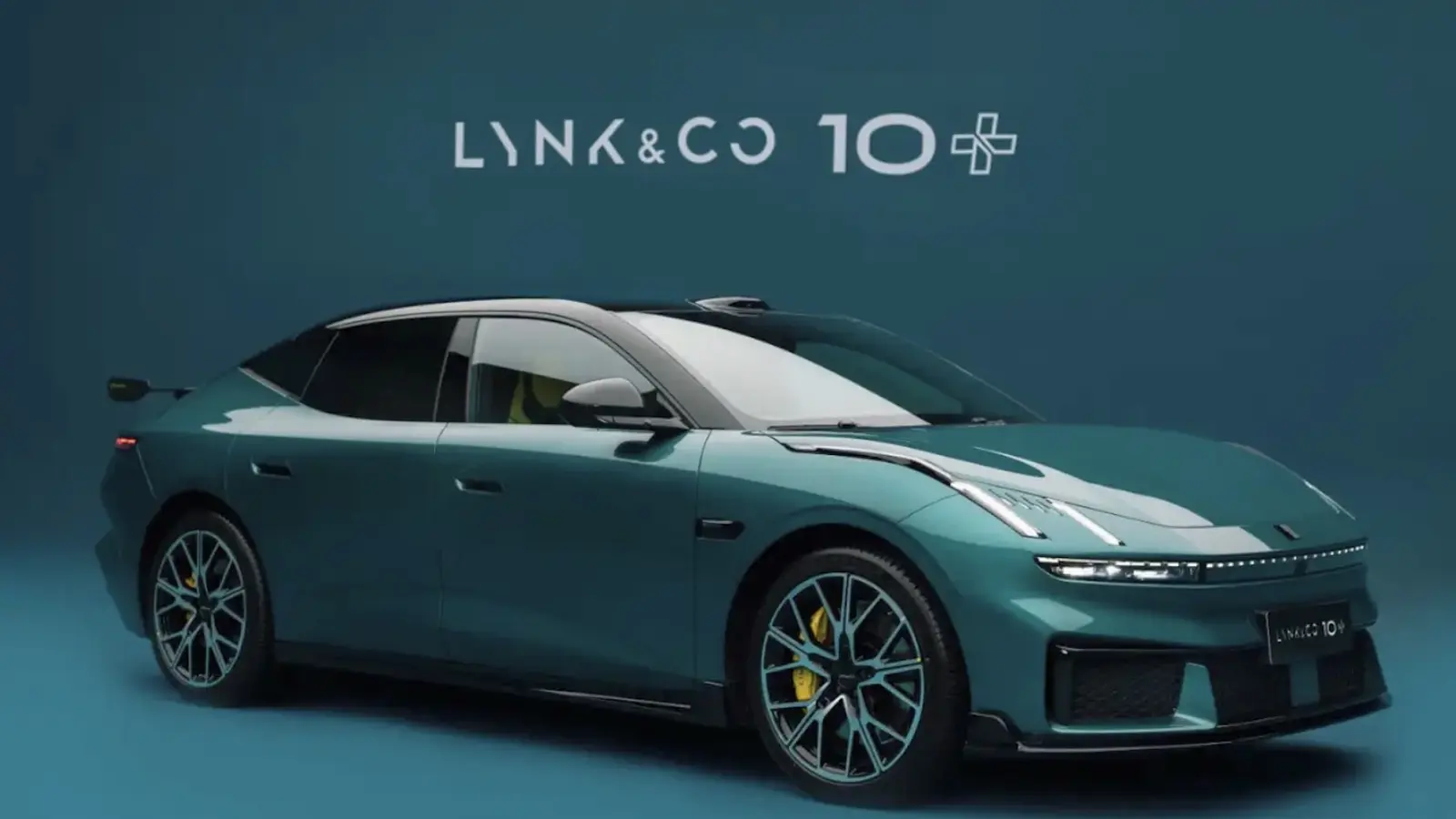
This is the sort of electric sedan that makes a boardroom go quiet.
Lynk & Co has pulled the covers off the new 10 and 10+ at the 2026 Beijing Auto Show, and the headline is not just the power figure, though 912 hp certainly helps. The real shock is the price. In China, the range is expected to start from roughly €25,800, while the high-performance flagship sits around €33,500 after conversion. That puts a luxury-leaning, 900V electric fastback in territory where many global buyers would normally be shopping for a well-equipped compact hatchback or a sensible family sedan.
That contrast is hard to ignore. While several American brands are slowing pure EV rollouts, reviving hybrids or leaning back into combustion engines, Chinese automakers are moving in the opposite direction with alarming confidence. They are not merely building affordable electric cars anymore. They are building affordable electric cars with massage seats, big batteries, LiDAR, premium audio and acceleration that used to belong to exotic metal.
The uncomfortable part for Western carmakers
The Lynk & Co 10 wears the brand’s familiar face, with split headlights sitting above a cleaner, reshaped bumper. The profile is smoother than aggressive, closer to a long-distance grand tourer than a track-day toy, and the semi-hidden door handles help keep the fastback shape uncluttered. Two-tone paint options add a little visual theatre without pushing the car into concept-car territory.
It is not a small machine. The sedan measures 5,050 mm long, 1,966 mm wide and 1,468 mm tall, with a 3,005 mm wheelbase. In old money, that is about 198.8 inches from nose to tail. So despite the pricing, this is not some stripped-back budget EV trying to look expensive in photos. It has the footprint of a genuine executive sedan.
The hardware tells the same story. The 10 rides on 21-inch forged wheels and uses four-piston fixed brake calipers up front. That matters, because even the entry model is hardly slow. Lynk & Co plans three power levels, starting with a rear-wheel-drive version producing 402 hp from a single motor mounted on the rear axle. A stronger rear-drive variant raises output to 496 hp.
Then comes the big one. The dual-motor flagship delivers 912 hp, or 924 metric horsepower, and Lynk & Co says it can sprint from 0 to 100 km/h in the three-second range. That is supercar vocabulary attached to a family-sized electric sedan. A decade ago, a number like that would have been used to sell posters to teenagers. Now it is appearing on a Chinese EV with heated, ventilated and massaging front seats.
Battery choice is just as important as performance here. Buyers can choose a 77.17 kWh pack with a CLTC-rated range of 536 km, or a larger 95 kWh battery rated at up to 816 km on the same Chinese test cycle. Global readers should treat CLTC figures with the usual caution, since real-world range can vary sharply with speed, weather and driving style. Still, even with a more conservative lens, the larger battery suggests this car is being pitched as more than an urban technology showcase.
Under the skin, the 10 uses a 900V high-voltage electrical architecture. That is a key detail. Higher-voltage platforms can support faster charging, lower heat losses and more consistent performance when engineered properly. It is the sort of technology premium EV brands like to shout about, and here it is appearing in a car priced far below many established luxury electric sedans.
There is also a front-mounted LiDAR sensor, backed by a Thor U chip, to support semi-autonomous driving functions. Lynk & Co has not framed the 10 as a fully self-driving machine, and nor should anyone expect that. But the sensor suite makes it clear where the brand wants this car positioned: not as cheap transport, but as a high-tech alternative to legacy premium models.
Inside, the cabin follows the current Chinese EV playbook, which means fewer buttons, more screens and a strong emphasis on software. A digital instrument cluster and head-up display handle the key driving information, while a 15.4-inch floating central touchscreen runs the Lynk Flyme Auto system. Processing power comes from an AMD V2000A chip, another reminder that modern car launches increasingly sound like consumer electronics events.
The comfort kit is where the value argument becomes especially sharp. Power-adjustable front seats with heating, ventilation and massage are available, along with a 23-speaker Harman Kardon sound system driven by a 1,600-watt amplifier. Buyers can also specify Alcantara upholstery and one-piece front seats if they want a sportier atmosphere.
None of this guarantees the Lynk & Co 10 will become a global hit. Pricing outside China, if the car reaches additional markets, would be shaped by tariffs, shipping, homologation, taxes and dealer strategy. Europe in particular is watching Chinese EV imports closely, and regulatory pressure can change the economics quickly.
Still, the signal is loud. China’s EV industry is no longer competing only on cost. It is competing on speed, charging technology, cabin equipment, software and design. The new Lynk & Co 10 may not frighten every luxury brand overnight, but it gives them one more uncomfortable question to answer: if this much car can be sold at this kind of price in China, what exactly are global buyers paying extra for elsewhere?
Orders are expected to open soon, with the first customer deliveries planned for the summer.

“Cars are evolving faster than ever. I cover electric vehicles, smart mobility, and the future of transportation worldwide.”

Discussion
Leave a Comment