
6 Minutes
The most interesting part of Orlando’s latest clean energy upgrade is not what was added. It is what was not added.
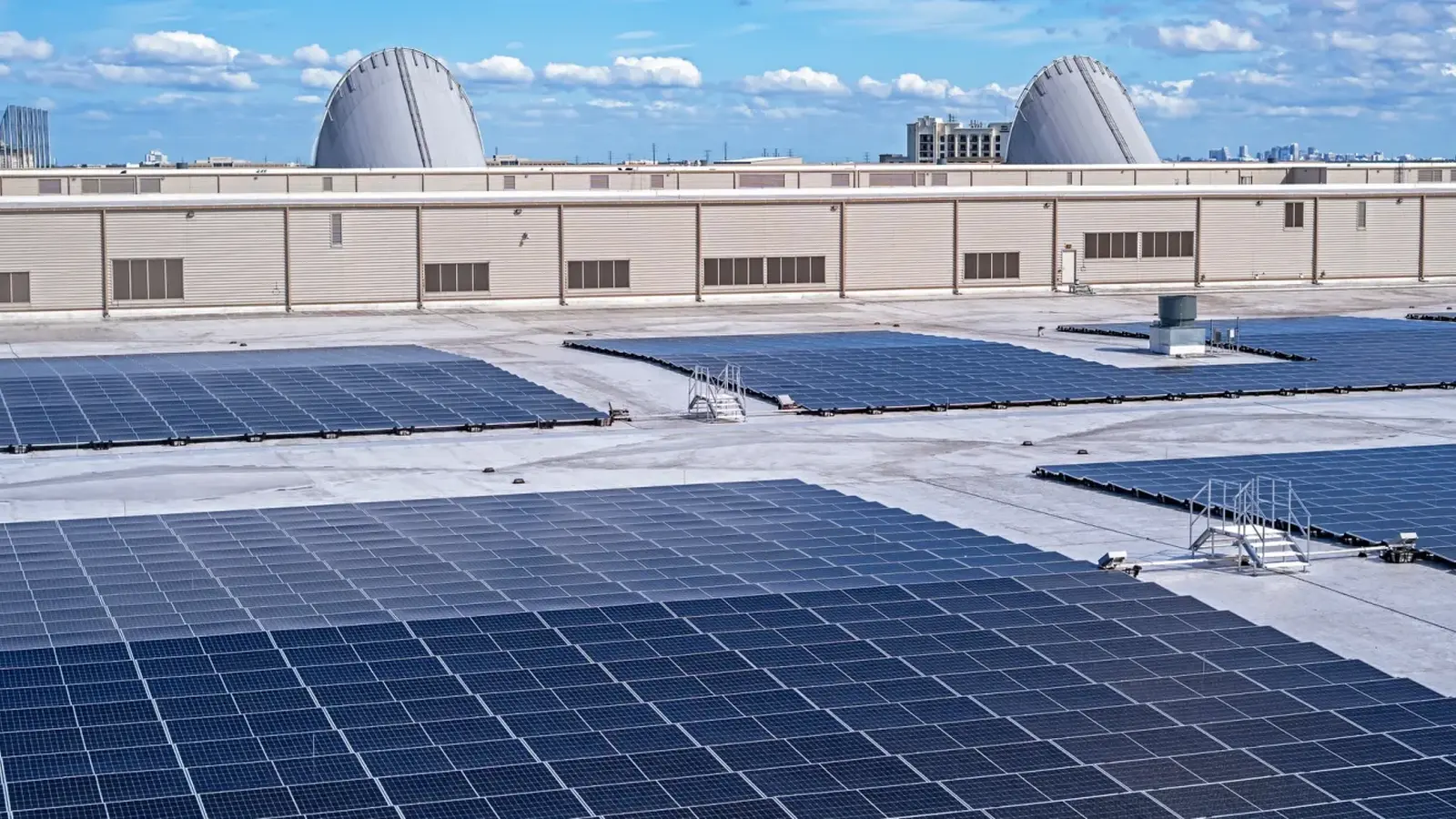
No extra roof space. No sprawling new solar field beside the parking lots. No dramatic change to the skyline. Yet the Orange County Convention Center, one of the largest convention venues in North America, has more than doubled its solar generation after a major rooftop rebuild led by SolarEdge Technologies.
The new system delivers 2.2 megawatts of rooftop solar capacity across the Florida convention center, replacing an older array with a far more efficient setup that squeezes substantially more power from the same footprint. For a building complex that welcomes around 2.4 million visitors a year and helps generate roughly €4.6 billion in economic activity for Central Florida, that is not a small tweak. It is a very public demonstration of what commercial solar repowering can do.
The roof did not get bigger. The solar did.
Large public venues are awkward energy beasts. They have enormous electricity demand, giant roofs, complicated maintenance schedules, and almost no appetite for disruption. A convention center cannot simply shut down for a clean energy makeover when trade shows, conferences, and exhibitions are already booked months or years ahead.
That was the challenge at the Orange County Convention Center, known as OCCC. The solar upgrade had to happen while the facility remained in operation, with roofing work by Advanced Roofing coordinated alongside the solar rebuild. In other words, this was not a quiet laboratory test. It was a construction and energy project running above a live economic engine.
SolarEdge’s design pairs its inverters with power optimizers and Hanwha Q CELLS modules, spreading the array across multiple roof zones. A custom combiner box was built to move electricity efficiently across a rooftop span of about 700 to 800 feet, while SolarEdge’s monitoring platform gives operators real-time visibility into system performance.
That last piece matters more than it sounds. On a home rooftop, a weak panel or underperforming string is a nuisance. On a sprawling convention center, finding and fixing performance issues quickly can affect real energy savings. Real-time monitoring turns the system from a passive installation into something closer to a managed asset.
The project also aligns with OCCC’s broader sustainability push, including the LEED Gold-certified renovation of its South Building. For cities competing to host global events, that kind of environmental credential is becoming less decorative and more strategic. Corporate conferences, tech expos, and international gatherings increasingly care about the carbon footprint of the venues they choose.
A second life for thousands of panels
The cleanest part of the story may be what happened to the old solar modules.
When the convention center removed its original rooftop array and aging roof, it did not send the decommissioned panels straight to landfill. Instead, OCCC worked with Orlando nonprofit IDEAS For Us on a reuse effort called the Great Solar Giveaway.
In February last year, 5,800 used but still functional solar panels were redistributed to more than 120 Florida residents, businesses, and nonprofit organizations. That kept a large volume of electronic waste out of landfills and, just as importantly, gave working solar hardware a second life in communities that might not otherwise have had easy access to it.
This is where the project becomes more than a facilities upgrade. Solar is scaling fast worldwide, and the first big wave of commercial installations is aging. Some panels still work, but newer modules produce far more electricity in the same space. That creates a dilemma: replace older systems to unlock better economics, or keep them running to avoid waste.
OCCC’s answer was practical. Upgrade the roof. Increase output. Reuse what can still generate power.
That model could become increasingly important as more early commercial solar projects reach the repowering stage. Solar panels are often treated as a simple environmental win, but the industry also has to manage its material footprint. Reuse programs, refurbishment channels, and better recycling pathways will decide how clean the clean energy transition really becomes.
There is also a land-use lesson here. Many cities and dense commercial districts do not have spare acres waiting for renewable energy projects. What they do have are rooftops, parking structures, warehouses, arenas, schools, airports, and convention centers. If newer solar technology can double output from existing surfaces, the economics shift quickly.
That is especially true for energy-hungry buildings with predictable daytime demand. Convention centers run lighting, cooling, escalators, kitchens, staging equipment, digital signage, and back-of-house operations at a scale most visitors never think about. Cutting grid demand directly at the site can reduce operating costs and improve resilience, particularly in a state where air conditioning is not optional.
The Orange County Convention Center is also looking ahead to future expansion, which makes the timing of the solar upgrade significant. Bigger venues usually mean bigger energy loads. By treating its rooftop as a power asset now, OCCC is showing how large public facilities can modernize without waiting for some perfect, empty piece of land to appear.
Expect more projects like this. Not because every building has the roof area of a convention center, but because the logic is hard to ignore: better panels, smarter inverters, sharper monitoring, and no need to expand the physical footprint.
The next phase of commercial solar may be less about dramatic new installations and more about returning to old rooftops with better tools. Less spectacle, more output. Sometimes that is exactly what progress looks like.
Source: electrek


Comments
DaNix
I manage facility installs, coordinating live events is a pain. Kudos for the reuse, but curious about roof access for repairs, warranties, inverter lifespans...
labcore
Sounds neat, but how much efficiency gain per panel really? Monitoring platform helps sure, but whats the real payback timeline and recycling cost?
voltflux
wow, that rooftop trick blew my mind! doubled output without more roof space, and reused 5,800 panels? damn, that's clever and practical

Leave a Comment