
Some vehicles age gracefully. Others simply refuse to leave the job site. The Toyota HiAce sold in Japan belongs firmly to the second group, a square-shouldered commercial van that has carried tools, parcels, hotel guests, tradespeople and camper dreams since 2004 with the stubborn reliability of a vending machine.
Now Toyota appears ready to do what it has avoided for more than two decades: rethink the HiAce properly. A new generation is expected to arrive in late 2026 or early 2027, and if the latest Japanese reports and Toyota’s own concept clues are anything to go by, this will not be a mild facelift wearing a fresh grille. It will be a clean break.
The biggest shock? Japan’s next HiAce is tipped to abandon the cab-over layout that has defined the local model for generations. That single change reshapes everything, from the driving position to crash performance, packaging, comfort and the way the van looks in traffic.

The nose finally grows
Toyota already sells the newer H300 HiAce in markets such as Australia, Thailand and the Philippines, but Japan stayed with the older H200. That decision made sense for a while. Japanese streets are tight, loading zones are unforgiving, and the compact footprint of a cab-over van is hard to beat when every centimetre matters.
Still, time catches up. Safety expectations have moved on. Fleet operators want better ride quality. Drivers spend longer hours behind the wheel. Electrification is no longer a talking point at motor shows, it is a purchasing factor. The current Japanese HiAce has been updated repeatedly, but underneath, it is still a product of another era.
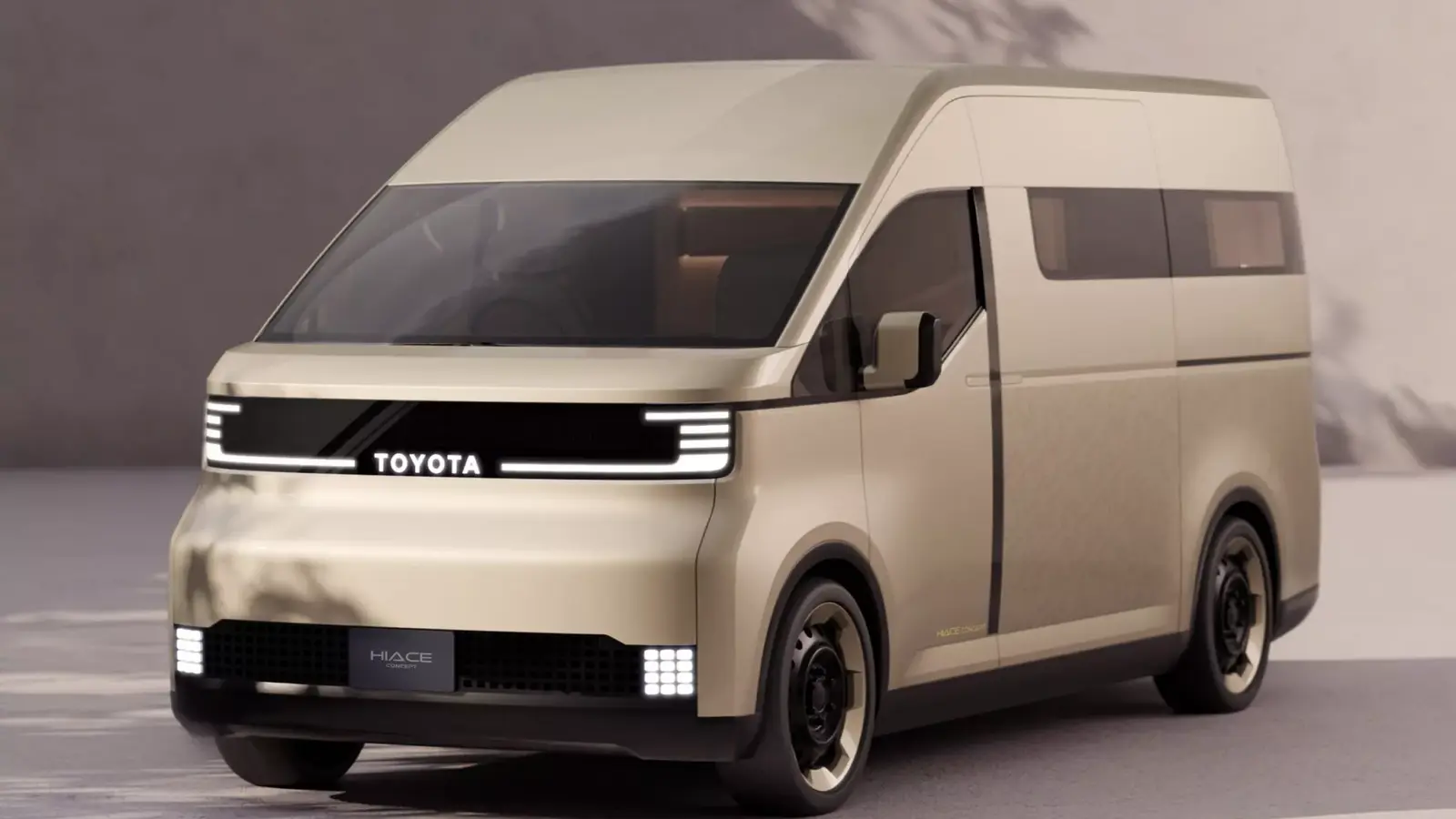
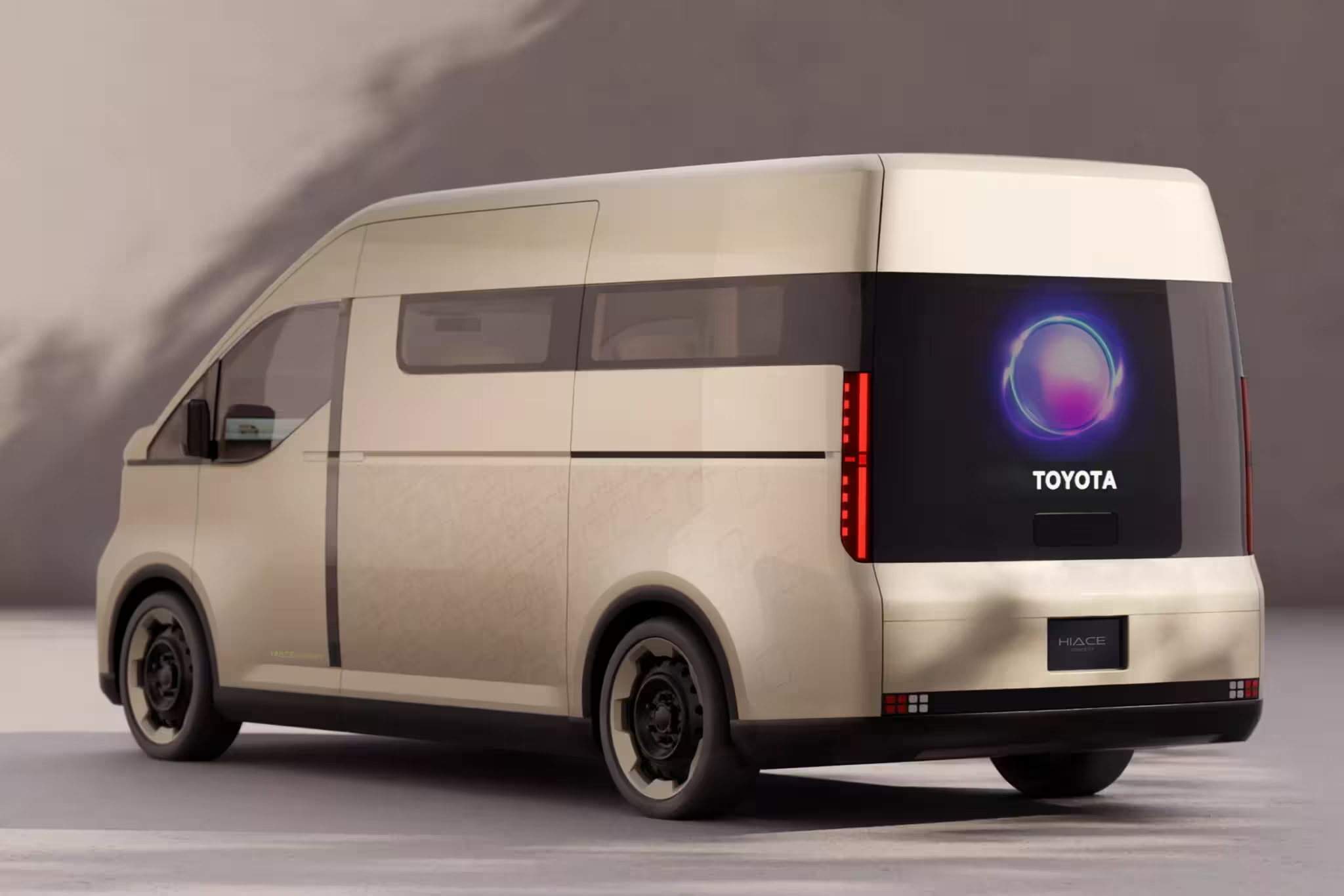
The clearest preview came from the Toyota HiAce concepts shown at the 2025 Japan Mobility Show. One wore a long-wheelbase, high-roof body, the sort of van airport shuttle operators and delivery firms notice immediately. The other looked closer to a standard commercial model. Both shared clean body sides, crisp LED lighting and a softer, more modern face influenced by Toyota’s Kayoibako concept.
Yet Toyota seems to understand that Japan does not need a full-size global van simply dropped onto local roads. The next HiAce is expected to have a shorter bonnet than the H300, giving it a more manageable footprint while still moving away from the old cab-over formula. Think less brick wall, more purposeful snout.
Production versions will almost certainly be toned down. Concept-car lighting tends to get simpler once accountants enter the room, and those slim side windows may be reserved for passenger-focused versions rather than basic cargo vans. A realistic work-ready HiAce would likely arrive with steel wheels, durable bumpers, a high roof option and enough body configurations to keep fleets, shuttle services and conversion companies interested.
That variety matters. The HiAce has never been just one van. It has been a delivery vehicle, a minibus, a mobile workshop, a camper base and, in many parts of the world, an unofficial public transport hero. Toyota is unlikely to walk away from that formula. Expect different roof heights, lengths and cabin layouts, along with versions aimed at private users who want comfort without sacrificing practicality.
A modern platform changes the brief
Under the skin, the next Toyota HiAce is expected to draw on TNGA-related engineering and share elements with the global H300 family. For buyers, that should mean a stiffer structure, more composed handling, better crash protection and a cabin that feels less like a punishment for choosing the practical option.
The move from a mid-engine layout to a front-engine setup would be one of the most important mechanical changes in the van’s history. It should improve refinement and open the door to newer powertrains, including a self-charging hybrid system. For Japanese urban fleets, that could be a big deal. Stop-start routes, dense traffic and rising fuel costs are exactly the conditions where Toyota hybrids tend to shine.
Diesel and petrol engines may still have a role, especially for buyers who prioritise payload, towing or simple long-distance durability. But a hybrid HiAce would give Toyota a cleaner, quieter answer for businesses that are not ready to go fully electric.
A battery-electric HiAce has been on the table before. Toyota showed the Global HiAce BEV concept in 2023, making it clear that a zero-emission commercial van was under study. Recent reports, however, suggest that plan has been delayed or paused as market conditions shift. That is not the same as cancellation. It simply means Toyota may launch the new HiAce with hybrid power first, then bring an EV variant later if fleet demand, charging infrastructure and cost targets line up.
There is also a smaller van in the pipeline, reportedly inspired by the Daihatsu Kayoibako-K concept. That model would sit below the HiAce and focus on city deliveries, compact business use and light recreational duty. In other words, Toyota may be building a more layered commercial-vehicle family rather than relying on one van to do everything.
The timing remains unofficial, with Japanese sources pointing to a debut in late 2026 or early 2027. But the direction is becoming hard to miss. After 22 years of careful updates, the Japanese-market Toyota HiAce looks ready to trade its familiar silhouette for a safer, smarter and more electrified future. For a van famous for changing as little as possible, that is a very big turn of the wheel.

“I cover automotive innovation, electric vehicles, and the future of mobility — where technology meets sustainability.”

Discussion
Leave a Comment