
4 Minutes
The smartphone was supposed to be the thing AI would kill. Now OpenAI may be preparing to build one.
According to analyst Ming-Chi Kuo, OpenAI is working on its own AI-focused smartphone, a device designed less around apps and more around autonomous digital agents that can act on a user's behalf. Think less endless swiping through icons, more asking a phone to plan a trip, compare market data, arrange a booking, or pull together information while you get on with something else.
That is the interesting twist. For months, the tech industry has toyed with the idea that AI wearables, voice-first gadgets, or screenless assistants could replace the phone altogether. OpenAI, if this report is accurate, appears to be taking a more pragmatic route. The company may not be trying to bury the smartphone. It may be trying to rebuild the way we use it.
A phone that does the tapping for you
Kuo says the device would run on custom hardware supplied by either MediaTek or Qualcomm, two names with deep roots in mobile chipsets. Manufacturing would reportedly be handled by Luxshare, the Chinese electronics giant that also assembles iPhones. That detail alone makes the rumor harder to ignore. This is not the supply chain you hear about when someone is sketching a fantasy gadget on a napkin.
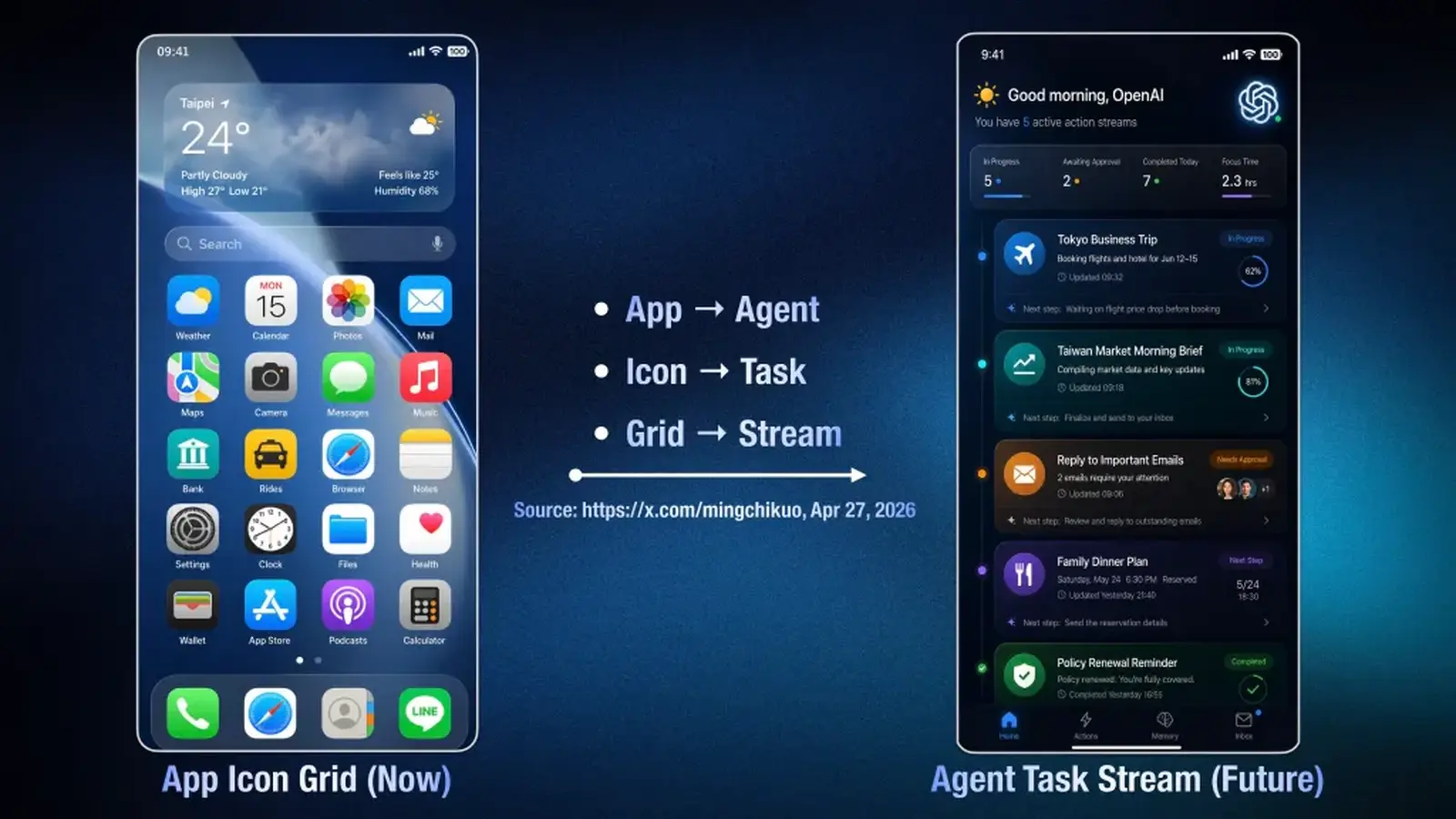
The big promise, according to Kuo, is a comprehensive AI agent service. In plain English, that means a phone built around software that can complete multi-step tasks instead of simply answering questions. The home screen, at least in a concept shared by the analyst, becomes less of an app drawer and more of a live command center, showing ongoing agent tasks, personal updates, travel plans, research, reminders, and real-time information streams.
OpenAI's final hardware may look nothing like that early concept. It probably should not be treated as a leak of the design. Still, the idea behind it matters. If AI agents become reliable enough, the smartphone interface could shift from something users manually operate to something users supervise. That would be a genuine change, not just another rounded rectangle with a better camera.
The timeline also suggests patience. Kuo believes the device may not be finalized until late this year or possibly early 2027, with mass production not expected before 2028. In consumer electronics, that is a long runway. It gives OpenAI time to refine the software, line up hardware partners, and perhaps wait for AI agents to become more dependable in everyday situations.
One unanswered question hangs over the whole report: what operating system would this phone use? Android seems the obvious candidate for the underlying architecture, especially if OpenAI wants access to mature mobile hardware, app compatibility, and global carrier support. But Kuo's report does not mention Android, nor does it clarify whether OpenAI might build a heavily customized interface on top of an existing platform.
That decision could define the product. A phone with ChatGPT baked into a familiar Android base would be one kind of device. A radically new AI-first operating experience would be something else entirely, and much harder to pull off.
For now, the rumored OpenAI smartphone sits somewhere between ambitious hardware project and early signal of where mobile computing is heading. The iPhone made apps the center of the digital world. The next fight may be over who gets to replace all that tapping with agents that simply get things done.
Source: 9to5google


Comments
Marius
Cool pitch but feels overhyped. If it's just ChatGPT glued to Android, meh. Rebuilding UX is huge, agents must stop hallucinating, and who owns your data? quick thought
datapulse
is this even true? sounds neat but an AI phone doing everything? privacy battery, offline use?? feels sketchy, if thats real tho..

Leave a Comment