
Toyota had a strange March. On one side of the ledger, sales slipped hard enough to raise eyebrows. On the other, the Japanese giant closed its fiscal year with the kind of number rivals would frame on the wall: 10.48 million Toyota and Lexus vehicles sold worldwide.
That contrast tells the real story. This was not a simple case of buyers walking away from showrooms. Toyota’s global sales fell 7.3 percent in March to 897,871 vehicles, marking the company’s second monthly decline in a row. But the drop was shaped less by cooling demand and more by a tangle of production timing, shipping disruption, regional instability and one very important SUV.
The RAV4-sized hole in Toyota’s March
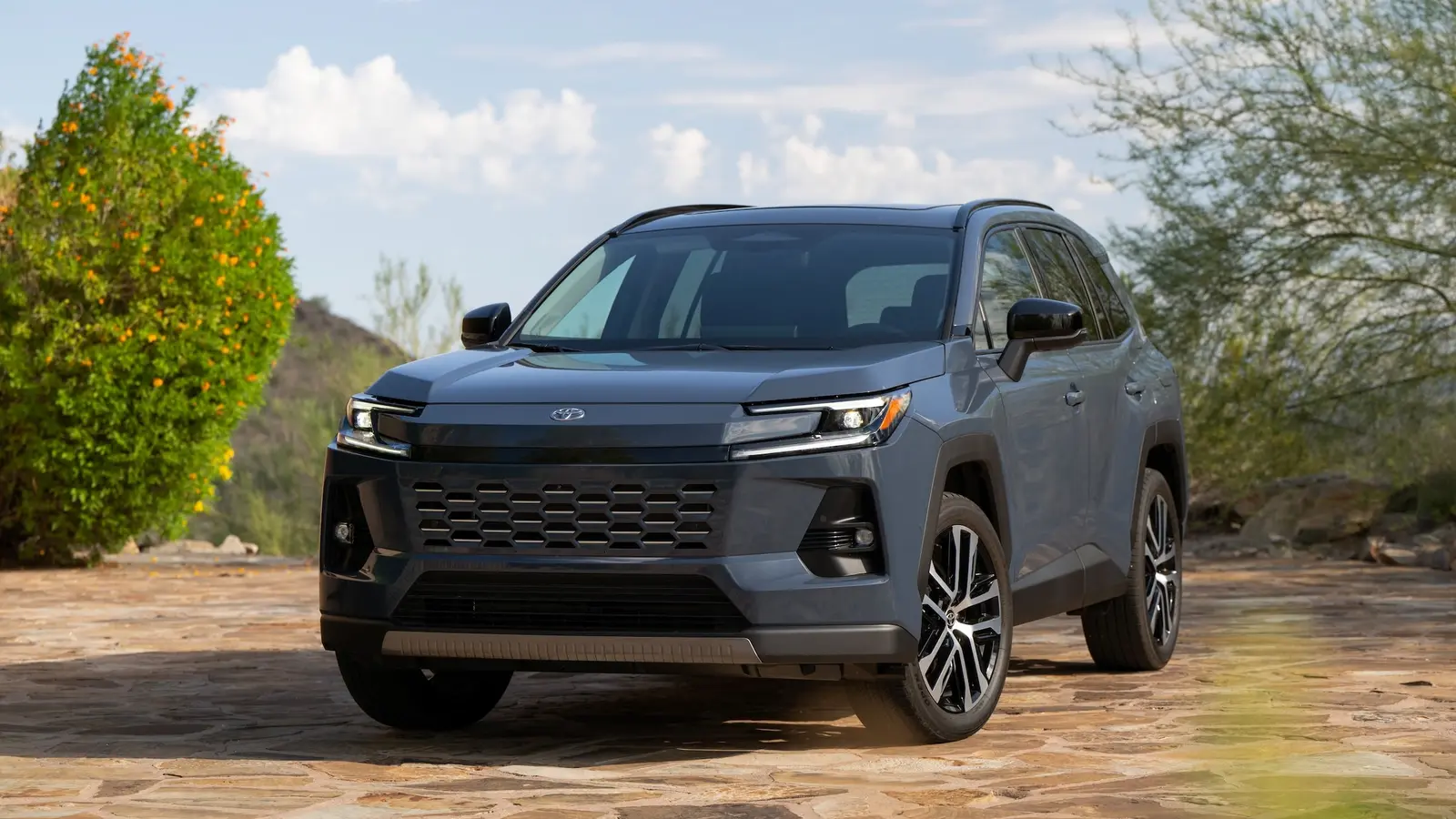
In the United States, the problem was easy to spot. The Toyota RAV4, one of the brand’s most important nameplates and a regular fixture near the top of America’s SUV sales charts, suddenly became harder to get.
Sales of the RAV4 in the US fell from around 41,000 units in March last year to roughly 21,000 this March. That is not a small wobble. It is the kind of drop that can bend a monthly sales chart on its own.
The reason, according to Toyota, was not weak appetite from customers. The company has been adjusting production at its Kentucky plant as it prepares for the next-generation 2026 RAV4. Retooling a factory is never invisible. Lines slow, supply tightens and dealers feel the pinch long before the new model arrives under bright showroom lights.
A Toyota spokesperson stressed that the decline was tied to limited availability and technical changes on the production side, rather than a fall in demand. That matters. In the current market, where buyers are picky, interest rates are still biting and electrified models are gaining ground, a shortage of the right vehicle can hurt just as much as a lack of customers.
Toyota’s hybrid lineup remains a major strength. Demand for hybrid versions of its core models continues to run high, especially as many buyers look for better fuel economy without making the full jump to a battery-electric vehicle. That middle ground has become Toyota’s comfort zone, and few automakers have played it as consistently.
The sharpest regional decline, however, came far from US dealerships. Toyota’s sales in the Middle East dropped 33 percent in March to about 34,000 vehicles. The company has not given a formal explanation for the plunge, but industry analysts point to an obvious pressure point: the widening effect of regional conflict on shipping and logistics.
When transit routes become unreliable, vehicle deliveries suffer. Disruptions around key shipping lanes and restrictions linked to the Strait of Hormuz have made it harder to move cars into several Middle Eastern markets. For an automaker with Toyota’s scale, even a temporary bottleneck can quickly show up in the monthly numbers.
China added another headache. Toyota sales there slipped 8 percent in an intensely competitive market where local brands are moving fast, especially in electrified vehicles. Even so, steady demand for models such as the Avalon and Camry helped prevent a deeper fall.
Then comes the twist. Despite the messy March, Toyota finished the fiscal year ending March 31 with a historic result. Toyota and Lexus combined for 10.48 million vehicles sold, a new record for the company. Include Daihatsu and Hino, and the wider Toyota Group reached 11.28 million vehicles, up 2.5 percent year on year.
That performance kept Toyota in the top spot as the world’s best-selling automaker for the sixth consecutive year. It also delivered record hybrid vehicle sales and the company’s highest-ever sales volume in the United States.
There is another detail worth watching: global production in March actually rose 2.1 percent, even as sales fell. That suggests Toyota was not shrinking its ambitions. It was navigating timing problems, model changeovers and regional delivery constraints, all while trying to keep its vast supply machine moving.
For global car buyers, the takeaway is simple. Toyota is still selling at record scale, but even the industry’s most disciplined manufacturer is not immune to factory transitions or geopolitical shockwaves. The next RAV4 could arrive to serious demand. The question is whether Toyota can get enough of them onto ships, trucks and dealer lots when customers come calling.

“I cover automotive innovation, electric vehicles, and the future of mobility — where technology meets sustainability.”

Discussion
Leave a Comment