
The next big fight in electric cars may not be about range, charging speed, or 0 to 100 km/h bragging rights. It may come down to how well a car understands the messy, unpredictable world outside its windscreen.
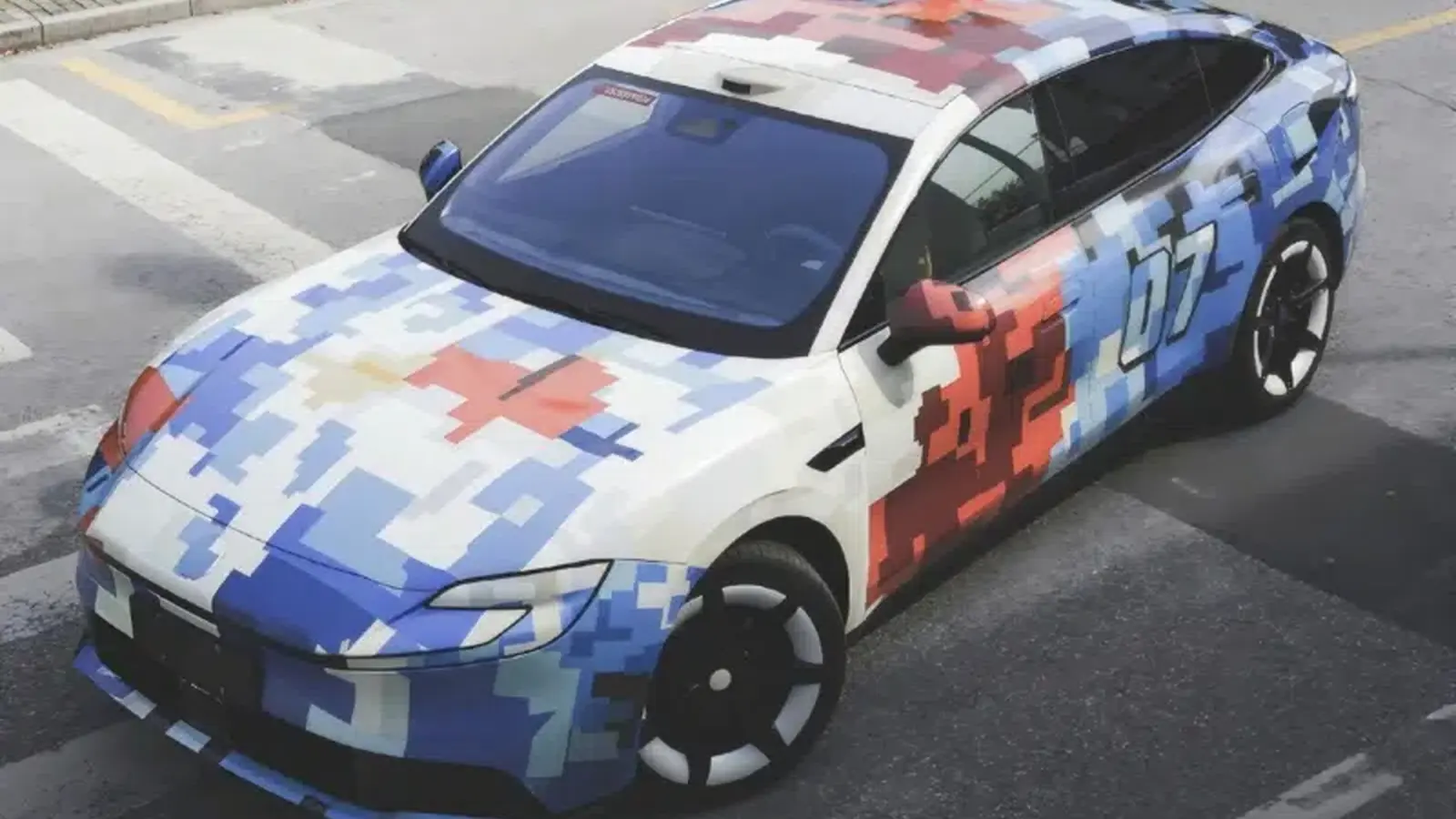
At the 2026 Beijing Auto Show, SAIC Motor's MG brand confirmed that the upcoming MG 07 will be among the first production vehicles to use Momenta's R7 autonomous driving system. The setup combines a reinforcement-learning-based world model with the dedicated Xheart X7 AI chip, creating a tightly linked hardware and software package aimed at advanced driver assistance.
That is not a small claim. MG and Momenta are openly positioning the technology in the same conversation as Tesla FSD V14, one of the most closely watched assisted-driving systems in the world. According to Autohome, the announcement followed talks between MG executives and Momenta's leadership, with both sides presenting R7 as a serious step toward high-level intelligent driving in mass-production cars.

The price war moves into the brain of the car
MG Brand Division General Manager Chen Cui said the MG 07 will use the same R7 system as vehicles priced above roughly €39,000. In plain English, MG wants to bring hardware and software normally associated with more expensive models into a more accessible segment.
That matters. For years, the most advanced assisted-driving suites have lived at the top end of the market, bundled into luxury EVs or premium tech flagships. If MG can deliver similar capability in a lower-priced vehicle, the competitive pressure on both Chinese and global brands could rise quickly.
Chen said the goal is to offer performance beyond the car's class, although SAIC has not released quantified benchmarks. No third-party comparison with Tesla FSD V14 has been published either, so the boldest claims still need real-world proof.
Momenta CEO Cao Xudong described R7 as a world model built around reinforcement learning and said its system-level direction is aligned with Tesla's latest FSD approach. He also referred to internal observations of FSD subscription behavior in Silicon Valley, but did not provide verified Tesla data.
The technical pitch is easy to understand, even if the engineering is anything but simple. A world model is designed to help the car predict what may happen next, not merely react to what its sensors see in the moment. Pedestrians hesitating at crossings. Scooters slipping between lanes. Delivery riders stopping without warning. These are the little urban dramas that make automated driving so difficult.
Momenta says it has accumulated more than 100 million kilometres of driving data and over 1 million long-tail training scenarios. Its equipped fleet is expected to grow from about 80,000 vehicles to a projected 200,000 by the end of 2026, with a longer-term ambition of more than 10 million cars.
The company also plans to triple its computing infrastructure in 2026. Internally, Momenta estimates that could bring its training compute to around 60 to 80 percent of Tesla's North American FSD training scale. Big numbers, certainly. The tougher question is how efficiently that data and compute translate into safer, smoother decisions on public roads.
Cao argues that China gives autonomous-driving developers a particularly demanding proving ground because traffic scenarios are denser than in the United States. He pointed to pedestrians, two-wheelers, and logistics vehicles as key sources of complexity. No comparative dataset was released, but anyone who has watched traffic in a major Chinese city will understand the point immediately. It is not a sterile test track. It is organized chaos with traffic lights.
Momenta says the R7 model can complete post-training iterations within two to three hours, while full training cycles take several days. That cadence is meant to support weekly incremental software updates, giving the system room to improve after launch rather than feeling frozen on delivery day.
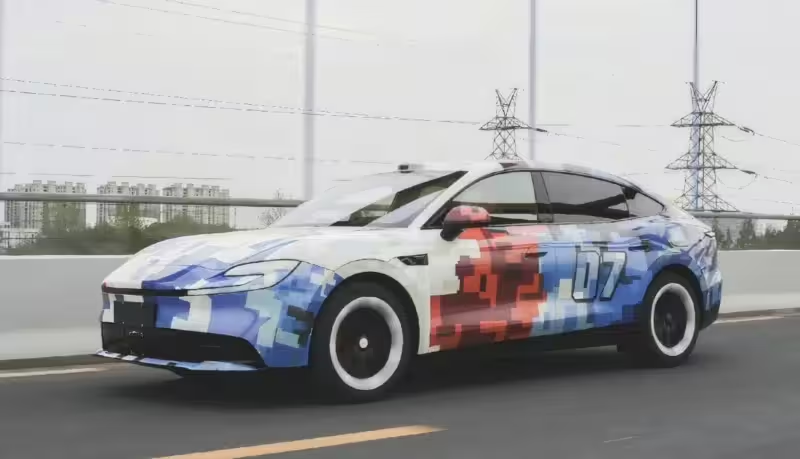
The MG 07 itself is shaping up as more than just a technology carrier. It wears a low-slung fastback body, frameless doors, integrated LiDAR hardware, and a coupe-like roofline. Road tests in China first linked the model to MG's electric successor strategy for the MG7 sedan in February 2026, when prototypes appeared with a fastback shape and roof-mounted LiDAR. In March, SAIC previewed the MG 07 alongside other new models, confirming its place in MG's next-generation NEV lineup.
Inside, the car will also lean on SAIC's broader AI ecosystem, including a cockpit system supported by a large language model. That suggests MG is not only chasing smarter driver assistance, but also a more conversational, software-led cabin experience.
There is a business angle too. According to China EV DataTracker, MG Motor's domestic sales have been volatile between 2025 and early 2026. March 2026 reached 18,003 units, an 80.0 percent year-on-year increase, after a stronger peak of 21,402 units in December 2025. A sharp new intelligent EV could help MG stabilize that momentum, especially if the brand can turn advanced driving tech into a reason to buy rather than a feature buried in a brochure.
The MG 07 is not yet a proven Tesla FSD rival, but it is a sign that China's assisted-driving race is moving fast into more attainable cars.
Final production specifications remain undisclosed, including detailed sensor configuration, battery options, powertrain data, and market launch timing. Still, the message from Beijing is clear enough: MG wants the 07 to be seen not just as another sleek electric fastback, but as a software-defined challenger in the global EV intelligence race.

“I cover automotive innovation, electric vehicles, and the future of mobility — where technology meets sustainability.”

Discussion
Leave a Comment