
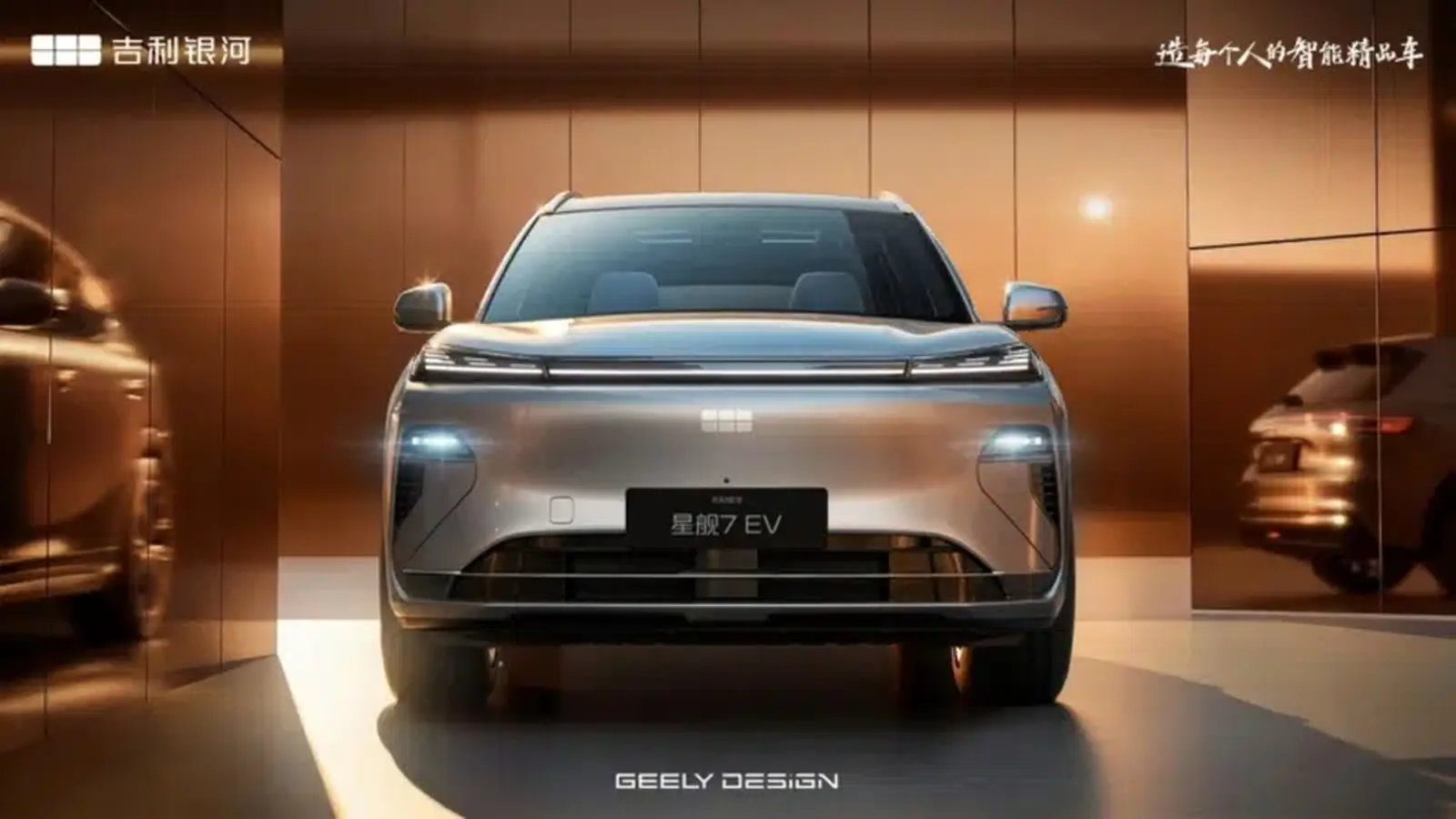
Geely has taken the wraps off the Galaxy Starship 7 EV, and the headline figure is the one buyers will notice first: up to 605 km of CLTC range from a fully electric midsize SUV that now sits above the EX5 in the brand’s expanding EV family.
This is not a clean-sheet surprise. The Starship 7 EV grows out of the same GEA architecture already used by the hybrid Starship 7 EM-i, but here Geely strips away the combustion-assisted setup and leans fully into a battery-electric formula. The result is a more straightforward, longer-range model aimed at drivers who want extra space and more touring ability than the smaller EX5 can offer.
Two battery options have been confirmed. Buyers will be able to choose between a 60.2 kWh pack and a larger 68.39 kWh unit, with official CLTC range figures of 525 km and 605 km respectively. Power comes from a single front-mounted electric motor producing 160 kW, with torque estimated at around 300 Nm. So no, this is not being pitched as a tire-shredding performance SUV. It is clearly tuned with efficiency and everyday usability in mind.

The proportions stay familiar because the body shell closely follows the EM-i version. The Starship 7 EV measures 4740 mm long, 1905 mm wide and 1685 mm tall, riding on a 2755 mm wheelbase. Aerodynamics have been sharpened to a claimed drag coefficient of 0.278 Cd, which is the kind of number that matters more than flashy styling talk when range is part of the sales pitch.
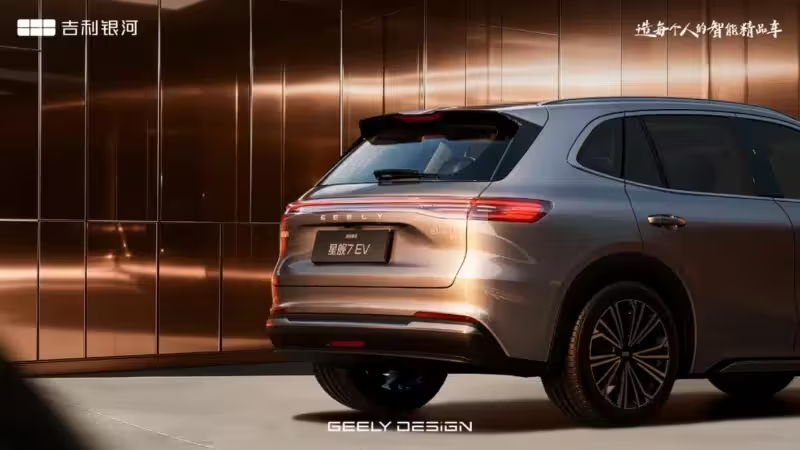
Visually, Geely has given the EV enough distinction to separate it from the hybrid. Up front, there is a closed fascia in place of a more conventional grille, joined by a full-width daytime running light signature that gives the nose a cleaner, more technical look. At the rear, the lighting has also been revised, while 18-inch and 19-inch low-drag wheel designs remain part of the package.
Where Geely thinks the Starship 7 EV fits
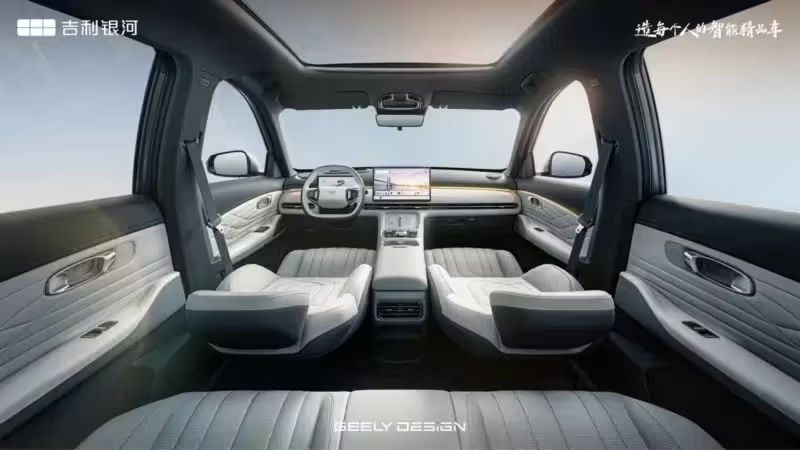
Inside, the cabin adopts Geely’s Flyme Auto operating system, one of the company’s increasingly important software pillars. The interface is designed to feel more like a smartphone than a traditional car menu stack, linking the central infotainment screen and digital instrument display through a multi-screen ecosystem. That matters because Geely is not just selling hardware anymore. Like every major EV player, it is trying to build familiarity across its wider lineup through a shared digital experience.
The Starship 7 EV also gives Geely a clearer step-up model above the EX5, known in China as the Galaxy E5. On paper, the difference is easy to spot. The EX5 is a compact electric SUV measuring 4615 mm in length, 1901 mm in width and 1670 mm in height, with a 2750 mm wheelbase. It typically uses a 60.2 kWh LFP battery and the same 160 kW motor output, but range tops out at roughly 413 km on the CLTC cycle depending on specification and market setup.
That leaves the Starship 7 EV in a more ambitious part of the lineup. It is larger in every key dimension, offers a noticeably longer claimed range ceiling, and presents itself as the better fit for buyers thinking beyond urban commuting. If the EX5 is the practical entry point into Geely’s global electric SUV push, the Starship 7 EV is the one aimed at people who want more room and fewer charging stops.
There is also a wider strategic angle here. The hybrid Starship 7 EM-i has already played a role in Geely’s overseas production plans, including assembly in Indonesia for export markets. In some regions, related versions are marketed under the Starray name, which shows how fluid Geely’s international branding can be. That naming strategy still varies by market and powertrain, so the EV’s final export identity may not be identical everywhere.
Sales of the Starship 7 EM-i in China have been anything but smooth, swinging sharply month to month despite a huge spike in November 2025. According to China EV DataTracker, the hybrid posted 12,001 units that month, then dropped to 5,190 in December, before settling at 3,309 in January 2026, 3,295 in February and 3,779 in March. Those fluctuations make the EV version especially important. It gives Geely another chance to broaden the model’s appeal in a market where pure-electric positioning still carries weight.
Pricing for the Starship 7 EV has not been announced yet. For reference, the hybrid EM-i launched in China at the equivalent of roughly €12,200 to €15,800 based on current exchange rates. The electric version will almost certainly land above that, especially in higher-range trim.
What Geely has revealed so far paints a clear picture. The Starship 7 EV is not trying to reinvent the electric SUV formula. It is doing something arguably smarter: taking a proven platform, stretching its electric credentials, and placing it in a sweet spot between family practicality and usable long-range driving. In today’s EV market, that may be exactly the right move.

“Cars are evolving faster than ever. I cover electric vehicles, smart mobility, and the future of transportation worldwide.”

Discussion
Leave a Comment