
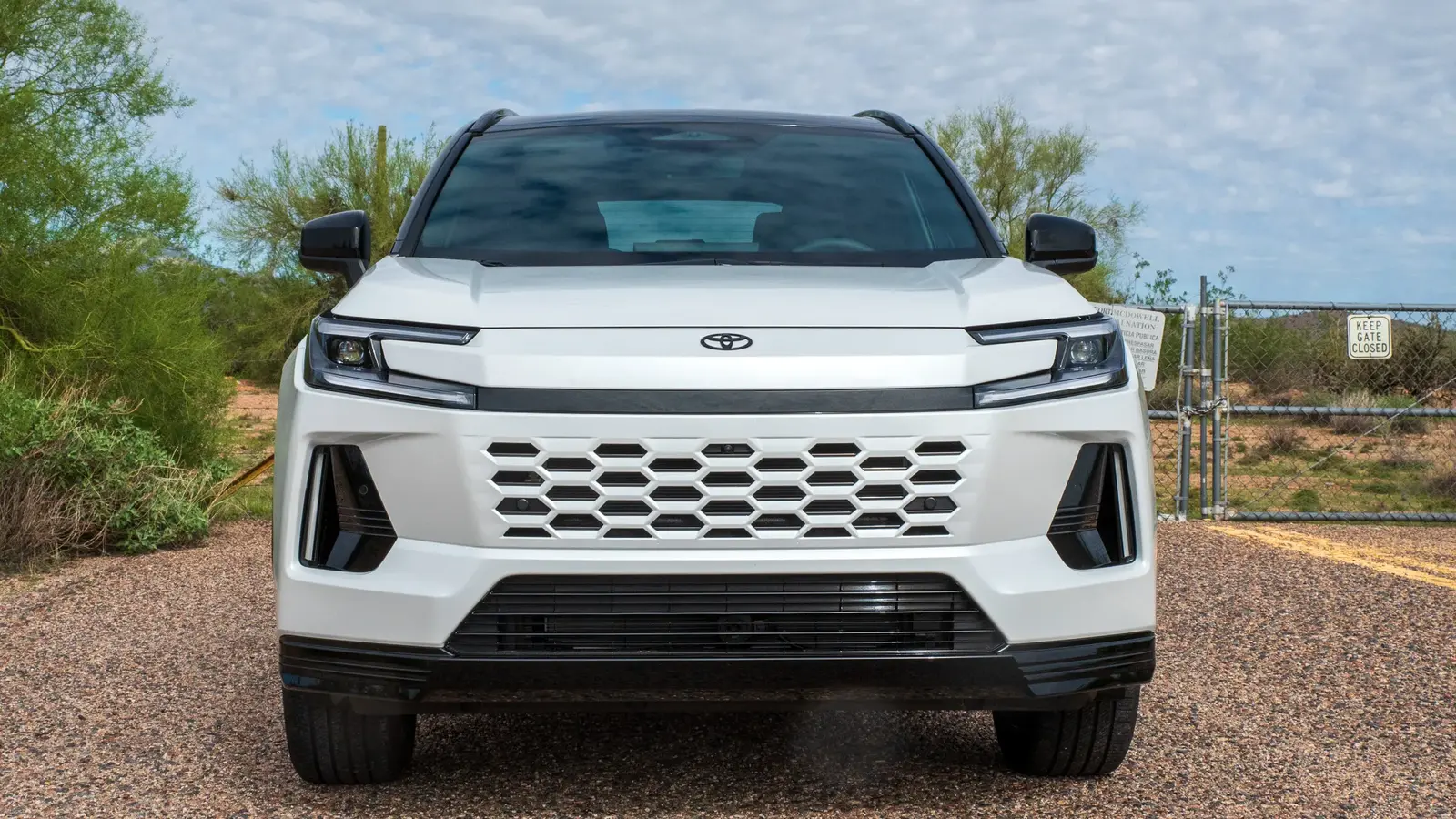
Thirty years after the original RAV4 helped invent the compact crossover, the sixth generation arrives with a decisive shift. Every 2026 RAV4 is a hybrid, and the XSE sits near the top of the range as the road-focused, well equipped trim that balances comfort, tech and real-world efficiency. It adopts Toyota’s latest software platform, a larger 12.9 inch centre display, a fully digital driver cluster, better sound isolation and a stronger fifth-generation hybrid system. The brief is simple. Keep the practicality that made RAV4 a best-seller, then make the car quieter, quicker, easier to live with and better to look at. We drove an early XSE to see what has changed, what still needs work, and why this is likely to be the volume pick in Europe.
Quick highlights
Powertrain: fifth-generation hybrid system pairing a 2.5 litre Atkinson-cycle four with front motor units and a dedicated rear e-axle on XSE
Output: 236 hp quoted for AWD which is about 176 kW. Front-wheel drive models in the range are quoted at 226 hp which is about 169 kW
Transmission: eCVT hybrid transaxle with Eco, Normal, Sport and Custom drive modes, plus EV, Snow and Trail selections
Battery: lithium-ion about 1.02 kWh
Performance: 0 to 100 km/h in roughly 7.5 to 8.0 s from early runs at light elevation with a passenger. Top speed estimated near 210 km/h
Efficiency reference: about 45 mpg city, 39 mpg highway and 42 mpg combined on US figures
Approximate EU conversions used here
City about 5.2 L/100 km
Highway about 6.0 L/100 km
Combined about 5.6 L/100 km
Range estimate: 53.7 litres tank and about 5.6 L/100 km combined gives roughly 960 km between fills
Towing: up to 3,500 lb quoted for AWD which is about 1,588 kg. Front-drive quoted up to 794 kg
Cargo: 37.8 cu ft seats up and 70.4 cu ft seats folded
EU conversions
Seats up about 1,071 litres
Seats folded about 1,994 litres
Dimensions reference
Wheelbase 2,690 mm
Length about 4,597 mm
Ground clearance XSE about 206 mm
Wheels and tyres: 20 inch alloys on 235/50 R20 all-season fitment for XSE
Figures can vary by market specification, certification cycle and tyre choice. Where the film mentions values in miles, gallons and inches, we provide indicative metric conversions for European context.
Exterior and proportions
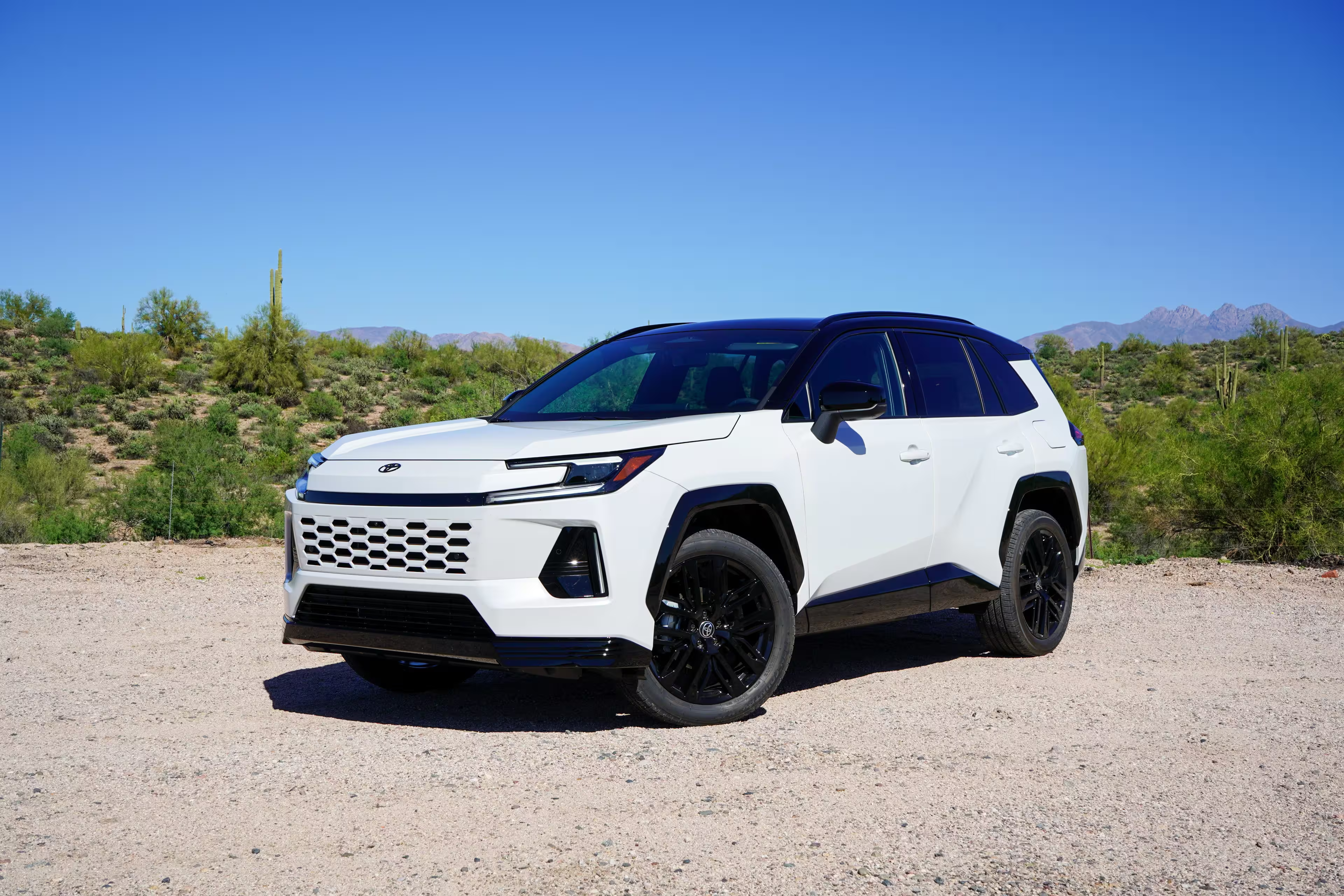
The sixth-gen RAV4 keeps the upright, practical shape that owners like and evolves the details. The XSE is the clean, road-oriented face of the family.
Front
Projector LED headlamps with LED DRL and LED indicators are standard on XSE. The grille wears a hex pattern with discreet openings for cooling and a raised Toyota badge that reads clearly without going oversized. The lower apron picks up a subtle grey insert for visual width.Side
The XSE moves to 20 inch alloys with 235/50 R20 tyres. That is a step up from the 18s that non-plug-in XSE models wore previously. The gloss black arches and lower cladding frame the wheels neatly. Low-profile roof rails keep the look tidy, and a contrasting black roof is available. Power-folding mirrors are not promised in every market which is a curious omission on a high trim.Rear
Full LED tail lamps with vertical slats create a three-dimensional look at night. Badging is tastefully restrained and finished dark on the XSE. The rear wiper sits exposed rather than tucked under the spoiler. Twin visible tailpipes are gone. The overall effect is crisp and recognisably RAV4 without pretending to be off-road hardware.
Dimensions are essentially carried over from the outgoing model. Wheelbase remains 2,690 mm and overall length sits near 4,597 mm. Toyota notes small changes in stance and width that improve stability and cabin calm without affecting parking footprint.
Body, platform and refinement
The TNGA-K underpinnings return with targeted upgrades. Toyota uses more structural adhesive and local reinforcements to reduce flex, then layers in extra sound deadening around the firewall, floorpan and rear arches. On the road you hear less wind rush at motorway pace and fewer coarse-surface harmonics. The four-cylinder is still audible when you dig in, but the general noise floor is lower and more consistent, which pays off on long days.
Powertrain deep dive
Architecture
2.5 litre Dynamic Force petrol four operating on the Atkinson cycle
Front hybrid transaxle with integrated electric motors
Dedicated electric motor on the rear axle for eAWD on XSE
Lithium-ion pack around 1.02 kWh mounted low within the floor structure
Output and conversion
Petrol engine around 176 hp which is about 131 kW and 163 lb-ft which is about 221 Nm
Main front electric motor about 134 hp which is about 100 kW and 153 lb-ft which is about 207 Nm
System output for AWD quoted at 236 hp which is about 176 kW
Transmission
eCVT planetary-split hybrid transaxle manages power blending. There are no fixed stepped gears, though software simulates steps through throttle mapping and engine load changes when you choose Sport mode
Drive modes
Eco calms responses and prioritises EV creep. Normal is the baseline. Sport sharpens pedal maps and steering weight. Custom lets you mix powertrain and steering settings. Separate EV, Trail and Snow selections tailor behaviour for short electric hops or slippery surfaces.
Performance and feel
Real-world runs yielded 0 to 60 mph in 7.5 s on a first attempt and 8.0 s on a later try with no brake-torqueing. Convert that to EU terms and you get roughly 0 to 100 km/h in the 7.7 to 8.3 s window, with the caveat that those tests were at about 460 metres elevation with a passenger in an early pre-production car. At sea level with one driver and cooler air, expect a mid-7 second result. Top speed is estimated near 210 km/h.
The more important point is the way the hybrid moves. Electric torque fills the first beat, so the car eases away smoothly without the flare you get from a small turbo waiting to spool. As speed rises, the engine blends in quietly and the eCVT holds it in the efficient band. You check the cluster to see which side is working because the handoffs are that clean when you are not flat out.
.avif)
Efficiency and range in European terms
Toyota’s reference figures are drawn from US testing. They translate to the following approximate EU numbers for guidance.
City about 45 mpg which is about 5.2 L/100 km
Highway about 39 mpg which is about 6.0 L/100 km
Combined about 42 mpg which is about 5.6 L/100 km
With a tank of about 53.7 litres, the combined figure suggests near 960 km between fills. Your reality will swing with tyre type, temperature, elevation and how often you carry passengers. Large 20 inch wheels add some rotation mass and rolling resistance, but the hybrid’s recapture on downhill and in town offsets that for many commutes. The XSE is not a plug-in in this configuration. You never need to charge it. You fuel it and drive it. EV operation at low speed appears often enough in city traffic to thin out consumption.
Chassis, steering and brakes
The XSE’s mission is comfort first with a dose of crispness. Toyota tweaks the damper curves to keep body movement tidy on big heaves while filtering short-sharp hits from expansion joints.
Steering
The rack is geared for easy corrections on the motorway and predictable response into a roundabout. It stays on the lighter side and does not try to mimic the heavy, artificial feel some sporty trims adopt.Braking
Front discs about 307 mm, rear about 279 mm. The pedal blends regeneration and friction with a natural ramp, and downhill control is easy to modulate so you do not overheat the system on a holiday descent.Tyres and ride
The 235/50 R20 fitment gives grip and a planted look. You will feel more of the road texture than on a 17 or 18, yet the body control is calm and the cabin does not thrum over coarse aggregate the way some crossovers do. If you live where winters bite, a dedicated winter set on 18s is the smart move.
Compared with the GR Sport, the XSE remains softer and quieter. Compared with Woodland on all-terrain rubber, the XSE is cleaner on tarmac and fractionally sharper in transient response.
Interior, ergonomics and storage
The cabin update is where owners will feel the daily improvements.
Seating and trim
The XSE interior mixes SoftTex with a suede-like insert and blue contrast stitching. Front seats are heated and ventilated on XSE Hybrid, which used to be reserved for plug-in variants. The driver’s chair offers 10-way power with two-way lumbar and two-position memory. The passenger has eight-way power. Bolsters are a touch firmer than the core grades without feeling pinchy.Displays
The driver view is a 12 inch fully digital cluster that can prioritise a clean speed readout, an assistance status view, a classic dual dial or a map-centred layout. The centre screen measures 12.9 inches. It runs Toyota Audio Multimedia 2.0 on the Aren platform, with a faster processor and a configurable home screen.
.avif)
Phone and media
Wireless Apple CarPlay and Android Auto connect quickly. There is a wireless charging pad for the driver, and 45 W USB-C ports up front. An upgraded JBL nine speaker system is available as part of a package on XSE and standard on Limited in some regions. Volume and temperature remain on physical knobs, which matters with gloves on a January morning.Cameras and parking
The 360 degree camera suite is standard on XSE. Resolution is much improved, and the perimeter scan lets you spin a composite model around the car. The transparent under-car forward view is genuinely useful in tight kerbside parks and narrow old-town alleys.Controls and console
A conventional PRND toggle or shifter sits where your hand expects. Cupholders are illuminated and have removable liners for cleaning. The centre armrest opens from either side and can be fully lifted off when you want to use it as a small table surface. The table function feels a little flimsy on the early build but should be solid enough for light duty.Materials and quiet
Touch zones are padded. The upper dash is a harder grained plastic that looks neat but does not feel premium to the fingers. The important piece is that the new sealing and insulation reduce the background hash that made the previous car feel busy on some surfaces.Roof and space
A panoramic roof is available on XSE as an option. Even with it fitted, there is enough headroom for taller drivers. In back you get vents and USB-C ports. Heated rear seats are limited to higher trims in some markets.
.avif)
Second row and boot
This is a family car first, so the back of the cabin needs to work.
Rear seat
Legroom remains about 960 mm by our tape in a seat-behind-seat setup, which aligns with the quoted 37.8 inches from the US spec. The floor has a small central hump. The backrest reclines slightly. The base does not slide fore and aft like some European rivals. Headroom is generous unless you fit the panoramic roof and wear a very tall hat.Boot
Seats up yields about 1,071 litres on our conversion from 37.8 cu ft. Fold the 60–40 seat backs and you see about 1,994 litres, with a nearly flat floor. Under the floor there is a temporary spare wheel and extra bins for small items. The boot door is powered and foot-activated on XSE. The nearly vertical tail helps with tall boxes and bicycles with front wheels removed.
.avif)
Safety and driver assistance
Toyota Safety Sense 4.0 is standard across the range, running on the Aren platform.
Pre-collision system detects vehicles, pedestrians, cyclists and motorcyclists and can brake if you do not respond
Lane Tracing Assist keeps the car centred on motorways with smooth interventions
Dynamic Radar Cruise Control manages spacing in traffic without the accordion effect
Road Sign Assist reads key signs into the cluster
Blind Spot Monitor and Rear Cross Traffic Alert with braking help in tight car parks
A digital rear-view mirror is available by package in some markets, and a 3D panoramic monitor sits atop the camera suite on upper trims
The tone of the assistance is important. It is not grabby. You do not end up fighting the wheel when the lane centring is active. If you have tried older systems and switched them off, this is worth a fresh look.
Driving impressions
Urban
Takeoff is smooth and instantly responsive. The hybrid will creep and shuffle at low speed on electric power whenever conditions allow. Steering is light for easy placement in tight streets. The suspension filters speed humps in one clean movement without a second bob.
Motorway
At 120 to 130 km/h the cabin settles. Wind noise from the mirrors is reduced compared with the outgoing car. The bigger tyres do bring some surface hum on very coarse tarmac, but voices carry easily and the JBL system has headroom to spare. Passing requires a modest dip of the right foot, and the powertrain blends assistance quickly.
Country roads
Turn-in is tidy. The body leans a touch and then settles, and the car tracks neatly through long sweepers. There is no attempt to be a hot hatch on stilts. Instead the XSE focuses on consistency. If you want firmer edges and a lower centre of gravity, the GR Sport exists, but then you accept summer tyres and a snappier ride.
Quibbles
The engine note under heavy throttle is still more present than in some rivals that prioritise EV-first logic in their hybrids. The upper dash plastic feels cost-driven. Power-folding mirrors would be expected by many European buyers at this price point. These are not deal breakers, they are context for the spec sheet.
Equipment highlights and omissions
What you get on XSE
12.9 inch multimedia and 12 inch digital cluster
360 degree camera as standard on the trim
Heated and ventilated front seats, power driver with memory and power passenger
20 inch alloys and dark exterior detailing
Low profile roof rails, panoramic roof optional
Wireless phone charging and high output USB-C
Comprehensive Toyota Safety Sense 4.0
What you might miss
Heated rear seats are not standard on XSE in many markets
Power-folding mirrors and a digital rear-view mirror can be package-dependent
The upper dash still uses harder plastics
Ground clearance is lower than Woodland and not intended for trail work
.avif)
Comparison table within the range
| Item | RAV4 XSE Hybrid | RAV4 Woodland Hybrid | RAV4 GR Sport Plug-in |
|---|---|---|---|
| Powertrain | Full hybrid eAWD | Full hybrid eAWD | Plug-in hybrid eAWD |
| System output | 236 hp about 176 kW | 236 hp about 176 kW | Up to 324 hp about 241 kW |
| Battery | Li-ion about 1.02 kWh | Li-ion about 1.02 kWh | Li-ion about 22.7 kWh |
| Wheels and tyres | 20 in, 235/50 R20 all-season | 18 in, all-terrain | 20 in, summer performance |
| Ground clearance | about 206 mm | about 216 mm | about 190 mm after 15 mm drop |
| Roof hardware | Low rails, pano optional | Raised rails with crossbars standard | No rails, no roof opening |
| Towing | up to 1,588 kg | up to 1,360 to 1,588 kg by spec | often not rated to tow |
| Seats | SoftTex plus suede, heated and ventilated | SoftTex, non-perforated, heated | Suede-like plus SoftTex with sport bolsters |
| Camera suite | 360 standard | 360 with trail views | 360 with sport overlays |
| Personality | Tarmac comfort and tech | Adventure look and light trails | Driver focus and pace |
Values shown are indicative and depend on market equipment.
Rivals in Europe
Honda CR-V Hybrid
Quieter powertrain note under load and a very calm rear cabin. The new generation offers more space but fewer trim personalities.Hyundai Tucson Hybrid and Kia Sportage Hybrid
Aggressive pricing, long warranties and crisp infotainment. Their ride on big wheels can turn busy on rough surfaces.Volkswagen Tiguan eHybrid and mild hybrids
Strong ergonomics and refined motorway manners. Plug-in variant targets a different ownership pattern.Mazda CX-5 and CX-50 petrol
Non-hybrid alternatives with good steering feel and a premium interior vibe. Less efficient in mixed use.
The RAV4’s advantage remains breadth. It offers an honest cabin, big boot, calm long-distance manners, tight tech integration and strong resale. The hybrids consume little in town and do not punish on the motorway.
Ownership, running costs and practical advice
Fuel
The combined reference near 5.6 L/100 km makes for low monthly fuel outlay, especially if most of your driving happens below 80 km/h where EV blending is frequent.Tyres
20 inch rubber is pricier. If you face harsh winters, consider a winter set on 18s to save the 20s from pothole seasons and to improve comfort and grip.Service
Toyota hybrids have a strong reliability record in Europe. The hybrid system reduces wear on conventional items such as pads and discs in urban use thanks to regeneration.Towing
If you plan to tow often at the upper limit, fit the correct cooling package and use the towing mode where available. Hybrid torque at low speed makes manoeuvring a trailer pleasantly simple.Accessories
Roof boxes and bike mounts bolt straight to the factory rails. If you carry dogs, the near vertical tail and the flat fold floor make a case for a half-height boot divider and a rubber mat.
Frequently asked questions
Is the XSE a plug-in
No. The XSE reviewed here is the conventional hybrid. The plug-in sits in other trims like GR Sport.
What is the real 0 to 100 km/h time
Early runs at light elevation with a passenger produced about 7.7 to 8.3 seconds. Expect mid-7s at sea level with one driver.
How economical is it on the motorway
On steady 120 to 130 km/h runs, think near the highway reference which converts to about 6.0 L/100 km. Winter tyres, crosswinds and roof boxes will raise that.
Can it tow a caravan
Yes. XSE AWD is quoted up to about 1,588 kg depending on market rating and equipment. Always check your country’s homologation plate and licence class.
Does the big screen lag
No. The new Aren-based multimedia is far quicker and now offers a configurable home screen. Wireless CarPlay and Android Auto connect promptly.
Key specifications in metric
| Item | 2026 Toyota RAV4 XSE Hybrid |
|---|---|
| Powertrain | 2.5 litre Atkinson petrol plus front motors and rear e-axle |
| System output | 236 hp about 176 kW |
| Transmission | eCVT hybrid transaxle |
| Drivetrain | eAWD on XSE |
| Battery | Li-ion about 1.02 kWh |
| 0 to 100 km/h | approx 7.7 to 8.3 s early runs |
| Top speed | about 210 km/h estimated |
| Fuel economy references | city about 5.2 L/100 km, highway about 6.0 L/100 km, combined about 5.6 L/100 km |
| Fuel tank | about 53.7 litres |
| Range estimate | near 960 km combined |
| Wheelbase | 2,690 mm |
| Length | about 4,597 mm |
| Ground clearance | about 206 mm |
| Brakes | front discs about 307 mm, rear discs about 279 mm |
| Wheels and tyres | 20 in, 235/50 R20 |
| Boot volume | 1,071 litres seats up, about 1,994 litres seats folded |
| Towing | up to about 1,588 kg on AWD |
All values indicative and may vary by EU market trim and certification.
.avif)
Pros and cons
Pros
Calm long-distance refinement with better noise control than before
Honest, roomy boot with a flat fold floor and a spare wheel under the deck
Big tech step with a 12.9 inch screen and a genuinely good 360 camera suite
Strong hybrid response in town and respectable motorway economy for the size
Heated and ventilated front seats and memory on the driver seat included at this trim level
Cons
Engine note is still present under heavy throttle compared with some EV-first hybrids
Upper dash plastics feel ordinary for the price point
Power-folding mirrors and digital rear mirror are not universal in the spec sheet
20 inch tyres add cost and can add hum on very coarse surfaces
Ground clearance below Woodland and no underbody protection
Verdict
The 2026 Toyota RAV4 XSE Hybrid is the quiet evolution that matters. It takes what owners liked most about the outgoing car and tightens all the screws that needed attention. The multimedia system is finally fast and clear. The driver display is modern and configurable. The cabin is calmer at 130 km/h. The hybrid adds power and trims consumption, then the eAWD stitches in traction on wet cobbles and winter mornings. The boot remains a selling point, and the equipment mix is the one many buyers would build if they were speccing from scratch.
If you want the toughest look and a little more clearance for gravel, the Woodland is your ticket. If you want back-road bite and plug-in punch, the GR Sport is the enthusiast’s choice. For everyone else who spends Monday to Friday on tarmac and weekends carrying bikes, dogs and kids, the XSE is the sixth-gen sweet spot. It is the version that will most likely keep the RAV4 at the top of European shopping lists for another cycle.

“Cars are evolving faster than ever. I cover electric vehicles, smart mobility, and the future of transportation worldwide.”

Discussion
Leave a Comment