
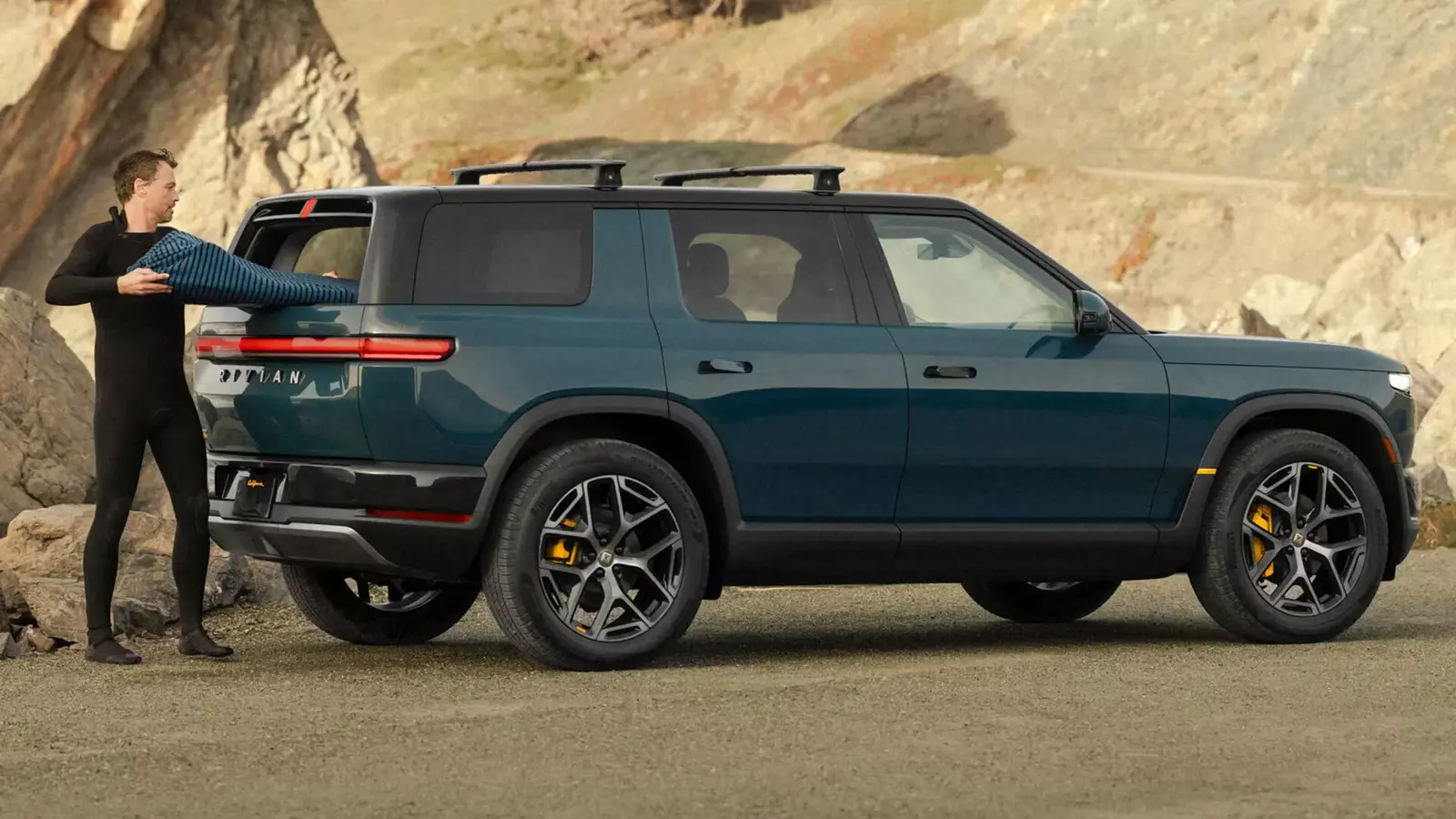
Rivian is still burning cash, but it is not backing away from its biggest manufacturing gamble. Quite the opposite. Even after reporting a net loss of €387 million in the last quarter, the EV maker has decided to push harder on its future factory in Georgia, raising the site’s initial production target and reshaping the financing behind it.
That move says a lot about where Rivian thinks the next chapter will be written. The company clearly believes its upcoming mass market products, especially the R2, can carry far more weight than its premium electric trucks and SUVs ever could on their own.
The headline change is simple: Rivian now wants the Stanton Springs North plant to start with annual capacity for 300,000 vehicles. That is 100,000 more than previously planned for the first stage. In practical terms, the company is chasing scale earlier, hoping bigger volume from day one will bring down the cost of each vehicle while leaving room to grow further later on.
There is a financial twist, too. Rivian worked with the US Department of Energy to revise the plant loan package. What was once a €6.14 billion loan has now been reshaped into a €4.19 billion facility, matched to the updated plant design and a new initial roadmap. According to reports, the earlier version was designed around two production phases and total annual capacity of 400,000 vehicles. The revised deal focuses on one phase instead, but with the benefit of letting Rivian tap the money sooner and launch with a stronger opening production base.
That matters because timing is everything for Rivian right now. The company says it expects to begin using the loan funds in 2027, while production in Georgia is scheduled to start in late 2028. Construction activity is already moving ahead, with vertical work due to begin this spring. Rivian also says preparations are underway for the stamping press area, one of the most expensive and technically demanding parts of the entire facility.

Why Georgia matters more than ever
This is not just another factory announcement. Georgia is central to Rivian’s attempt to become something much bigger than a niche electric adventure brand. The company has already started production of the R2 in Normal, Illinois, and it is treating that model as a pivotal product. If the R2 lands the way Rivian hopes, demand could quickly outgrow the brand’s current footprint.
So the Georgia plant is not merely a backup plan. It is a statement of intent. Rivian wants enough space, tooling and flexibility to support the kind of volumes that can finally make the economics of its business less punishing.
That is the backdrop to the latest earnings figures, which were a mixed bag. Rivian built 10,236 vehicles in the first quarter and delivered 10,365. Revenue climbed 11 percent to €1.29 billion, showing there is still commercial momentum. But the company remained deep in the red, posting that €387 million net loss for the quarter.
Even that number needs context. Rivian said the result was helped by a €471 million gain in other income linked to the Series A capital raise and the related deconsolidation of Mind Robotics. Strip away one off accounting help, and the underlying picture still looks tough.
Its outlook does not exactly sugarcoat things either. For 2026, Rivian expects deliveries of between 62,000 and 67,000 vehicles. Respectable, yes. Transformational, not yet. The more sobering figure is adjusted EBITDA, where the company is forecasting a loss of between €1.67 billion and €1.95 billion.
That leaves Rivian in a familiar but uncomfortable place. It has a brand people watch closely, vehicles that stand out in a crowded EV field, and a potentially game changing smaller model on the horizon. It also has the kind of losses that make every expansion plan feel like a test of nerve.
Still, this Georgia decision shows Rivian is choosing to act like a company preparing for demand rather than one retreating from risk. Whether that confidence proves visionary or premature will depend on one thing above all: can the R2 turn Rivian from an admired EV startup into a genuinely high volume automaker?

“Cars are evolving faster than ever. I cover electric vehicles, smart mobility, and the future of transportation worldwide.”

Discussion
Leave a Comment