
5 Minutes
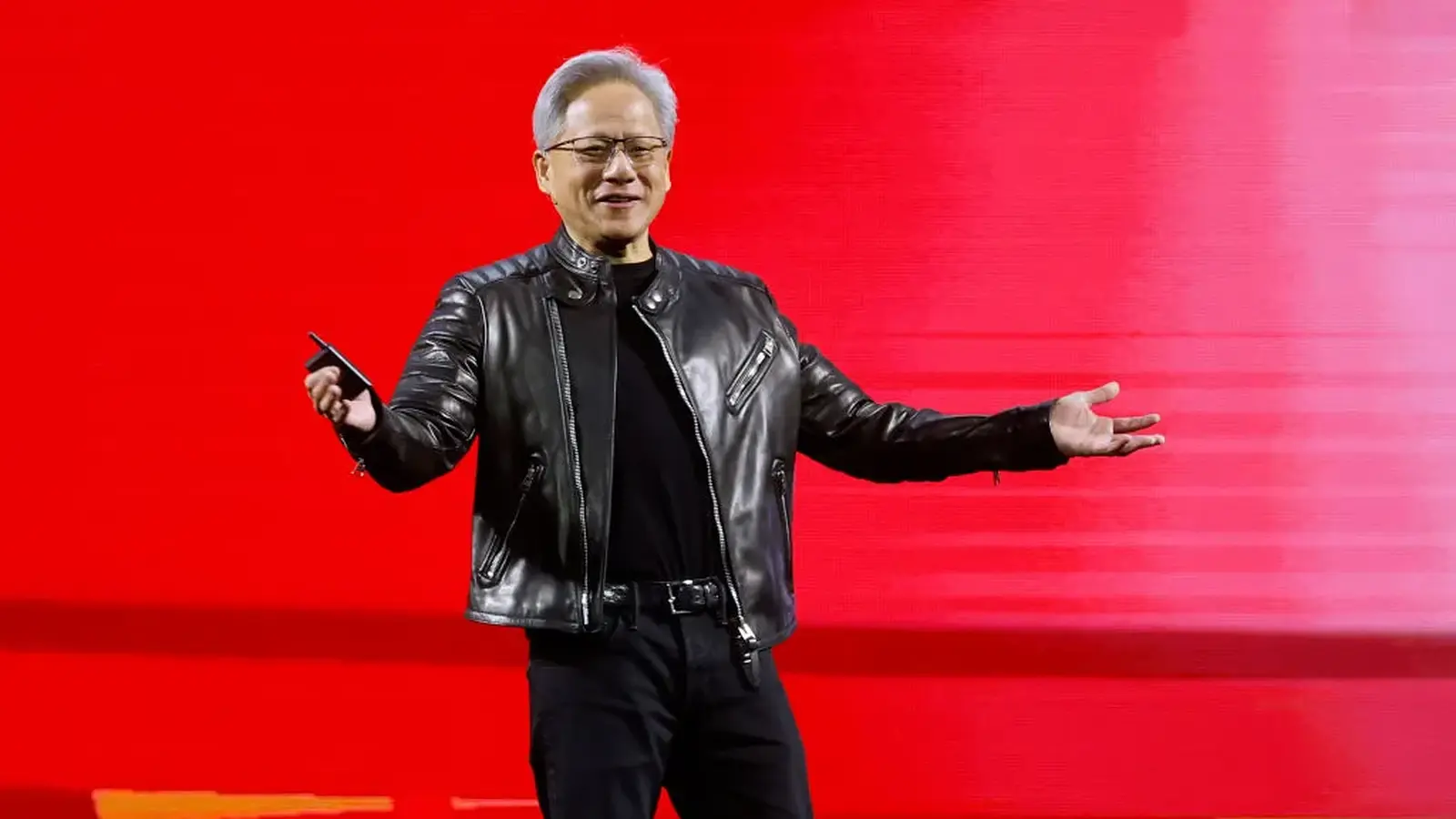
Fear travels faster than facts, especially when artificial intelligence is involved. One week the conversation is about machines replacing office workers, software engineers, and call centers. The next, Nvidia chief executive Jensen Huang is on stage arguing the opposite: AI is not hollowing out the labor market, he says, it is opening the door to a huge wave of new work.
Speaking during a conversation hosted by the Milken Institute with MSNBC's Becky Quick, Huang pushed back hard against the idea that AI is mainly a job-destroying force. His view was clear and delivered without hesitation. AI, he argued, is becoming one of the strongest engines for employment growth and could even help the United States rebuild its industrial base.
That point matters because the anxiety is real. As generative AI tools spread through offices, customer support teams, software workflows, logistics, and media production, workers are asking the same question in different ways: if a machine can do part of my job, what happens to me?
Huang's answer rests on a distinction that often gets lost in the panic. A task is not the same thing as a job. Automating one slice of a role, he suggested, does not automatically erase the broader purpose a person serves inside a company. In practice, that could mean AI handles repetitive work while humans shift toward judgment, coordination, troubleshooting, creative direction, or customer-facing decisions.
He also framed the AI boom as something much bigger than software. Behind every chatbot, image model, and enterprise AI platform sits a physical layer: chips, servers, networking gear, data centers, power systems, cooling infrastructure, manufacturing lines, and the people required to build and operate them. This is where Huang sees a fresh industrial opportunity. In his telling, AI is not just code on a screen. It is a full stack economy.
The part of the AI debate nobody agrees on
Quick raised the question hanging over nearly every public discussion about AI right now: the speed of change. If this transition unfolds faster than earlier technology waves, could it trigger a deeper shock to workers and widen inequality even further?
That is where the optimism collides with a more uncomfortable reality. Huang warned against what he sees as fear-driven storytelling around AI, especially the kind that paints the technology as an unstoppable threat to human relevance. He said one of his biggest concerns is that Americans become so intimidated by the technology that they stop engaging with it altogether. In his view, that would be a strategic mistake, not just for workers but for the country's economic future.
Still, the broader picture is messy. Some of the loudest warnings about AI have not come from outsiders alone. The industry itself has often fueled the drama, sometimes with apocalyptic language, sometimes with sweeping promises that critics say far exceed what current products can actually deliver. That has created a strange dynamic: the same sector building AI tools is also helping shape the mythology around them.
And the uncertainty is not imaginary. While business leaders like Huang stress job creation, several respected academic and financial analyses have suggested that AI could eliminate a meaningful share of existing roles in the United States over the coming years, with some estimates placing the impact at around 15 percent of jobs. That does not necessarily mean permanent mass unemployment, but it does point to disruption on a scale large enough to reshape industries, wages, and the skills employers value most.
So who is right? Probably both, at least in part. AI may generate entirely new categories of employment while also making some current roles smaller, leaner, or obsolete. History tends to work that way. New technology rarely asks permission before redrawing the map.
For now, Huang is betting that the upside wins. His argument is not that change will be painless. It is that the popular vision of AI as a one-way conveyor belt to joblessness misses how economies actually adapt. Tools replace tasks. Industries reorganize. New infrastructure appears. New specialties emerge. People learn the new system, then build careers inside it.
That may sound reassuring, or convenient, depending on where you sit. But one thing is no longer in doubt: the fight over AI and jobs is no longer a distant thought experiment. It is the defining labor question of the tech era, and the people shaping that future are already trying to control the story around it.
Source: techcrunch


Comments
Tomas
Ive watched automation take over tasks at my shop, then new roles popped up. Still, retraining was messy and some folks left. Optimism ok, but it's bumpy.
mechbyte
Is he right or just PR spin? AI might create jobs, but who gets them and how fast? Retraining lag, regional gaps, inequality, worries me. Not simple.

Leave a Comment