
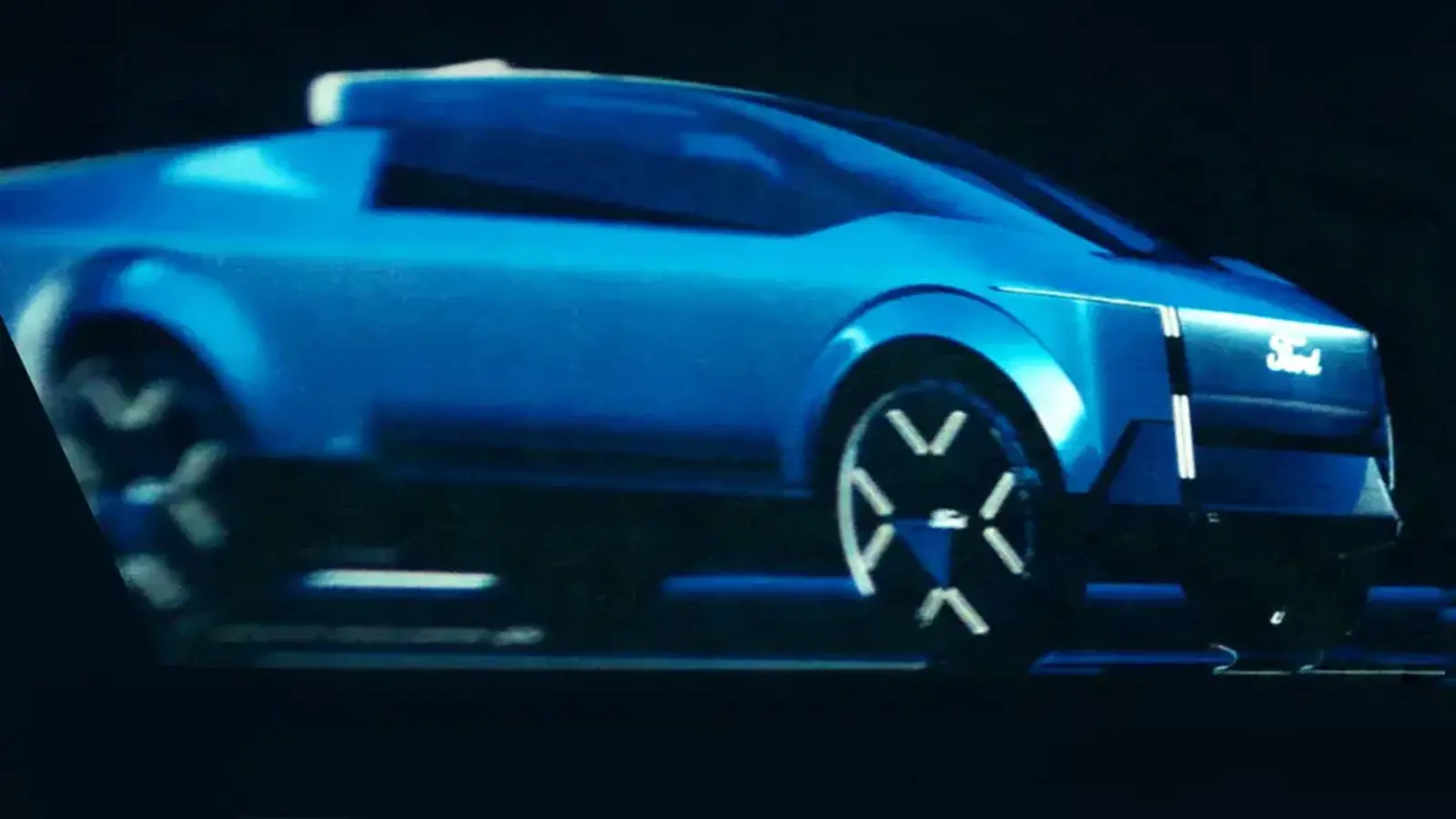
Ford is doing something few legacy carmakers dare to admit: the old way of building cars is no longer enough. While rivals warn that matching the pace and price of Chinese electric vehicles is close to impossible, Ford is quietly trying to rewrite the playbook from the factory floor up.
At the center of that effort is a tightly focused skunk works team working on an affordable new EV platform, one that could underpin a compact pickup and potentially several other models. The headline target is striking: a roughly €27,700 electric truck with around 483 kilometers of range and the kind of punchy performance buyers usually associate with a Mustang. In today’s market, that combination still feels rare in the United States. In China, it is already part of the conversation.
That is exactly the pressure Ford is responding to. CEO Jim Farley has not been watching the Chinese market from a distance. He has driven Chinese EVs himself and has spoken openly about how quickly those brands are improving. He has also seen how expensive Ford’s own EV journey has been so far, with billions spent on platforms and production systems that have not delivered the cost efficiency the company needs.
According to reports from The Wall Street Journal, Ford’s diagnosis is blunt. Too many parts. Too much complexity. Too many manufacturing habits carried over from the combustion era. For electric cars, that baggage can be fatal, especially when Chinese automakers and Tesla have already shown how much cost can be stripped out of design and assembly.
Ford wants to rebuild the process, not just the product
This is where the story gets more interesting. Ford is not simply developing a cheaper EV. It is rethinking how that vehicle gets made. Instead of relying on the traditional step by step assembly process that has shaped car manufacturing for decades, the company is moving toward a more modular approach. That means larger cast components, fewer individual parts, fewer handoffs on the line, and less time spent stitching the vehicle together piece by piece.
It is a clear shift toward methods already used by Tesla and several Chinese EV leaders. The logic is simple: if a vehicle is designed to be built with fewer touchpoints, it can be assembled faster, more cheaply, and with less opportunity for inefficiency to creep in.
Jolanta Coffey, Ford’s vehicle program director, summed up the scale of the change with unusual candor. The company, she said, has never really blown up the whole system and started over before. If this project reaches production, it will not just launch a new electric vehicle. It could fundamentally reshape how Ford builds future cars.
That makes this more than a product story. It is a survival story. The global auto industry is entering a phase where software, battery cost, manufacturing simplicity, and speed to market matter just as much as horsepower and badge value. Carmakers that cannot simplify will struggle. Carmakers that cannot compete on value will struggle even more.
The wider backdrop only sharpens the stakes. Hyundai Motor CEO José Muñoz recently said competing with Chinese EV makers is effectively impossible without government support. It was a striking admission, and one that reflects how dominant China has become in affordable electric cars, supply chains, and production efficiency.
Ford is making a different bet. The company seems to believe that Chinese EV brands are not unbeatable, only better adapted to the current moment. If Ford can cut costs deeply enough, reduce complexity aggressively enough, and launch a compelling low cost electric pickup by 2027, it may finally have a product that speaks the language of the next EV market rather than the last one.
That is the real gamble here. Not whether Ford can build another electric vehicle, but whether a Detroit icon can learn fast enough to challenge the companies that already mastered the new rules.

“I cover automotive innovation, electric vehicles, and the future of mobility — where technology meets sustainability.”

Discussion
Leave a Comment