
Nissan is trimming hard in Europe, and the most intriguing part of the story is not just the job cuts. It is the empty space they could leave behind.
The Japanese carmaker, under pressure to steady its finances and shrink excess capacity, is reportedly preparing to reduce its European workforce by around 10%. That could put roughly 900 jobs at risk across the region, a sign of how serious the restructuring effort has become.
Some of the changes are already taking shape. A parts warehouse in Barcelona is expected to be downsized, while Nissan is also said to be reshaping its distribution network in the Nordic countries. In the UK, white collar roles are believed to be under review as well. None of that feels cosmetic. This is a company cutting into the bone.
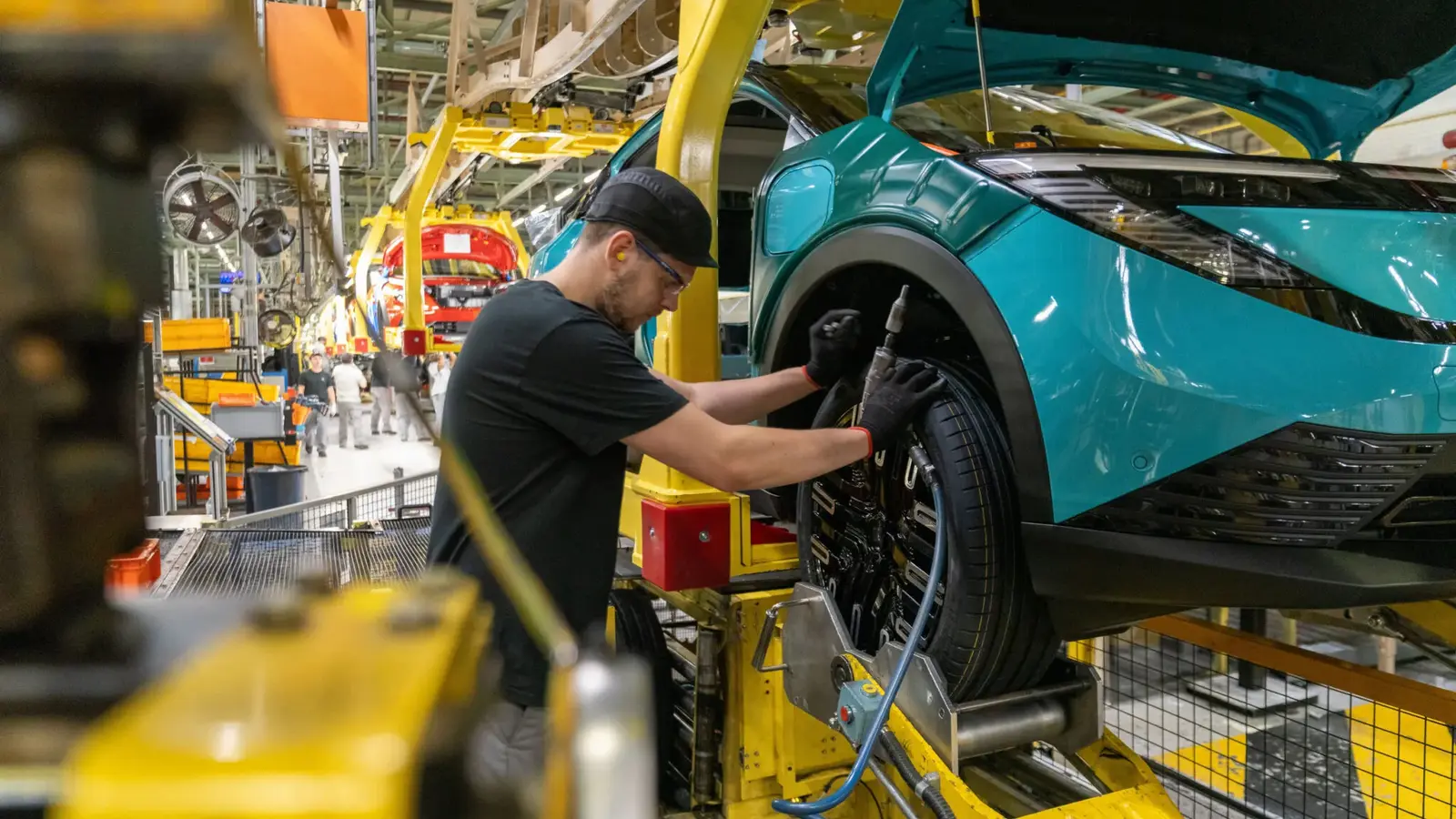
Then there is Sunderland, the factory that has long stood as one of Nissan’s most important manufacturing sites in Europe. Production there is reportedly being consolidated onto a single assembly line. Given that the plant is said to be operating at about 50% capacity, the move is hardly shocking. Running two lines when demand does not justify it simply burns money.
What happens next is where the plot thickens. The unused line could become more than idle factory space. It may turn into an opportunity for a Chinese carmaker looking for a foothold in British manufacturing.
The line Nissan no longer needs
Reports have previously linked Nissan with talks involving Chinese brands, including Chery, over the possible use of part of the Sunderland facility. Nissan has not named a partner, but it has openly acknowledged that it is exploring opportunities with third parties to make better use of the plant.
That matters. A lot. If a Chinese automaker were to step into Sunderland, it would not just be a clever capacity fix for Nissan. It could also offer a faster and more politically acceptable route into local production for a brand eager to grow in Europe.
For Nissan, the logic is straightforward. Idle capacity is expensive. Sharing a plant, leasing space, or building vehicles for another company could help spread costs and improve profitability at a time when every margin point counts.

The company says these measures are necessary to protect its future in Europe, preserve jobs over the long term, and keep it competitive in a market that is getting tougher by the month. That sounds measured, but the numbers help explain the urgency.
In the first four months of the year, Nissan sold 28,389 vehicles in the UK. That was down 13.3% from the same period a year earlier. More telling still, the brand is only narrowly ahead of fast rising Chinese rivals. BYD reached 26,396 sales, while Jaecoo posted 22,789.
That gap is uncomfortably small for a manufacturer with Nissan’s history, dealer network, and production presence in Britain. It also underlines a new reality in Europe’s car market: Chinese brands are no longer fringe players. They are arriving fast, filling niches quickly, and forcing established names to rethink everything from pricing to factory strategy.
So yes, Nissan’s cuts are about survival. But they may also signal something bigger. Sunderland, once a symbol of Japanese strength in British car manufacturing, could soon become a shared address in an industry being rewritten by new alliances and Chinese ambition.

“I cover automotive innovation, electric vehicles, and the future of mobility — where technology meets sustainability.”

Discussion
Leave a Comment