
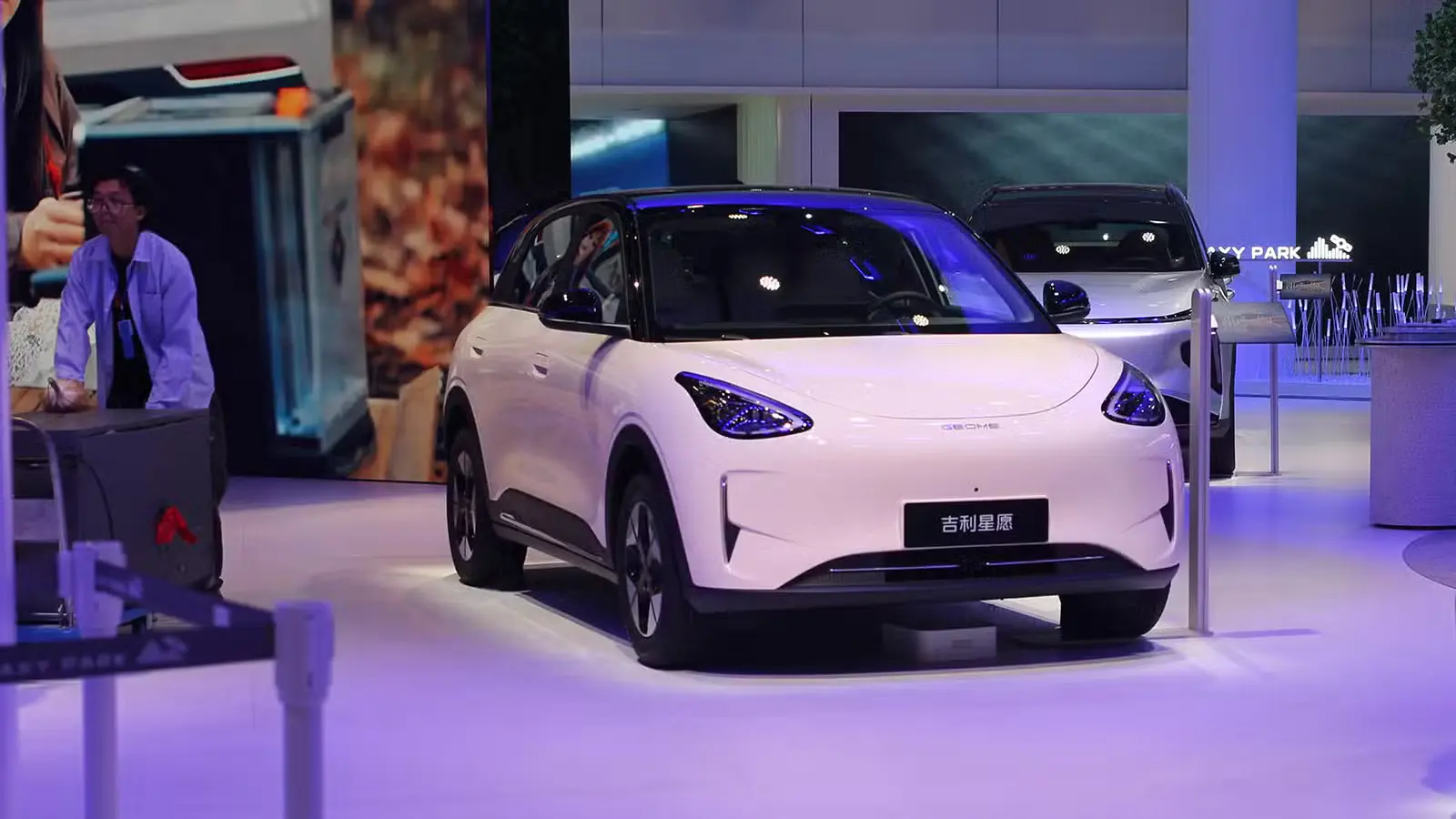
Geely is edging closer to a move that could reshape its European ambitions. According to a report from Spanish outlet La Tribuna de Automoción, the Chinese carmaker has agreed to acquire the Body 3 assembly line at Ford’s Almussafes factory in Valencia, Spain, a site that is currently sitting idle but could soon return to life with a very different badge on the production line.
If the deal goes through as expected, Geely would gain far more than floor space. It would secure a ready-made industrial foothold inside Europe, giving the company a faster and more strategic route into local vehicle production at a time when tariffs, logistics costs, and political scrutiny are all making simple exports less attractive.
The report says Geely intends to build a new electrified model there using its GEA platform, short for Global Intelligent New Energy Architecture. Inside the company, the vehicle is reportedly known by the code 135. More importantly for European buyers, it is said to be planned with three powertrain choices: hybrid, plug in hybrid, and full electric. That kind of flexibility matters. Europe is not moving at the same speed everywhere, and brands that offer several electrified options often stand a better chance of matching local demand.
There is also growing speculation that this model could be closely related to the Geely EX2, the compact electric SUV sold in China under the Xingyuan name. If that proves accurate, the Valencia-built version would likely be heavily adapted for European tastes, regulations, and market expectations rather than simply copied and pasted from the domestic Chinese lineup.
A factory with unfinished business
The Almussafes plant has long been one of Ford’s key manufacturing sites in Spain, but like many legacy factories tied to combustion-era economics, it has been caught in the wider industry reset. Automakers including Ford and Nissan have been trimming underused capacity as they rethink how, where, and what they build for the electric age.
That is where Geely enters the picture. For Chinese carmakers looking outward, idle Western factory space is no longer just an opportunity. It is part of a broader strategy. Instead of relying only on exports from China, brands are increasingly trying to localize production, assemble cars closer to buyers, and build supply chains that can better withstand trade barriers and shifting policy rules.
In practical terms, using Ford’s existing infrastructure in Spain would allow Geely to shortcut years of setup work. The company could tap into an established automotive region, trained labor, and a manufacturing base already integrated into Europe’s industrial network. Just as crucially, local production would help Geely reduce exposure to import duties that have become an increasingly sensitive issue for Chinese EV makers entering Europe.
There may be another layer to this story as well. The Spanish report suggests Ford itself could eventually launch a collaborative model based on Geely technology. That possibility would underline how quickly the industry’s old assumptions are changing. Not long ago, Chinese automakers were widely seen as followers learning from established Western groups. Now the conversation is increasingly about technology sharing, platform access, and cost-saving partnerships that can run both ways.
Reuters pointed in that direction earlier this year. In February, the news agency reported that Ford and Geely were in talks over a broader partnership that could cover not just manufacturing in Europe but also the sharing of advanced automotive technologies, including autonomous driving systems. For both sides, the logic is easy to understand. Developing software-heavy, electrified vehicles is expensive, and the cost of going it alone keeps rising.
If a wider manufacturing agreement is finalized, the impact on Valencia could be significant. Before the pandemic, the Almussafes facility built five models and produced more than 300,000 vehicles a year. A fresh industrial program backed by Geely, and possibly supported by Ford, could help restore some of that lost scale.
For Europe, this is another sign that the next phase of the EV race will not be defined only by who sells the most cars. It will also be shaped by who controls production, who adapts fastest to local rules, and who can turn dormant factories into strategic assets. Geely seems to understand that perfectly.

“Cars are evolving faster than ever. I cover electric vehicles, smart mobility, and the future of transportation worldwide.”

Discussion
Leave a Comment