
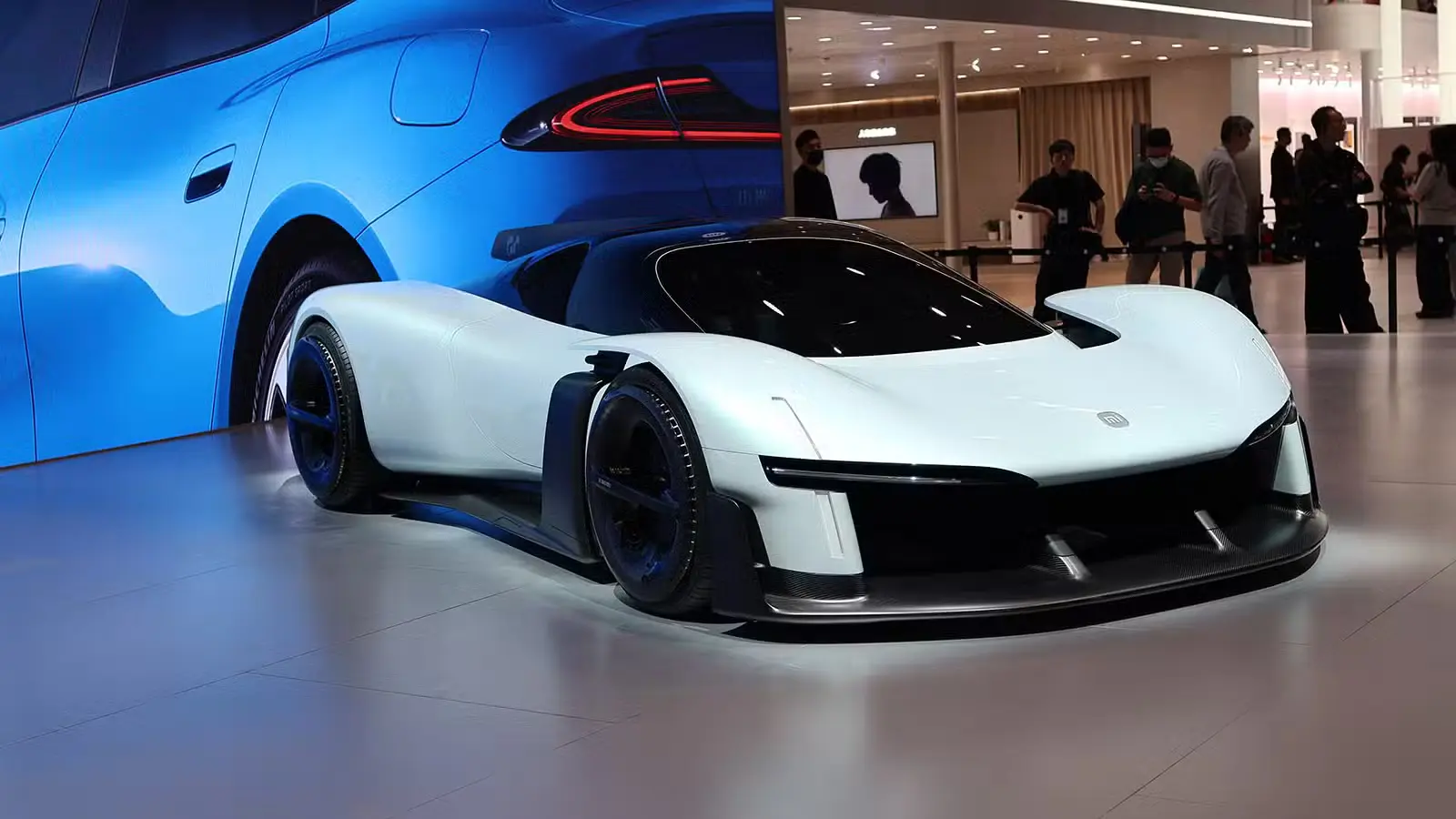
Xiaomi is no longer behaving like a newcomer testing the water. It is staffing up like a carmaker with a map already pinned to the wall, and Europe is clearly circled first.
The latest signal comes from inside Xiaomi EV, where a fresh round of executive appointments shows the company is moving from ambition to preparation. According to local reports, Xiaomi has named auto division vice president Yu Liguo to lead its overseas business preparation group, a role that places him at the center of the brand’s next big chapter.
Yu will report to Xiaomi Group chief executive Lei Jun and president William Lu, a reminder that this is not some side project buried deep in the corporate org chart. It sits close to the top.
That matters, because Xiaomi’s electric car business is entering a very different phase now. Building momentum at home is one thing. Taking an EV brand overseas, especially into Europe, is another game entirely. Regulation, logistics, retail strategy, charging compatibility, aftersales service, local homologation, brand trust. None of it happens by accident.
Yu is not stepping into this cold. Before joining Xiaomi in 2022, he served as president of BAIC’s Arcfox division. Inside Xiaomi, he has already handled core work tied to vehicle definition and manufacturing, giving him a practical view of how the company’s cars are conceived and built. His new brief is to turn that knowledge outward and begin laying the foundations for international expansion.
At the same time, Xiaomi has shifted production and manufacturing responsibilities to Song Gang, a name with serious factory credentials. Song, the former manager of Tesla’s Shanghai plant, will now take charge of manufacturing while continuing as chief of staff for Xiaomi’s auto division. He reports directly to Lei Jun.
It is a telling appointment. Song joined Tesla in 2018 and played a key role at Giga Shanghai, one of the most closely watched EV production hubs in the world. He also led the setup of Tesla’s Shanghai energy storage factory. After a stint in 2024 at renewable energy group Envision as senior vice president of integrated supply chain, he joined Xiaomi EV leadership this April as vice president and chief of staff.
Taken together, the reshuffle looks less like routine management housekeeping and more like a carefully timed handoff. One executive focuses on opening doors abroad. Another locks down the production muscle needed to support that move.
Europe comes first, and not by chance
Xiaomi has already made it clear that Europe will be the first destination in its EV globalization push, with a formal market entry targeted for the second half of 2027. After that, the company plans to move into right hand drive markets in the first half of 2028.
That sequencing says a lot. Europe is one of the most demanding EV markets on the planet, but it is also one of the most strategically important. Buyers are increasingly comfortable with electric cars, emissions rules are pushing the market further in that direction, and Chinese EV makers are now treating the region as a serious proving ground rather than a symbolic export destination.
Xiaomi’s management had already pointed in this direction in August 2025, when it confirmed that Europe would become the first overseas stop for its EV business in 2027. Then came a more visual clue. On July 5, 2025, William Lu posted an image on Weibo of an SU7 Ultra wearing a German license plate, calling it Xiaomi’s first experimental vehicle registered in Europe.
That single image carried weight. It suggested the company was already doing the less glamorous groundwork behind the scenes, from testing and validation to early regulatory preparation.
Xiaomi’s rise in China helps explain why the company now looks ready to think bigger. For all the skepticism that usually greets a consumer electronics giant entering the auto industry, Xiaomi has moved with unusual speed. It arrived late to China’s crowded EV race, yet it has managed to build real traction in a surprisingly short time.
The numbers underline that pace. Xiaomi is targeting 550,000 vehicle deliveries in 2026, up roughly 34 percent from about 410,000 units in 2025. Monthly momentum has also been climbing. In April, the company delivered more than 30,000 vehicles, a sharp jump from 21,440 in March.
That kind of growth does not guarantee an easy ride overseas. Europe is tough, crowded, politically sensitive, and increasingly alert to the scale of China’s EV advance. But Xiaomi is not approaching the market blindly. It is building an executive bench with experience in premium Chinese EVs, high volume manufacturing, and global scale operations.
In other words, this is starting to look real. Not a headline grabbing promise, but the slower, more serious phase that usually comes before a brand crosses borders for good.

“Cars are evolving faster than ever. I cover electric vehicles, smart mobility, and the future of transportation worldwide.”

Discussion
Leave a Comment