
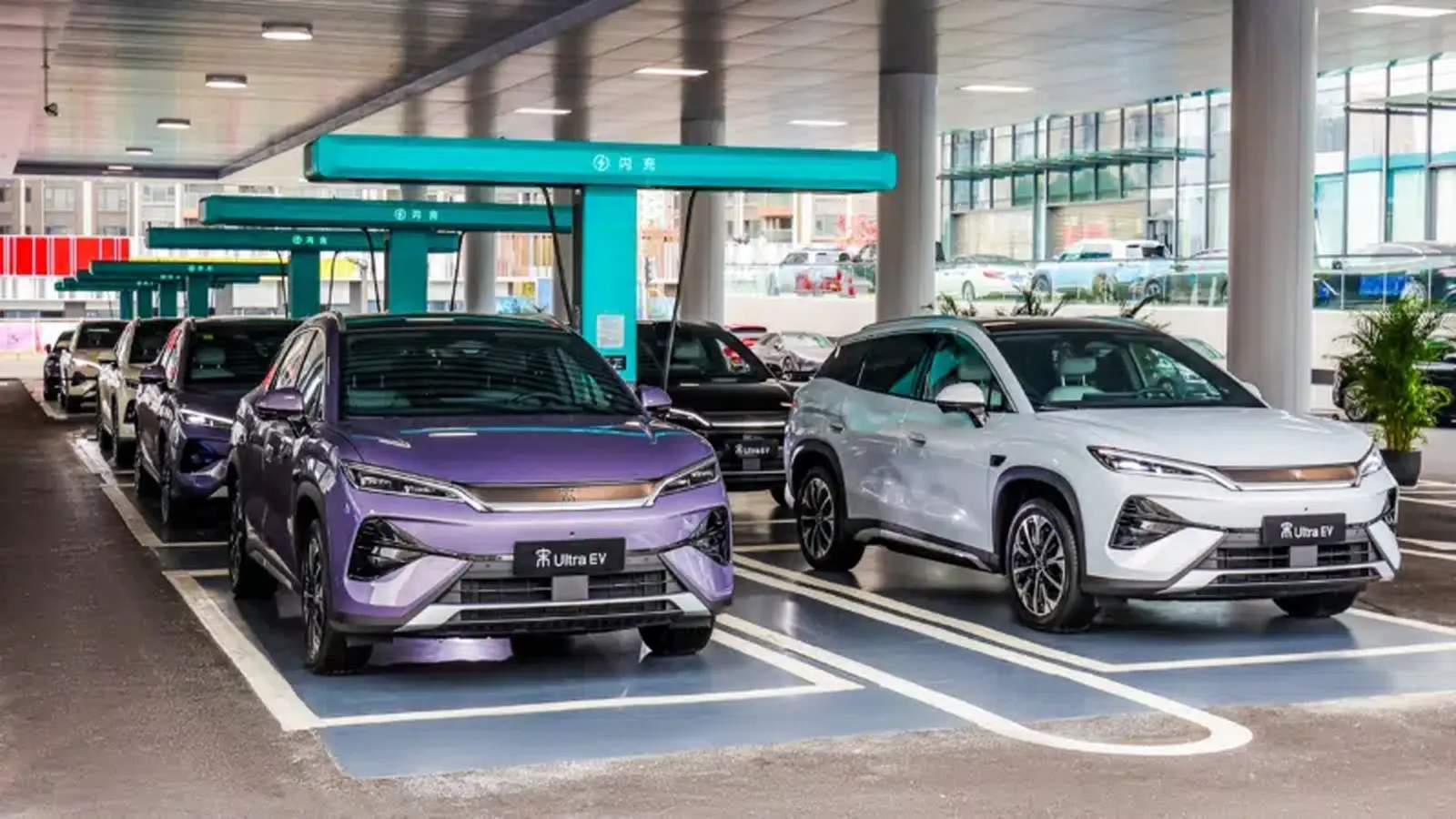
One average new car in the United States now costs about as much as a small fleet of Chinese EVs. That is not a throwaway line. It is the reality staring the global auto industry in the face.
At the Beijing Auto Show, the scale alone told part of the story. More than 180 new cars made their debut, and over 1,400 vehicles filled the show floor. Yes, there were flashy concepts and design exercises built to grab headlines. But the real takeaway was something far more serious: China is no longer just building affordable electric cars. It is building them at a pace, scale, and price level that feels almost unreal from an American perspective.
According to Reuters, Kelley Blue Book placed the average transaction price of a new car in the US at €47,700 in March. In China, industry site DCar says buyers can choose from more than 200 electric models, including plug in hybrids, priced below roughly €23,200. Put simply, for the price of one typical new vehicle in America, a customer in China could drive home in two, three, even five new electrified cars depending on the segment.
That gap is not limited to bare bones city runabouts, either. Some of the cheapest models on sale in China are inexpensive, yes, but they are not stripped of personality or modern tech.
The Geely EX2, sold in China as the Star Wish, starts at around €9,300. Tiny? Absolutely. Basic? Not quite. It comes with a front trunk, smart storage solutions, and a 14.6 inch central touchscreen running Geely’s own software. The top version delivers a claimed 410 km of range on China’s test cycle. That helps explain why it became China’s best selling vehicle of any kind in 2025.
Then there is the tiny disruptor that has become impossible to ignore. Wuling’s Hongguang MiniEV starts at roughly €6,100. It is a lesson in minimalist urban mobility, wrapped in a design that leans more charming than cheap. For 2026, Wuling stretched it into a four door format and improved rear seat space, making the little car more usable without losing its identity. Performance remains modest, with a 100 km/h top speed and a claimed 204 km range, but that is hardly the point. This car exists because millions of people want low cost electric transport that fits dense cities and tight budgets.
Need a bit more substance? Wuling has that covered too. The Bingo Pro, a larger and more road trip friendly step up, opens at just over €7,400 and offers a claimed 402 km of range. In many Western markets, that price would barely buy a used commuter car with uncertain battery health and patchy equipment.
BYD, of course, is impossible to leave out. The Seagull, also known in some markets as the Atto 1, Dolphin Mini, or Dolphin Surf, starts at about €9,400. Entry level on paper, yes, but not in the old sense of the word. The updated 2026 version brings a surprisingly rich equipment list, including available lidar based driver assistance, autonomous lane change capability, faster charging, and a claimed range of 505 km. For a low cost hatchback, that is a staggering value proposition.
Not just microcars anymore
Here is where the conversation gets even more uncomfortable for Western automakers. China is not only winning at the bottom end of the market. It is pushing aggressive pricing into compact sedans, family SUVs, and larger mainstream vehicles too.
Take Volkswagen’s Sagitar S. This compact sedan starts at around €10,700 in China, less than half the price of a US market Jetta priced at $23,995, which converts to roughly €22,200. Same brand. Very different pricing reality.
Volkswagen also used the Beijing show to preview the Jetta X concept, a rugged electric SUV expected to target a price below about €13,900 when it arrives later this year. That would place it in territory that many European and American brands have struggled to reach even with their smallest EVs.
Toyota is playing the same game. Its new bZ7 sedan is longer than a Tesla Model S, yet it is expected to start at around €19,900. That single number says a lot about where the market is heading. Chinese buyers are being offered space, technology, and electric range at prices that would sound like accounting errors in much of the West.
And between those headline models sits a crowded battlefield packed with Geely, Chery, BYD, and others. Sedans, three row SUVs, compact crossovers, pickups. Every niche is being filled. Every price band is under pressure. Every established carmaker is being forced to rethink what value really means.
The deeper story here is not just that cars are cheaper in China. It is that the country has created a brutally competitive car market where price, software, battery tech, and speed to market are locked in a constant fight. Consumers benefit. Rivals scramble. And the rest of the industry is left trying to work out whether this is a local phenomenon or the shape of the future.
Right now, if you are shopping for a new car in America, €47,700 buys you one average vehicle. In China, it can buy an entire lesson in how quickly the rules of the car business are changing.

“Cars are evolving faster than ever. I cover electric vehicles, smart mobility, and the future of transportation worldwide.”

Discussion
Leave a Comment