
5 Minutes
Flat phone screens suddenly look a little old-fashioned.
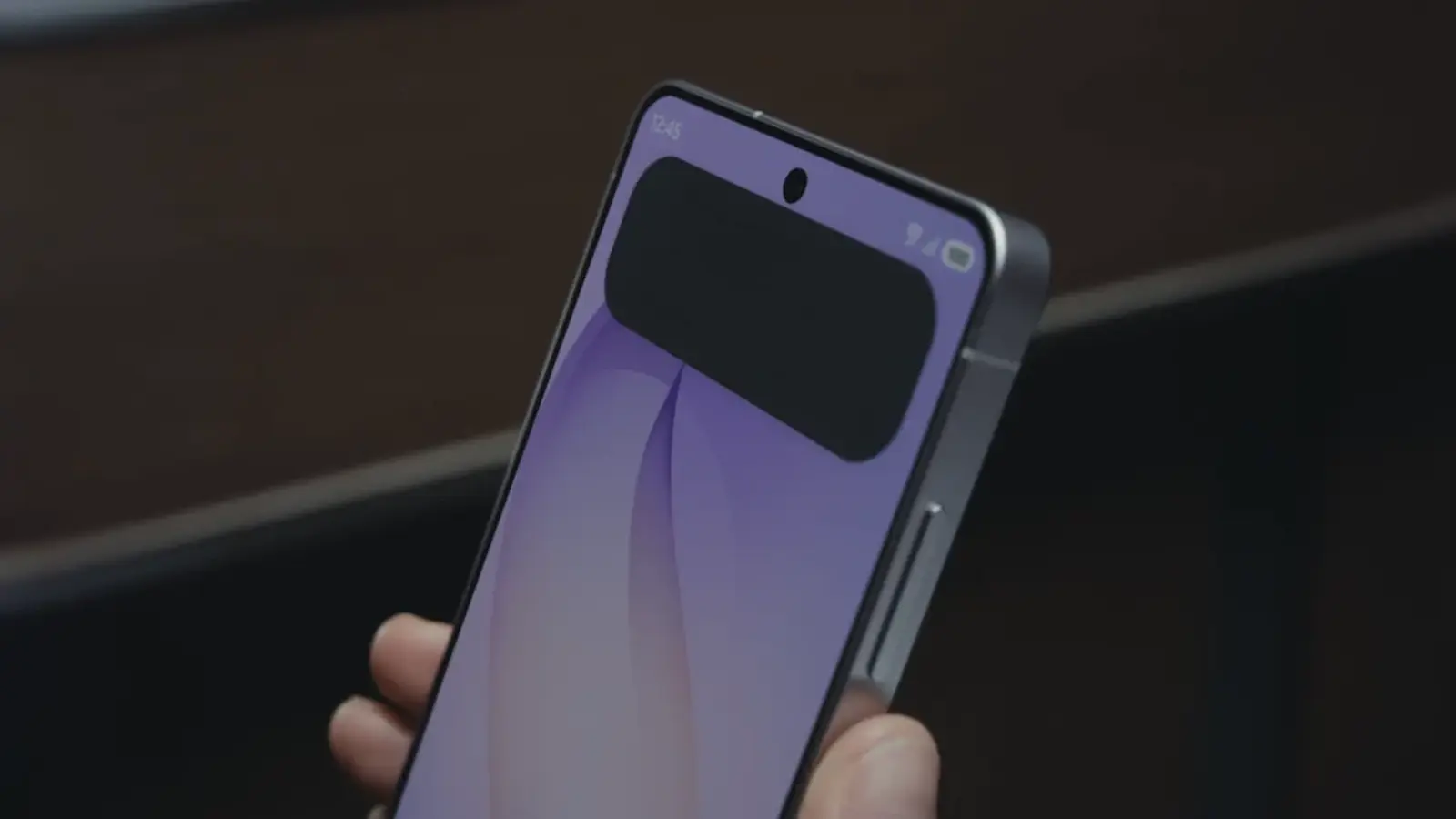
A fresh leak suggests Samsung Display is exploring a holographic display system that could push smartphones into genuinely new territory, well past the foldable era. The project is said to be running internally under the codename MH1, or simply H1, and if the report holds up, Samsung is testing a glasses-free 3D screen concept designed for future mobile devices.
The detail that really grabs attention is not just the tech itself, but the ambition behind it. According to information shared by leaker Schrödinger, known on X as phonefuturist, the long game may involve a so-called Spatial iPhone, with Apple reportedly mentioned as a potential customer if the technology matures. That alone is enough to raise eyebrows across the display industry.
The leaked system reportedly combines a nano-structured holographic layer with eye-tracking and beam-steering. In plain English, the display would adjust light with far more precision than conventional panels, letting users see depth directly on the screen without needing glasses or a headset. Tilt the phone slightly, shift your view, and objects could appear to change perspective as if they exist inside or just above the display rather than sitting on a flat panel.
That sounds futuristic, but it also touches a very old problem. Glasses-free 3D has been tried before, many times, and most efforts ran into the same wall. The effect often worked only from a narrow angle, image quality suffered, and the whole experience could fall apart the moment your eyes moved out of the sweet spot. Anyone who remembers the Nintendo 3DS will know exactly how fragile that illusion could be.
Why this leak feels different
What makes Samsung’s reported approach more interesting is the promise of preserving full resolution in standard 2D mode. That matters. Previous 3D display attempts often asked users to accept a compromise: enjoy the novelty of depth, but live with a softer or less stable image the rest of the time. If Samsung can avoid that trade-off, it clears one of the biggest hurdles that has kept holographic phone displays from becoming more than a trade show curiosity.
Beam-steering may be the key piece of the puzzle. Instead of projecting a fixed 3D effect, the display could direct light dynamically toward the viewer’s eyes, adjusting in real time as the phone moves or as the user shifts position. In theory, that would make the illusion more natural and much less fussy. Not perfect, perhaps, but far more practical than older autostereoscopic systems.
Even so, this is still early-stage research. The leak itself suggests commercialization is nowhere near the finish line, and there is no guarantee MH1 ever becomes a shipping product. That is the reality of advanced display development: plenty of experiments, far fewer launches.
Still, Samsung Display has earned the benefit of the doubt. The company has repeatedly turned ambitious panel ideas into mainstream products, most notably with foldable OLED technology. It has also spent years tinkering with spatial displays and glasses-free 3D concepts beyond smartphones, so this would not be a random moonshot pulled from nowhere.
There is also a broader industry context here. Samsung recently introduced hardware-based viewing angle control on the Galaxy S26 Ultra, and similar technology is reportedly on the way to flagship phones from Xiaomi, Oppo, and Vivo. That trend matters because controlling what each eye sees, and when, is a core part of making holographic or spatial mobile displays work reliably.
If MH1 survives the lab and reaches mass production, the implications could be significant. Phone interfaces might no longer feel locked behind glass. Navigation elements could float with actual depth. Mobile games could gain a more spatial feel without forcing users into a headset. And for companies building mixed reality ecosystems, including Apple with Vision Pro, a holographic smartphone display could become a surprisingly important bridge between today’s apps and tomorrow’s spatial computing experiences.
For now, though, this is a glimpse, not a product announcement. A tantalising one. Samsung may be testing the idea of a phone screen that behaves less like a window and more like a volume of light. If that sounds ambitious, it is. But then again, the next big shift in mobile displays was never going to look ordinary.


Comments
Armin
Is this even real or another lab toy? Beam steering sounds neat but how's battery life, heat and cost gonna look? Real users wont forgive awful battery
mechbyte
Whoa, glasses-free 3D on a phone? If Samsung pulls it off, omg that'd be wild. But 3DS memories haunt me, hope beam steering isn't just hype gonna be costly tho

Leave a Comment