
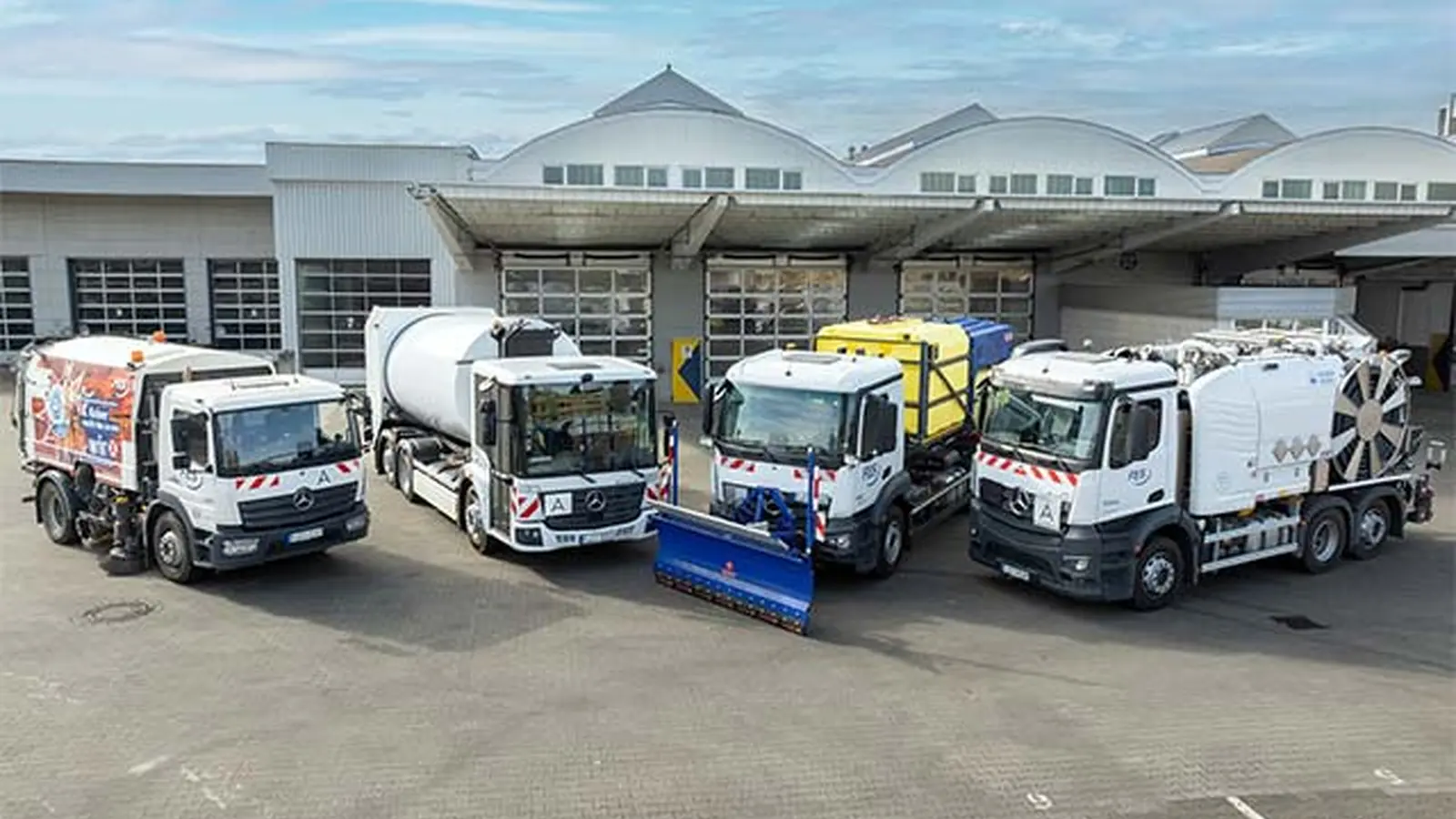
Frankfurt’s streets are getting a little quieter, and a lot cleaner. The city’s waste operator, FES, is adding ten more Mercedes-Benz eEconic trucks to its electric fleet, pushing the total number of battery-powered low-entry vehicles in service to 34.
That matters more than it may sound at first glance. Refuse trucks are among the hardest-working vehicles in any city. They crawl through tight residential streets, stop constantly, operate before sunrise, and spend their shifts inches away from cyclists, parked cars, and pedestrians. If electrification can work here, it can work almost anywhere in urban transport.
FES, one of the biggest municipal waste and cleaning providers in the Rhine-Main region, has been testing and expanding its electric truck operations since 2022. This latest move shows the trial phase is no longer the story. Frankfurt is now scaling up.
The Mercedes eEconic has been built with exactly this kind of city work in mind. Its low-entry cab makes the endless rhythm of getting in and out less tiring for crews during a long shift. Visibility is another major advantage. The large panoramic windscreen gives drivers a broader view of the road around them, a real benefit in dense urban traffic where hazards appear fast and often.
Then there is the noise, or rather the lack of it. Electric refuse trucks are far less disruptive on early-morning rounds, which is good news for people living along collection routes and for the crews who spend hours in the vehicle every day. In a busy city centre, that reduction in background noise can change the feel of the street more than many expect.
Why electric refuse trucks make sense in cities
On paper, waste collection is a demanding job for any heavy vehicle. In practice, it suits electrification surprisingly well. The eEconic uses three battery packs with a total installed capacity of 336 kWh and around 291 kWh of usable energy. For most daily waste collection routes, that is enough to complete the shift without stopping to recharge.
Stop-start driving, usually the enemy of efficiency, becomes less of a problem here. Regenerative braking allows the truck to recover energy during frequent braking events, which helps stretch range across the day. That is a natural fit for urban collection work, where vehicles are constantly slowing, stopping, and moving off again.
Drivers also get live support from Mercedes-Benz’s Multimedia Cockpit Interactive, which displays battery charge, energy use, and remaining range in real time. It is not just a flashy screen. In a working truck, that kind of information helps drivers manage energy more effectively and return to base with confidence rather than guesswork.
Frankfurt is not only buying vehicles, either. FES is expanding its charging network across several sites in the city, an essential step if electric fleet growth is going to work in the real world. Trucks are only half the story. Without reliable charging at depots and operating hubs, even the best electric commercial vehicle quickly becomes a logistical headache.
That is why this fleet expansion feels significant. It reflects a broader strategy rather than a one-off headline grab. Frankfurt is building the pieces together: more electric trucks, more charging points, and more daily experience operating zero-emission heavy vehicles under real municipal conditions.
For cities across Europe looking for a practical route to lower urban emissions, Frankfurt’s approach is becoming a useful case study. Clean transport is often discussed in terms of private EVs, but municipal fleets have a huge role to play. Waste trucks may not be glamorous, but they are visible, high-mileage, and deeply woven into everyday city life.
By growing its Mercedes-Benz eEconic fleet to 34 vehicles, Frankfurt is showing that electric waste collection is moving from experiment to normal city business.
And that may be the most important shift of all.

“Cars are evolving faster than ever. I cover electric vehicles, smart mobility, and the future of transportation worldwide.”

Discussion
Leave a Comment