
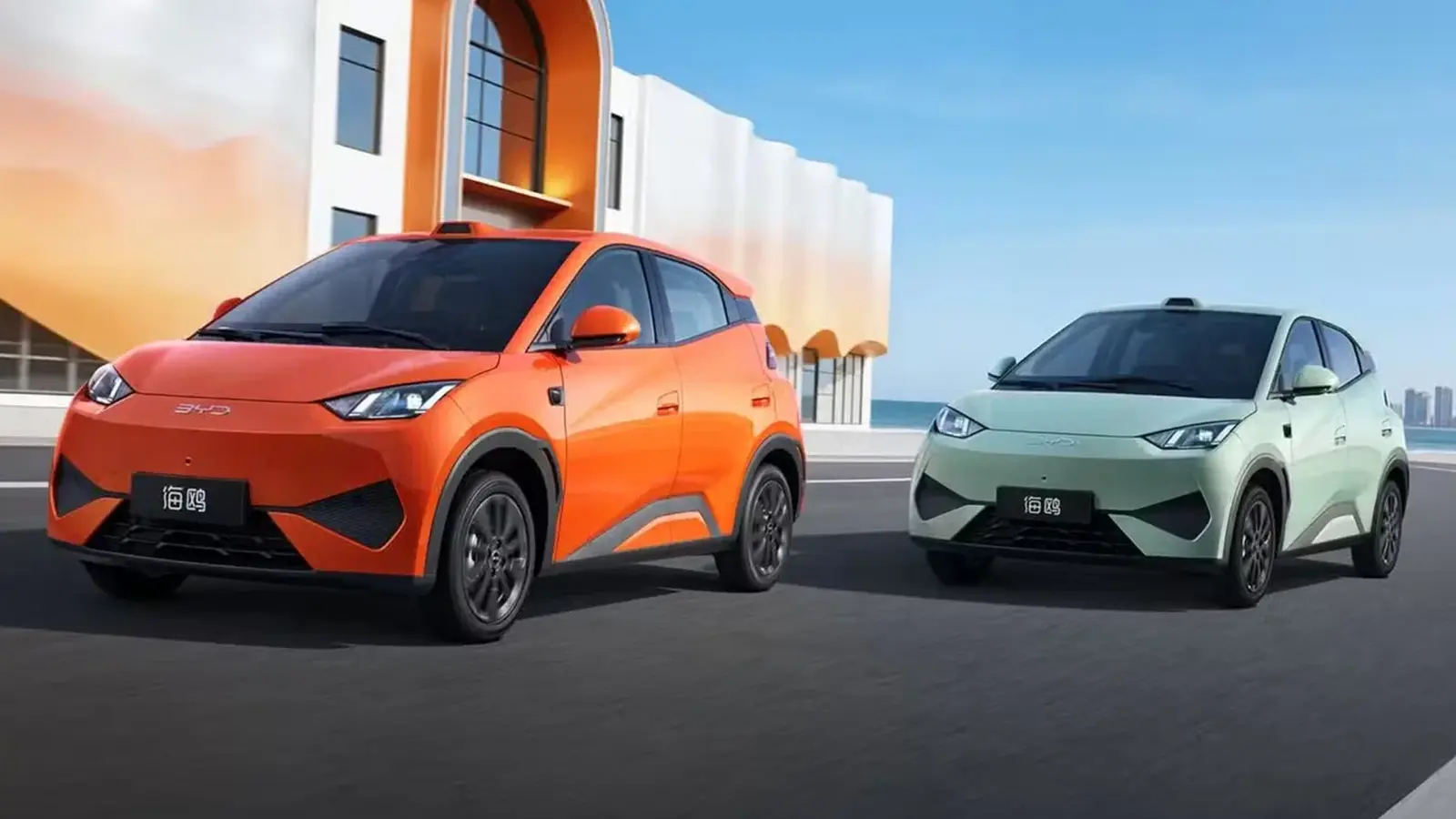
Cheap electric cars are supposed to come with compromises. Short range. Sparse cabins. Bare minimum tech. The 2026 BYD Seagull tears up that script.
Shown at the Beijing Auto Show and now on sale in China, BYD’s updated city EV arrives with numbers that would have seemed unrealistic not long ago. The entry price starts at 69,900 yuan, or about €9,000 at current exchange rates, and rises to 85,900 yuan, roughly €11,100, depending on trim. For buyers outside China, this same model is known as the Dolphin Mini or Dolphin Surf.
And yes, this is the small EV that can be fitted with LiDAR.
That matters because LiDAR has typically been reserved for pricier electric cars and technology flagships. Here, BYD is pushing it into the kind of price band where most buyers are usually comparing basic hatchbacks, older used cars, or entry-level petrol models. Add the optional God’s Eye B package, also known as DiPilot 300, and the Seagull moves into roughly €11,800 to €12,700 territory. Even there, it still feels disruptive.
The package brings a more advanced suite of driver assistance features, including city navigation assist, traffic light recognition, and the ability to handle roundabouts with greater intelligence. It is not full autonomy, of course, but for a subcompact urban EV at this price, the tech list is startlingly ambitious.

The part that really changes the conversation
Range is where affordable EVs often lose momentum, but BYD has given the Seagull enough substance to avoid feeling like a stripped-down commuter appliance. The higher-spec version uses a 38.88 kWh battery and delivers up to 252 miles of CLTC range, which translates to about 406 km. Base versions get a 30.08 kWh pack with a claimed 190 miles, or around 306 km, on the same test cycle.
Those figures should be read with the usual caution, since CLTC numbers tend to be more generous than WLTP or real-world driving. Even so, for a car built primarily for dense urban traffic and short daily runs, the Seagull offers the kind of usability that makes it more than a second car.
Power comes from a 55 kW electric motor producing 135 Nm of torque. On paper, that does not sound especially thrilling. In practice, it fits the brief. This is a lightweight subcompact designed for city streets, stop-start traffic, tight parking spaces, and quick dashes through crowded neighborhoods. It does not need to be fast in the dramatic sense. It needs to feel easy, responsive, and affordable to run.
Inside, BYD has avoided the bargain-basement feel that often sneaks into low-cost EVs. The cabin includes a 12.8-inch central touchscreen for navigation and vehicle functions, with 3D car controls built into the interface. Buyers can also add features that were once rare in this segment, including 50W wireless charging, heated front seats, and a six-way power-adjustable driver’s seat.
That is what makes the Seagull interesting beyond its sticker price. It is not simply cheap. It is strategically equipped. BYD is building a case that mass-market electric mobility does not have to mean settling for dated tech or a painfully basic ownership experience.
Viewed from Europe or the US, the Seagull also highlights a widening gap in the global EV market. In China, buyers are being offered advanced driver assistance, respectable range, and modern cabin tech at a price that still looks almost impossible by Western standards. Elsewhere, entry-level EV shoppers are often asked to pay far more for less battery, less software sophistication, and fewer features.
The 2026 BYD Seagull feels like more than a routine facelift. It looks like a warning shot. If LiDAR and semi-automated urban driving are now filtering into EVs at around €12,000, the definition of an affordable electric car is starting to change very quickly.

“Cars are evolving faster than ever. I cover electric vehicles, smart mobility, and the future of transportation worldwide.”

Discussion
Leave a Comment