
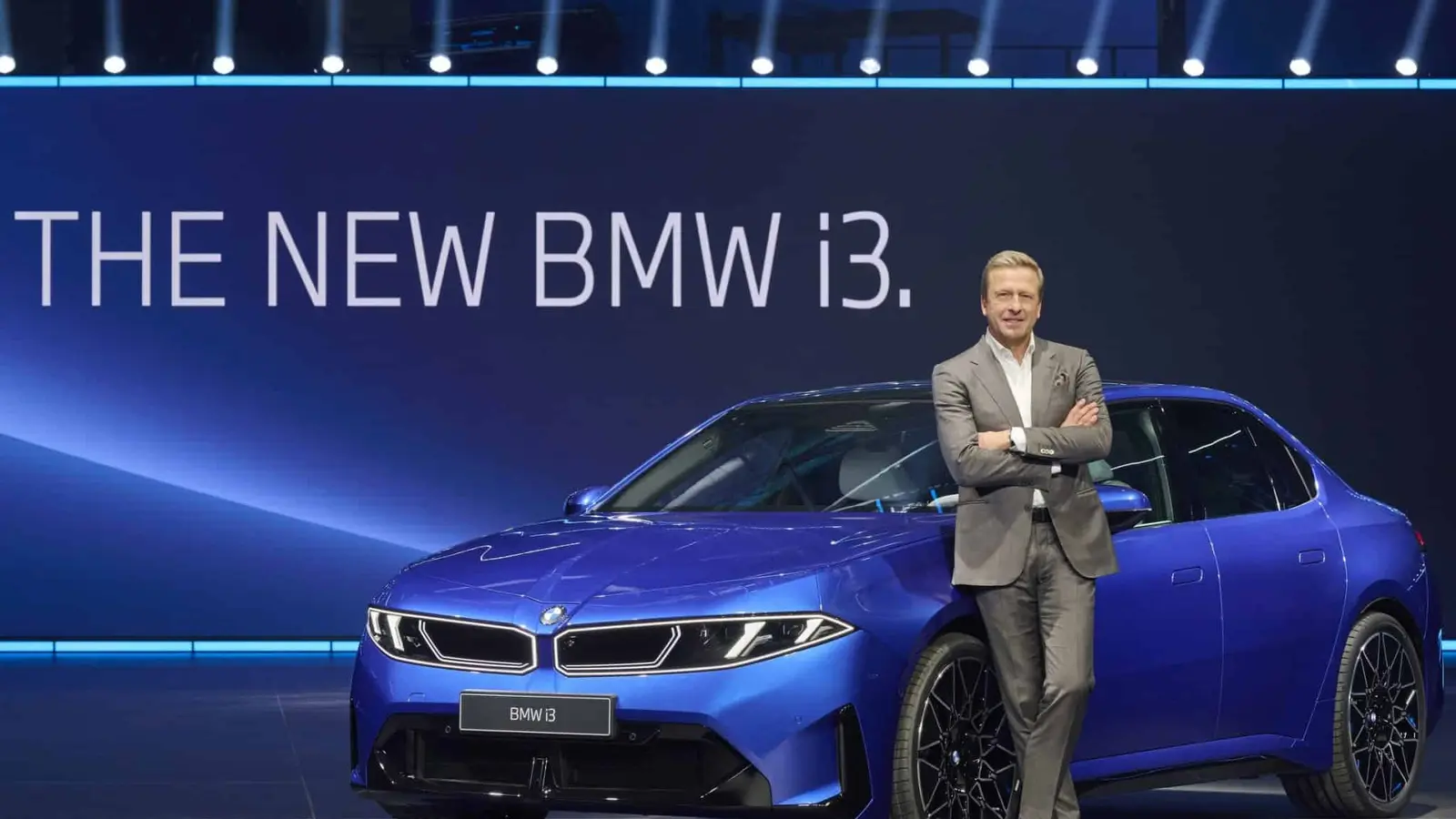
While rivals were racing to declare the combustion engine finished, Oliver Zipse kept his foot off the panic pedal. That decision, mocked in some corners of the industry only a few years ago, now looks far less conservative than it did at the height of the all electric frenzy.
Zipse joined BMW as a trainee in 1991 and is now stepping away as the chief executive who guided the company through a pandemic, a semiconductor crisis, and one of the fiercest strategic arguments the car business has seen in decades. More importantly, he leaves behind a company that stayed profitable while much of the industry was busy rewriting its own promises.
His position never really wavered. BMW would build electric cars, yes, but it would not abandon combustion engines, plug in hybrids, or even hydrogen simply to satisfy a fashionable narrative. Zipse argued that markets move at different speeds, and that forcing one global answer onto every customer, every region, and every infrastructure reality was a mistake. In 2025, he told shareholders that e mobility as the only technology leads to a dead end. By then, the statement sounded less provocative and more like a summary of what the market had already begun to reveal.
Back in 2021 and 2022, that view put BMW in the firing line. Mercedes Benz was talking about going fully electric by 2030 where conditions allowed. Volkswagen was betting heavily on its ID lineup. Volvo promised full electrification by 2030. General Motors turned away from hybrids in pursuit of Tesla style momentum, only to spend the following years rebuilding a hybrid offering it had already dismantled. At the time, BMW was painted as hesitant, too attached to the old world, too slow to jump.
But hesitation was never really the story. BMW was still pushing hard into battery electric vehicles. In 2024, the BMW Group sold 426,536 fully electric cars worldwide, up 13.5 percent year on year, with more than 15 full EV models on sale. Nearly one in four vehicles sold by the group that year was electrified. The company was not avoiding the future. It was refusing to bet everything on a future that had not yet arrived at the same pace everywhere.
Not one road, but several
This was the essence of Zipse’s technology openness strategy. Keep building combustion cars for customers who still want them. Expand the EV lineup for buyers ready to switch. Maintain plug in hybrids where they make sense. Continue exploring hydrogen. On paper, it sounds obvious. In practice, it meant resisting pressure from regulators, investors, media, and competitors all demanding a cleaner, simpler story.
And then reality started to interfere with the grand plans elsewhere. Volkswagen’s ID family repeatedly missed expectations. Its Cariad software division burned through billions while delays piled up. Mercedes shifted further upmarket under Ola Kallenius, chasing margins over volume, only to watch Chinese brands move into the space it left behind and begin pressing into premium territory as well. Audi, meanwhile, has spent the last few years trying to recover lost ground in China.
BMW largely held its position through all of this. For most of Zipse’s leadership, it led the German premium segment globally, staying ahead of both Mercedes and Audi. That matters because BMW managed it without turning its back on EVs and without starving its legacy business. It kept the cash flowing while others were trying to reinvent themselves at full speed.
The next chapter is already rolling into view. BMW’s Neue Klasse is not some cautious backup plan. It is the company’s biggest strategic investment in decades, a dedicated electric vehicle architecture with new round battery cells, a fresh software stack, and a new plant in Debrecen, Hungary, which began producing vehicles in 2025. This is not BMW sitting on the fence. It is BMW choosing the timing of its leap more carefully than others did.
The first production model from that family, the new iX3, will become a serious test. It will show whether BMW can compete head on in the pure EV arena, not just in Europe but in China too, where local brands such as BYD and Nio have changed the rules of the game. That challenge now belongs to Milan Nedeljkovic, not Zipse.
And the timing of the handover feels deliberate. China is a much tougher market than the one Zipse inherited in 2019. BMW’s sales there dropped from 826,300 units in 2023 to 715,200 in 2024, then fell another 12.5 percent in 2025 to 625,527. The first quarter of 2026 brought a further 10 percent slide to 143,958 vehicles. Yes, BMW outperformed a wider Chinese market that contracted even faster, but that is hardly a comforting backdrop for a premium carmaker with major ambitions in the region.
The pressure has not come only from China. US tariffs cut around 1.25 percentage points from BMW’s automotive EBIT margin in 2026. Operating profit in 2025 dropped 11.5 percent, marking the weakest result since the pandemic era. BMW’s finance chief Walter Mertl said profits would have risen without those tariffs, suggesting the core business remains solid even as the outside environment turns rougher.
So Zipse is leaving at a moment that makes sense. His board extension had already pushed beyond BMW’s age 60 rule, and at 62 he exits with the company’s biggest EV project already in production and his central strategic argument looking vindicated. Not bad timing.
There is also something fitting about who comes next. Nedeljkovic, 56, followed a path through BMW that looks strikingly similar to Zipse’s own. He started as a trainee, worked through Oxford, Leipzig, Munich, and the production board. BMW clearly believes this operational, factory floor rooted leadership model still works.
That may be Zipse’s deeper legacy. He was never simply the CEO who resisted going all electric. He was the executive who understood that manufacturing depth, margin discipline, and strategic patience still matter in a business obsessed with headlines. He had spent decades inside BMW’s plants, from Oxford to Rosslyn to Spartanburg, watching how profits are built in the real world. So when he warned against outsourcing too much capability during the EV transition, it was not ideology talking. It was experience.
In the end, BMW did not win by rejecting electric cars. It won by refusing to abandon everything else too soon.

“I cover automotive innovation, electric vehicles, and the future of mobility — where technology meets sustainability.”

Discussion
Leave a Comment