
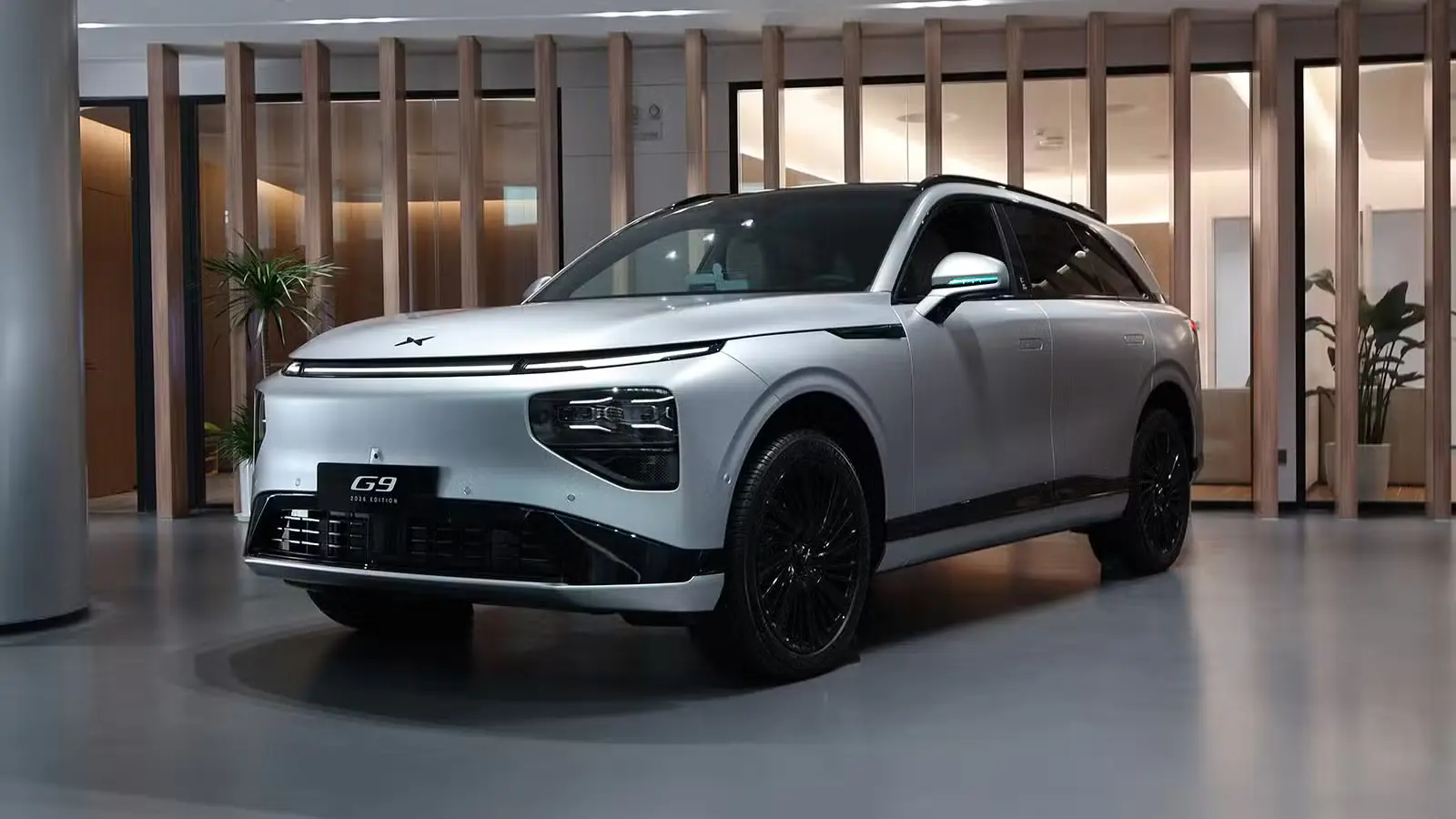
Xpeng is no longer testing Europe from the sidelines. It is looking for a deeper footprint, and that could mean taking over a Volkswagen factory as the Chinese electric car maker ramps up its ambitions across the region.
At the Financial Times Future of the Car summit, Elvis Cheng, Xpeng's managing director for northeastern Europe, said the company is in discussions with Volkswagen and other carmakers about securing production capacity in Europe. The clearest option on the table is the possible purchase of an existing plant, though Xpeng is also open to building a new factory if the right site cannot be found.
That matters because Xpeng's current European manufacturing setup is starting to feel tight. The brand already produces the G6 and G9 at Magna Steyr's plant in Austria, where output began in September 2025 as a way to soften the impact of steep European Union tariffs on China-built EVs. But contract manufacturing has limits, and Cheng indicated that available capacity there is beginning to run short. Xpeng also completed trial production of its 2026 P7+ electric sedan at the Austrian site in January, adding one more model to an already busy operation.
Old factories, new EV demands
Finding space is one thing. Finding the right kind of space is another. Cheng suggested that not every European factory is suited to Xpeng's future products, and he described Volkswagen's plants as somewhat dated. That comment says a lot about the challenge facing legacy manufacturers: many older facilities were designed for a very different era of car production, long before software heavy electric models became the industry's new battleground.
Still, Volkswagen has something Xpeng wants and needs. Capacity. The German auto giant is restructuring its European operations as weaker demand and fierce competition squeeze margins. It plans to cut annual production capacity by roughly 750,000 vehicles by 2030 and is also reportedly looking at a further 500,000 units of reductions across Europe, especially at underused sites. In plain terms, Volkswagen has factories that may no longer fit its own plans but could become valuable assets for a fast growing EV brand eager to localize production.
Volkswagen CEO Oliver Blume hinted at that possibility recently when he said the company was considering whether its Chinese partners could make use of some of its excess European capacity. Xpeng would be an obvious candidate. The two companies are already tied together through a strategic alliance that has been steadily growing since Volkswagen invested about €642 million in 2023 for a stake of roughly 5 percent in Xpeng.
Xpeng's interest in a European plant is not happening in a vacuum. Its overseas business is picking up speed, and the numbers show it. The company exported a record 6,006 vehicles in April, up 62.24 percent from a year earlier and 27.65 percent higher than in March. Over the first four months of the year, exports reached 17,563 units, a 55.19 percent jump year on year.
That kind of growth changes the conversation. Exporting a few thousand cars is one thing. Building a long term business in Europe is something else entirely. Local production can help with tariffs, logistics, delivery times, and political pressure. It can also make a brand look more committed to the market, which matters when European buyers are still learning which Chinese EV makers are likely to stay.
Xpeng is hardly alone in chasing dormant factory space. As Chinese automakers push into overseas markets, using a partner's underused manufacturing base is becoming a familiar playbook. BYD executive vice president Stella Li said at the same summit that BYD is also in talks with Stellantis and other European manufacturers, focusing on underused plants in the region.
Stellantis has already been moving in that direction with Leapmotor. The two groups recently outlined plans to expand production at the Zaragoza plant in Spain, where a new Opel electric SUV and the Leapmotor B10 are expected to be built. They also intend to transfer ownership of Stellantis' Madrid Villaverde factory to Leapmotor International's Spanish subsidiary, paving the way for additional Leapmotor models to be assembled there.
That broader shift is becoming hard to miss. European carmakers have factories with spare capacity. Chinese EV companies have products, momentum, and a need to build closer to customers. Somewhere in that overlap, deals are starting to take shape.
For Xpeng, the question now is simple: rent more room, build from scratch, or buy its way into Europe with a plant that already exists. If Volkswagen is serious about trimming old capacity and Xpeng is serious about becoming a real player in Europe, this could be one of the more telling EV industry deals of the year.

“I cover automotive innovation, electric vehicles, and the future of mobility — where technology meets sustainability.”

Discussion
Leave a Comment