
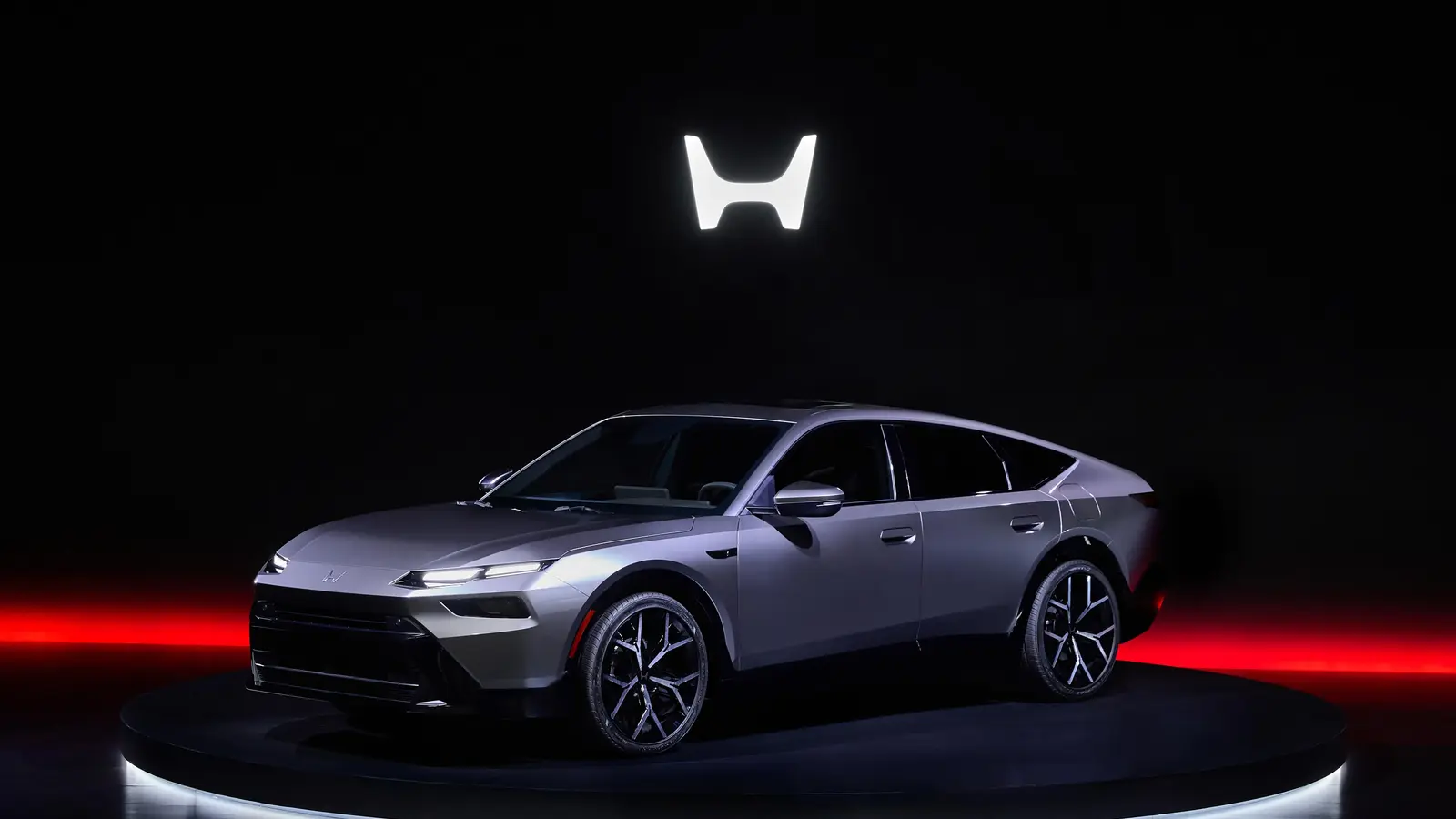
Honda has made its next move crystal clear, and it is not the all electric sprint many expected. At this week’s annual business briefing, the company pulled the wraps off two new hybrid prototypes, an upcoming Honda Accord sedan and the Acura RDX SUV, both built on a fresh platform set to begin rolling out next year. For Honda, this is more than a product reveal. It is a reset.
The new RDX matters for another reason. Honda had already signaled earlier this year that the luxury SUV would become the first model to use the next generation of its two motor hybrid system in an SUV format. Now, with the Accord joining the picture, the strategy looks broader and more deliberate. Sedans and SUVs. Core segments. Big volume potential.
And yes, this is also a major shift in tone. Honda is stepping back from earlier electric vehicle targets, dropping its plan for EVs to account for 20 percent of sales by 2030, along with the previous ambition of reaching 100 percent EV and fuel cell vehicle sales by 2040. Instead, the company says it will redirect more development and production resources toward hybrid vehicles, a sign that market reality is proving tougher than boardroom forecasts.
Not a retreat, a recalibration
That change sounds dramatic, but it is not hard to see why Honda is doing it. Hybrid demand remains strong, especially in North America, where buyers still want better fuel economy without changing how they refuel, drive, or travel long distances. For many mainstream customers, hybrids still hit the sweet spot.
Honda plans to launch 15 next generation hybrid models globally by the end of the fiscal year ending March 31, 2030, with North America taking center stage. Larger models for the region are scheduled to arrive in 2029, suggesting Honda is preparing to bring this technology into some of its most important and profitable vehicles.
The company also says the next generation hybrid system will cut costs by more than 30 percent. Pair that with a new vehicle platform and an electric all wheel drive setup, and Honda expects fuel economy to improve by more than 10 percent compared with the hybrid system introduced in 2023. In plain terms, cheaper to build, more efficient to run, and likely easier to scale across the lineup.

There is a technology angle here too. Honda’s next wave of advanced driver assistance systems is due in 2028 and will spread to more than 15 models over the following five years. That means these future hybrids will not just be about saving fuel. They are also being positioned as smarter, more competitive family cars in a market where software and safety features increasingly shape buying decisions.
Behind the scenes, Honda is reworking its factory plans to match this new direction. In Ohio, plant capacity is being shifted to support gasoline and hybrid vehicle production. The company also says it will work with LG to convert part of the battery production lines at their joint venture from EV battery output to hybrid battery production. That is the kind of operational move you make when a strategy is no longer theoretical.
Japan tells a slightly different story. There, Honda still sees room to grow its EV presence, particularly in the kei car segment, where small size, urban use, and lower running costs make electrification easier to justify. The company’s next step will be an electric version of the N BOX minicar, expected in 2028.
Then there is the financial backdrop, and it is hard to ignore. In March, Honda said it would take a writedown of up to about €14.4 billion on its EV investments, based on the current conversion from 2.5 trillion yen. Now it says those EV related losses should be resolved by 2029, with a broader reevaluation of its electric vehicle strategy coming in 2030.
So where does this leave Honda? Somewhere pragmatic. Not abandoning EVs, not pretending hybrids are a temporary bridge, and not rushing to meet targets that no longer fit the market. The new Accord and RDX prototypes are the first visible proof that Honda’s hybrid future is no side project. It is quickly becoming the main road.

“Cars are evolving faster than ever. I cover electric vehicles, smart mobility, and the future of transportation worldwide.”

Discussion
Leave a Comment