
4 Minutes
You do not need to tap a screen anymore. With Meta’s latest update for the Ray-Ban Display, writing a message can be as subtle as moving your fingers in the air, almost like tracing invisible letters only the device can see.
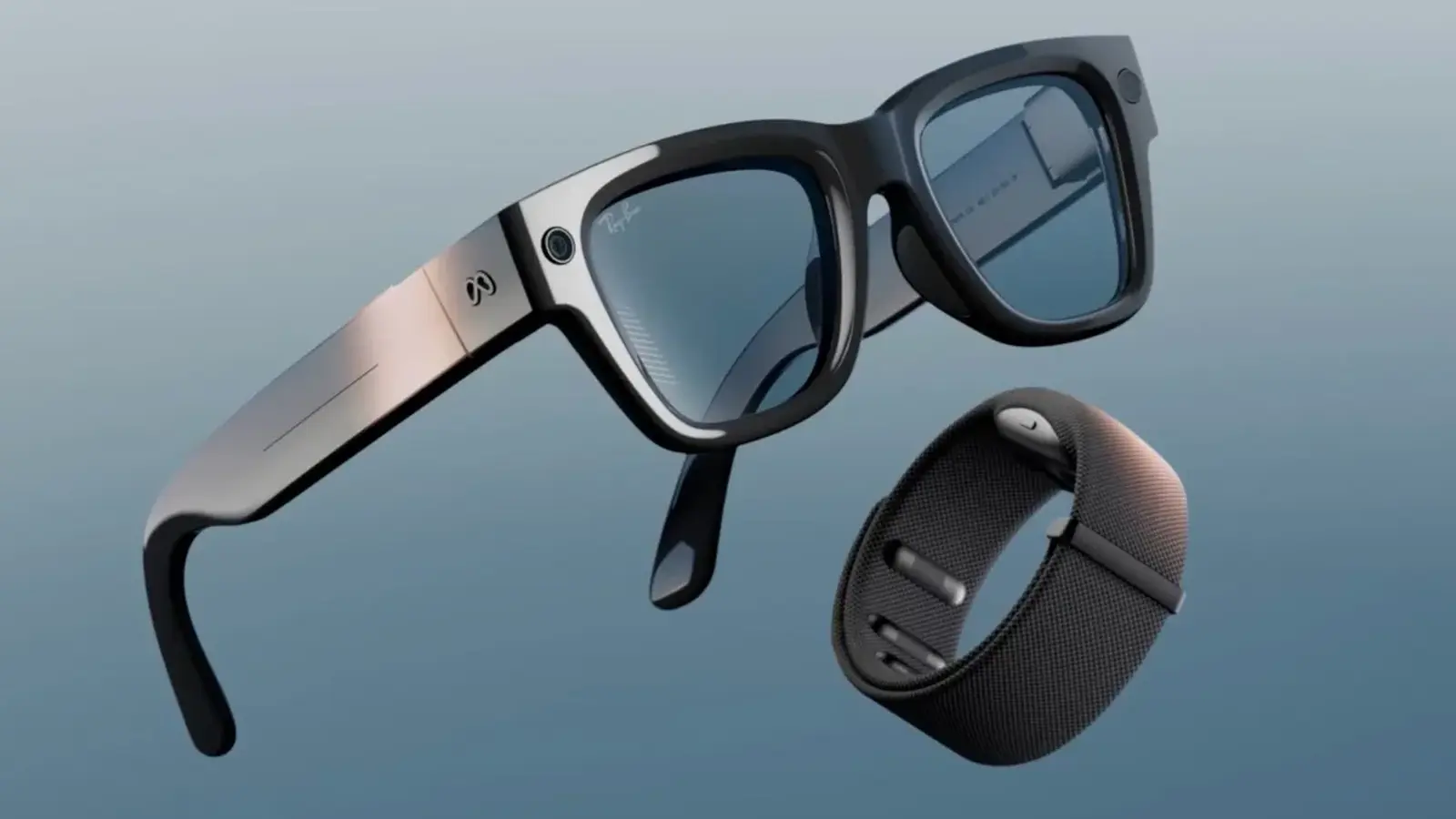
The standout addition is Neural Handwriting, a feature that pushes Meta’s smart glasses far beyond photo capture and voice commands. Paired with the Neural Band wristband included in the box, the glasses can read tiny finger and hand movements through surface electromyography, or sEMG, and convert those gestures into typed text on a connected app.
In practice, it feels a little futuristic. Wear the Ray-Ban Display, strap the Neural Band to your wrist, and move your fingers as if you were writing by hand. The system interprets those motions and turns them into a message you can send through WhatsApp, Messenger, Instagram, or your phone’s default messaging app. The feature works on both Android and iPhone, which gives it a much wider reach from day one.
Price matters here too. The glasses ship with the wristband and are listed at about €735, based on the current euro equivalent of the original $799 price. That is not cheap, but Meta is clearly betting that the experience feels different enough to justify the premium.
The update that matters even more
Neural Handwriting is the kind of feature that grabs attention fast, and for good reason. It is unusual, useful, and easy to imagine in everyday life. But the quieter announcement may end up being the more important one: Meta is now opening the Ray-Ban Display to third-party web app developers.
That shift changes the conversation. A gadget becomes far more interesting when outside developers can build on top of it. Suddenly, the Ray-Ban Display looks less like a clever wearable experiment and more like an emerging computing platform.
The possibilities are broad. Developers could create AI assistants that live in your field of view, productivity tools for quick responses and reminders, navigation layers that feel more natural on the move, accessibility features for people who need hands-free interaction, or gesture-based experiences that go well beyond messaging. If Meta follows through, this is the kind of ecosystem move that can shape whether smart glasses become mainstream or remain a niche curiosity.
The update includes a few other notable additions. Display Recording can now capture what appears on the lens display, along with camera footage and surrounding audio, in a single video file. That could be useful for demos, tutorials, or simply showing others what the wearer actually experienced.
Meta is also expanding walking directions across the entire United States, while adding support for major international cities including London, Paris, and Rome. Live captions are being extended to voice messages in WhatsApp, Messenger, and Instagram DMs, a practical accessibility upgrade that should resonate with users who rely on text-first communication. On top of that, Muse Spark AI is scheduled to arrive on the glasses this summer.
Six months after launch, the Ray-Ban Display is starting to look like something more serious than an experimental accessory. The finger-writing feature is flashy, yes, but the real story is the platform play underneath it. Meta is not just updating smart glasses. It is laying the groundwork for a new kind of wearable interface.


Comments
bioNix
Platform angle is smart, but sEMG = biometric data. Who owns those tiny muscle traces? Privacy questions, regulation needed, fast
atomwave
Whoa, writing in air? kinda wild. If it actually works without constant hiccups, this could be legit. But €735 tho, yikes

Leave a Comment