
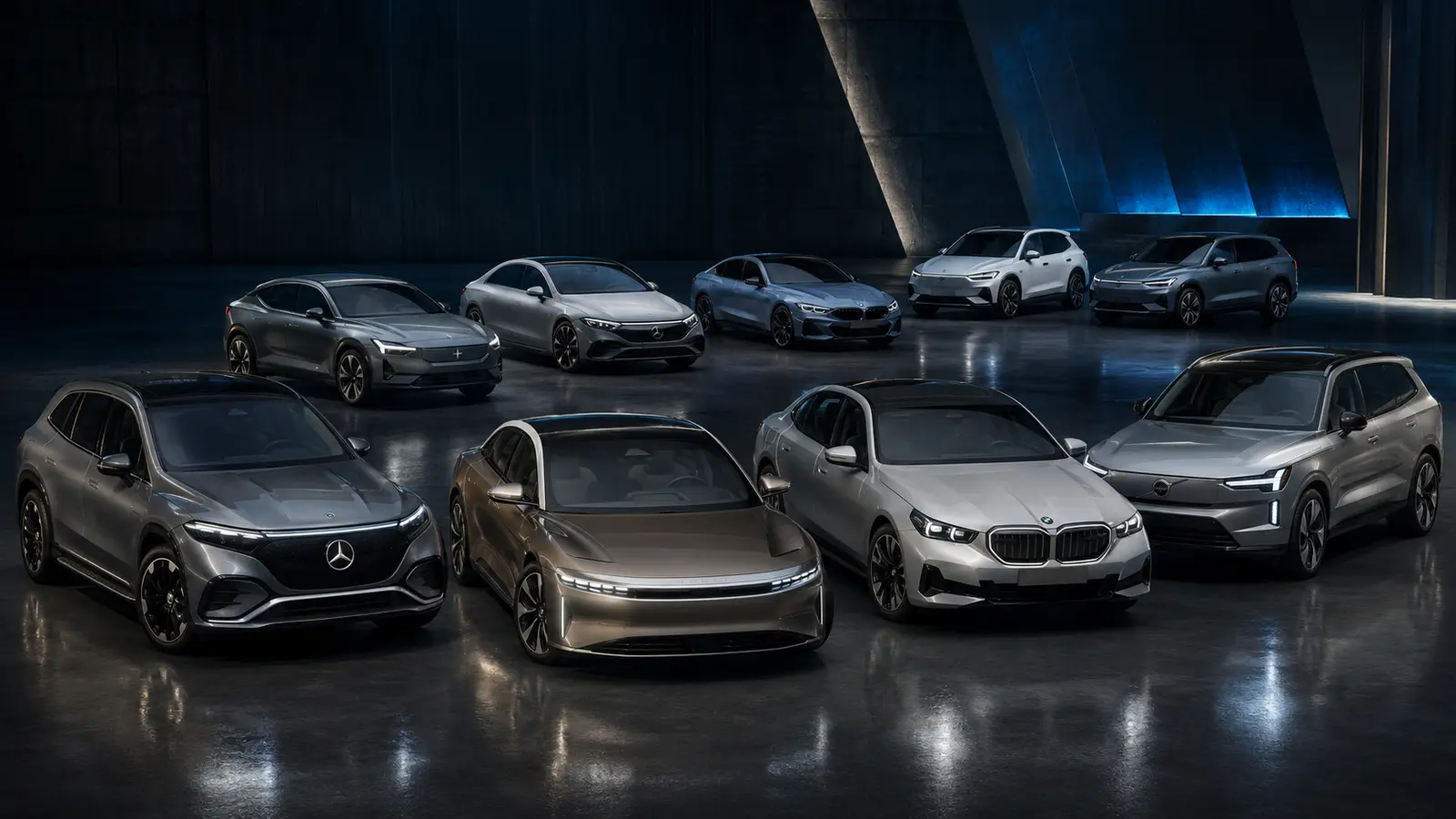
Range anxiety used to define the electric car conversation. Not anymore. In 2026, several new EVs are pushing far beyond the old psychological barrier, with some now capable of travelling more than 800 kilometres on a single charge under the WLTP cycle. One of them even stretches to an extraordinary 925 kilometres. That is no longer just competitive with combustion cars. It is a statement.
For years, early electric vehicles asked buyers to compromise. A real world trip often meant keeping one eye on the battery gauge and the other on a patchy public charging map. Across much of Europe and beyond, the charging network simply was not mature enough to make long distance EV travel feel effortless. Now the story is changing fast, driven by better battery chemistry, sharper energy management, more efficient motors and the spread of 800 volt architectures.
What is striking is that the biggest gains are not coming from battery size alone. Carmakers are finding range in smarter places: lower drag, improved thermal control, lighter platforms and drivetrains that waste less energy at motorway speeds. That is why the latest generation of long range EVs feels like a genuine technological leap rather than a simple spec sheet exercise.
The new distance champions
Mercedes-Benz has grabbed the spotlight with the updated EQS 450, which now claims a remarkable 925 kilometres of WLTP range. That makes it the longest range electric car in this group and one of the most significant EV benchmarks of the year. Even more impressive, the EQS is not an all new model. It has been on sale since 2021, yet Mercedes has extracted roughly 13 percent more range mainly through drivetrain optimisation and improved efficiency.

The facelifted EQS also introduces a new two speed gearbox, a rare move in the EV world but one that makes a lot of sense. It helps the car deliver stronger acceleration off the line while reducing energy consumption at higher speeds. Porsche showed the value of this approach in the Taycan, and now Mercedes is using the same idea to turn the EQS into a true range king.
- Mercedes-Benz EQS 450
- WLTP range: 925 km
- Electrical architecture: 800V
- Max charging speed: 350 kW
- Key feature: new two speed gearbox
BMW is also reviving a familiar badge in a very different form. The new BMW i3 xDrive has nothing in common with the quirky carbon fibre city car that once wore the same name. This time, it arrives as a sleek modern saloon based on BMW's Neue Klasse platform, with an estimated WLTP range of 905 kilometres. Power is expected to land at around 463 hp, delivered by BMW's sixth generation electric motors.

BMW has not confirmed the exact battery capacity yet, but expectations point to a pack close to 108 kWh, similar to what is anticipated for the next iX3. On paper at least, this new i3 looks like one of the most serious electric executive cars on the horizon.
- BMW i3 xDrive
- WLTP range: 905 km
- Power: 463 hp
- Architecture: 800V
- Max DC charging: 400 kW
Then there is the Lucid Air Grand Touring, still one of the most efficient electric cars money can buy. Its WLTP range of around 840 kilometres keeps Lucid firmly among the elite. What makes the Air so fascinating is that it achieves this without relying on an absurdly oversized battery. Lucid's secret lies in extremely compact, efficient drive units and a slippery aerodynamic design that wastes very little energy.

- Lucid Air Grand Touring
- WLTP range: around 840 km
- Power: over 800 hp
- Architecture: 900V
- Fast charging: up to 300 kW
Mercedes also appears again with the EQE, the smaller and more usable sibling to the EQS. In long range form, the EQE now reaches roughly 820 kilometres on the WLTP test cycle. For a luxury executive saloon, that is an outstanding number. The formula is familiar but effective: cleaner aerodynamics, better battery temperature control and smarter energy software working quietly in the background.

- Mercedes-Benz EQE
- WLTP range: about 820 km
- Architecture: 800V
- Power in long range version: about 300 hp
- Fast charging: up to 350 kW
Volvo takes a different route with the EX60 P12, a family crossover that behaves like a performance machine. With around 670 hp and a WLTP range of 809 kilometres, it combines serious pace with serious usability. Volvo's new SPA3 platform plays a major role here. It is lighter, simpler and built around cell-to-body battery technology, where the battery becomes part of the vehicle structure itself. Less weight. More stiffness. Better packaging. The industry has been heading this way for a while, and Volvo is clearly leaning in.

One of the headline figures is its charging performance. Volvo says just 10 minutes plugged in can add roughly 340 kilometres of range. If that holds up in real conditions, it will make this Swedish SUV one of the most convincing long distance EVs on sale.
- Volvo EX60 P12
- WLTP range: 809 km
- Power: 670 hp
- 0 to 100 km/h: 3.7 seconds
- Fast charging: 400 kW
BMW's next generation iX3 also deserves attention. This is one of the brand's most important upcoming electric SUVs, and it looks ready to combine practicality with class leading charging performance. BMW says the new iX3 will support 400 kW charging and complete a 10 to 80 percent top up in just 21 minutes. The official WLTP range is 805 kilometres.
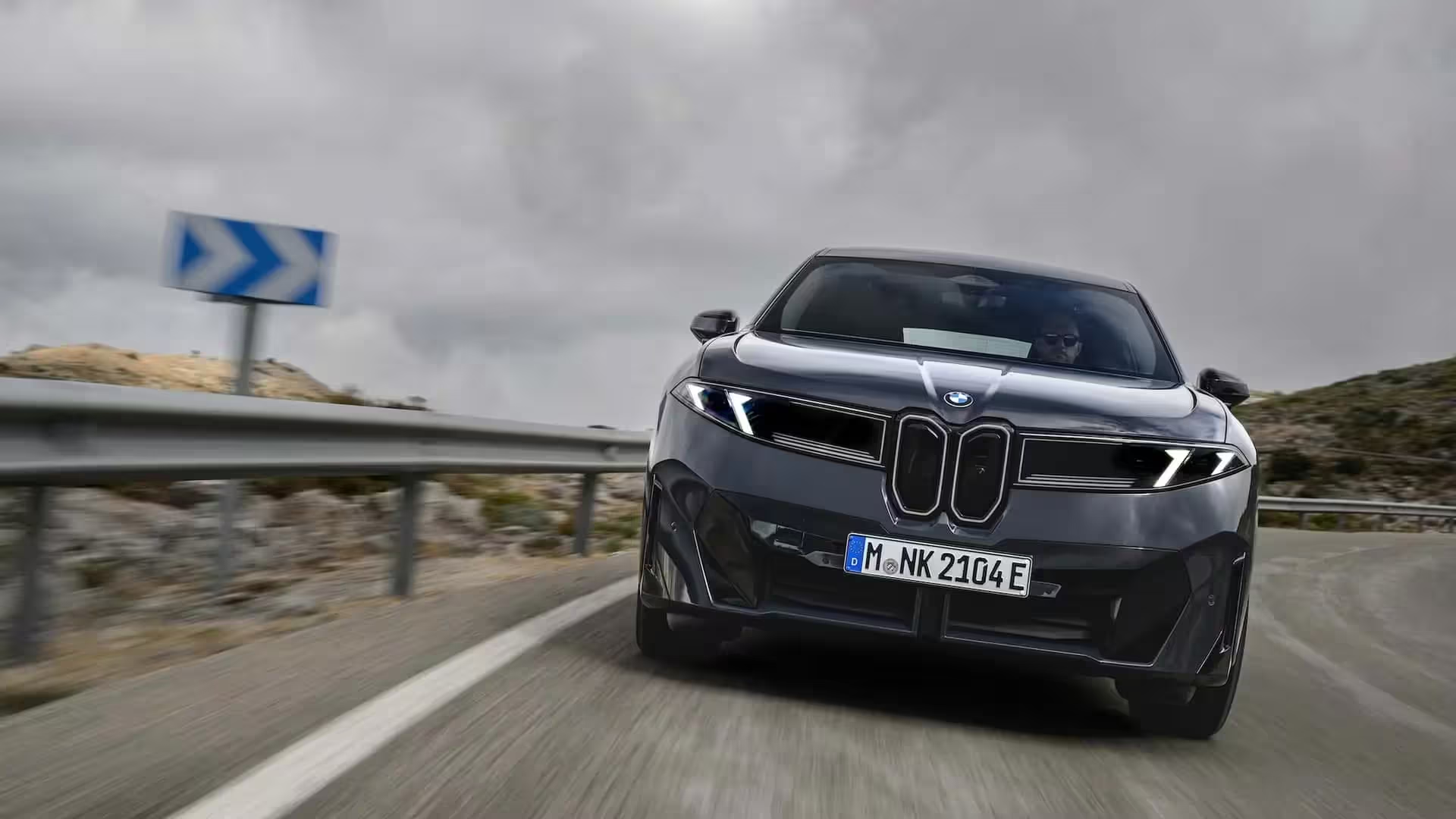
Of course, there is one catch. Ultra high power chargers are still not evenly available in many markets, so the car may be ready before the infrastructure fully is. Still, the technology itself shows where premium EVs are heading.
- BMW iX3
- WLTP range: 805 km
- Architecture: 800V
- Fast charging: 400 kW
- 10 to 80 percent charge time: 21 minutes
BMW's i7 eDrive50 proves something else entirely: luxury does not have to come at the expense of range. This all electric limousine offers around 800 kilometres of WLTP range while surrounding passengers with one of the quietest, most indulgent cabins on the market. Massive rear screen, advanced audio, active air suspension. It feels less like transport and more like a private lounge that happens to move.

- BMW i7 eDrive50
- WLTP range: about 800 km
- Power: 450 hp
- 0 to 100 km/h: around 5.5 seconds
- Battery capacity: about 105 kWh
Polestar 3 may be more understated, but that is part of its appeal. The long range single motor version delivers about 760 kilometres of WLTP range, a very strong result for a large SUV. It blends Scandinavian minimalism, solid build quality and rear wheel drive simplicity into a package that looks increasingly well judged in a market obsessed with excess.

- Polestar 3 Long Range
- WLTP range: about 760 km
- Power: about 300 hp
- Battery capacity: 111 kWh
- Drivetrain: single motor, rear wheel drive
Audi's A6 Sportback e-tron Performance lands in the same territory, also offering around 760 kilometres of WLTP range. This may be one of the most visually appealing EV saloons in the segment, but it is more than just a pretty shape. The shared PPE platform with Porsche, combined with excellent aerodynamics and an 800V system, gives the A6 e-tron the efficiency and charging credentials to back up its design.

- Audi A6 Sportback e-tron Performance
- WLTP range: about 760 km
- Power: about 380 hp
- Architecture: 800V
- Fast charging: up to 270 kW
And then there is the Mercedes EQS SUV, the outlier that refuses to behave like a typical SUV. Normally, taller bodies and extra weight eat into range. Here, Mercedes still manages to extract about 740 kilometres from the EQS SUV 450+, a figure many electric saloons would be happy to claim.

- Mercedes-Benz EQS SUV 450+
- WLTP range: about 740 km
- Power: 355 hp
- Battery capacity: 118 kWh
- Fast charging: up to 200 kW
Tesla is no longer alone at the top
Perhaps the most telling shift in 2026 is not just that EV range has improved. It is that Tesla no longer owns this conversation by default. Rivals from Mercedes, BMW, Lucid, Audi, Volvo and Polestar are now matching or beating Tesla in outright range, charging speed, cabin quality and in some cases battery technology.
That does not mean Tesla has lost its strengths. Far from it. Its software remains among the best in the business, energy efficiency is still highly competitive, and the charging ecosystem continues to be a major advantage in many regions. But the market has matured. Other brands are catching up fast, and in some areas they are already ahead.

Electric cars are no longer just city tools. The best of them now cover 800 or even 900 kilometres on a charge, which changes the ownership equation completely.
The real breakthrough is not one single component. It is the combination of several advances coming together at the same time:
- 800V electrical architectures
- More efficient electric motors
- Advanced aerodynamics
- Smarter energy management software
- New battery cell technologies
There is still one stubborn problem left: charging infrastructure. A car capable of 350 kW or 400 kW charging only delivers its full promise if the right charger is actually available. In too many places, that part of the future is still catching up.
Even so, the direction is unmistakable. The era when EV buyers had to apologise for range is over. In 2026, the longest range electric cars are not making excuses. They are setting the pace.

“Cars are evolving faster than ever. I cover electric vehicles, smart mobility, and the future of transportation worldwide.”

Discussion
Leave a Comment