
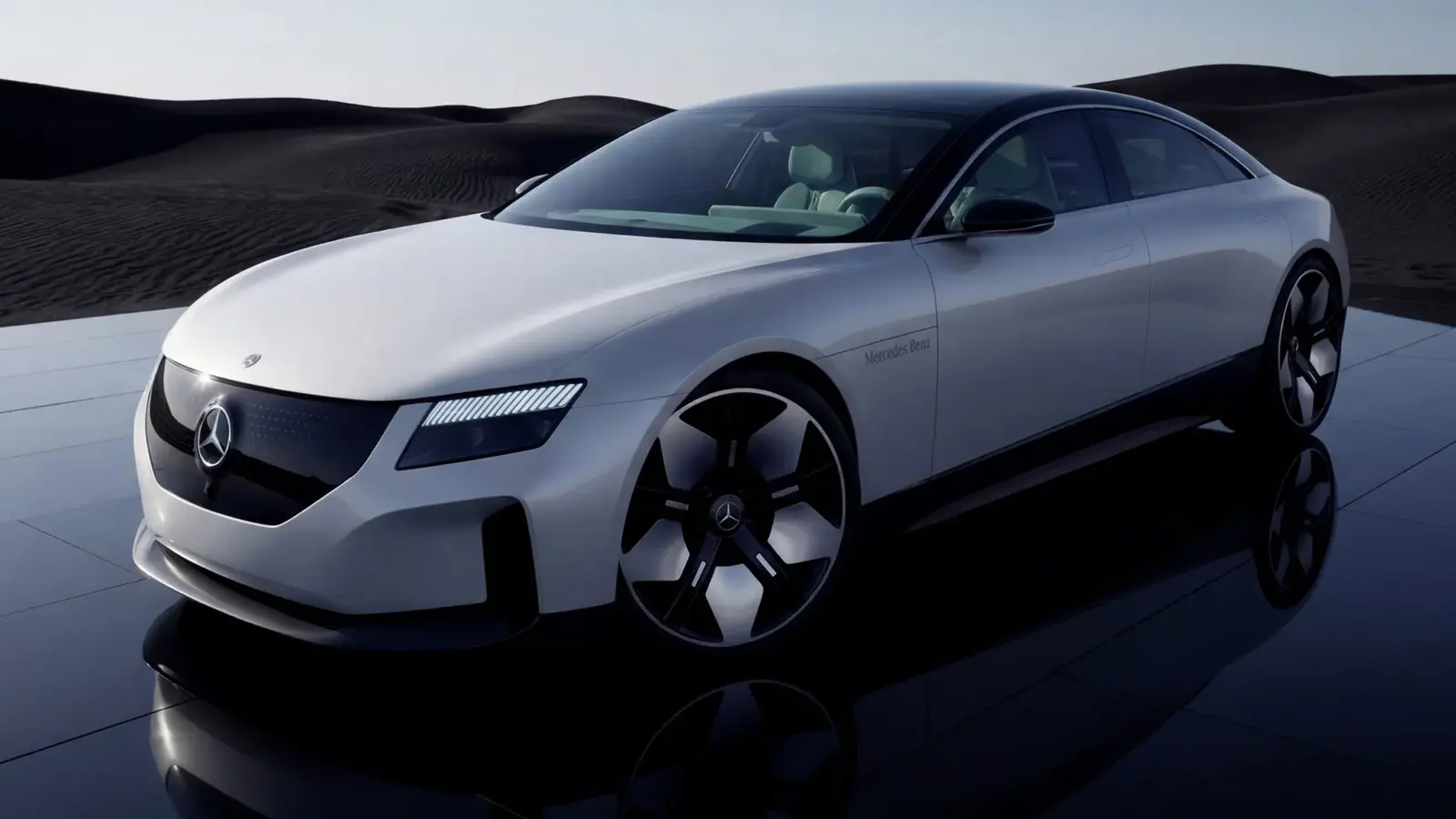
Mercedes has spent years chasing the future, and somewhere along the way it misplaced part of its identity. The proof is hard to ignore. Recent electric models have leaned into smooth, rounded shapes and dashboard-wide screens, yet for many enthusiasts and premium buyers, that vision has felt oddly anonymous. Now an independent concept from former NIO designer Lukas Wochinger offers a far more persuasive answer to what a modern Mercedes could be.
This is not a casual sketch from an internet dreamer. Wochinger, who served as Lead Exterior Designer at NIO between 2021 and 2025, knows exactly how the premium EV space thinks, sells, and presents itself. From his Munich base, he has shared a series of polished digital renders that imagine a different design path for Mercedes. Less gadgetry. More presence. Less visual noise. More confidence.
The idea behind the concept is simple, but powerful: bring back a cleaner, more structured form language, with just enough of the 1990s Mercedes spirit to remind people what made the brand feel special in the first place. You can see echoes of icons such as the R129 SL, the W124 E-Class, and the C215 CL-Class. Not in a retro, costume-like way, but in the proportions, restraint, and sheer calm of the design. These were cars that never needed to beg for attention.
That is exactly why this concept works at first glance. Instead of the egg-like silhouette that has defined the EQS, Wochinger gives the car a longer hood and a more formal stance. It instantly feels more like a Mercedes. The front end is especially telling. A closed grille is still present, as expected in an electrified era, but the treatment is crisp and elegant rather than overly decorative. Slim, squared LED headlights sharpen the expression, while deep air intakes and a pronounced lower splitter add just enough tension.
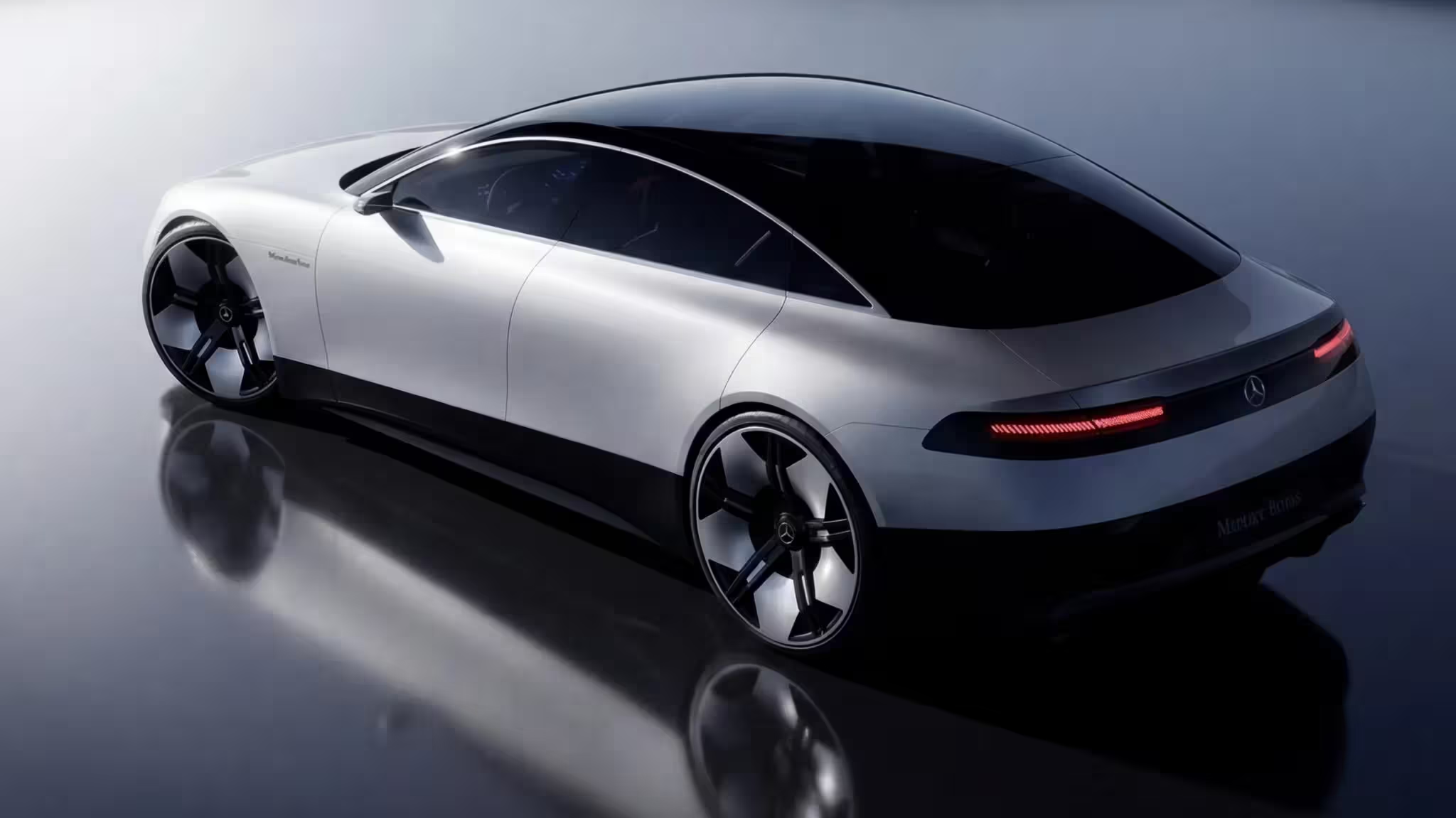
From the side, the car carries itself with the kind of proportion modern luxury sedans too often forget. Large star-pattern alloy wheels anchor the view. Flush door handles keep the surfaces clean. The rear shoulders are sculpted with care, hinting at the muscularity of the AMG GT Four-Door without overplaying it. There is also a beautiful coupe-like glasshouse that recalls the old CL, and the two-tone finish visually stretches the body even further. At the rear, the design stays disciplined: a subtle ducktail spoiler, horizontal LED light graphics, and a neatly integrated lower bumper complete the look without drama.
The cabin is where the real rebellion happens
Step inside, at least digitally, and the concept becomes even more interesting. The oversized Hyperscreen is gone. In its place sits a more focused infotainment display that feels integrated rather than overwhelming. Behind the steering wheel, Wochinger imagines analogue-style dials, including a white-faced speedometer that looks more like a finely made watch than a piece of consumer electronics. It is a small detail, but it changes the whole mood.
Then come the physical controls. Real buttons on the centre console. Switchgear on the doors. Tactile inputs on the steering wheel. In an era when too many carmakers are burying everything inside touchscreens, this feels almost radical. And yet it is exactly what many drivers have been asking for. Luxury is not just about digital spectacle. Sometimes it is about the satisfying click of a well-made switch and the certainty of being able to adjust something without hunting through menus.
The materials reinforce that thinking. Mint green leather gives the interior a fresh, almost lounge-like character. Dark wood and metal trim bring warmth and seriousness. The seats, finished with Mercedes star inserts, look properly plush without falling into gimmickry. It is a cabin with atmosphere, one that appears designed for people rather than software demos.
The technical package remains deliberately open to interpretation. The clean bodywork, lack of visible cooling openings, and absence of tailpipes suggest a fully electric car. At the same time, Wochinger reportedly imagines it as a hybrid, which may explain the presence of an rpm gauge in the instrument cluster. That ambiguity hardly matters. The bigger point is emotional, not mechanical.
This concept quietly exposes what has been missing from Mercedes design in recent years. Not innovation. Not technology. Soul. Wochinger's study suggests that the brand does not need more illuminated panels or larger displays to regain its authority in the luxury EV market. It needs proportion, discipline, tactile quality, and a stronger connection to the values that once made a Mercedes instantly recognisable from a block away.
Sometimes the smartest way to move forward is to remember what never needed fixing.

“Cars are evolving faster than ever. I cover electric vehicles, smart mobility, and the future of transportation worldwide.”

Discussion
Leave a Comment