
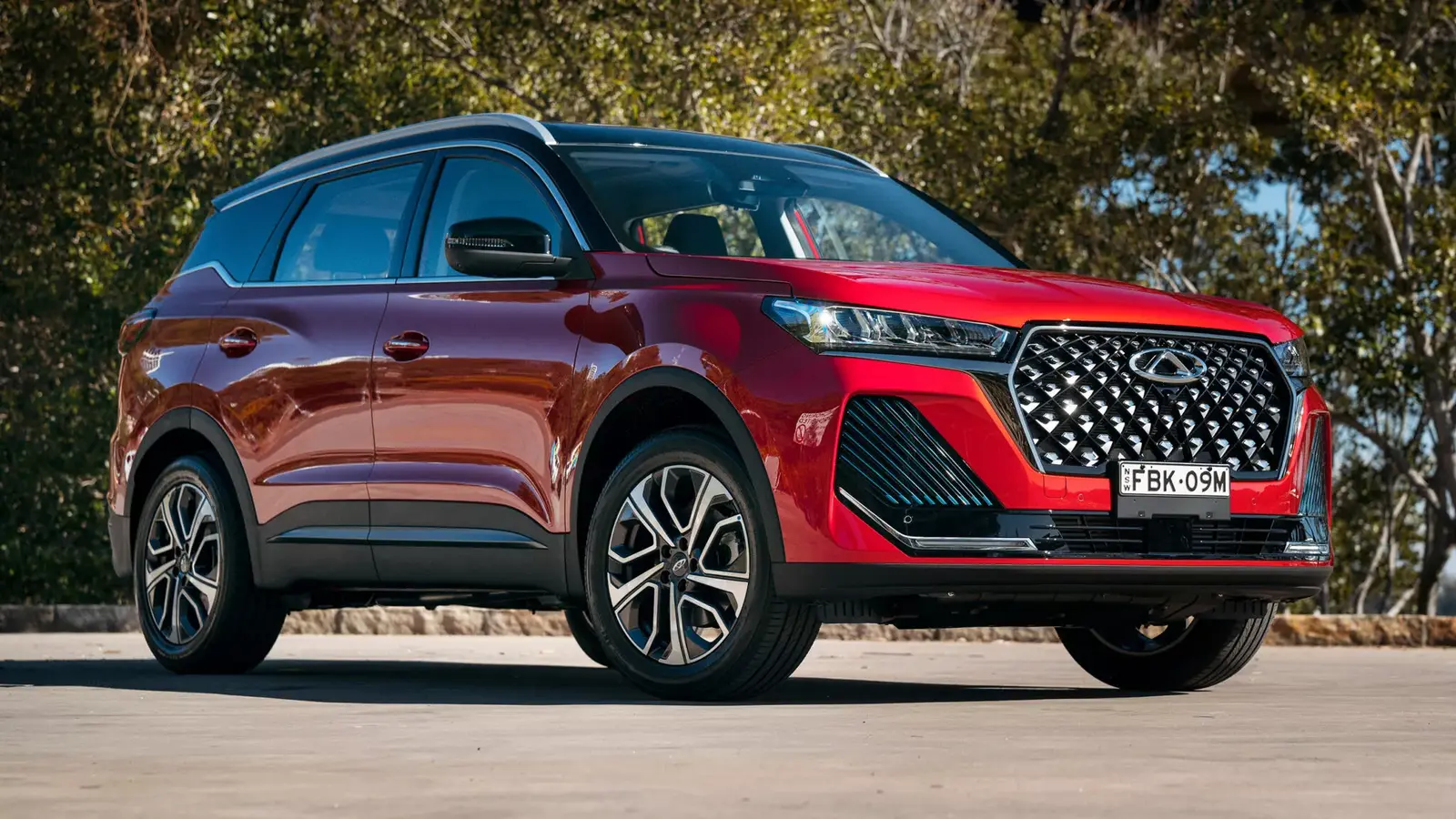
America is still the prize. For any carmaker with global ambitions, cracking the US market carries a kind of symbolism that goes far beyond sales charts. And Chery, now China’s biggest vehicle exporter, is clearly thinking about that next frontier even as political resistance in Washington grows louder by the week.
The company is not being subtle about its interest. Speaking at Chery’s headquarters in Wuhu, Chery International president Zhang Guibing made it plain that the brand wants a future in the United States. The real question, in his view, is timing. Not if. When.
That ambition is easy to understand. The US remains the world’s second largest car market by volume, and despite the barriers, it is too important for any serious automaker to ignore. Chery has spent years building momentum at home, then widening its footprint abroad through a sprawling brand portfolio that includes Exeed, iCar, Luxeed, Jetour, Omoda, Jaecoo and Chery itself. Now the company is scanning bigger opportunities, and America is still sitting there, rich, influential and stubbornly hard to enter.

The market is tempting. The politics are brutal.
Chery’s recent expansion tells the story. The Chinese automaker has been pushing aggressively into Europe, the Middle East, Southeast Asia and Latin America, while also preparing to launch in Canada later this year with an initial focus on British Columbia, Ontario and Quebec. That kind of international rollout is not random. It is the behavior of a company that believes it can compete on a far larger stage.
But the United States is not just another export destination. It is a geopolitical minefield.
Zhang acknowledged as much, noting that any future US launch would depend on policy decisions in both Washington and Beijing, as well as Chery’s own readiness. That is the key point. Product plans matter, dealer plans matter, factory plans matter. Yet none of them mean much if tariffs stay high and regulators keep the gate locked.
That gate looks very heavy right now. Earlier this year, President Donald Trump indicated he could be open to Chinese automakers selling cars in the US, but only if those vehicles were built locally with American labor. On paper, that sounds like a possible route in. In practice, it has done little to calm opposition on Capitol Hill.
Lawmakers from both parties have shown deep hostility toward the idea of Chinese car brands gaining a foothold in the American market, even if production happens on US soil. Last month, dozens of House Democrats reportedly urged Trump to block Chinese automakers from entering altogether, warning that their arrival could damage domestic manufacturers and weaken major parts of America’s industrial base.

That is the tension hanging over Chery’s plans. On one side sits a giant consumer market and the obvious appeal of selling into it. On the other sits a political establishment that increasingly views Chinese automotive expansion not simply as competition, but as a strategic threat.
For now, Chery can afford to wait. Its global push is already gathering speed, and markets across Europe, Asia, the Middle East and Latin America offer plenty of room for growth. Canada may also serve as a useful test case for North American tastes, regulations and brand positioning. Still, the pull of the United States is not going away.
And neither is the pushback.
If Chery eventually arrives in America, it will not be because the road suddenly became smooth. It will be because the company found a narrow opening in one of the most politically charged corners of the global auto industry. Until then, the message from both sides is remarkably clear: Chery wants in, and much of Washington wants it nowhere near the front door.

“I cover automotive innovation, electric vehicles, and the future of mobility — where technology meets sustainability.”

Discussion
Leave a Comment