
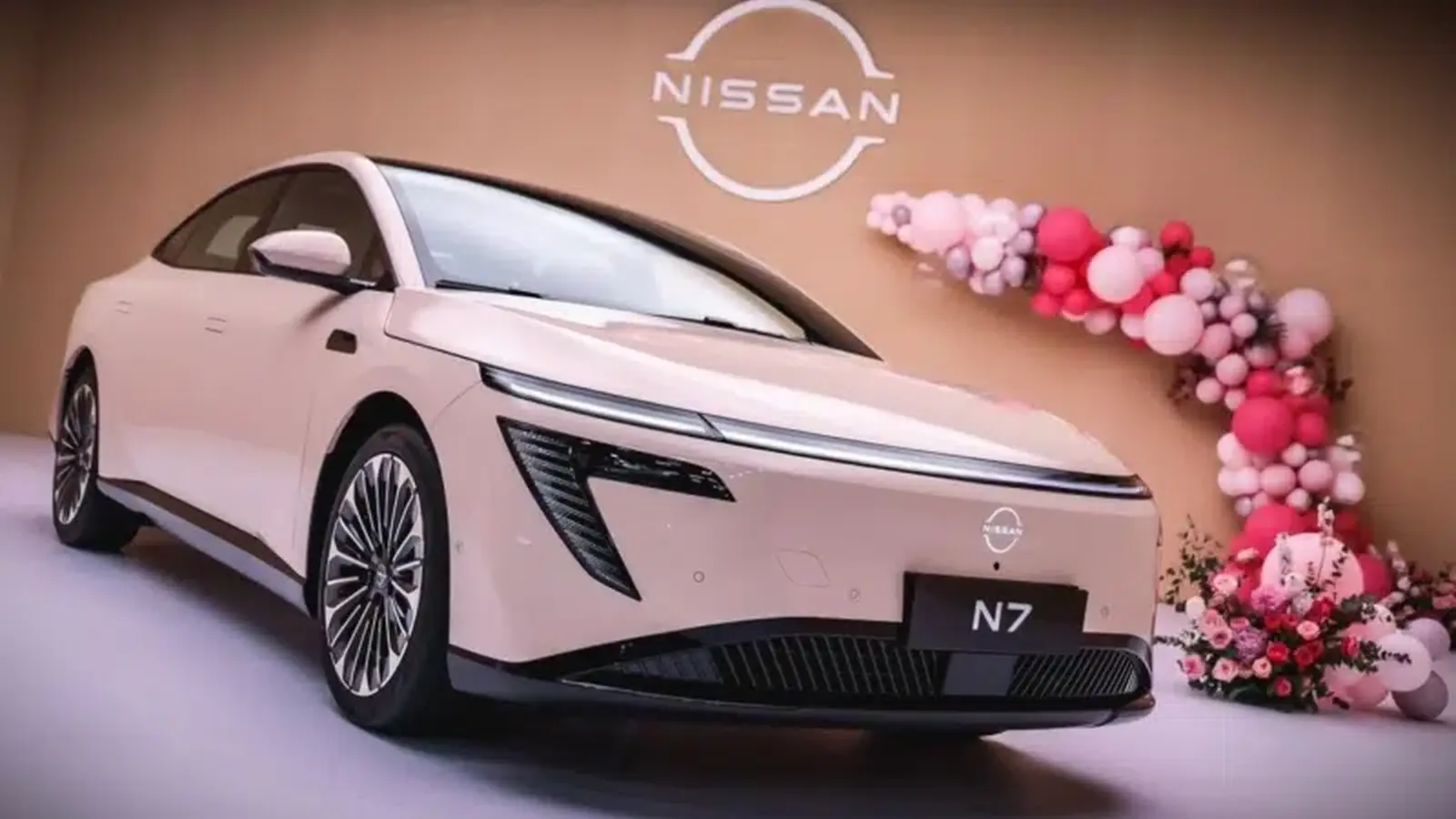
Just as Nissan has been pushing harder into China’s fast-moving EV and hybrid market, a major recall has landed at exactly the wrong moment. Nearly 70000 locally developed Nissan vehicles are being called back after regulators identified a flaw in the accelerator pedal assembly that could affect how the pedal returns during use.
According to a recall filing published by China’s State Administration for Market Regulation on May 22, Dongfeng Motor will recall 49465 units of the Nissan N7 electric sedan and 18800 units of the Nissan N6 plug in hybrid SUV from May 25, 2026. The issue is not cosmetic, nor is it the sort of software hiccup brands can patch over the air. It concerns mechanical wear inside the pedal assembly itself, the kind of fault that immediately raises questions about long term durability and driver safety.
The regulator said the problem stems from the pedal design. Over time, internal wear can develop where rotating pedal components interact with a protruding support structure. If that wear builds up, the pedal may not return normally, creating abnormal pedal behavior and a potential safety risk. In plain terms, that is the sort of defect no carmaker wants associated with new energy vehicles it is trying to establish in a fiercely competitive market.
Dongfeng Motor says it will replace the accelerator pedal assembly free of charge on affected vehicles. Owners of the Nissan N6 will also receive an updated brake pedal assembly, designed to match the revised pedal shape. So far, the filing does not mention any crashes or injuries linked to the defect, which will offer at least some reassurance to current owners.
A setback for two important China built Nissan models
This recall matters because the N7 and N6 are not fringe products. They sit right at the heart of Nissan’s China strategy, where local development and electrification are meant to help the brand stay relevant against an army of domestic rivals.
The Nissan N7 electric sedan entered production in 2025 and quickly became one of the brand’s more closely watched China market launches. Dongfeng Nissan previously said cumulative N7 production reached 50000 units within just seven months, a sign that the model was being scaled with real ambition. Sales momentum, however, has not been linear. Data from China EV DataTracker shows N7 domestic sales hit 1635 units in April 2026, up 18.3 percent from the previous month and 145.9 percent year on year. Even so, that is well below the model’s earlier high point of 10148 units in August 2025. By October 2025, volume had fallen to 6540 units, and by December it had slipped further to 1925.
The N6 plug in hybrid SUV is newer to the scene, having launched in China in late 2025. Its starting price was 89800 yuan, which works out to roughly 11500 euros at current exchange rates. Nissan had previously signaled that the N6 was also being considered for export, making this recall more than just a local headache. It potentially adds pressure to any broader rollout plans if engineering credibility comes under scrutiny.
There is also a wider backdrop here. In April 2026, Nissan expanded its China focused range with the NX8 SUV, a model the company says can deliver up to 1450 km of combined range and features an 800V electrical architecture. That vehicle entered the market with a starting price of 141000 yuan, or about 18000 euros. Taken together, these launches show Nissan is still betting heavily on China specific electrified products, even as competition grows more intense and margins get tighter.
China’s recall system is closely watched because SAMR regularly publishes filings involving both domestic automakers and major joint ventures. Some recalls are initiated voluntarily, others follow defect investigations. Either way, public filings like this one can shape consumer confidence quickly, especially in segments where buyers have no shortage of alternatives.
For Nissan, the immediate task is straightforward: fix the affected vehicles quickly and keep owner trust intact. The bigger challenge is less mechanical and more strategic. In China’s new energy vehicle market, where reputations rise and fall fast, even a relatively contained defect can echo far beyond the workshop.

“I cover automotive innovation, electric vehicles, and the future of mobility — where technology meets sustainability.”

Discussion
Leave a Comment