
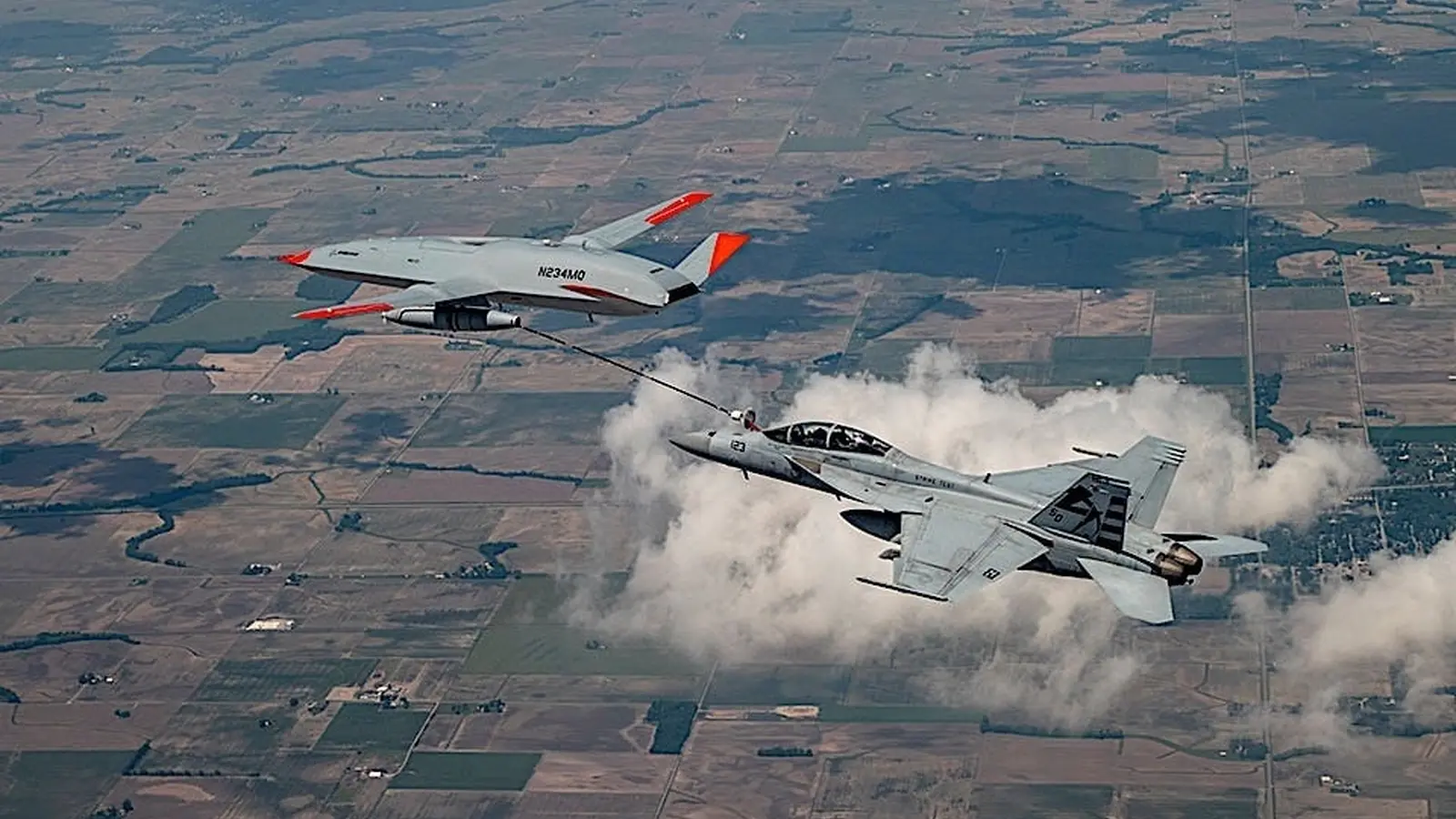
Imagine a gray morning on a carrier deck. Jets roar, sailors move with practiced choreography, and somewhere above, a drone slides into formation carrying the one thing fighters need most between sorties: fuel. Quiet, efficient, and automatic, the MQ-25 Stingray looks nothing like the tanker crews of old. Yet it may change carrier operations more than any single aircraft in decades.
How a drone becomes a flying gas station
First things first: this is a tanker. Its aerial refueling store holds about 15,000 pounds (6,800 kg) of fuel. That payload turns the MQ-25 into a dedicated refueling asset, freeing F/A-18 Super Hornets from the buddy-refuel role so they can focus on strike missions. The math is simple. When fighters stop ferrying gas, the carrier air wing regains both range and combat tempo. Longer reach. Faster turnaround. More options for commanders.

The Navy recently cleared the MQ-25 for low-rate initial production after a significant flight campaign. The sting of skepticism that often greets new unmanned programs gave way to a quiet endorsement: Milestone C approval, which opens the door to production contracts. The first Lot 1 contract will buy three aircraft, to be followed by separate lots covering three and five more airplanes respectively. Those small batches are deliberate. The service wants to blend production with further testing and carrier qualification.
Test flights are still ongoing. Boeing ran a noteworthy sortie from its MidAmerica facility near St. Louis where the aircraft completed two hours in the air, practicing autonomous taxi, takeoff, en route operations, and a full landing sequence while executing a mission plan. That flight also tested the Stingray's integration with the Lockheed Martin Skunk Works Unmanned Carrier Aviation Mission Control System MD-5 Ground Control Station, known as the MDCX GCS. In short: the Stingray is being readied to operate within the same command architecture as manned naval aviation.
So far, no in-flight refueling happened on that run. But the Navy is satisfied enough to push ahead. Capt. Daniel Fucito, the Unmanned Carrier Aviation program manager, summed it up plainly: the aircraft, production, and program are ready to move forward. Those are not casual words in Washington; they carry weight for budgets and schedules.
What gives the MQ-25 its practical edge is a mix of endurance, integration, and simplicity. It is powered by a single Rolls-Royce AE 3007N engine and can operate about 580 miles (930 km) from its launch point. Control is normally ground-based, but Boeing is developing an option to let pilots in Block II and III Super Hornets assume control from the air. That capability would cut the time needed to task the drone and keep it responsive in fast-moving scenarios.
Beyond pure refueling, the Stingray brings versatility. Over several years of simulated operations it has performed intelligence, surveillance, and reconnaissance missions. It also carries two underwing hardpoints, enabling the carriage of anti-ship missiles if the mission calls for it. Think of the MQ-25 as logistics-first, with the potential to be a strike or ISR node when commanders choose to employ it that way.
Why does that matter strategically? Carrier Strike Groups depend on a balance of reach and sustainability. Crewed tankers take sorties away from strike and patrol duties. Drones like the Stingray change that calculus. They extend the operational radius of fighters, decrease wear on manned platforms, and create a persistent refueling capability that is harder to attrit in contested environments.

Next steps are methodical. Additional test flights will continue at the MidAmerica field to validate flight controls and autonomous routines. Only after Boeing and the Navy are comfortable will test aircraft move to Naval Air Station Patuxent River in Maryland for carrier qualification runs. If all goes to plan, the Navy expects initial operational capability by the end of the decade. The service intends to buy roughly 76 Stingrays at a program value of about €12 billion.
There are questions, of course. How will maintenance and logistics scale aboard a carrier? Can shipboard handling and deck operations be optimized for unmanned aircraft without undermining pace? How resilient will control links be in a contested electromagnetic environment? The Navy will need patience and rigorous testing to answer these.
Still, the broader point is hard to ignore. Unmanned carrier aviation has moved from concept to concrete capability. The MQ-25 is not flashy. It will not headline air shows. But it performs an unglamorous, critical task with precision and repeatability. In naval aviation, that can be revolutionary.
That gray morning on the carrier deck could soon be normal. And when a drone is the one bringing the gas, everything else begins to look different.

“I cover automotive innovation, electric vehicles, and the future of mobility — where technology meets sustainability.”

Discussion
Leave a Comment