
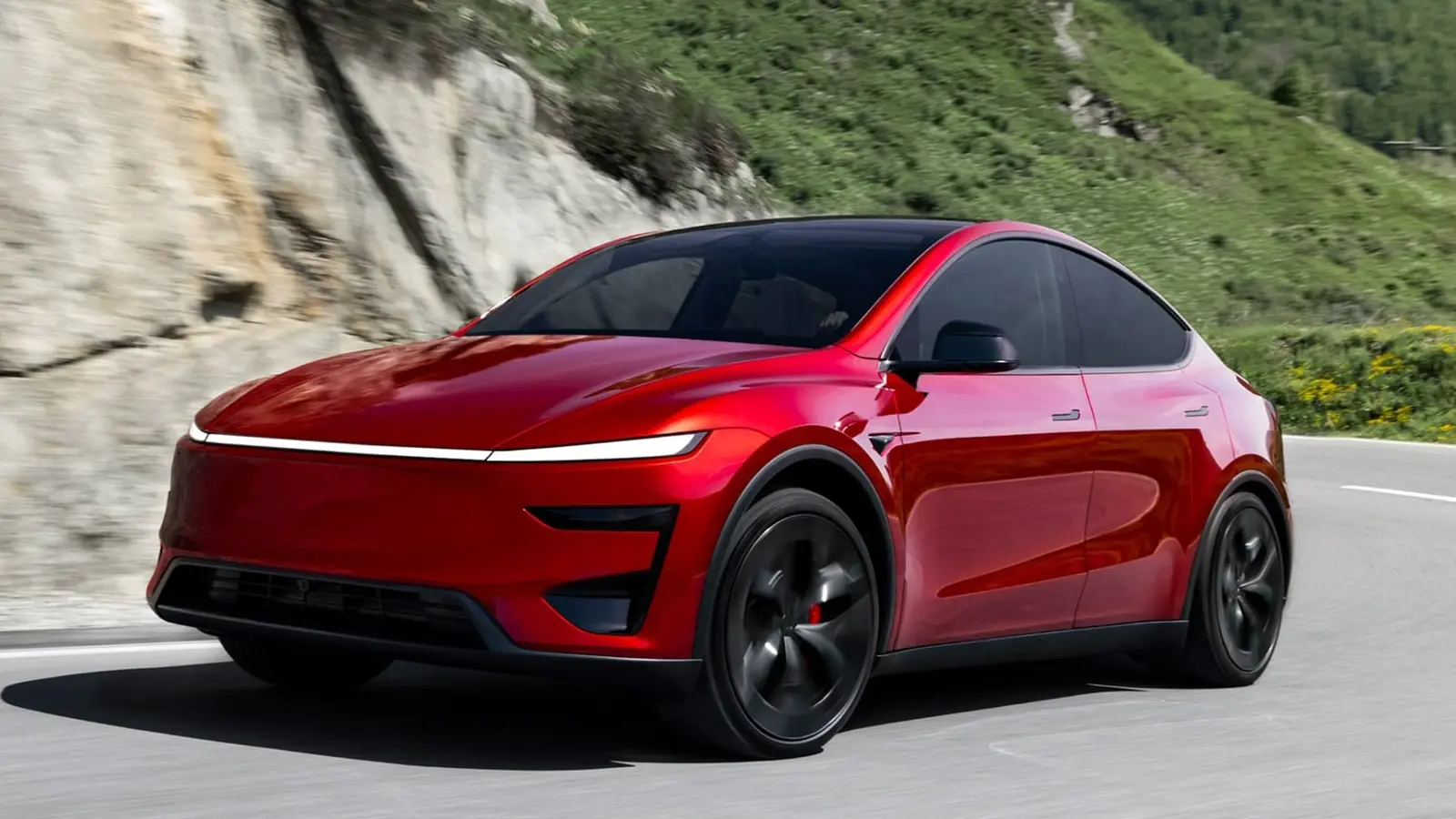
Picture a robotaxi sliding through a sudden downpour. Rain streaks the lens, the world outside blurs, and the car hesitates. That tiny smear is a big problem. Clean optics mean the difference between confident autonomy and a forced stop.
Tesla has been quietly experimenting with practical fixes. Early Robotaxi tests in Austin taught a blunt lesson: cameras must stay clean to keep the software working. The stopgap was simple enough—high-pressure washer jets aimed at side and rear repeater cameras. It worked, but it felt clumsy. It guzzled fluid. It was overkill. And for a robot designed to operate with minimal human intervention, rehydrating reservoirs every few days is not ideal.
Why a tiny wiper matters more than you think
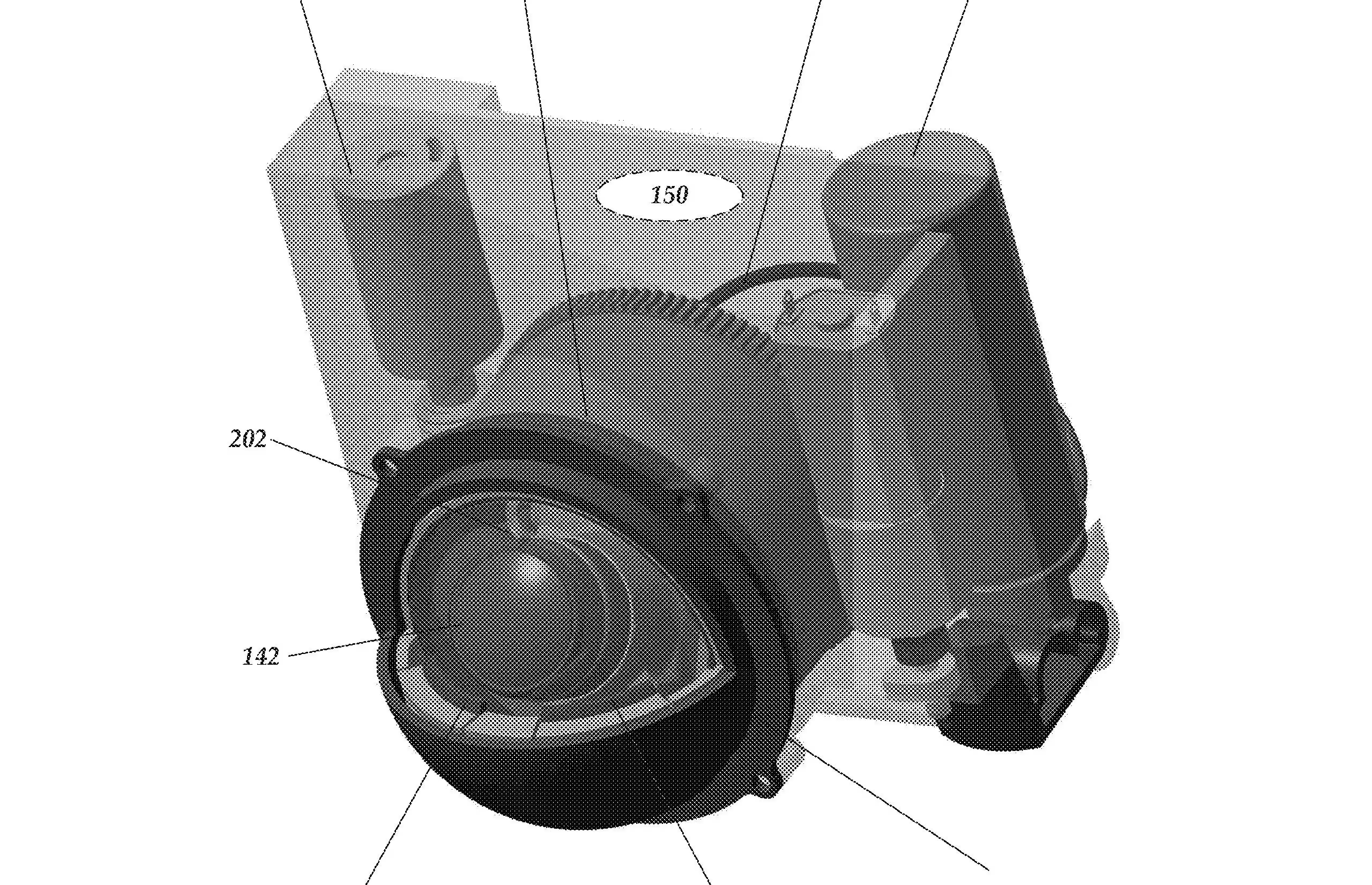
Now the company has filed a patent for a far more elegant solution: a self-cleaning camera inspired by the human eye. Think eyelid, not windshield wiper. The design uses a shaped wiper blade that sweeps across a rounded lens, with just a whisper of liquid—enough to lift grime but nowhere near the volumes used by current washers. The patent, filed in May 2025, even shows lens assemblies that look like miniature eyeballs, complete with a mechanism to detect when the view has deteriorated.

How does it know when to act? By watching its own footage. The system monitors image quality metrics. A sudden drop triggers the cleaning cycle: tiny amounts of fluid are dispensed, the eyelid-like wiper performs a measured sweep, and the camera returns to service. Short, precise gestures. No soaking. No waste.
There is a practical elegance to the idea. Human eyes rely on a coordinated wetting-and-blinking routine to stay clear. Tesla’s approach borrows that choreography—sensors, micro-delivery of fluid, and a mechanical sweep. The patent drawings include realistic photos alongside diagrams, which usually means Tesla has moved beyond pure concept and likely built engineering samples.
That matters because patents often stop at paper. This one feels different. It addresses a recurring operational headache for autonomous systems: contamination from rain, mud, salt, insects, and road spray. Clean sensors are non-negotiable when vehicles must make split-second decisions without a human taking over.
And the implications stretch beyond cars. Optimus, Tesla’s humanoid project, benefits from reliable vision too. A camera tucked into a skull or a forehead is vulnerable to the same fouling as a car-mounted lens. Do you wipe the entire head? No. Better to keep the eye itself working. The miniature eyelid could be the low-energy, low-maintenance answer for mobile robots operating around the clock.

There are other wins: lower maintenance costs, reduced fluid waste, and fewer service visits. For a fleet of autonomous vehicles, those savings add up. Imagine a robotaxi fleet that rarely needs human attention for something as trivial as cleaning. That increases uptime and trims operating expenses.
Questions remain. How robust will the wiper be against freezing temperatures? How will it resist wear from grit and salt? The patent sketches out seals, drainage channels, and materials choices, but real-world durability only reveals itself after months or years on the road. Still, this is precisely the kind of incremental hardware evolution that nudges autonomy forward: clever, focused, and practical.

Tesla's eyelid camera isn't flashy. It's not a radical new sensor or an AI breakthrough. It is, however, the kind of sensible engineering that quietly fixes the small things that can derail big ambitions. You can call it mundane. Or you can call it essential.
Either way, when your next autonomous ride doesn't pause for a streaky lens, you may have a little eyelid to thank.

“Cars are evolving faster than ever. I cover electric vehicles, smart mobility, and the future of transportation worldwide.”

Discussion
Leave a Comment