
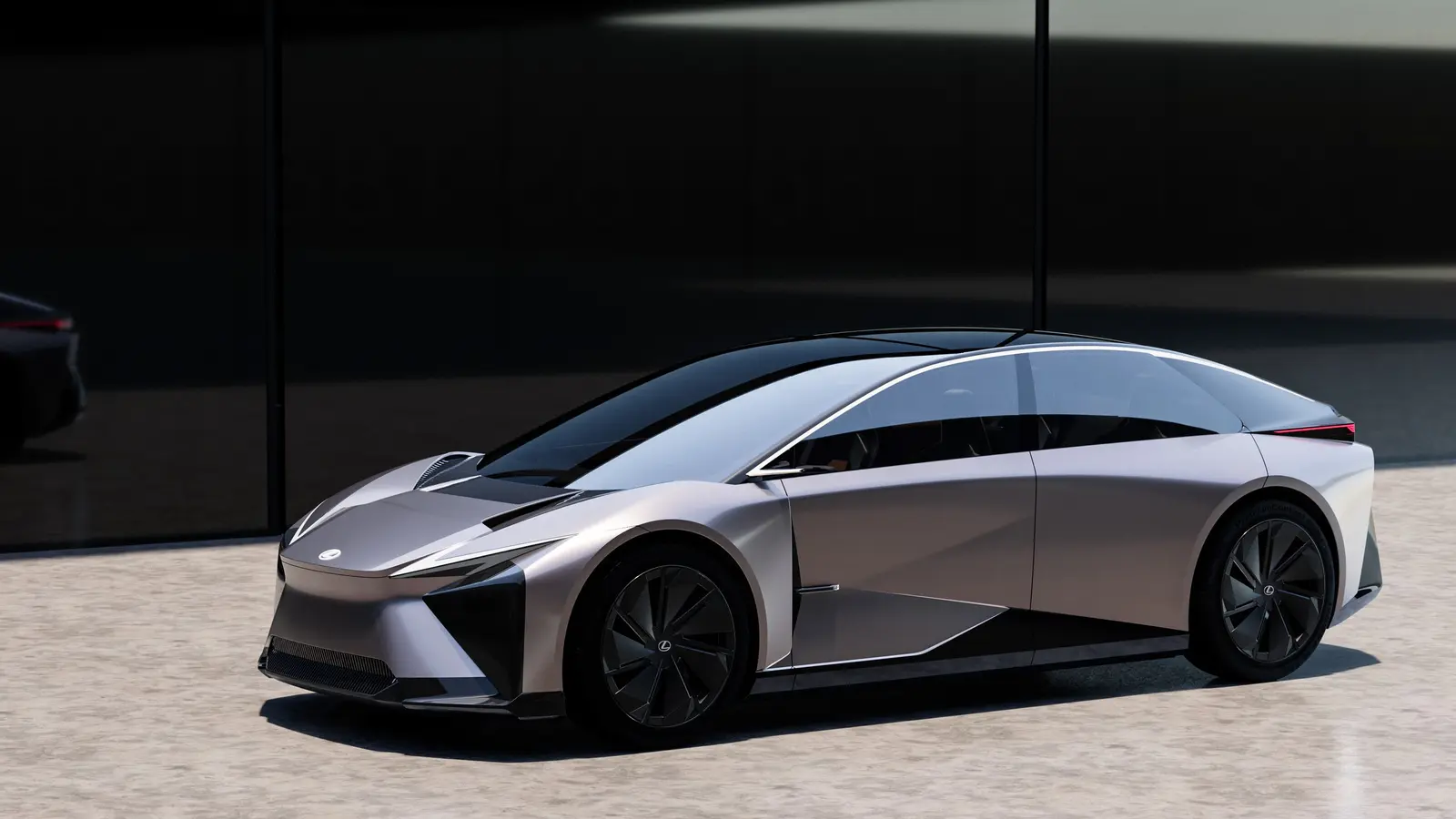
The concept that turned heads at the 2023 Japan Mobility Show will not become the electric sedan Lexus promised. The LF-ZC, once billed as a luxury, zero-emissions sport sedan, has reportedly been shelved by Toyota as of May 2026.
Onstage it was a statement of intent: dramatic lines, minimalist cabin, and a claim that Lexus was ready to leap into the premium EV arena. But the road from show car to showroom is seldom straight. Delays surfaced first, with a launch window slipping from 2026 to 2027. Then the project quietly stopped. Nikkei reported the decision, and the reasons are less cinematic than practical: profit signals, shifting demand, and the hard engineering realities beneath the gloss.

What changed in the marketplace
Simply put, buyers shifted. Electric vehicle growth has cooled compared with earlier forecasts, especially at the high end where volumeless halo models struggle to justify the investment. Global EV momentum still exists in lower-priced segments and among high-volume brands, but the luxury performance niche became a tougher sell. Lamborghini pulled the plug on its first all-electric vehicle in early 2026 for similar reasons, choosing instead to expand its plug-in hybrid range centered on models that reliably sell.
Toyota watched the numbers and reacted. The company is rebalancing its lineup toward utility vehicles and highly profitable models. Hybrids, already Toyota’s bread and butter, are enjoying renewed appetite from buyers who want improved efficiency without current-generation EV compromises. Put bluntly: hybrids are selling, high-end BEVs are not selling enough.

But market demand is only one piece of the puzzle. The LF-ZC was meant to introduce several next-generation production methods to Toyota’s factories, including large-scale aluminum casting and new gigacasting techniques. Those methods promise weight savings and simplified assembly, but they require time to mature. Toyota appears unwilling to rush a flagship that must get both engineering and manufacturing right on its first global outing.
Battery technology: the real gating item
Then there are the batteries. Solid-state chemistry has been discussed as the next big leap for EVs for years. In theory, a switch away from liquid electrolytes boosts energy density, reduces fire risk, and allows tighter packaging of cells. Several manufacturers are trialing hybrid approaches, like semi-solid designs, which reduce liquid content and act as a bridge toward all-solid-state systems.
Meanwhile, Chinese firms have advanced quickly, raising the stakes. If Toyota were to launch a premium BEV without competitive battery tech, it risks handing an advantage to rivals. The company is therefore cautious: better to delay and align production with the battery breakthroughs and manufacturing processes it wants to ship at scale.

- Demand shifted toward hybrids and SUVs, hurting niche luxury BEVs.
- Toyota needs more time to validate gigacasting and large aluminum cast parts.
- Solid-state and semi-solid batteries are emerging as decisive technology bets.
None of these factors alone would necessarily kill a halo car. Together, they make a convincing case for pressing pause.
There is still movement in Toyota’s EV thinking. The LF-ZL SUV concept, which shares some of the LF-ZC’s design cues and technology goals, is reportedly still under consideration. Toyota continues to invest in solid-state research and the production techniques that would let it scale advanced vehicles profitably.

So what does this mean? For buyers and observers it is a reminder that automotive strategy is as much about timing and factory readiness as it is about headlines and concept cars. Lexus’s shelved sedan is a setback in terms of brand theater, but it also reflects a pragmatic, conservative approach: bring a luxury EV to market only when the core elements—demand, batteries, and manufacturing—are aligned.
Watch this space. Toyota is not abandoning electrification; it is recalibrating how and when it debuts major innovations. The company’s next play may arrive later, smarter, and built on a foundation that avoids the stumbles other early entrants have faced.

“I cover automotive innovation, electric vehicles, and the future of mobility — where technology meets sustainability.”

Discussion
Leave a Comment