
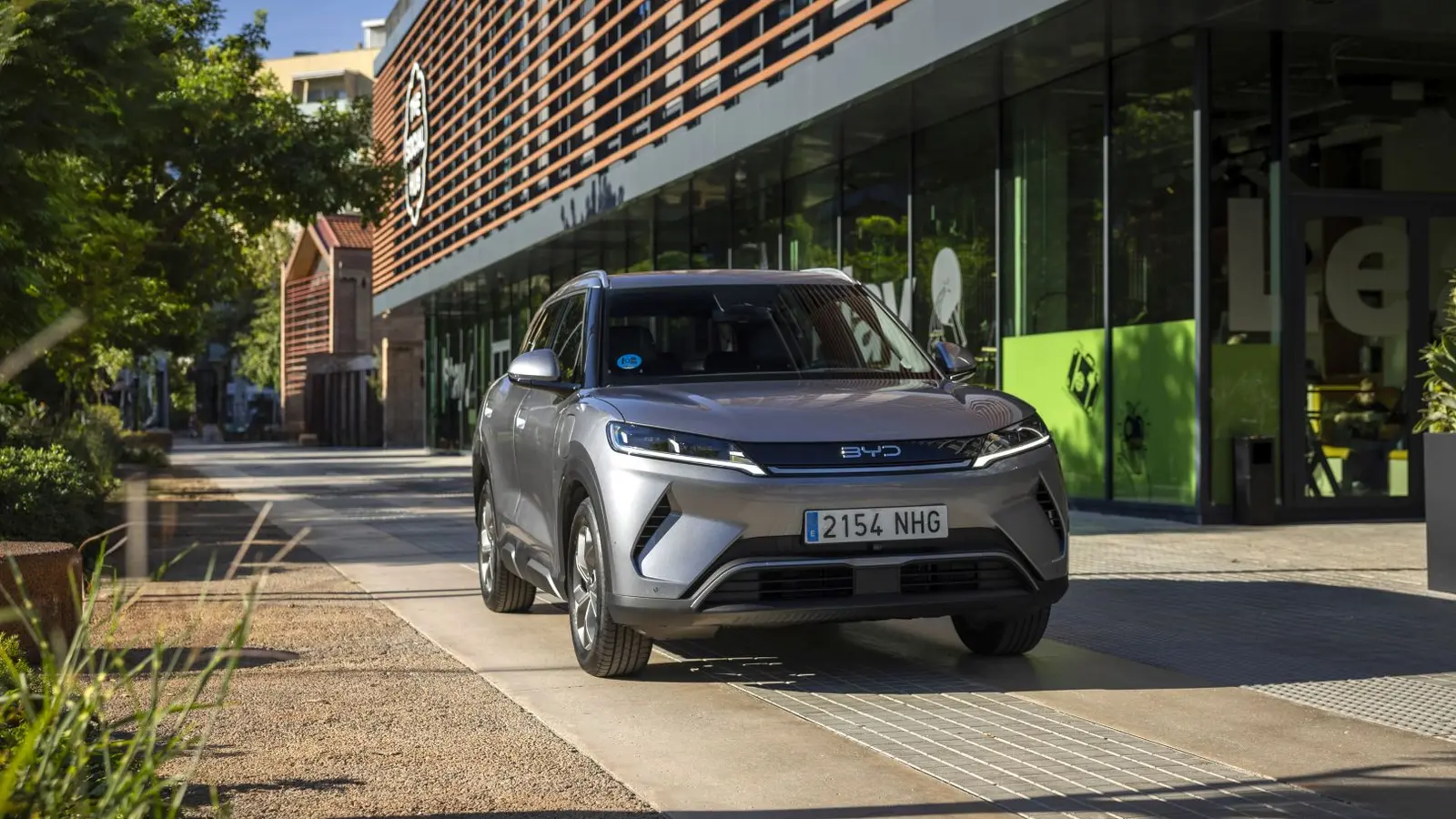
Imagine sitting in the back seat while your car steers through city traffic, making split-second choices for you. Now imagine the manufacturer writing you a cheque if it gets something wrong. That is the gamble BYD has just made.
When the car takes the wheel, who pays?
At a recent Intelligence Strategy event, BYD unspooled a promise that reframes liability in autonomous driving: the automaker will cover damage if one of its cars crashes while operating under its God's Eye autonomous system. It is an unusual move. Brave, too. And it signals more than marketing bravado—this is a bet on tech, on data, and on public trust.
BYD calls its full offer Full Damage Coverage. Switch on God's Eye and, if the car is driving itself when something goes wrong, BYD steps in to handle the bill. Simple to say. Complicated to deliver. But that is precisely the point. Who else is willing to stake the company reputation on real-world performance?

BYD will cover damages when God's Eye is engaged.
The announcement arrived alongside a handful of hardware and software milestones. BYD introduced the Xuanji A3, a 4-nanometer automotive driving system on a chip, and confirmed that LiDAR-equipped God's Eye will be an optional fit across its lineup. Underpinning the offer is a huge data play: over 3.15 million BYD vehicles on the road already, recording more than 124 million miles each day. That scale gives BYD a continuous stream of edge cases to train its models.
There are engineers behind those numbers. Lots of them. BYD says it has the largest intelligent driving team in China, roughly 5,000 people. The God's Eye stack has had four major upgrades, from a new Xuanji Architecture 2.0 to a satellite sensor arrangement and an upgraded physical AI model that adapts from real-road scenarios. The company frames these improvements as steps toward Level 4 capability.
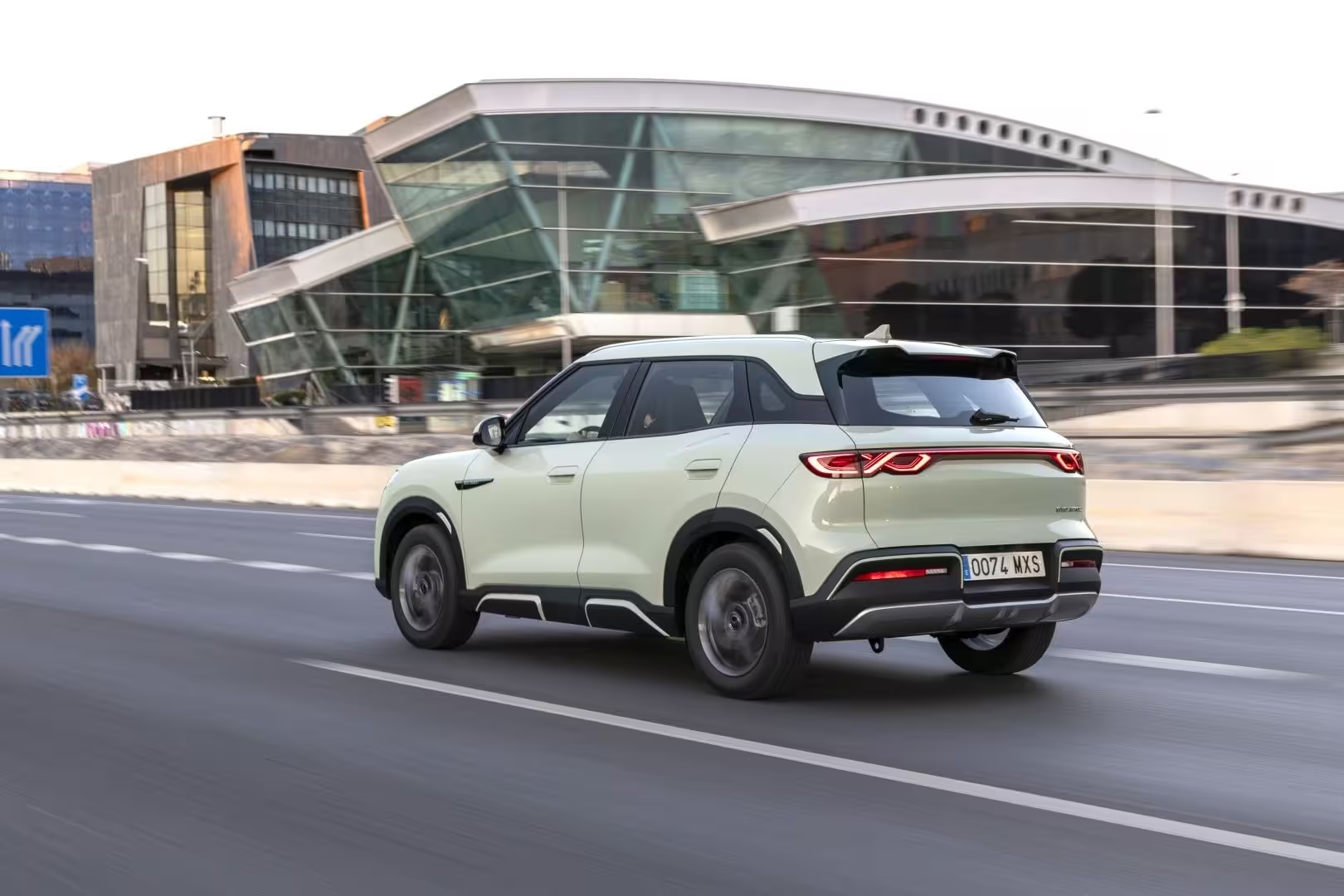
That matters because legal and regulatory frameworks lag technology. In the United States, consumer cars typically operate at Level 2 or Level 3; Level 4 remains largely limited to commercial deployments. The picture varies in Europe and the UK, but the technical promise is the same: give the AI more control and let it prove it can handle more responsibility.
Cost will determine adoption. In China, BYD prices the God's Eye LiDAR package at about €1,560. The firm also says it will invest roughly €136 million in intelligent driving research focused on safety and family travel. For context, competing approaches such as subscription supervised driving suites in other markets run in the neighborhood of €91 per month, while prior one-time purchase offers in the industry have been around €7,360.
Will buyers pay? Will regulators accept a manufacturer writing liability cheques? Those are real questions. For many consumers, insurance already handles crash costs. This move is as much about risk signaling as it is about payouts. BYD wants to make the case that its system reduces blame ambiguity: if God's Eye is engaged, BYD owns the outcome.

There is a marketing angle, clearly. But there is also a profound shift in expectation. Historically, self-driving incidents reignited debates about distracted drivers, third-party software suppliers, and complex fault chains. BYD is collapsing that chain—at least on paper—into a single promise. That could simplify claims processes and public conversation. Or it could invite legal scrutiny.
Either way, the industry will be watching. Autonomous systems live or die in the messy reality of everyday driving: construction zones at dawn, unexpected pedestrians, and the kind of weather that wrecks sensors. BYD is betting its sensors, chips, and mountains of fleet data will make the difference.

There is one final, practical note: BYD is not currently selling cars in the United States, so this announcement plays out first in China, where the company already has a deep installed base. If the experiment proves convincing there, expect echoes elsewhere. The carmaker is positioning itself not just as a vehicle builder but as a guarantor of what the car does when the driver does not.

“Cars are evolving faster than ever. I cover electric vehicles, smart mobility, and the future of transportation worldwide.”

Discussion
Leave a Comment