
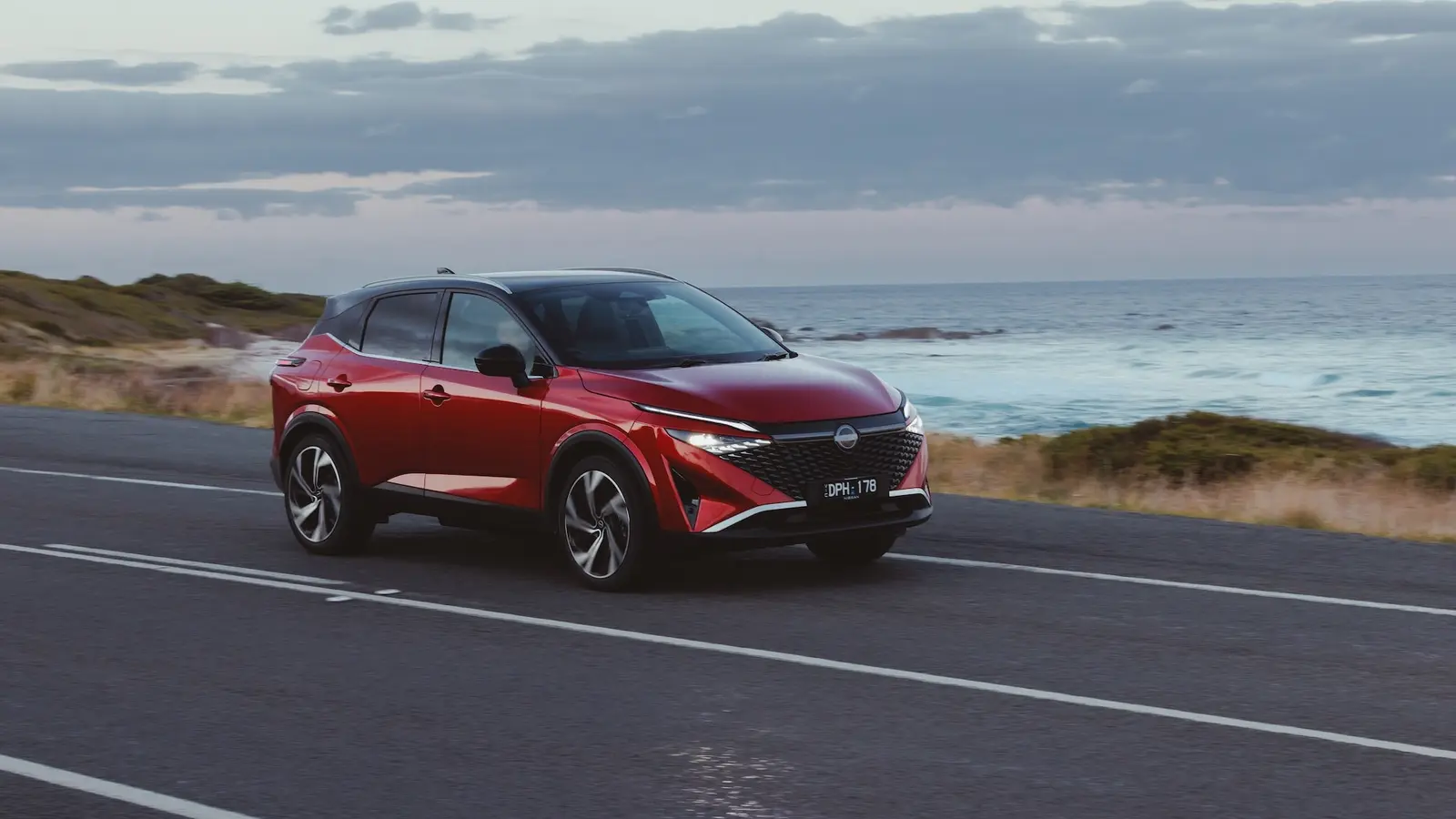
Picture an island road that keeps turning, a coastline that refuses to stop, and a compact SUV that quietly refuses to refuel. Nissan sent a Qashqai e-Power around Tasmania to see how far it could go on one tank. The answer: it lapped the island and kept going.
The run covered 808 miles, roughly 1,300 kilometers, with a reported real-world consumption of 53.4 MPG, or about 4.5 l/100 km. No plug. No stops for fuel. Just a small petrol engine doing the maths behind the scenes and an electric motor doing the heavy lifting.
What makes that possible
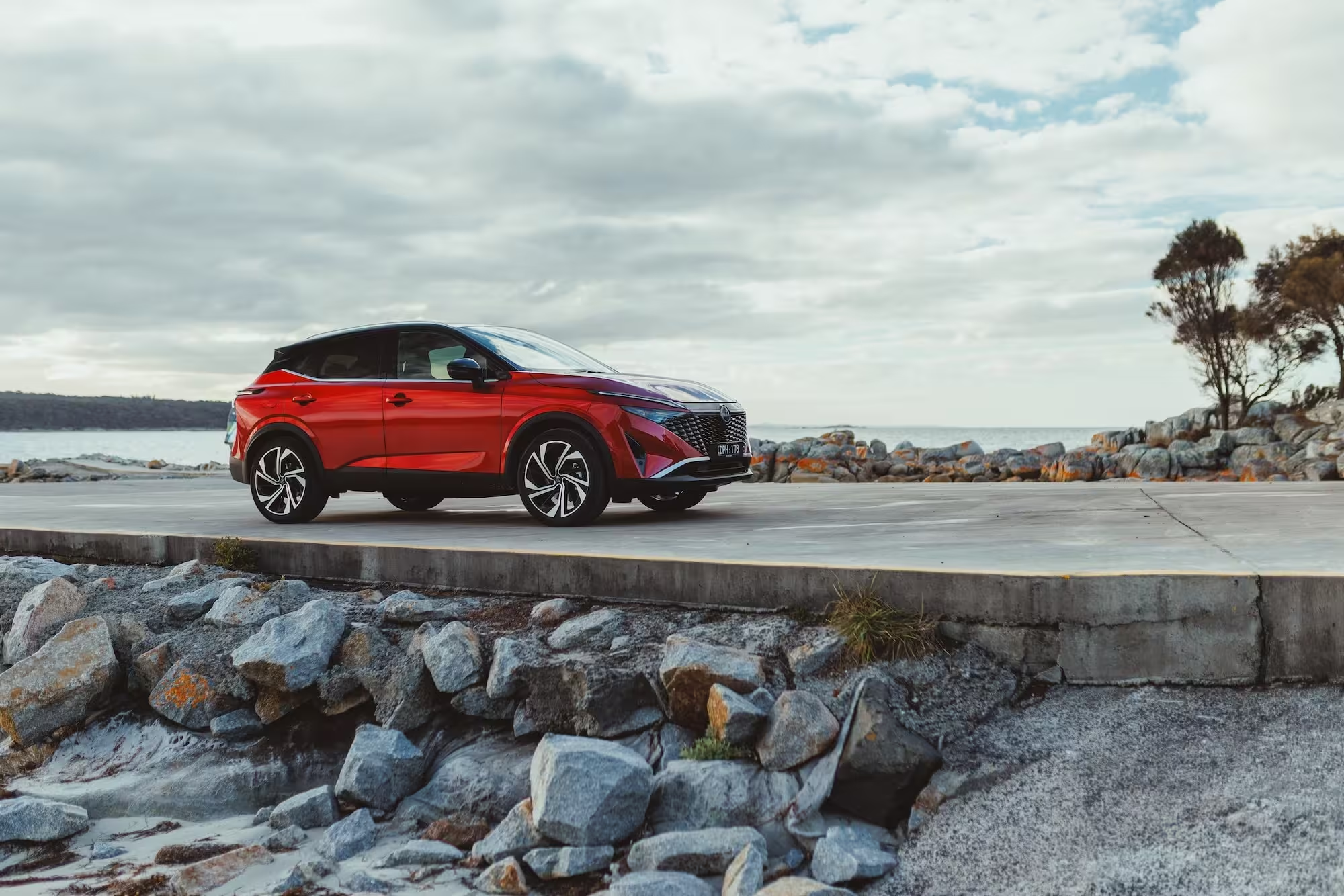
The Qashqai e-Power is not a plug-in. Its 1.5-liter petrol unit behaves like a mobile generator, charging a compact but eager lithium-ion battery pack. The battery is tiny by EV standards: 2.1 kWh gross, around 1.8 kWh usable. That gives brief pure-electric bursts of one to two miles at low speed, but the real point is continuous electric drive delivered by the motor while the petrol engine keeps the battery topped up and regenerative braking recovers energy on the descents.
The system lays down 188 horsepower and 243 pound-feet of torque, which translates to brisk off-the-line thrust. Nissan quotes 0 to 60 mph in 7.5 seconds and an electronically limited top speed of 105 mph, or 170 kph. On winding mountain passes and coastal ribbon roads, that electric drive character—instant torque, linear response—changes the feel of what would otherwise be an ordinary compact SUV.

The headline: 808 miles on a single tank with an average of 53.4 MPG (4.5 l/100 km).
Why Tasmania? For a straightforward reason: varied roads. The island mixes steep climbs, tight curves, long rural stretches, and stretches of open highway. Nissan says this was the second long-distance proof for the Qashqai e-Power; earlier it completed the classic Land's End to John O'Groats route across the UK, some 837 miles, returning a 62 MPG figure (about 3.76 l/100 km) and reportedly still had roughly 99 miles of range left at the end. Those two different circuits paint a useful picture: the system performs when the scenery — and the demands on the drivetrain — change.
The e-Power layout is effectively a series hybrid architecture: the engine never drives the wheels directly. That separates the petrol engine from drive duties and lets software and the electric motor manage speed and torque more like an EV. The trade-off is a small battery and reliance on the onboard generator, but the payoff is familiar—improved urban efficiency and EV-like driving feel without home charging infrastructure.

Beyond numbers, the test underlines something manufacturers increasingly want buyers to notice: range and fuel economy are as much about systems integration and driving patterns as raw battery size. A small battery combined with clever regeneration and an engine tuned to run in its efficient bands can deliver surprisingly long distances between fill-ups.

And Nissan is not shy about publicity. The Qashqai e-Power was recently named Hybrid Car of the Year at the News UK Motor Awards for a second year running. That recognition, plus these long-run demonstrations, frames the car as a practical compromise for drivers who want the responsiveness of electric drive without remaking their home or life around charging points.
Is it the future? Maybe. For now, the Tasmania lap is a proof point: a compact hybrid SUV that behaves like an EV on the road and can cover more than 800 miles when the math is done right. That will matter to drivers chasing both range and refinement.

“Cars are evolving faster than ever. I cover electric vehicles, smart mobility, and the future of transportation worldwide.”

Discussion
Leave a Comment