
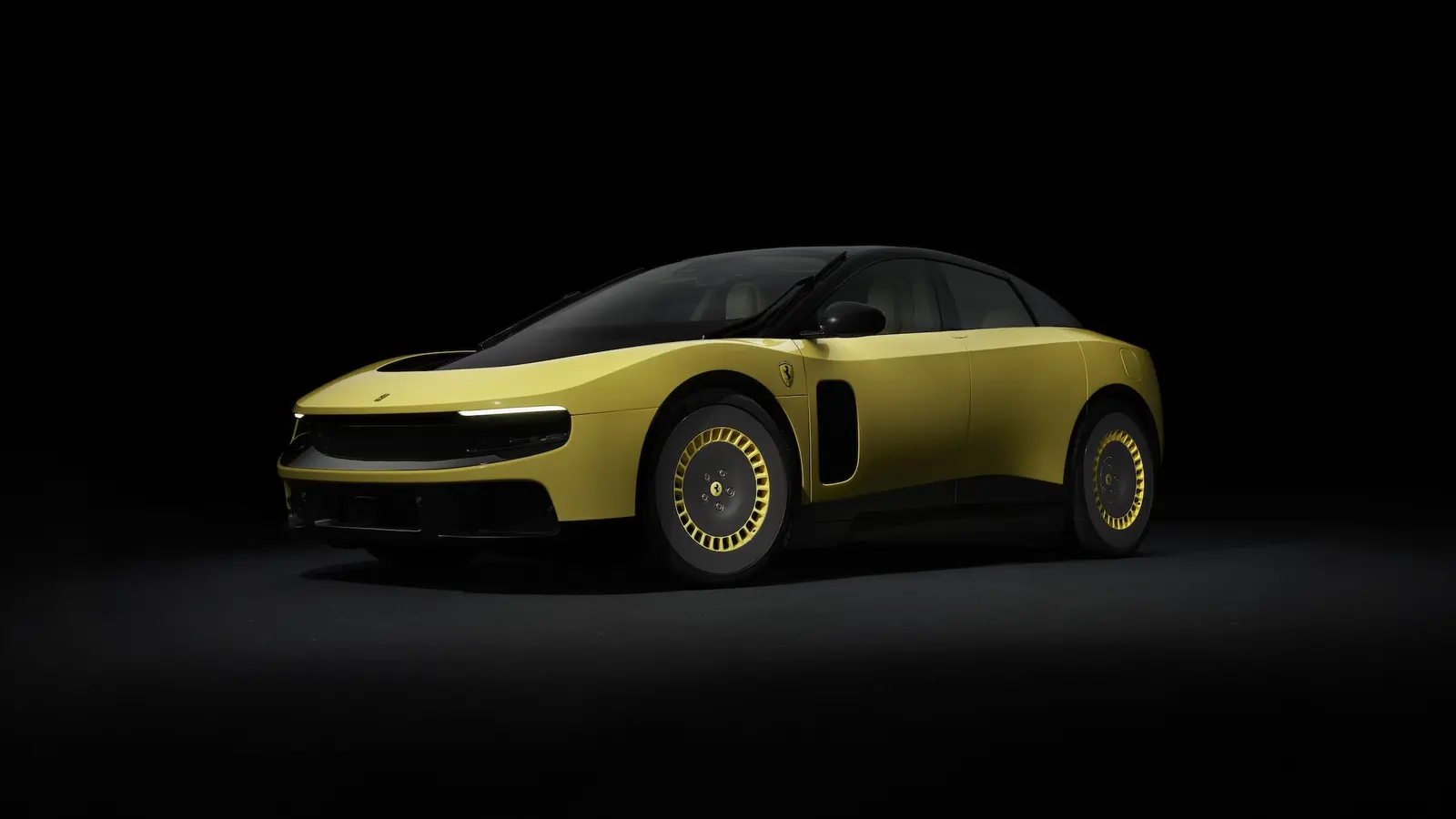
When Ferrari rolled the Luce into view in Rome, the reaction was immediate and messy. Some saw betrayal. Others saw progress. Either way, the latest chapter in Maranello's history proves a stubborn truth: brands evolve on their own terms.
The driver's seat is nonnegotiable
"We will not make fully autonomous cars," Ferrari CEO Benedetto Vigna said plainly. "We want the people to have fun, not the chips." Short sentence. Big idea. The company plans to keep and refine familiar driver aids like adaptive cruise control and lane departure warnings, but the firm draws a clear line at Level 3 and above autonomy.

That stance puts Ferrari at odds with rivals racing to automate the wheel. Mercedes, Ford, GM and BMW are betting safety and convenience on hands-off driving. Ferrari is betting on emotion. Why would someone buy a Ferrari to hand over the steering? It's not just marketing rhetoric. For Maranello, steering is part of the product.
Still, history has a memory. In 2011 Luca di Montezemolo declared electric cars incompatible with the essence of Ferrari. He said he would never build one. Fast forward to 2026, and the Luce is real: an electric hypercar that has stunned purists and tempted a new set of buyers. The price is steep, starting at about €595,000, but the buzz isn't about efficiency—it's about what it delivers on the road.
The Luce's quad-motor setup produces 1,035 horsepower (1,050 metric horsepower). Acceleration? 0 to 60 mph (0 to 97 kph) in roughly 2.5 seconds. Top speed close to 193 mph (310 kph). It looks exotic without looking like what many expect a hypercar to be. And yes, some clients said they'd only buy a Ferrari if the company offered an EV. So here it is.

Vigna is pragmatic. "We have IC, we have the hybrid, and we have the electric. Full stop. Then the client can pick up whatever they want," he said. The Luce will be Ferrari's electric halo for now, not the start of a full EV conversion. Expect petrol, hybrid and electric to coexist in the lineup for the foreseeable future.
So where does that leave autonomy? Ferrari's logic is simple and human. Cars are more than transport. They are theatre, skill, sound and sensation. Letting software take over those sensations would strip Ferrari of what makes it Ferrari. That may read as stubborn. Or as strategic restraint. Either way, for buyers who want a cockpit, not a chauffeur, the message is crystal clear: keep your hands on the wheel.

“I cover automotive innovation, electric vehicles, and the future of mobility — where technology meets sustainability.”

Discussion
Leave a Comment