
8 Minutes
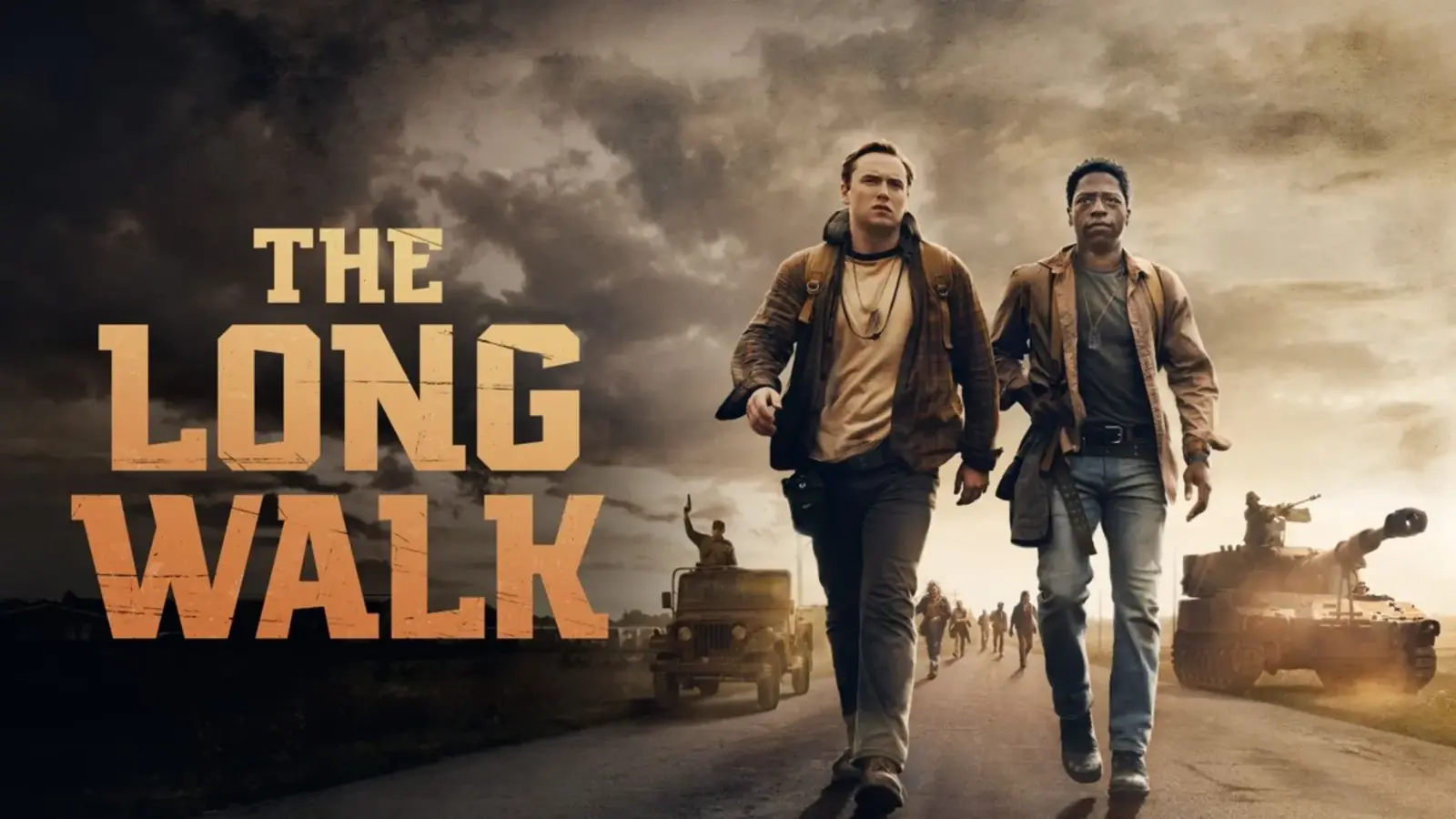
Francis Lawrence’s The Long Walk arrives with a weighty pedigree: a grim, one-line premise lifted from Stephen King (originally published under his Richard Bachman pseudonym) and a director who has handled large-scale dystopian and post-apocalyptic material before. At face value, the film promises a taut survival parable — fifty young contestants forced to keep walking under a merciless regime, with a single misstep punished by death. In execution, however, The Long Walk often feels like an intriguing idea that never quite translates into satisfying cinema.
A familiar apocalypse, told as bleak ritual
A key to understanding The Long Walk is to place it within the modern wave of dystopian cinema and serialized adaptations. The film sits squarely in a lineage that includes The Running Man-style televised cruelty, the endurance-torture logic of The Hunger Games, and the existential bleakness of I Am Legend — a film Lawrence himself directed. Where I Am Legend translated loneliness and survival into atmospheric horror, The Long Walk aims for a political allegory: the endless march as metaphor for a broken, coercive society. That formal premise has real potential. The idea that form and content should mirror each other — a narrative that is itself a ritual of exhaustion — is a clever, high-concept bridge between cinematic style and thematic bite.
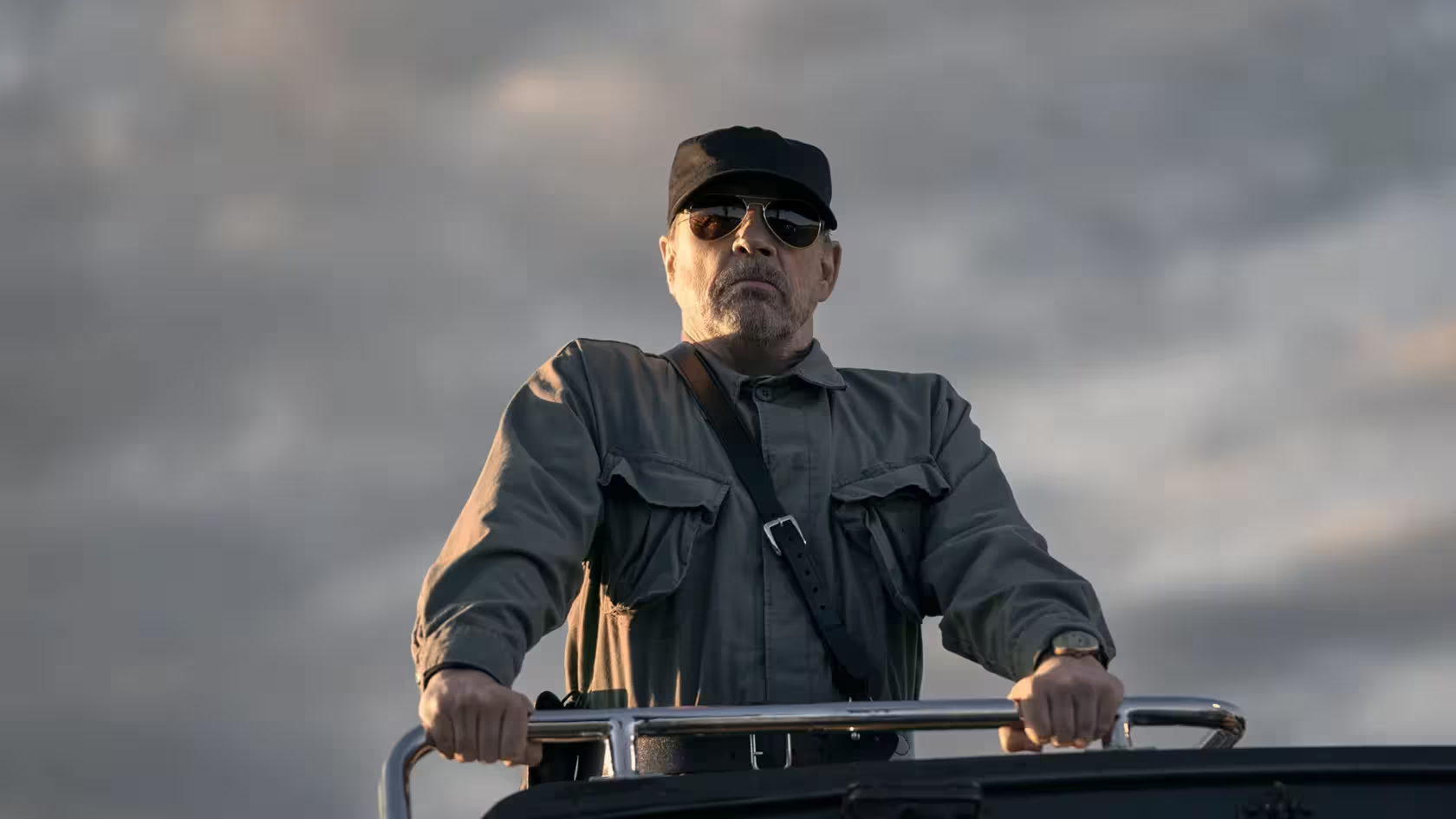
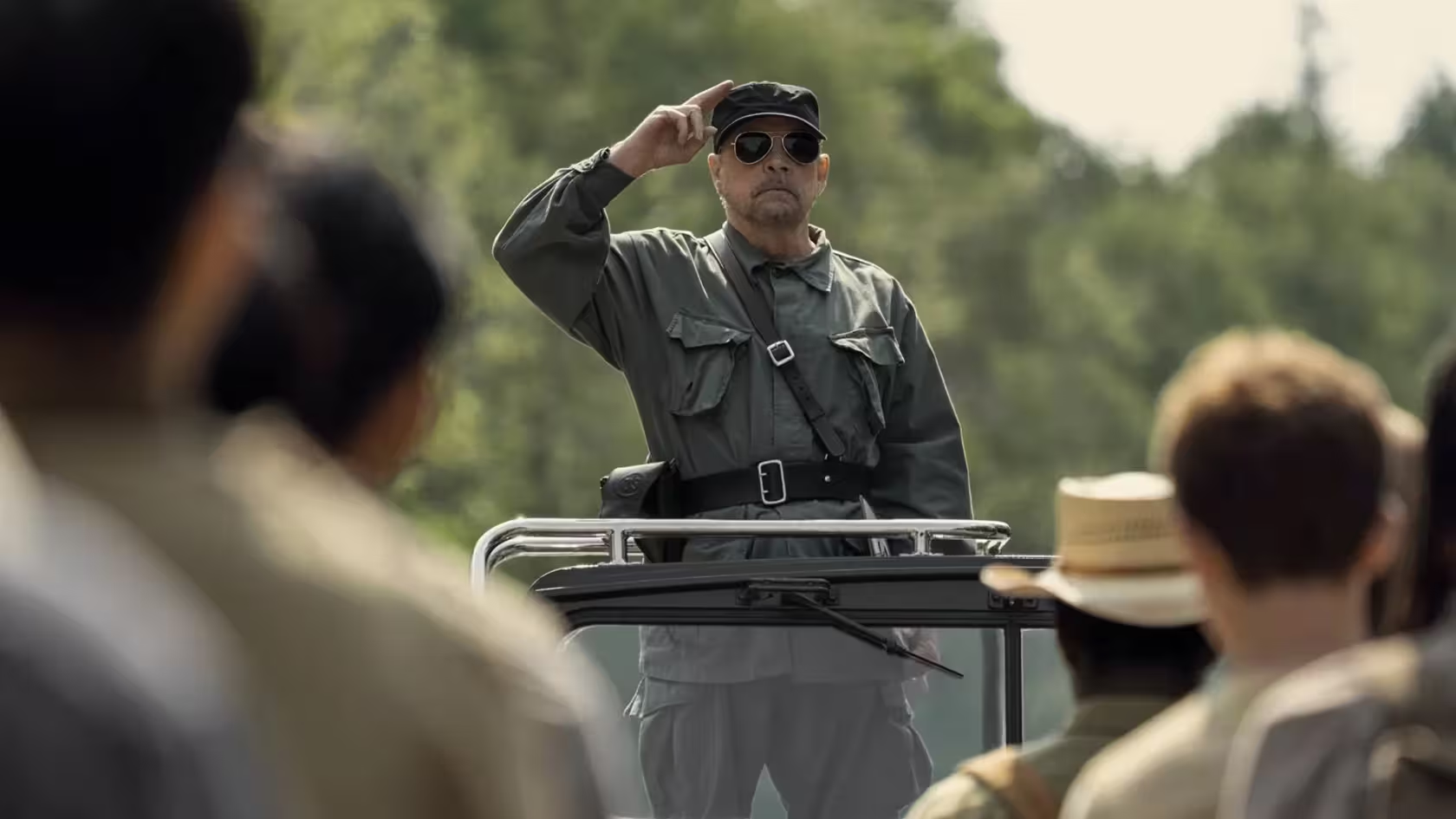
But potential and payoff are different things. The Long Walk builds a convincing, alternate-history backdrop: an America diminished by global conflict, where jobs and stability have collapsed and a warped authoritarian spectacle promises false hope. The film uses familiar dystopian signifiers — uniformed officers with rifles, propaganda, public punishments — to sketch a punitive system that preys on youth. The “colonial” charm of set dressing and period touches help sell the alternate timeline, and the early sequences genuinely convey anxiety. For a moment, the world feels both claustrophobic and dangerously plausible.
The problem is pacing and dramatic architecture. The film sets up an elemental tension — keep walking or die — and then largely relies on that single, relentless engine. Characters march. The guards shoot those who falter. Close-ups and landscapes reinforce physical strain and moral numbness. But aside from incremental wear and small interpersonal flashes, there isn’t a larger structural movement: no meaningful plot twists, no subversive gambit by the participants, and no dramatic escalation beyond attrition. The result is a movie that is thematically consistent but dramatically thin.
Why the concept falters on screen
Dramatic cinema requires stakes that evolve. Films like The Hunger Games or even the more literary Robocop remake create moments where characters make active choices, scheme, or instigate rebellion against the system; these choices redefine the stakes. The Long Walk’s characters are mostly reactive and resigned. This can be an intentional formal choice — to depict a society of fatalism — but on film, fatalism without contrast risks monotony. The audience needs a counterpoint: a plan, a moral argument, or a defiant act that changes the direction of the story. Without that, the film becomes a series of elegiac steps toward an expected end.
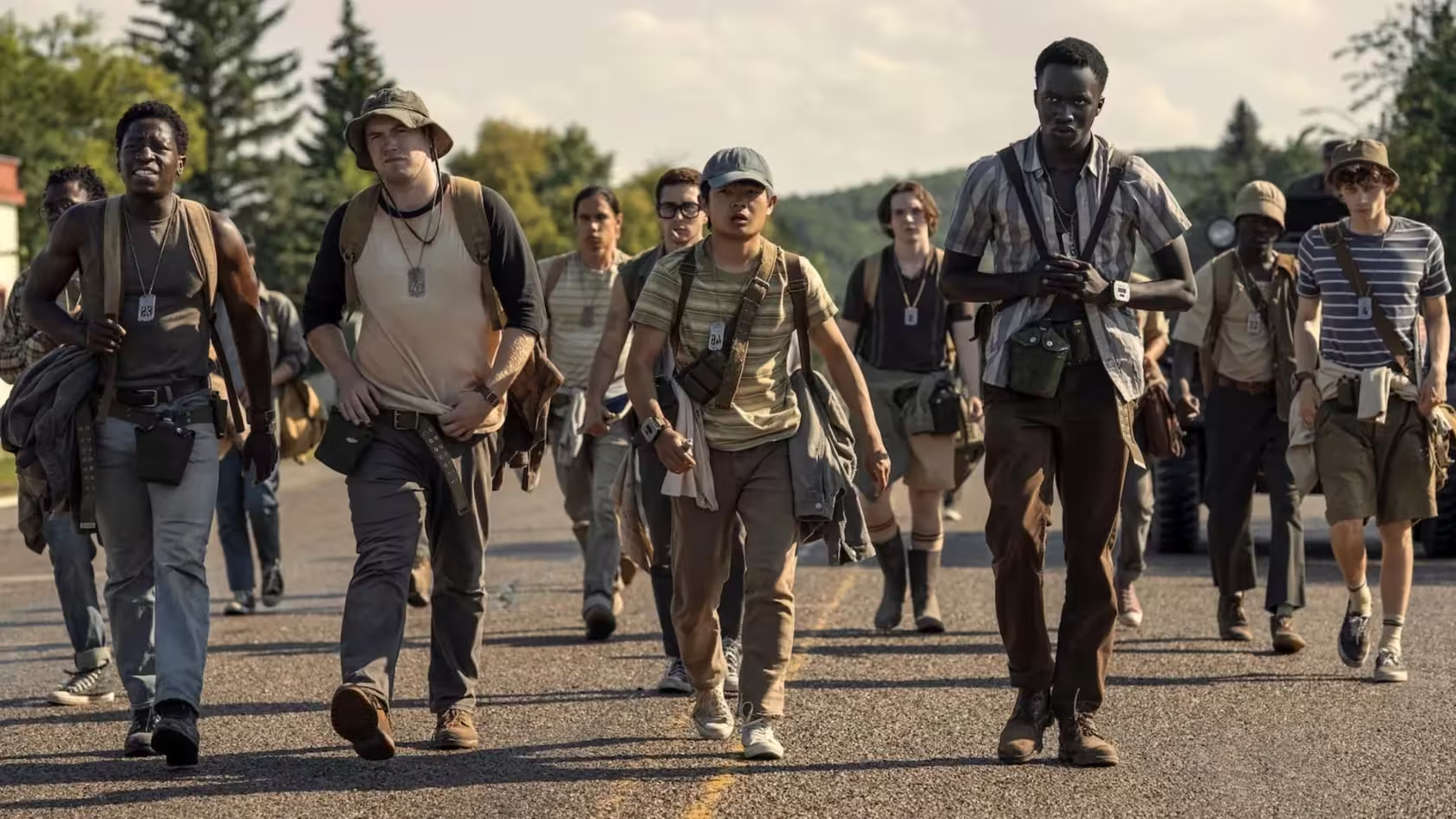
Performance-wise, the cast delivers committed work. There are instances of quiet power: small dialogues that show camaraderie, fear, and the odd flicker of hope. Yet the screentime devoted to walking undermines opportunities for deeper character arcs. The film’s central figures never cohere into fully realized protagonists with agency; instead, they function as representatives of the film’s thesis about coercive systems. That thesis — that oppressive regimes manufacture hope as bait and punish hope as a threat — is sharp, but it’s served in a reductive way.
Comparisons and missed opportunities
Comparing The Long Walk to similar titles clarifies both its strengths and weaknesses. In I Am Legend, Lawrence turned isolation into an evolving survival puzzle; in his Hunger Games entries, he allowed spectacle to feed into active rebellion. The Long Walk takes the spectacle and strips it of insurgent energy. If the film’s closest cinematic cousin is The Running Man or the more recent death-game narratives on streaming, then its failure is that it never turns the game into a stage for strategy. It remains a bleak procession rather than a crucible of change. Fans of King’s more psychological work — and readers of the original novella — may remember the story’s undercurrent of fatalism and social critique. The adaptation honors that tone but not the narrative propulsion necessary to make the feature film linger in memory.
Context: why dystopian films keep returning to similar beats
Dystopian cinema often reuses archetypes because those archetypes are powerful shorthand: the uniformed oppressor, the arena, the televised atrocity. These images speak to contemporary anxieties about surveillance, media, and political manipulation. Over the last decade, streaming platforms have revived interest in adaptation-heavy, concept-driven stories. But the market is also crowded; audiences demand that recycling of tropes be matched with either character reinvention or formal novelty. The Long Walk elects to double down on atmosphere and metaphor instead of narrative reinvention. That choice feels like a philosophical stance that might read well on paper but proves less effective in creating memorable theatrical experiences.
Behind the scenes and fan reception
Without delving into production-specific rumors, it’s worth noting how modern audiences respond to high-concept adaptations. The initial fan chatter surrounding The Long Walk praised the premise and Lawrence’s involvement. As reviews surfaced, many viewers appreciated the film’s visual rigor and its bleak allegory; critics and fans, however, also highlighted the slow burn and lack of narrative surprises. On social channels, conversations split between admiration for faithful mood-setting and frustration that the film never escalates into meaningful revolt or revelation.
Expert perspective
"The Long Walk is one of those films where the idea almost outshines the execution," says Eleanor Fisk, a cinema historian. "Lawrence captures the oppressive poetry of the source material, but cinema ultimately asks for movement: of plot, of character, of moral consequence. This film gives us erosion instead of transformation."
A final reckoning: where The Long Walk lands
The Long Walk is most compelling as provocation: a film that asks whether cinematic adaptations should prioritize atmosphere and allegory over the mechanics of storytelling. If you relish bleak, idea-first films that linger on metaphorical images — the endless road, the indifferent watchman, the ritualized punishment — there is satisfaction here. Moviegoers who want a narrative that pivots, surprises, and transforms its characters will likely feel shortchanged. The film could have found a more potent balance by allowing its protagonists to plan, resist, or at least present a dramatic counterweight to the system they endure.
In the end, The Long Walk is an accomplished exercise in tone and a missed opportunity for cinematic momentum. It honors Stephen King’s nightmarish vision and Francis Lawrence’s eye for desolate atmospherics, but it too often confuses endurance for drama. For those who study contemporary dystopian cinema, the movie is an interesting case study: a striking idea constrained by its refusal to let that idea explode into fully kinetic storytelling.
If you go in expecting a philosophical march rather than an action-driven escape, you will find value. If you want a dystopia that builds to cathartic rebellion, look elsewhere. Either way, The Long Walk is worth seeing — if only to witness how a brilliant premise can be simultaneously haunting and unresolved.


Comments
skyspin
I get the allegory, but cinema needs movement. feels like a long meditation, cool visuals, little payoff. meh
Armin
Is it really just walking tho? Sounds like an interesting idea but does that sustain two hours? feels thin, curious what others think
datapulse
wow didn't expect Lawrence to go so bleak... kinda mesmerized but also bored at times. pacing drags, tho

Leave a Comment