
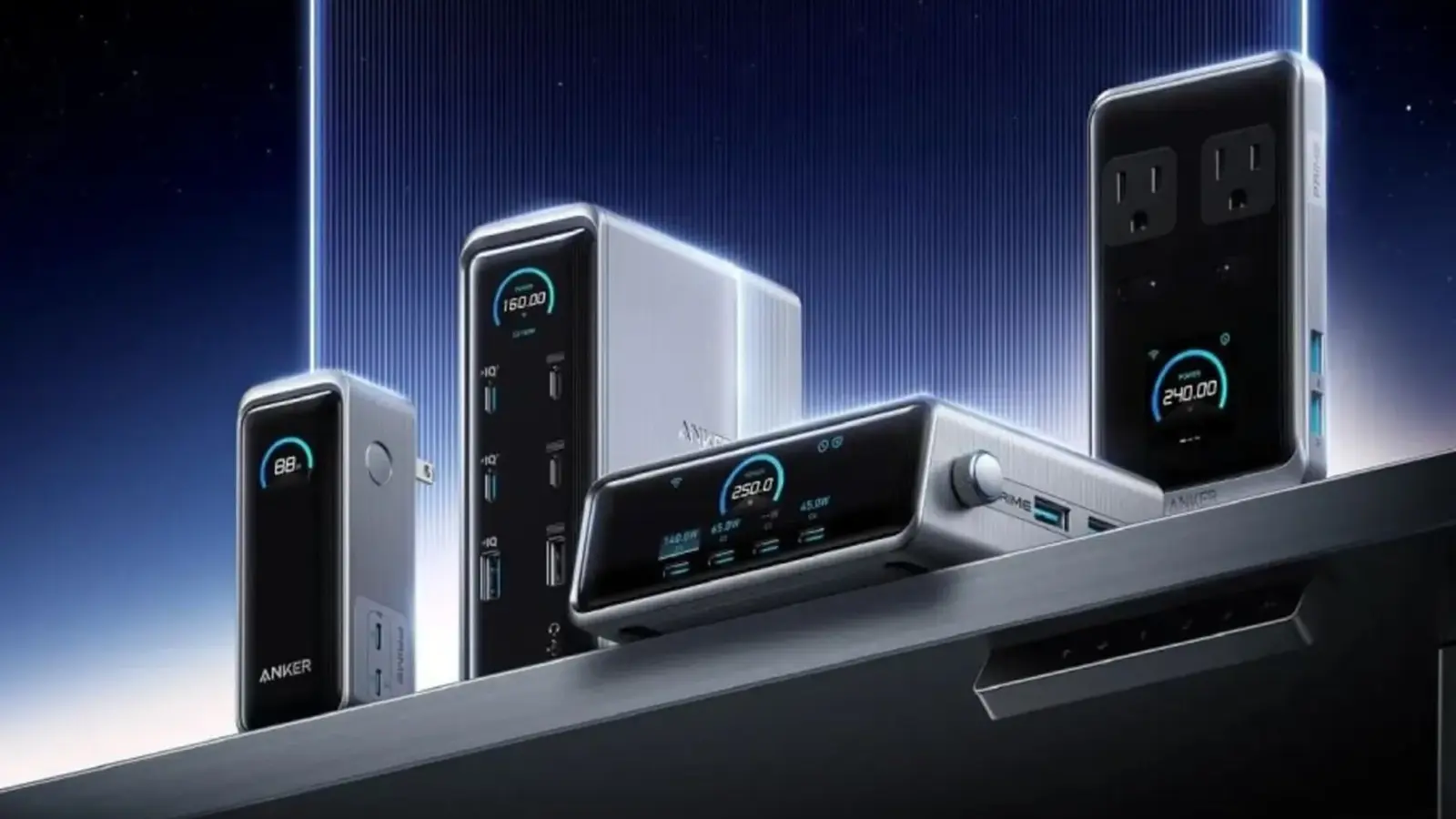
Ask anyone who commutes: a bulky power bank used to be as essential as a wallet. Those days may be numbered. Meng Yang, Anker's founder and CEO, thinks the humble portable charger could follow MP3 players and CD players into obsolescence within a few years.
That is a blunt claim from a company whose name became synonymous with the product that helped build its reputation. Anker rose fast after it launched in 2011 by shipping reliable portable chargers around the world. But prominence and permanence are not the same thing. Yang warns that traditional power banks are unlikely to balloon into a market worth tens of billions of euros and that their lifecycle could be short as new charging and battery solutions take hold.
From staple accessory to a smaller role
Numbers help explain why Anker is talking about change instead of clinging to nostalgia. The company reported roughly €3.97 billion in revenue for 2025, up significantly year on year. About €2.00 billion of that came from charging and energy storage products, roughly half of Anker's sales. But the firm is clear: conventional power banks are no longer the primary growth engine.

In the first quarter of this year, Anker posted about €988 million in revenue, a near 27 percent increase from the same period last year. Yet net income attributable to shareholders slipped to around €61 million, down approximately 4.9 percent. Growth without margin expansion. A signal that demand dynamics are shifting.
Yang has admitted the company once overextended its power-bank lineup. At the 2025 annual shareholder meeting, he acknowledged Anker released far more models than made sense, with roughly 100 distinct power-bank SKUs hitting the market in 2024 alone. Quantity does not equal longevity. Consumers move on.
So where do things go from here? For Anker, the answer has been diversification. The company still sells charging gear and battery packs, but it's increasingly placing bets on smart devices, energy-storage systems and more sophisticated charging accessories. The portfolio is broader. The narrative has shifted from one product to a platform of power and smart peripherals.
That pivot makes practical sense. Technology consumption is cyclical. Devices that feel indispensable can become quaint when form factors change, when phones get more efficient or when charging moves into new environments—cars, furniture, or public infrastructure. Power banks filled a gap for a decade. The next decade may call for different solutions.
Will portable chargers vanish entirely? Probably not overnight. There will be niches: travelers, festival-goers, and areas with unreliable grid power will still value portable energy. But the mass market could thin. And when a market shrinks, margins compress and product strategies have to evolve quickly.
For Anker, survival without stagnation means leaning into what’s durable about the business: engineering talent, supply-chain know-how, and brand recognition. Those assets can be redeployed into new categories that capture the same user needs—convenient, reliable power—through different form factors and smarter integrations.
Changemakers in consumer electronics have always known this truth: being first to solve a problem does not guarantee being the one to solve it forever. The future of portable power will be written by companies that anticipate how people will want to carry, access, and share energy in daily life.


“I cover emerging technologies, digital innovation, and the intersection of tech and everyday life. My goal is to make complex trends accessible and inspiring.”

Discussion
Leave a Comment
Comments (2)
Is this even true? Anker predicting a fade feels a bit dramatic, battery tech is messy. But yeah, in lots of places portable power is still essential, curious to see margins
Wow, didnt expect Anker to say power banks could go niche so quick! kinda wild, phones better, chargers in cars/furniture... still keeping mine for festivals and travel tho