

3 Minutes
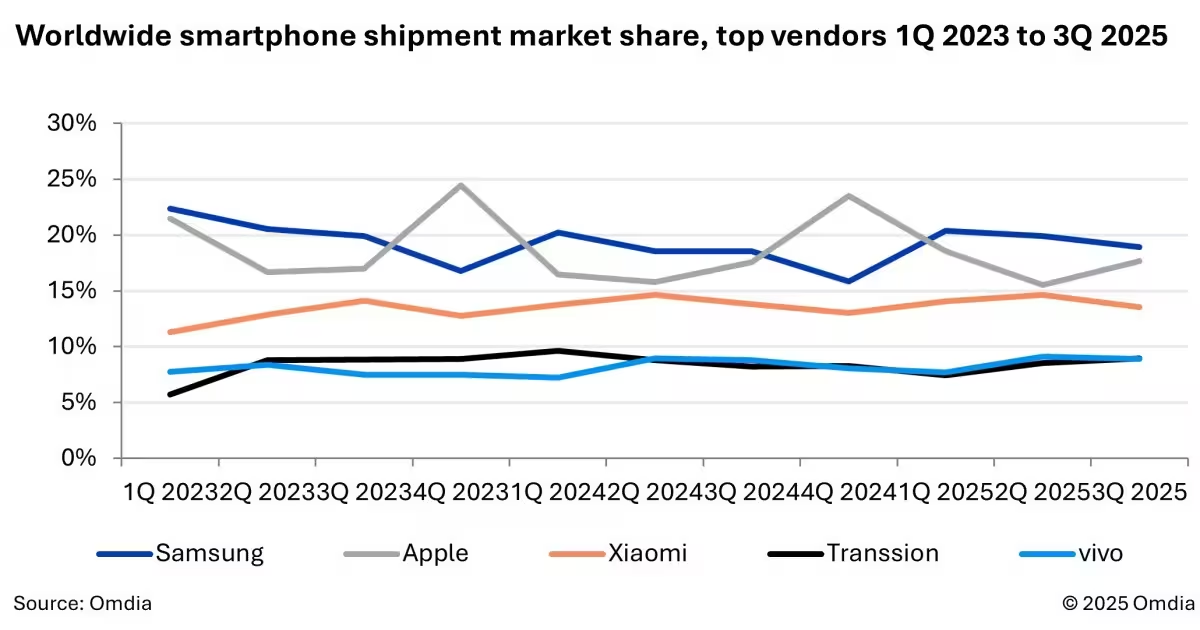
Omdia's newest market brief shows Samsung reclaimed the lead in global smartphone shipments for Q3 (July–September), as buyers shifted across price tiers and regions. The quarter brought surprising winners, pressure on mid-range models, and clear signs of where manufacturers are finding traction.
How the top five manufacturers stacked up
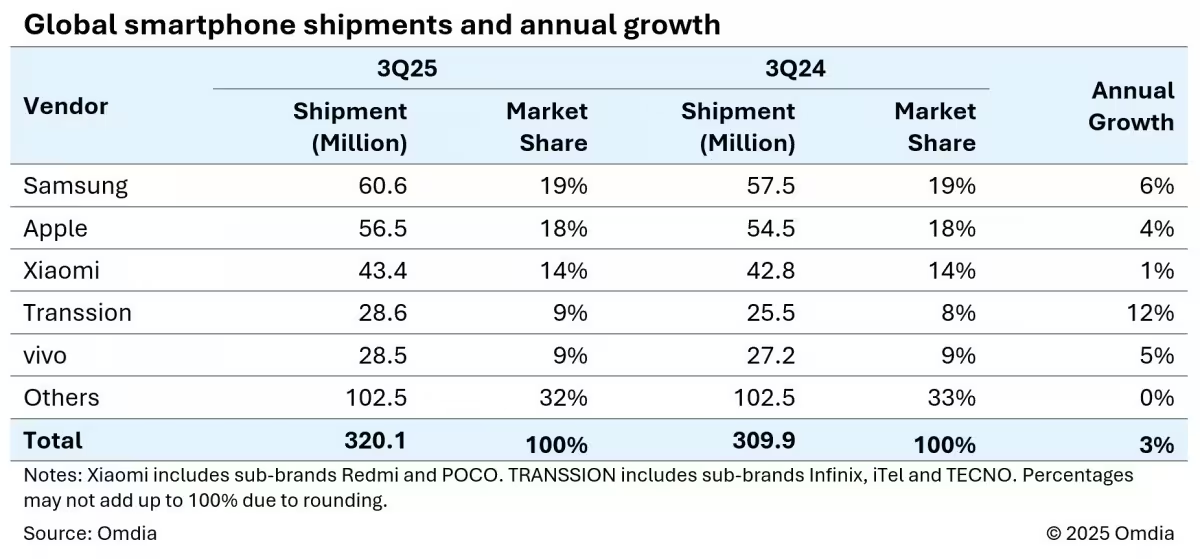
Shipments across the industry totaled 320.1 million units in Q3, up 3% year‑on‑year. But beneath that modest gain the leaderboard saw tight competition and divergent regional performances:
- Samsung: 60.6 million units — 19% market share, up 6% YoY.
- Apple: 56.5 million units — 18% share, up 4% YoY.
- Xiaomi: 43.4 million units — 14% share, up 1% YoY.
- Transsion: 28.6 million units — 9% share, highest YoY growth among top five at 12%.
- vivo: 28.5 million units — 9% share, up 5% YoY.
What drove Samsung’s rebound?
Samsung’s bounce was fueled by a mix of premium foldables and solid entry-level performers. The Galaxy Z Fold7 and Flip7 attracted premium buyers, while A-series models like the A07 and A17 helped the company retain volume in price-sensitive markets. That two-pronged approach — flagship halo devices plus affordable volume phones — proved effective this quarter.
Apple, Xiaomi and regional stories
Apple’s base iPhone 17 outperformed initial expectations, with analysts pointing to a clearer value proposition at the entry point of the lineup. Xiaomi faced a China slowdown after government subsidy programs ended, but growth across Asia‑Pacific and other markets offset that weakness.
Meanwhile, Transsion — the parent of Infinix, iTel and Tecno — posted the strongest growth among the top five, driven by continued demand in Africa and other emerging markets. vivo kept momentum in India, surpassed Huawei in China, and expanded across Asia‑Pacific, Africa and Latin America.
Regional shifts: winners and laggards
Not all markets moved in the same direction. North America and Greater China recorded year‑on‑year declines in shipments, while Asia‑Pacific, the Middle East and Africa showed strong growth. Africa stood out with a 25% increase in shipments, and Asia‑Pacific grew by 5% — underscoring how much of the industry’s expansion depends on emerging regions.
Price tiers reshaping demand
A notable insight from Omdia: growth in Q3 came mainly from two extremes — devices priced under $100 and those above $700. The mid‑range segment struggled. Looking ahead, analysts expect manufacturers to push list prices higher for new models, which could squeeze the low‑end market if component and production costs rise.
In short, Q3 painted a picture of a market that’s growing but shifting: premium flagships and ultra‑cheap phones are driving volumes, mid‑range appeal is fading, and regional opportunities — especially in Africa and parts of Asia — are increasingly decisive for vendors chasing scale.
Source: gsmarena



Leave a Comment