
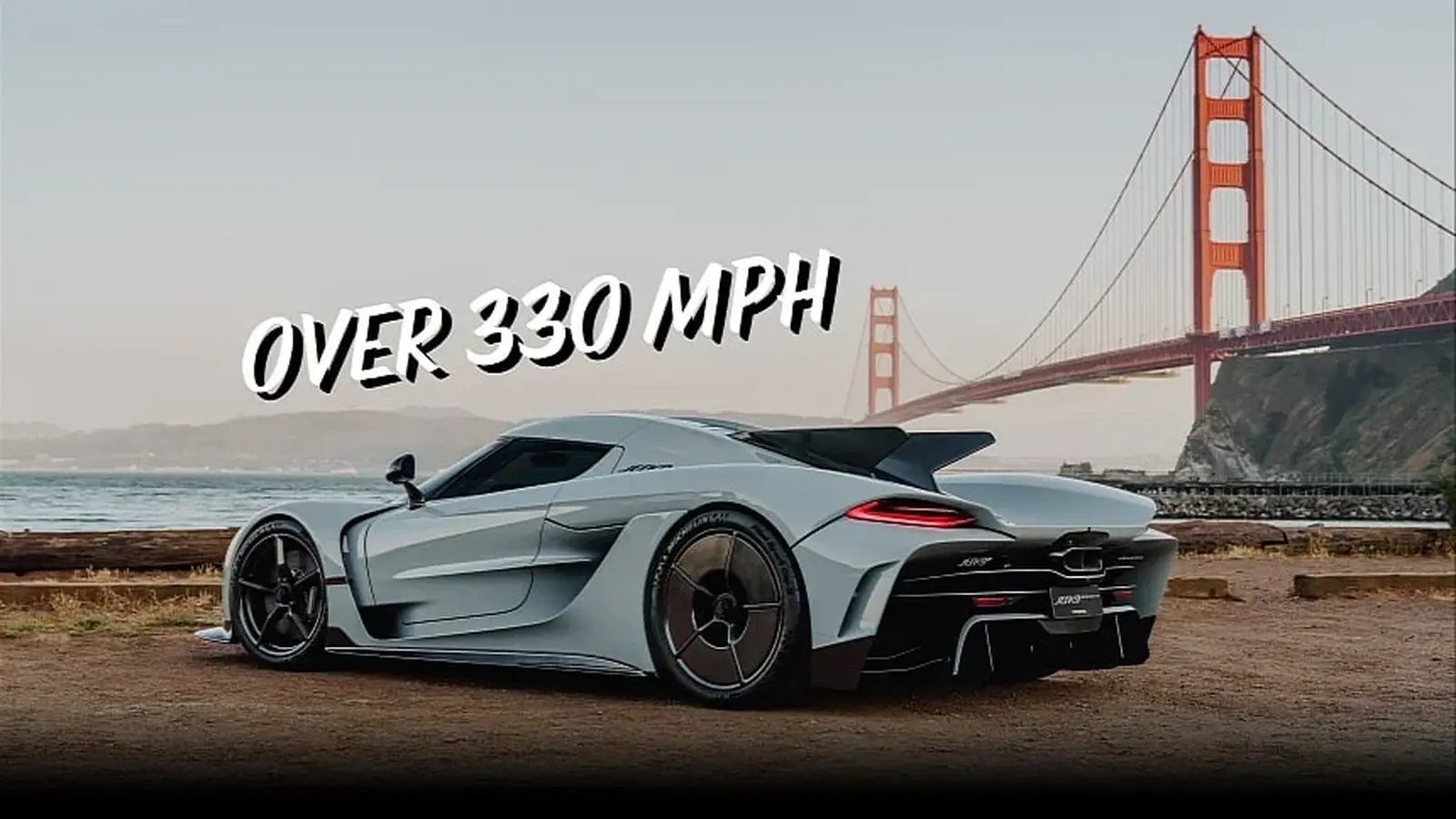
Can production cars ever reach 400 mph?
As of late 2025, the short answer is: not yet. While automakers keep pushing the envelope of engineering and materials science, practical limits—regulatory, physical and commercial—stand between today’s fastest road cars and the mythical 400 mph (644 km/h) barrier. Aerodynamic rules, ever-tighter safety and noise regulations, tire technology, and even fuel economy and emissions requirements all combine to make the 400-mph dream a tremendously difficult proposition for bona fide production vehicles.
That doesn’t mean manufacturers aren’t chasing higher and higher top speeds. Many current hypercars focus on the 300+ mph bracket, while electrification is rewriting the acceleration playbook. Below we rank 20 of the speediest production-eligible cars in 2025, excluding discontinued models and one-offs that never entered series production. Conceptual vaporware is out, too: these are cars with real engineering, production intent and recorded or widely accepted performance targets.
How we picked the list
We included cars that have either produced validated top-speed runs or that are production models with published, verified targets. Prototypes and purely conceptual projects were excluded. The ranking blends actual measured top speeds with credible manufacturer targets and validated test runs to create a snapshot of the current high-speed landscape.
Highlights & quick takeaways
- Electric hypercars now occupy many of the top positions, thanks to instant torque and advanced battery and motor tech.
- Internal-combustion legends remain highly competitive—particularly trimmed-down, low-drag special editions and models optimized for top speed.
- Top speed claims vary between manufacturer targets, one-off test vehicles and customer-limit settings; always look for independently verified runs.
The 20 fastest production-capable cars in 2025
Numbers below are a mix of achieved top speeds (noted where applicable) and credible manufacturer targets. For consistency we cite miles-per-hour (mph) primarily, and metric equivalents where useful.
20. Ferrari F80 — Target: 217 mph
Powertrain: 3.0L twin-turbo V6 + 3 electric motors • Transmission: 8-speed DCT • Power: ~1,184 hp • 0–60 mph: ~1.9 s
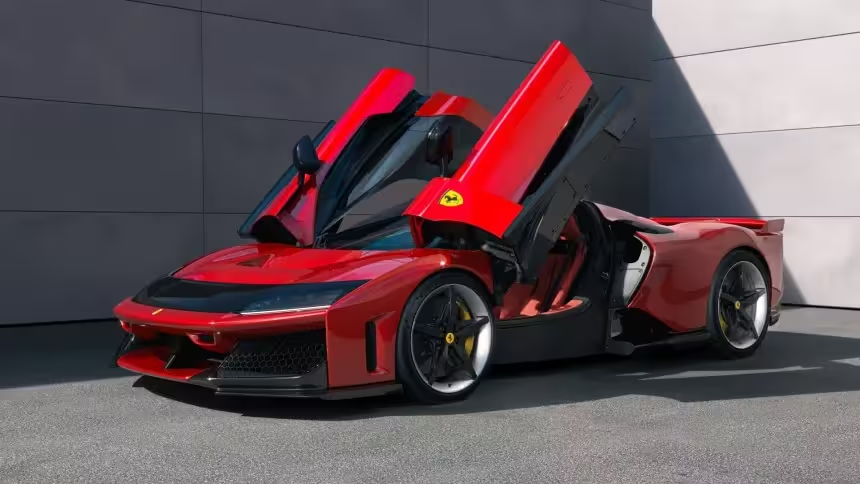
The F80 replaces the LaFerrari as Ferrari’s modern halo. Its hybrid layout—an aggressive downsized twin-turbo V6 aided by three electric motors—generated controversy for abandoning the old naturally aspirated V12 badge identity. Still, the balance of electrification and combustion allows Maranello to extract top-speed performance close to 217 mph (350 km/h) while keeping curb weight and packaging competitive. Stylistic choices and the absence of a rear window divided enthusiasts, but the F80 is undeniably a technical statement about Ferrari’s hybrid future.
19. McLaren W1 — Target: 217 mph
Powertrain: 4.0L twin-turbo V8 + 1 electric motor • Transmission: 8-speed DCT • Power: ~1,258 hp • 0–60 mph: ~2.5 s
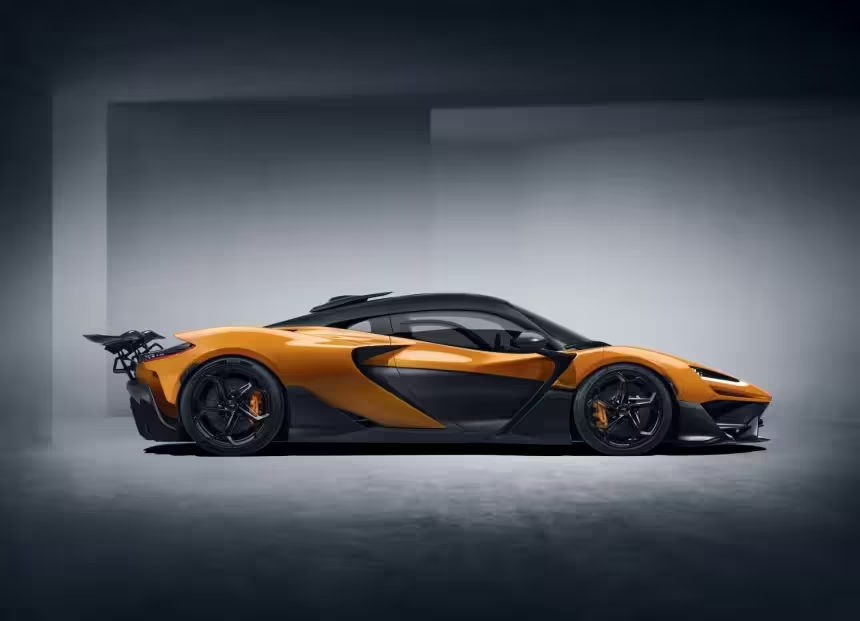
McLaren’s W1 returns some purity by sticking with a rear-drive layout and a V8 heart paired with hybrid assist. The car’s aerodynamic package includes a roof-mounted flow diverter and a full-width lower front wing that funnels air under the car, working together with an active rear wing. Despite its sophisticated aero, top speed aims mirror Ferrari’s F80—both listed around 217 mph—leaving McLaren’s W1 focused as much on driver engagement as sheer velocity.
18. Lamborghini Revuelto — Target: 217+ mph
Powertrain: 6.5L NA V12 + 3 electric motors • Transmission: 8-speed DCT • Power: ~1,001 hp • 0–60 mph: ~2.3 s
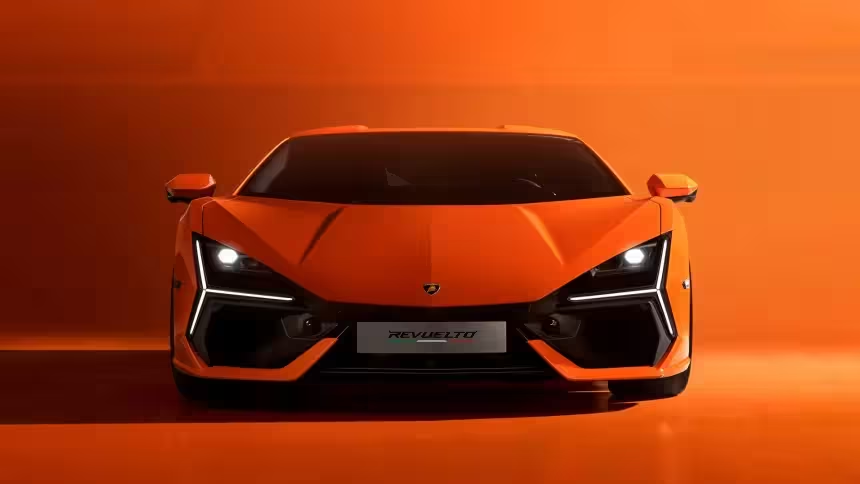
Lamborghini replaced the Aventador’s automated-manual gearbox with a modern dual-clutch while introducing the Revuelto’s high-revving naturally aspirated V12 complemented by three electric motors. It’s a plug-in hybrid that aims to retain Lambo’s signature V12 bark—claimed 9,500 rpm—and produce a top speed slightly above 217 mph on the right setup. The plug-in hybrid recipe is Lambo’s last dance for a naturally aspirated V12 halo.
17. Automobili Pininfarina Battista — Achieved: 222 mph (2023)
Powertrain: 4 electric motors • Transmission: Direct drive • Power: ~1,900 hp • 0–60 mph: ~1.79 s
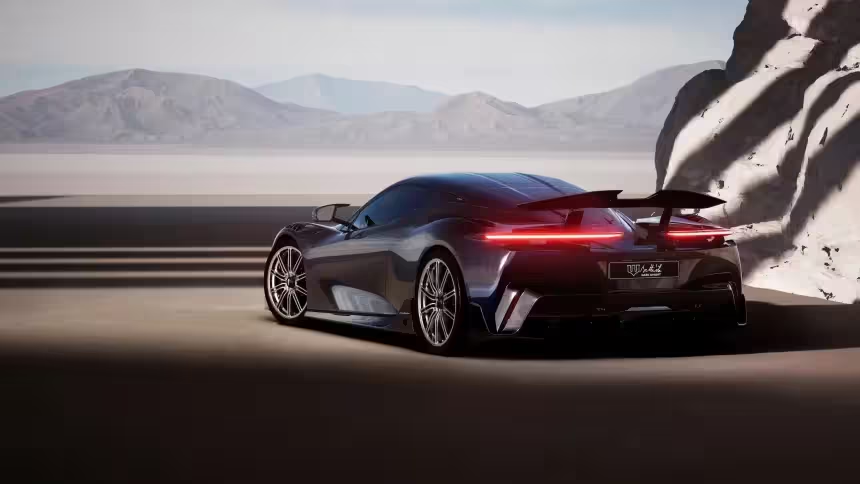
Built in Cambiano and drawing heavily on Rimac technology, the Battista is a grand-touring hypercar with colossal electric output. A verified run reached 222 mph (357.1 km/h) in 2023, with the car using Michelin Pilot Sport Cup 2 R tires for the validation run. The Battista blends coachbuilt Italian flair with Croatian EV performance engineering to deliver blistering straight-line speed and surprising range for a four-motor hyper GT.
16. Chevrolet Corvette ZR1 — Achieved: 233 mph (2024)
Powertrain: 5.5L twin-turbo V8 • Transmission: 8-speed DCT • Power: ~1,064 hp • 0–60 mph: ~2.3 s
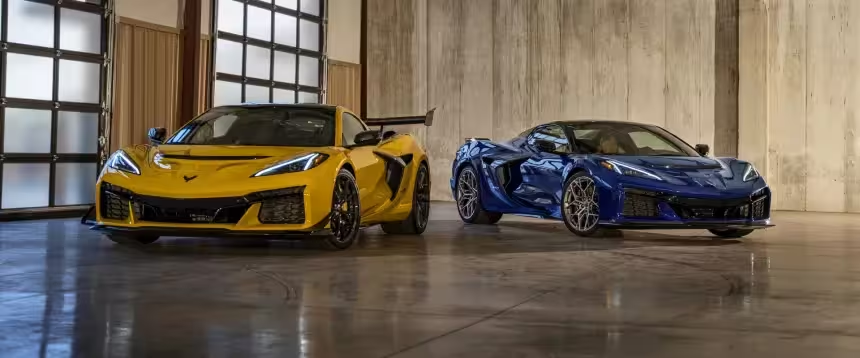
The Corvette ZR1 is the most affordable stallion on this list. With a 5.5-liter twin-turbo V8 tuned for high-output performance, Chevrolet confirmed a 233 mph top speed in 2024 using the ZTK Performance Package (track-focused setup). The ZR1 mixes accessible pricing with astonishing top-speed capability, proving that extreme performance needn’t always come with a seven-figure price tag.
15. W Motors Fenyr SuperSport — Target: 249 mph
Powertrain: 3.8L twin-turbo boxer H6 • Transmission: 7-speed DCT • Power: ~799 hp • 0–60 mph: ~2.6 s
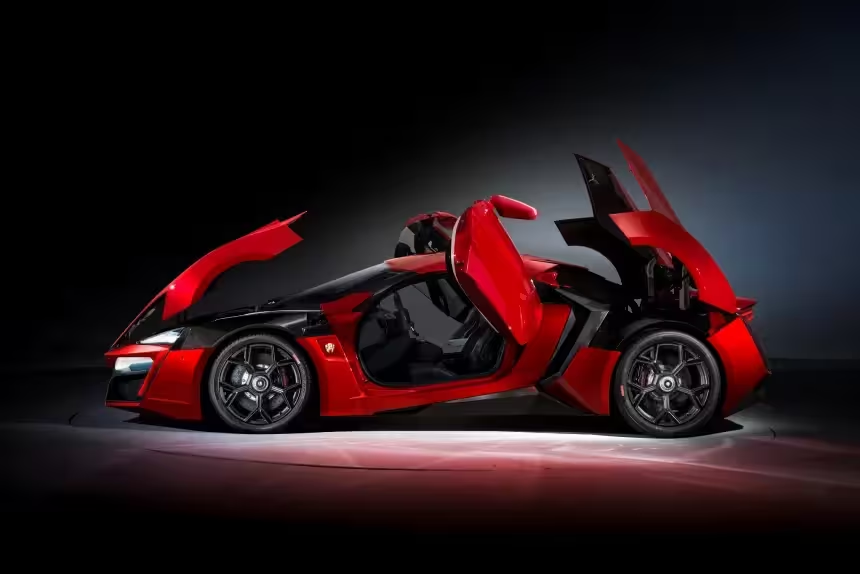
As an evolution of the Lykan brand’s more theatrical hypercar days, the Fenyr SuperSport relocated assembly to Austria under contract manufacture, pairing a RUF-developed flat-six with high-performance packaging. Limited production and hand-built touches underline its exclusivity; targeted top speed nudges into the mid-240s mph on optimized runs.
14. Deus Vayanne — Target: 249+ mph
Powertrain: 3 electric motors • Transmission: Direct drive • Power: ~2,213 hp • 0–60 mph: ~1.7 s
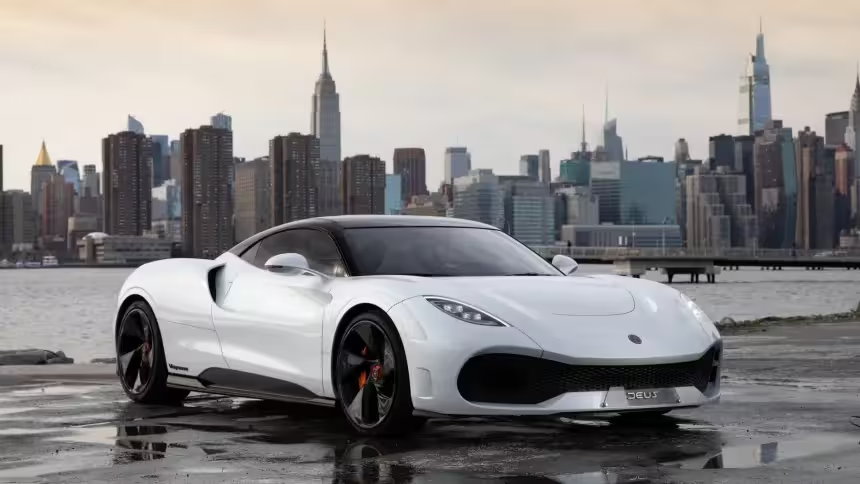
Developed in partnership with Italdesign and Williams Advanced Engineering, the Deus Vayanne is a three-motor electric hypercar from Austria limited to 99 units. Its claimed output and advanced battery tech aim for top speed numbers rivaling other three- and four-motor EV hypercars while offering fast charging support—0–80% on a 350-kW charger in roughly 20 minutes—plus notable luggage space under the front hood.
13. Koenigsegg Gemera — Target: 249+ mph
Powertrain: 5.0L twin-turbo V8 + 1 electric motor • Transmission: 9-speed Light Speed Tourbillon • Power: ~2,269 hp • 0–60 mph: ~1.7 s
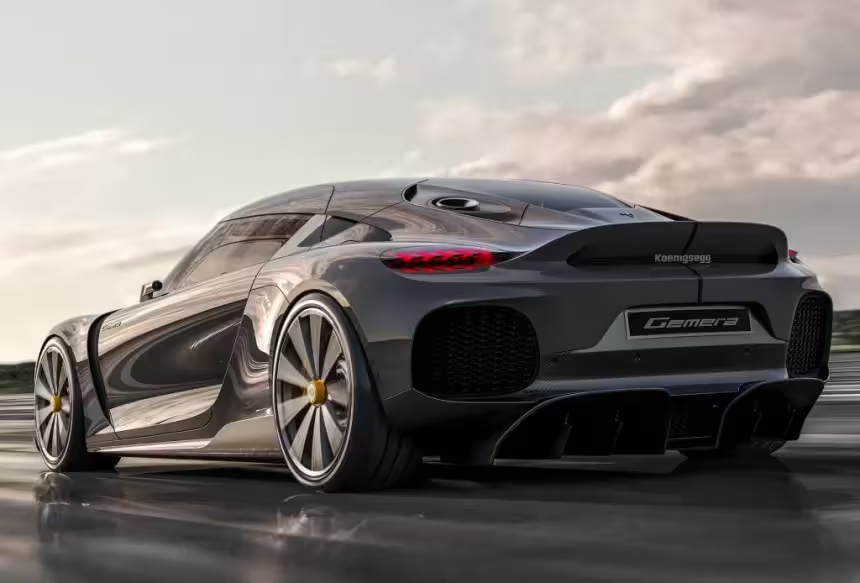
The Gemera is Koenigsegg’s unusual 2+2 hyper-GT with gargantuan engineering solutions: dihedral synchro-helix doors, a hybrid V8 powerplant, and a multi-clutch “Light Speed Tourbillon” transmission variant derived from Koenigsegg’s other high-end models. The Gemera emphasizes packaging and multi-seat practicality while still promising hypercar-level straight-line performance.
12. Ultima RS (LT5) — Target: 250+ mph
Powertrain: 6.2L supercharged V8 (LT5) • Transmission: 6-speed manual • Power: ~1,184 hp • 0–60 mph: ~2.3 s
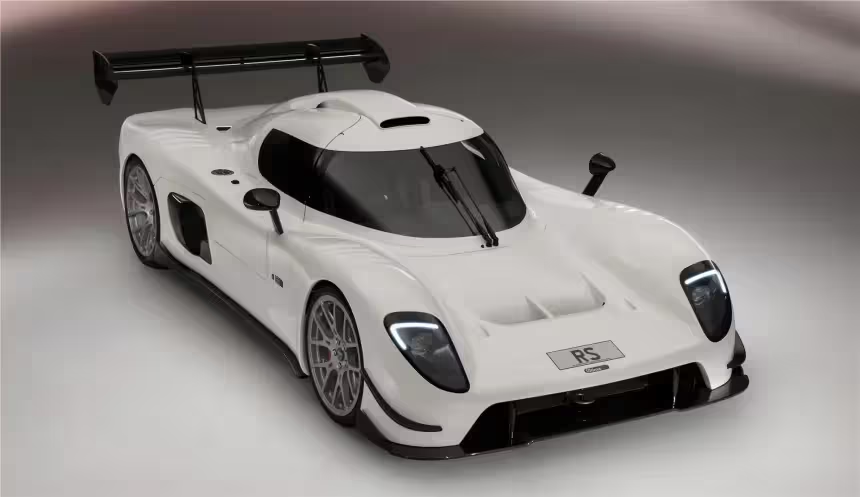
Ultima’s RS is a raw, track-inspired sports car built on a tubular spaceframe with composite bodywork—often mistaken for a kit car, though factory-built examples are available. Lightweight construction and huge power outputs (from GM-sourced powertrains up to LT5 supercharged spec) let the Ultima target top speeds in excess of 250 mph, but this is a car that rewards bravery and mechanical sympathy more than passive luxury.
11. Czinger 21C V Max — Target: 253 mph
Powertrain: 2.88L twin-turbo V8 + 3 electric motors • Transmission: 7-speed sequential • Power: ~1,350 hp • 0–60 mph: ~1.7 s
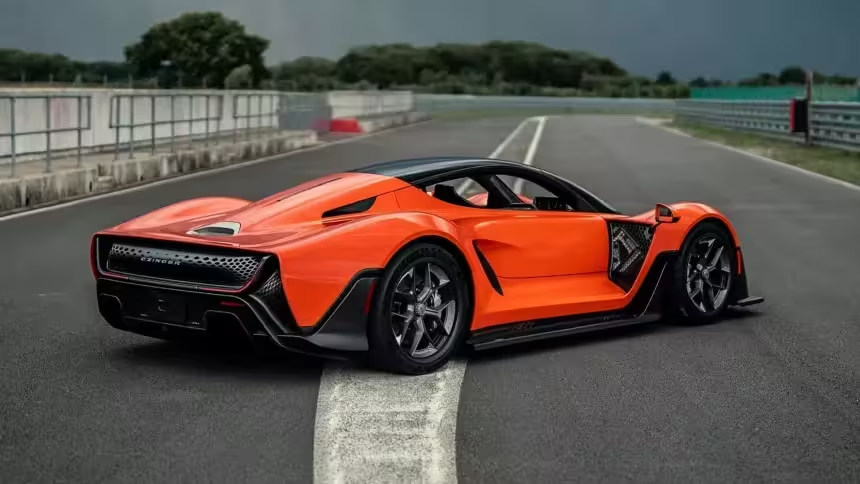
The Czinger 21C pairs an unusually small-displacement twin-turbo V8 (2.88 L) with electric assistance in a highly optimized low-drag package. The V Max variant is targeted at 253 mph and shows how engineering focus—lightweight structures, central driving position and high-tech composites—can combine with hybrid systems to produce hypercar speeds.
10. Aspark Owl Roadster — Target: 257 mph (development runs higher)
Powertrain: 4 electric motors • Transmission: Direct drive • Power: ~1,953 hp • 0–60 mph: ~1.5 s
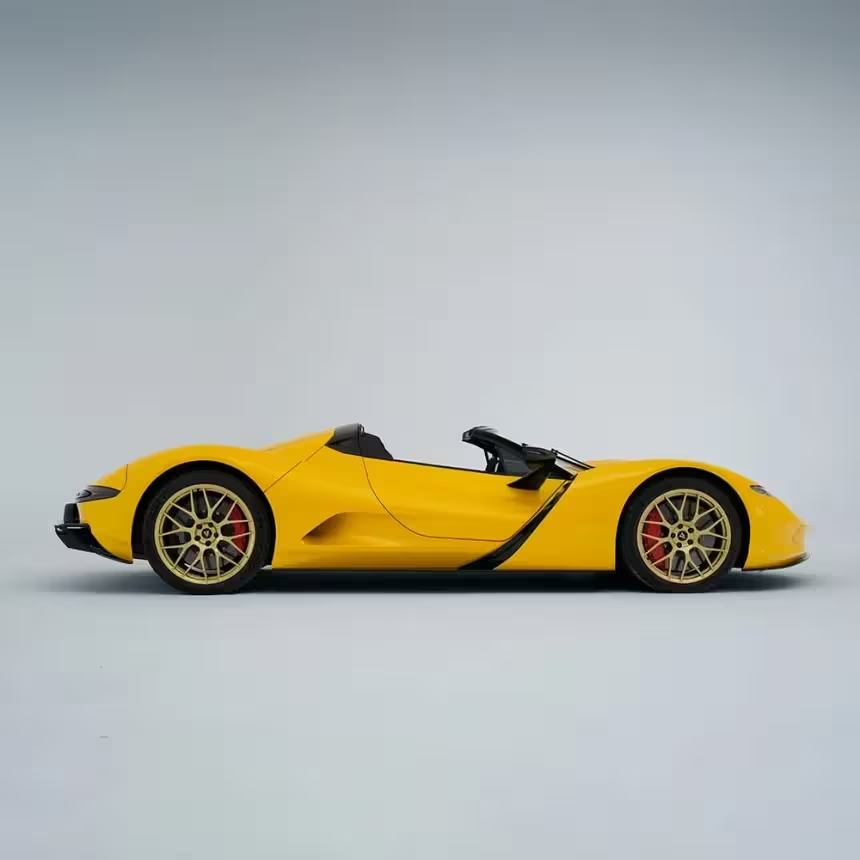
Japan’s Aspark took its Owl from concept to small-series production and then destroked into a one-off development prototype that logged very high speeds in Germany. The Roadster targets a 257 mph top speed with a near-instantaneous electric launch. Only 20 Roadster units are planned, with production support from Manifattura Automobili Torino.
9. Fahlke Larea GT1 S12 — Target: 267 mph
Powertrain: 7.2L supercharged V8 • Transmission: 6-speed manual/sequential • Power: ~1,243 hp • 0–60 mph: ~1.8 s
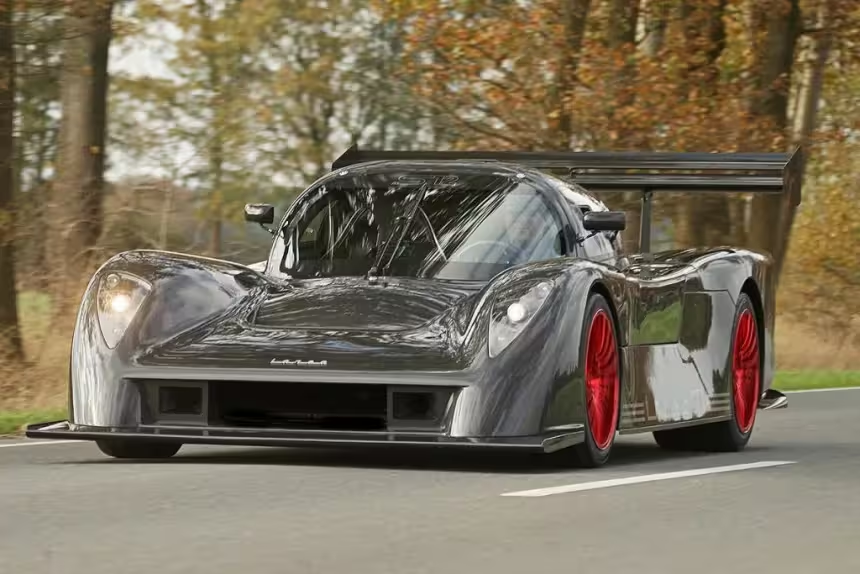
A relatively unknown German specialist, M-Racing Fahlke’s Larea GT1 S12 is a hand-built, racing-car–inspired masterpiece. At under 1,000 kg curb the S12 uses race-level materials, data logging and suspension hardware—and targets a top speed in the high 260s. This is the kind of machine that blurs the line between track-only prototypes and road-legal speed machines.
8. Rimac Nevera R — Achieved: 268.2 mph (2025)
Powertrain: 4 electric motors • Transmission: Direct drive • Power: ~2,078 hp • 0–60 mph: ~1.6 s
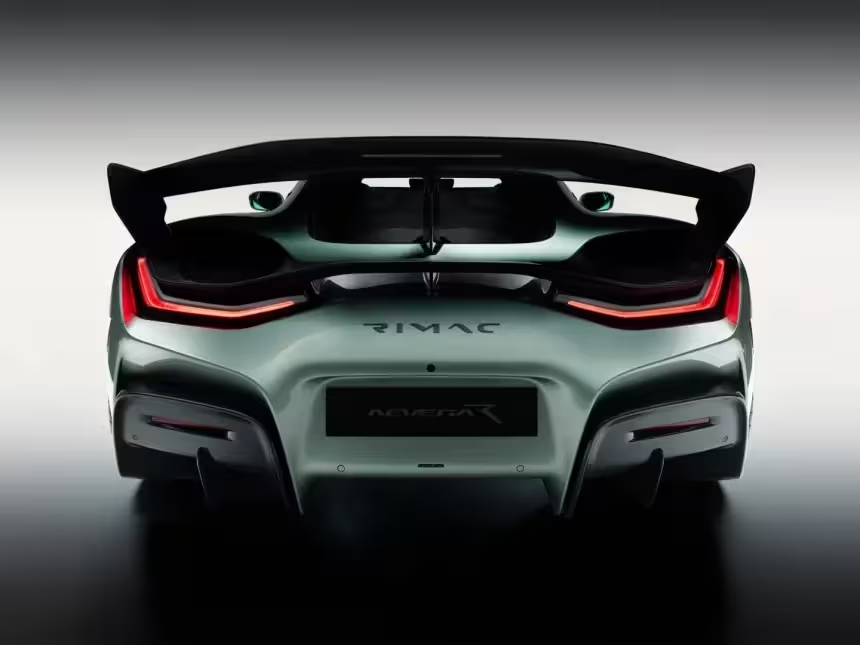
Rimac’s Nevera R took the existing Nevera platform and pushed it further, breaking multiple performance records in 2025 and achieving a measured top speed of 268.2 mph (431 km/h). Exceptional acceleration figures, including a 0–400–0 km/h run completed in under 26 seconds, made the Nevera R a benchmark for electric hypercar performance.
7. 9ff GT9 Vmax — Achieved: 272 mph (2012 spec)
Powertrain: 4.2L twin-turbo H6 • Transmission: 6-speed sequential • Power: ~1,381 hp • 0–60 mph: ~2.9 s
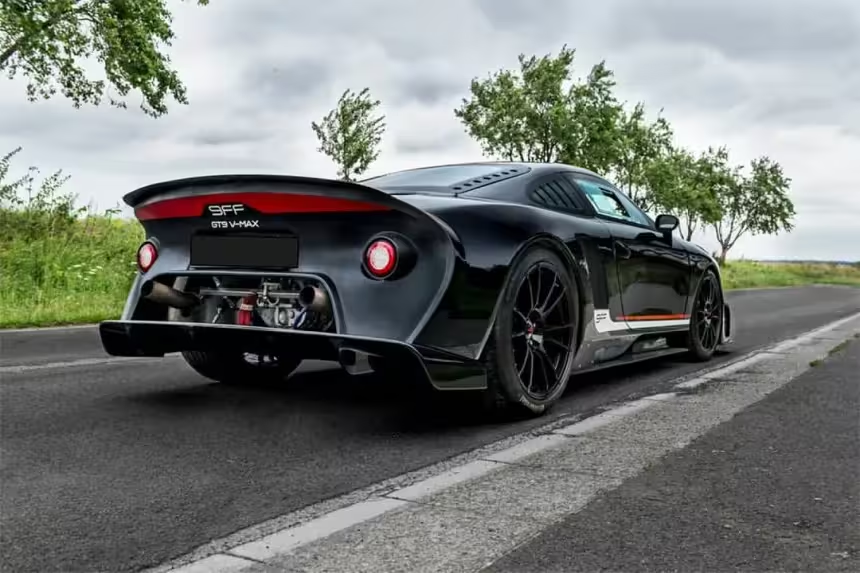
9ff took the Porsche 997 platform and crafted a high-speed specialist capable of 272 mph in its most extreme Vmax guise. With wide rear tires and extensive chassis and aero modifications, the GT9 Vmax is a compelling reminder that track- and speed-focused tuning houses can produce machines that rival factory-built hypercars.
6. Koenigsegg CC850 — Projected: 280+ mph
Powertrain: 5.0L twin-turbo V8 • Transmission: 9-speed Light Speed with Engage Shifter • Power: ~1,366 hp • 0–60 mph: ~2.5 s
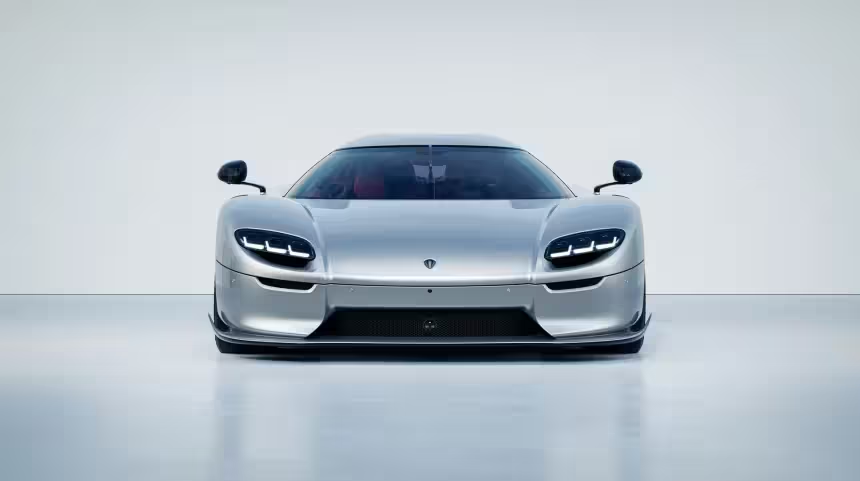
Koenigsegg’s CC850 celebrates driver engagement over blind speed: it features the Engage Shifter System that turns a multi-clutch transmission into an H-pattern manual for a more interactive experience. Still, as a streamlined Koenigsegg it’s theoretically capable of 280 mph (450+ km/h) in the right conditions, showing the brand’s balance between usability and unrestrained performance.
5. Bugatti W16 Mistral — Achieved: 282.04 mph (2024)
Powertrain: 8.0L quad-turbo W16 • Transmission: 7-speed DCT • Power: ~1,578 hp • 0–60 mph: ~2.2 s
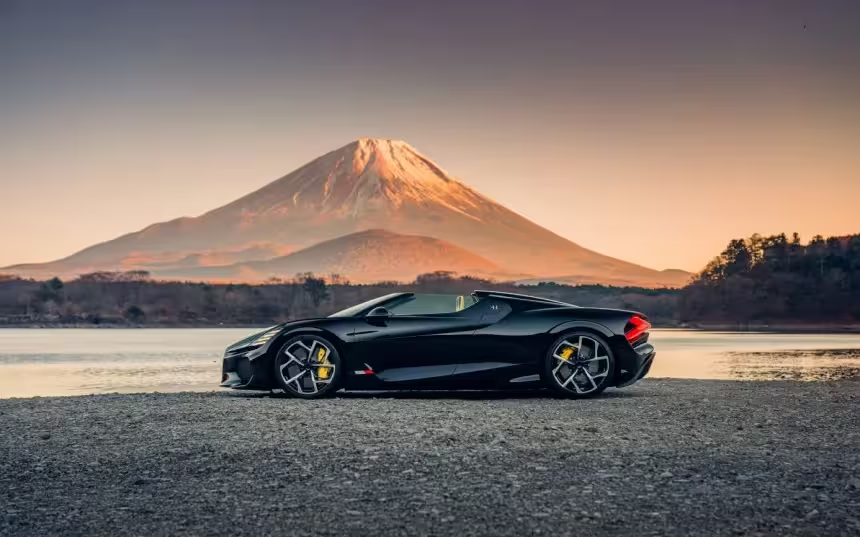
Bugatti’s final iteration of the quad-turbo W16 family, the Mistral, is a roadster celebration of the W16 era. A verified top speed of 282.04 mph (453.91 km/h) was recorded in controlled tests. With a limited customer speed setting (420 km/h) and track-oriented ‘handling’ modes with lower governors, the Mistral is both an engineering tour de force and an expensive collectible.
4. SSC Tuatara — Achieved: 295 mph (2022)
Powertrain: 5.9L twin-turbo V8 • Transmission: 7-speed automated manual • Power: ~1,750 hp • 0–60 mph: ~2.5 s
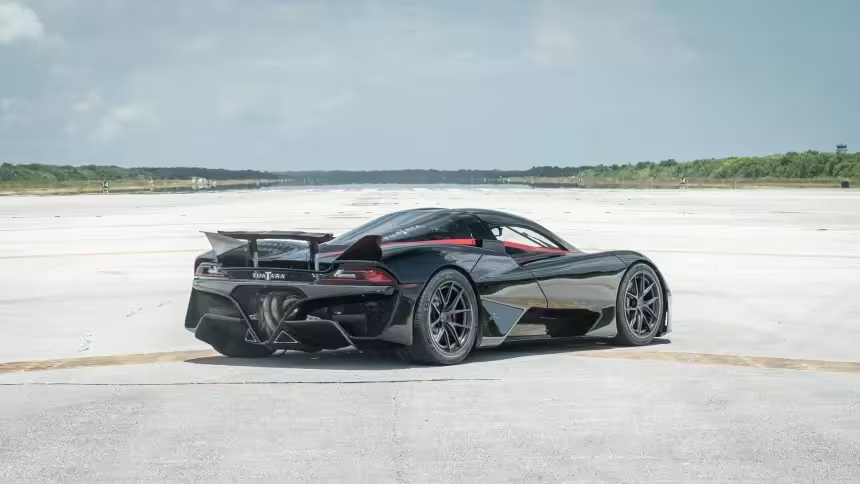
After a controversial early claim that drew scrutiny, SSC returned with validated test runs for the Tuatara. A customer car recorded a 295 mph (475 km/h) run in 2022 at the Johnny Bohmer Proving Grounds. The Tuatara demonstrates how boutique North American automakers can still build world-class speed machines—albeit not without growing pains.
3. BYD Yangwang U9 Xtreme — Achieved: 308.3 mph (2025)
Powertrain: 4 electric motors • Transmission: Direct drive • Power: ~2,977 hp • 0–60 mph: ~2.1 s
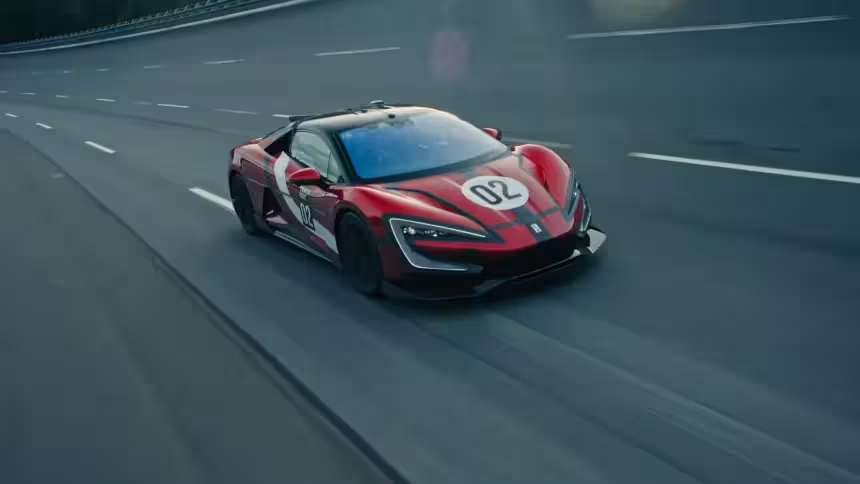
China’s BYD, via its Yangwang sub-brand, stunned the hypercar world in 2025 when a development U9 Xtreme recorded 308.3 mph (496.22 km/h). The car also lapped the Nürburgring in under seven minutes, signaling its mix of outright speed and circuit capability. With limited production (about 30 units planned) and a price well below many established hypercar rivals, the U9 Xtreme represents the global rise of Chinese EV performance makers.
2. Hennessey Venom F5 Evolution — Target: 311+ mph
Powertrain: 6.6L twin-turbo V8 (Fury) • Transmission: 7-speed manual/automated manual • Power: ~2,031 hp • 0–60 mph: <2.6 s
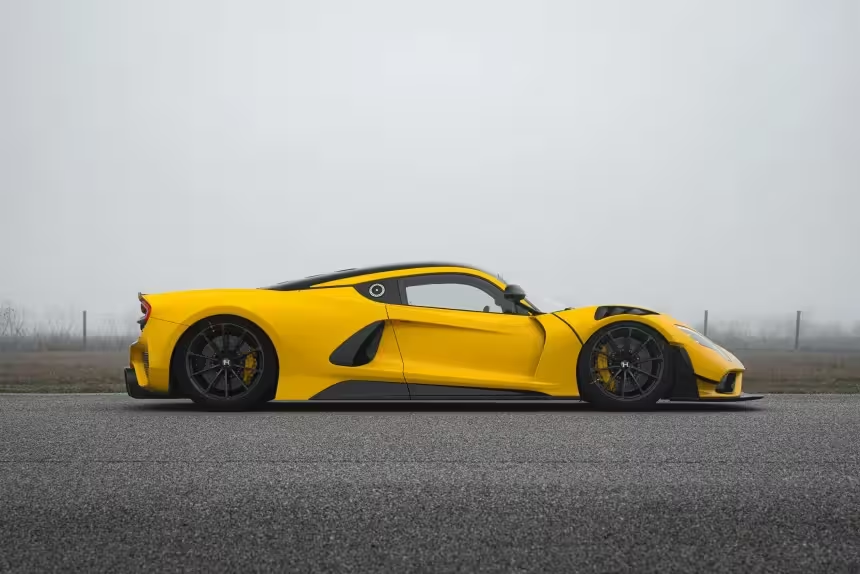
Hennessey’s Venom F5 is designed with a tornado in mind—F5 rating symbolism and all. While the base Venom F5 claims over 300 mph potential, the Evolution package promises even more by dialing the twin-turbo V8 (run on E85) to produce over 2,000 hp. The Evolution aims to be the most potent internal-combustion road car on Earth when fully optimized.
1. Koenigsegg Jesko Absolut — Projected: 330+ mph
Powertrain: 5.0L twin-turbo V8 • Transmission: 9-speed MCT Light Speed Transmission • Power: ~1,578 hp • 0–60 mph: ~2.5 s
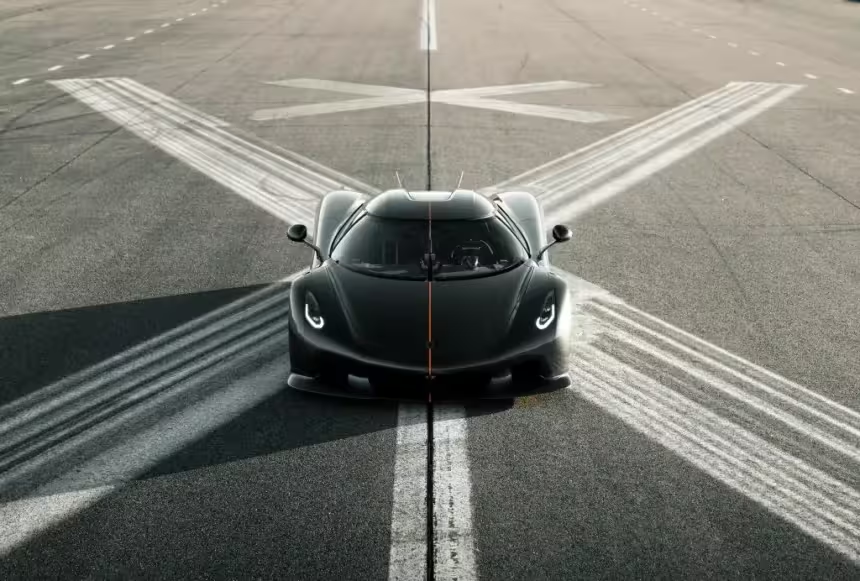
At the top of our 2025 ranking is the Koenigsegg Jesko Absolut—a purpose-built low-drag variant of the Jesko family focused on straight-line speed. Koenigsegg’s computations suggest a theoretical range between 330–350 mph given ideal testing conditions, thanks to a remarkably low drag coefficient and a compact frontal area. Limited production and Koenigsegg’s obsessive engineering approach mean the Absolut is a carefully realized statement of single-minded speed ambition.
Why 400 mph remains out of reach for production cars
There are several practical reasons why a genuine, street-legal production car has not yet broken 400 mph:
- Aerodynamics: Achieving stable behavior at extreme Mach-equivalent speeds requires highly refined low-drag shapes, which often conflict with cooling and downforce needs.
- Tires: Tire construction and materials are among the most significant limiting factors. Tires need to survive enormous centrifugal forces, heat and structural stress—limits that are extremely costly and complex to overcome for production volumes.
- Regulations: Crash-safety, pedestrian protection, lighting and noise rules restrict how extreme a road car can be built.
- Runway and testing logistics: Real-world top-speed runs require exceptionally long, flat, controlled runways in barometric and temperature conditions that can materially affect results.
- Commercial rationale: Buyers of hypercars demand a mix of prestige, daily usability and drivability; pushing exclusively for extreme top speed can narrow the market.
Electrification vs. internal combustion: the speed duel
Electric hypercars have upset the traditional top-speed hierarchy in two major ways: they deliver extreme acceleration due to near-instant torque, and they allow multi-motor torque vectoring that improves traction and stability. But when it comes to absolute top speed, ICE machines still hold advantages in energy density (liquid fuels versus batteries), and propulsive efficiency at very high forward speeds. That’s why many of the top entries are hybrids or advanced ICE cars, while electric models dominate the mid- and lower-top-speed positions through superior launch and mid-range grunt.
How top speed is validated
Independent measurement is key: GPS-based telemetry, third-party timing equipment (race-grade VBOX, Dewetron-style systems), and repeat runs in both directions to cancel wind influence are standard methods. Where possible, results are validated by recognized sporting authorities or independent engineering teams. Manufacturer claims without independent validation should be treated cautiously.
Buyer perspective and market positioning
These hypercars are as much about branding, engineering showcase and exclusivity as they are about raw performance. Limited runs (sometimes fewer than 100 units) maintain resale value and desirability, while engineering breakthroughs often trickle down into more mainstream cars over years. Price tags vary wildly—from the comparatively affordable Corvette ZR1 to multi-million-euro Bugatti and Koenigsegg models—reflecting different strategic aims: accessibility, record-chasing, or ultimate exclusivity.
Final thoughts
The quest for the highest top speed is a mix of bravado, engineering prowess and marketing theatre. In 2025 the leaderboard shows a diverse field: legacy houses (Bugatti, Koenigsegg, Ferrari), newcomers and specialists (Rimac, Czinger, Aspark, Deus), and even surprising entrants from OEMs in China (BYD). Electric powertrains continue to redefine acceleration expectations, while combustion and hybrid machines remind us that top-speed physics favors fuels for now.
Expect the next few years to blur the lines further. As tires, aerodynamics, battery tech and regulatory frameworks evolve, new contenders will emerge—and the top-speed narrative will remain one of the most compelling stories in high-performance automotive engineering.
"Top speed is a headline, but engineering that lets you use it safely and repeatedly is the real achievement." — Road tester
For enthusiasts, collectors and engineers alike, the race is far from over. Watch this space for new runs, verified record attempts and technology transfer that will shape the next generation of both hypercars and mainstream performance models.

“Cars are evolving faster than ever. I cover electric vehicles, smart mobility, and the future of transportation worldwide.”

Discussion
Leave a Comment