

4 Minutes
Bitcoin slips as US dollar strength and ETF flows weigh
Bitcoin (BTC) retreated toward $59,060 on Wednesday as a stronger US dollar and disappointing ETF activity pushed short-term sentiment into the red. The cryptocurrency’s bounce above $60,000 earlier this week looks fragile amid a broader macro backdrop that favors yield-bearing assets over non-yielding stores of value.

US dollar strength index (left) vs. Bitcoin/USD (right).
Why the dollar rally matters for BTC
The US dollar surged to a 13-month high against a basket of global currencies, a move that typically correlates negatively with Bitcoin. When the dollar strengthens, capital often rotates into fixed-income and cash-like instruments, pressuring risk assets such as crypto. Traders increasingly view a robust DXY and the prospect of higher-for-longer interest rates as headwinds for Bitcoin’s near-term upside.
Commodities and safe-haven demand cooled
Lower oil prices and easing inflation concerns after the US and Iran signed a memorandum of understanding — temporarily reopening the Strait of Hormuz — reduced demand for traditional inflation hedges. Brent crude fell below $74, while safe-haven metals also showed weakness, signaling softer appetite for scarce assets amid calmer geopolitical risk perceptions.
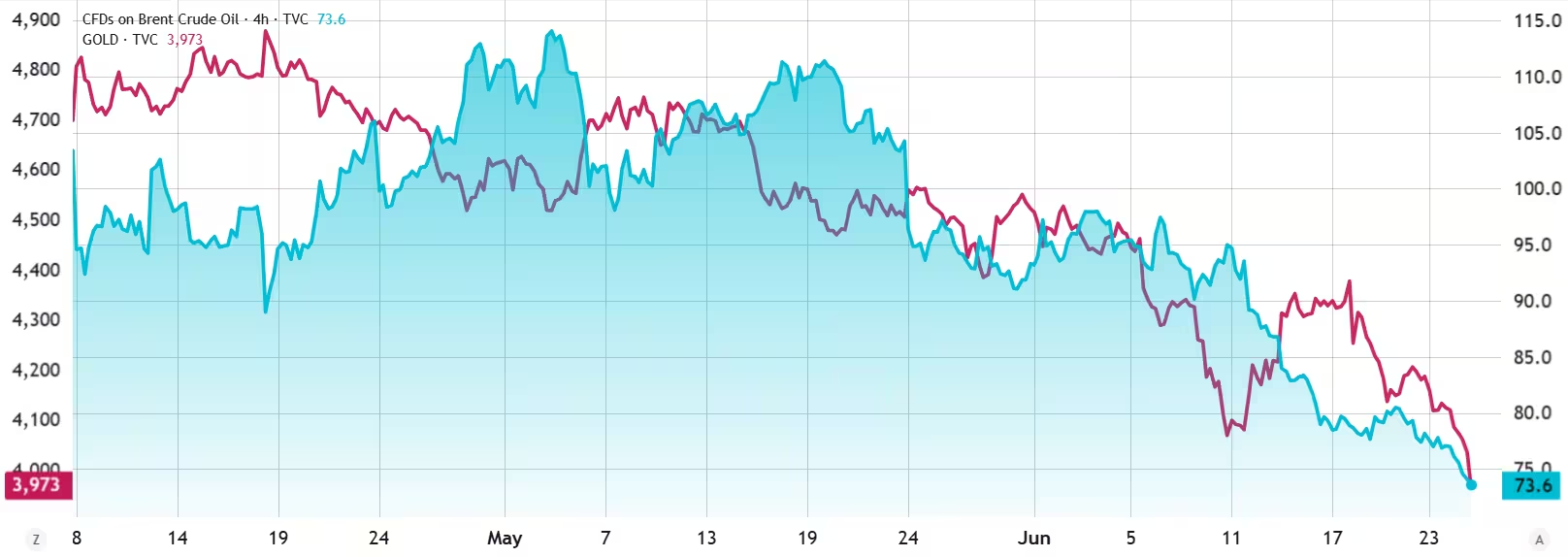
Gold (left) vs. Brent Crude oil, USD.
Macro backdrop: liquidity and inflation expectations
Data released this week highlighted persistent monetary expansion in the US. The Federal Reserve’s preferred liquidity measures remain elevated, and May’s expanded Monetary Base (M2) climbed to $23.05 trillion from $22.8 trillion the prior month. Although the direct short-term correlation between money supply and Bitcoin’s price is mixed, an environment that fosters higher yields can erode the investment case for non-yielding crypto assets.

US expanded Monetary Base (M2), USD.
At the same time, US labor market data kept the outlook for rates resilient: initial jobless claims fell, suggesting the economy is not cooling fast enough to push the Fed toward rate cuts imminently. The combination of sticky labor data and a stronger dollar bolsters fixed-income returns relative to speculative alternatives.
Spot Bitcoin ETF outflows and institutional buying slow
Spot Bitcoin ETFs recorded net outflows this week, a material development given ETFs’ growing role in price discovery for BTC. Institutional demand had been an important tailwind for Bitcoin’s 2024–2026 rally, so sustained ETF outflows introduce meaningful downside risk.
Strategy’s cooling accumulation
MicroStrategy (MSTR) — one of the most visible institutional crypto holders — slowed its pace of BTC purchases to the lowest weekly intake in 18 months, adding 520 BTC in the week ending June 21. The company also used about $300 million of proceeds from a stock issuance to bolster cash reserves rather than increase its Bitcoin holdings, removing a significant source of incremental demand.

Strategy (MSTR US) Bitcoin reserve changes, BTC.
Outlook: immediate risks and what traders should watch
With spot ETF outflows and reduced institutional accumulation from high-profile buyers, the path of least resistance for Bitcoin could be lower in the short term. Key levels to monitor include $59,000 as immediate support and $60,000 as the psychological ceiling. A sustained DXY rally and continued rotation into fixed income would likely deepen selling pressure.
Conversely, any signs of renewed ETF inflows, a reversal in dollar strength, or fresh macro accommodation could quickly restore confidence. On-chain metrics, derivatives funding rates, and ETF flow data remain critical indicators for traders gauging whether this is a temporary pullback or the start of a deeper correction.
Bottom line
Bitcoin’s recent slide toward $59K reflects a mix of macro and market-structure forces: a stronger US dollar, cooling commodity-based inflation fears, spot Bitcoin ETF outflows, and a slower buying cadence from major institutional holders. Traders should remain attentive to dollar strength, ETF net flows, and institutional accumulation as the most reliable signals for the market’s next directional move.
Source: cointelegraph


Comments
Marius
Short-term looks messy, DXY and yields make sense, but too much focus on ETF flows. On-chain could flip it, watch funding rates, open interest...
coinpilot
Wait, is this even true? DXY spike + ETF outflows sounds bad, but MicroStrategy pausing buys isn't panic yet, right.. could bounce?

Leave a Comment