
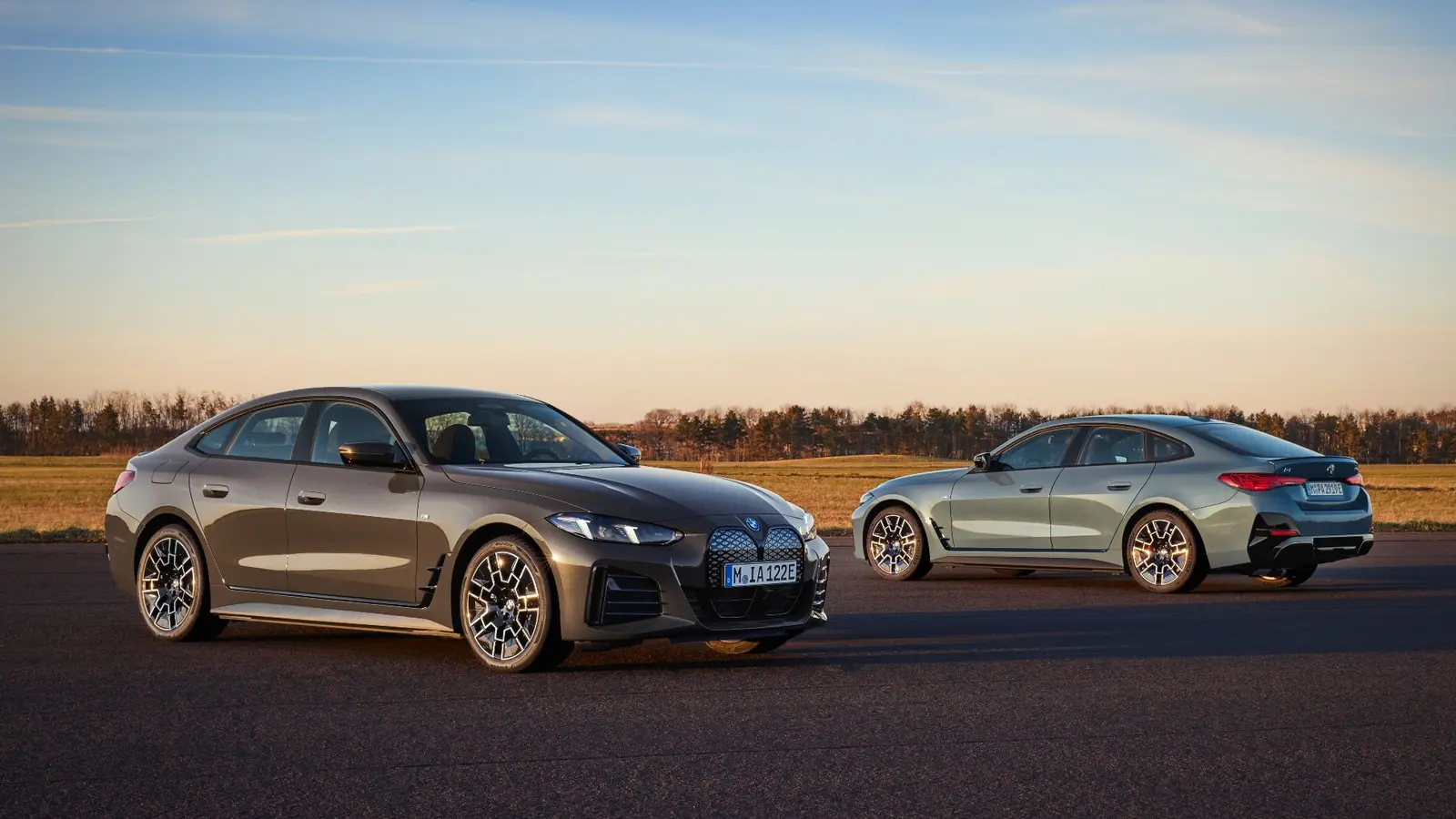
BMW ups the ante for the 2026 i4: longer range and a sharper M60
BMW of North America has revised the i4 lineup for the 2026 model year, introducing meaningful range improvements for the rear-wheel-drive versions and replacing the M50 with a more potent M60 variant. Production is slated to begin this month, and internal EPA-style testing suggests the refreshed liftback can comfortably exceed the 300-mile mark on a single charge.
EPA-based estimates and real-world implications
According to preliminary internal tests following EPA procedures, the i4 eDrive40 wearing 18-inch wheels can manage up to 333 miles (536 km) per charge. Opt for the more common 19-inch wheels and BMW estimates about 307 miles (494 km) — still a substantial gain for a relatively heavy electric sedan. Those figures translate into improvements of roughly 15 and 12 miles compared with the 2025 i4 eDrive40.
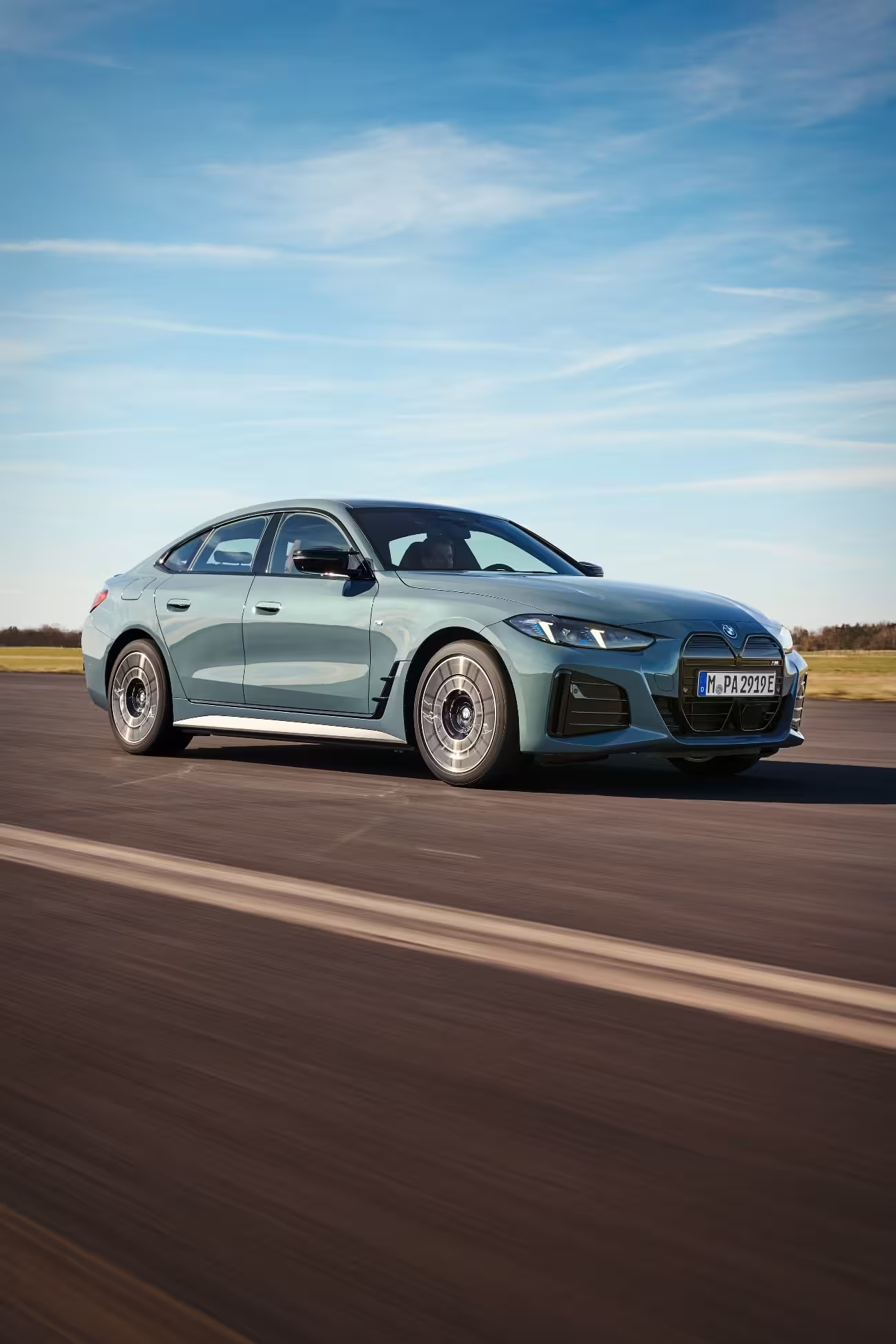
The new i4 M60 (standard 19-inch wheels) replaces last year’s M50 and is rated at 278 miles (447 km) of range — about 11 miles (18 km) more than its predecessor. If buyers choose 20-inch wheels, BMW expects the M60’s range to fall to around 232 miles (373 km), which is still slightly better than the prior model on the same wheel size.
Why the better range?
BMW attributes much of the efficiency improvement to upgraded power electronics: the inverters now use silicon carbide (SiC) semiconductors. Compared with conventional silicon-based components, silicon carbide offers higher efficiency, better thermal tolerance, and a reduced energy loss during power conversion — an especially useful gain for highway driving and spirited acceleration.
Performance: M60 brings more grunt
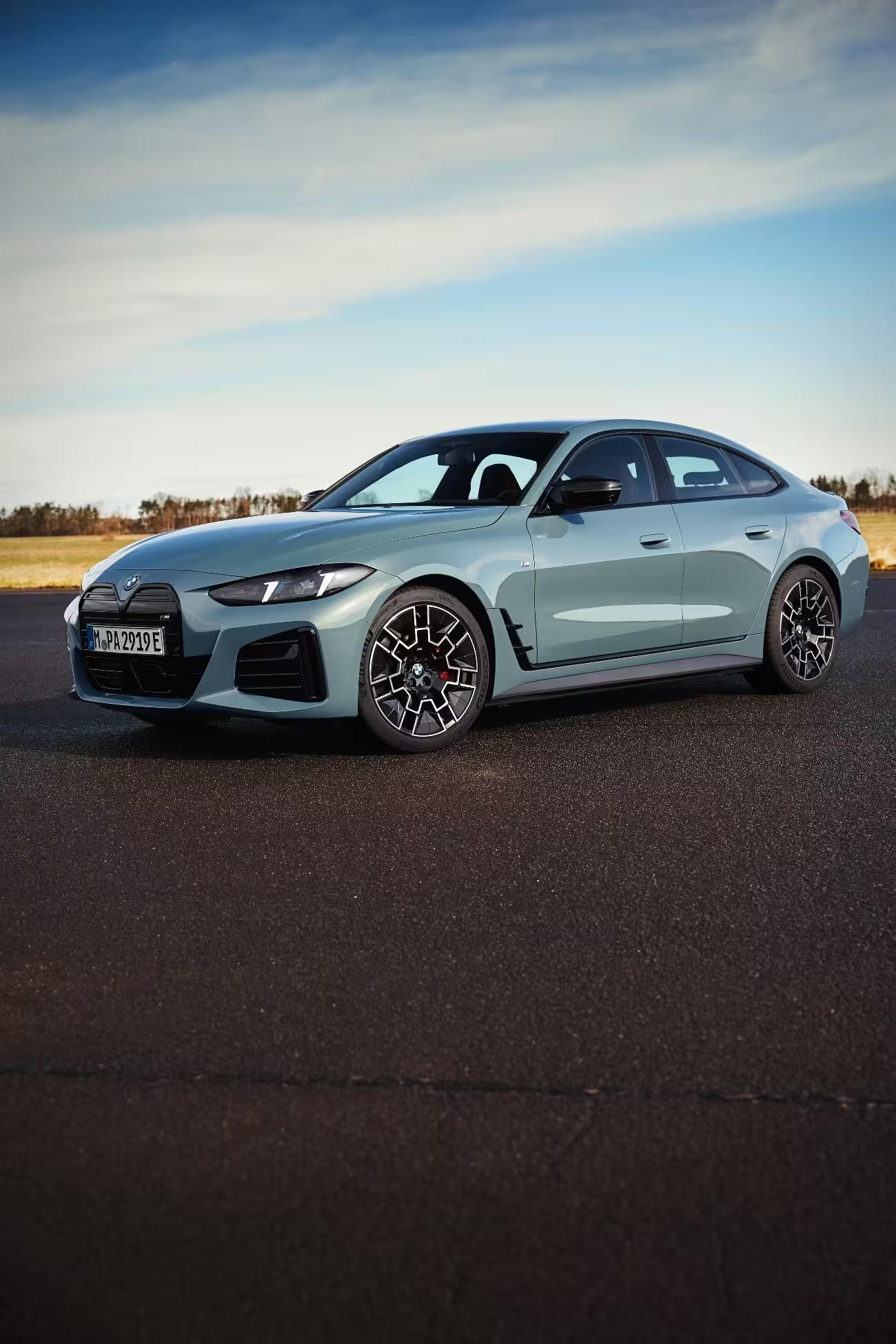
The i4 M60 is a clear performance bump over the outgoing M50. BMW lists the standard mechanical output at 510 hp — a 41-horse increase — and when Sport mode is engaged the system can deliver an estimated 593 hp, up 57 hp from the 2025 M50. Peak torque remains at 586 lb-ft (795 Nm), and BMW says the M60 can sprint to 60 mph (97 km/h) in approximately 3.6 seconds under ideal conditions.
For context:
- i4 eDrive40: ~335 hp, 0–60 mph in ~5.5 seconds
- i4 dual-motor (configured): ~396 hp, 0–60 mph in ~4.9 seconds
- i4 M60: 510 hp (standard), 593 hp (Sport), 0–60 mph in ~3.6 seconds
A notable technical detail: the i4 continues to sit on BMW’s CLAR architecture — the same underpinnings shared with the internal-combustion 4 Series Gran Coupe — rather than a dedicated BEV platform. That choice influences weight, packaging and driving dynamics compared with dedicated EV rivals.
Positioning and market context
It’s important to underline that the i4 M50 and M60 are M Performance models, not full-fledged M cars. Still, the M50 was BMW’s top-selling electric vehicle in 2024, and the M division as a whole (M and M Performance) moved more than 200,000 vehicles last year, highlighting strong demand for sporty electrified offerings.
Value is part of the i4 M60’s appeal. BMW’s U.S. starting price (excluding destination) for the quickest i4 in 2026 is $70,700. By comparison, the M4 Competition xDrive Coupe starts at around $90,600 and the M4 Competition Coupe at about $85,500. That price delta makes the M60 an attractive performance bargain — especially for buyers prioritizing straight-line speed and EV benefits — though the M4 models still deliver a more visceral driving experience and higher top speed thanks to their dedicated performance tuning.
Highlights
- eDrive40 estimated up to 333 miles (536 km) on 18-inch wheels
- M60 replaces M50, with up to 278 miles (447 km) on 19s
- Silicon carbide inverters increase efficiency and heat resistance
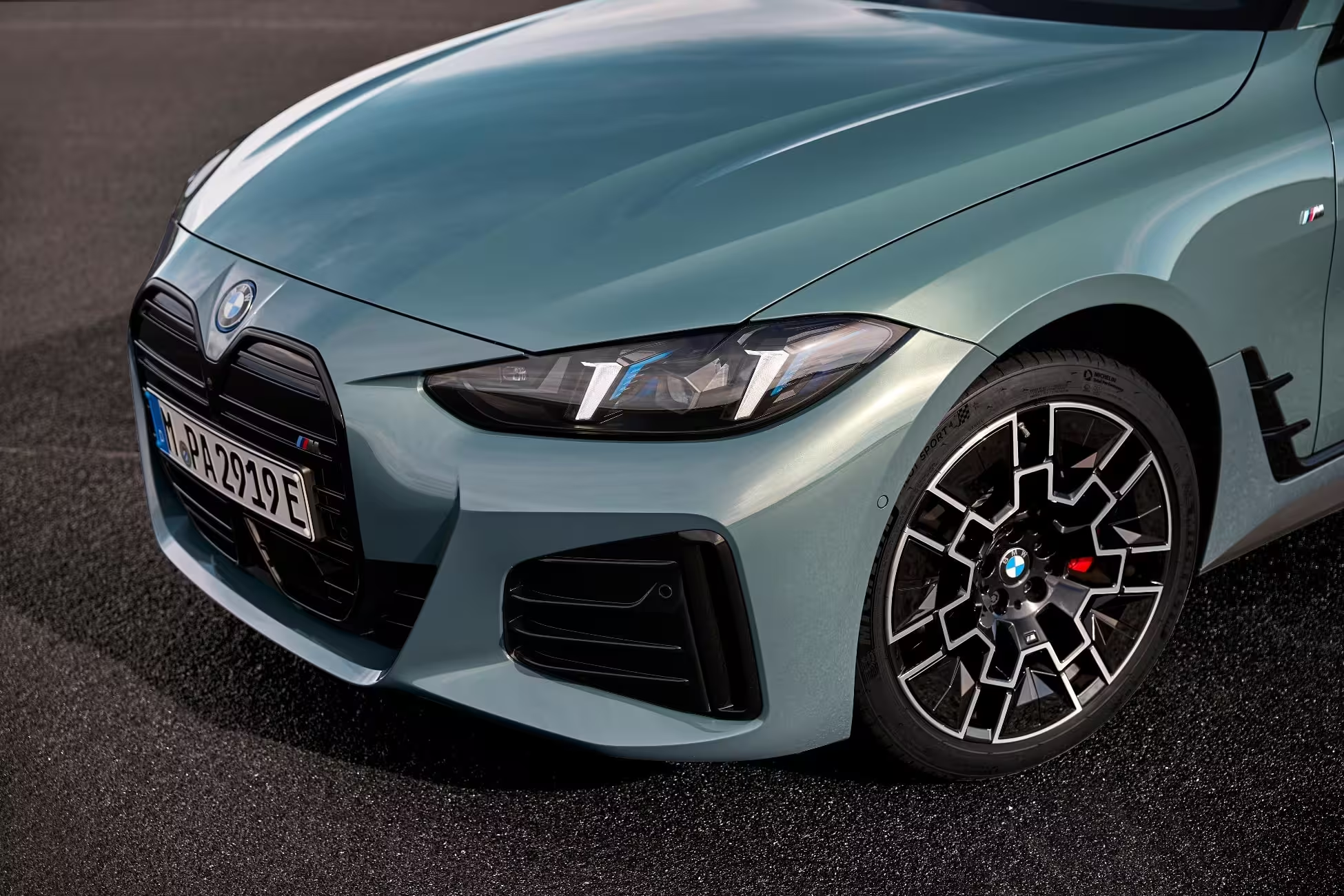
- M60: 510 hp (standard), 593 hp in Sport, 586 lb-ft torque, 0–60 mph in ~3.6 s
- Starting price for quickest i4: $70,700 (excl. destination)
"The 2026 i4 brings tangible range gains and a more compelling M Performance halo," said one product analyst. "It tightens BMW's EV offering by balancing usable range, performance and pricing."
Whether buyers will choose the i4 M60 over a conventional M car depends on priorities: if you want instant EV torque, lower running complexity and strong straight-line performance at a lower price, the M60 is hard to ignore. If you want ultimate chassis response, higher top speed and the traditional M driving experience, the M4 lineup still leads the way.
Expect more detailed EPA ratings and first-drive impressions as production starts and independent testing follows the automaker’s internal figures.

“I cover automotive innovation, electric vehicles, and the future of mobility — where technology meets sustainability.”

Discussion
Leave a Comment