
Samsung Electronics has sharply raised prices on several memory chips this month, citing surging global demand tied to AI datacenter buildouts. The move, confirmed by industry sources and reported by Reuters, has ripple effects across servers, laptops and smartphones.
Supply squeeze as AI datacenters race to expand
Samsung delayed its usual monthly pricing announcement for October supply contracts, and when details emerged they showed dramatic increases. Industry insiders say competition to equip new artificial intelligence datacenters has tightened supply for server-grade DDR memory, driving price spikes that in some cases reach 60% compared with September.
How steep are the increases?
Notable jumps include Samsung’s DDR5 32GB modules, which rose to roughly $239 in November from about $149 in September. Other DDR5 capacities have seen large hikes too: 16GB and 128GB parts climbed by around 50% to roughly $135 and $1,194 respectively, while 64GB and 96GB chips increased by more than 30%.
Who bears the cost — and where will it show up?
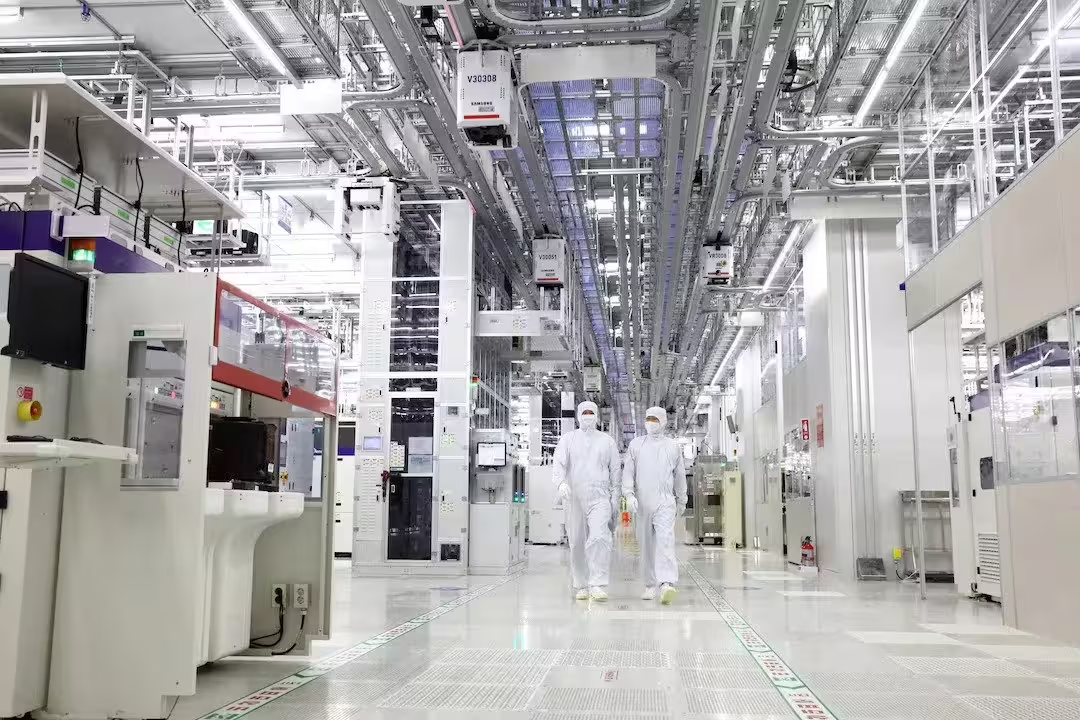
Server and datacenter operators are the immediate buyers feeling the pressure. As companies scale infrastructure to support AI workloads, many have accepted they won’t receive as many memory chips as they ordered, according to Fusion Worldwide’s distribution chief Toby Gorman. That shortage forces buyers to either pay premium contract prices or postpone deployments.
- Servers and cloud providers: Higher memory costs translate directly into more expensive buildouts for AI and enterprise workloads.
- PCs and laptops: Component cost increases can lift overall device prices if manufacturers cannot absorb the margin hit.
- Smartphones: OEMs like Xiaomi have already warned that rising memory prices could push up handset prices.
Why memory matters — a quick primer
DDR memory (Double Data Rate) is essential for temporary data storage and fast access during processing. In servers and high-performance systems, larger and faster DDR5 modules allow AI models and applications to run more quickly and efficiently. When demand outstrips supply, prices climb — and that squeezes margins across the hardware stack.
What to watch next
Samsung has not issued an official comment on the recent pricing moves. Observers will be watching whether other memory makers follow suit and how long the shortage persists. Chipmakers in China, including contract foundry SMIC, report knock-on effects as customers hold off on orders for other components while memory constraints persist. For buyers and consumers, the key questions are whether manufacturers can shift production, whether inventories will stabilize, and how much of the added cost will be passed on to end users.
Imagine buying a new laptop or phone soon and seeing a slightly higher price tag — that’s the practical outcome if component costs remain elevated. For enterprises racing to build AI infrastructure, the choice is tougher: pay more now or slow deployments and risk falling behind competitors.

“I love exploring gadgets, apps, and trends that redefine how we connect, work, and play in a digital world.”

Discussion
Leave a Comment
Comments (2)
Seen this in my shop, makers sometimes eat costs, but yeah phones will creep up in price if margins don't shift. AI hype hitting wallets 😬
is this even true? 60% memory hikes sounds wild. Who's paying - datacenters or consumers? Samsung delayed the memo, feels like supply hoarding, or...