
End of an era: the last Ford Focus rolls off the line
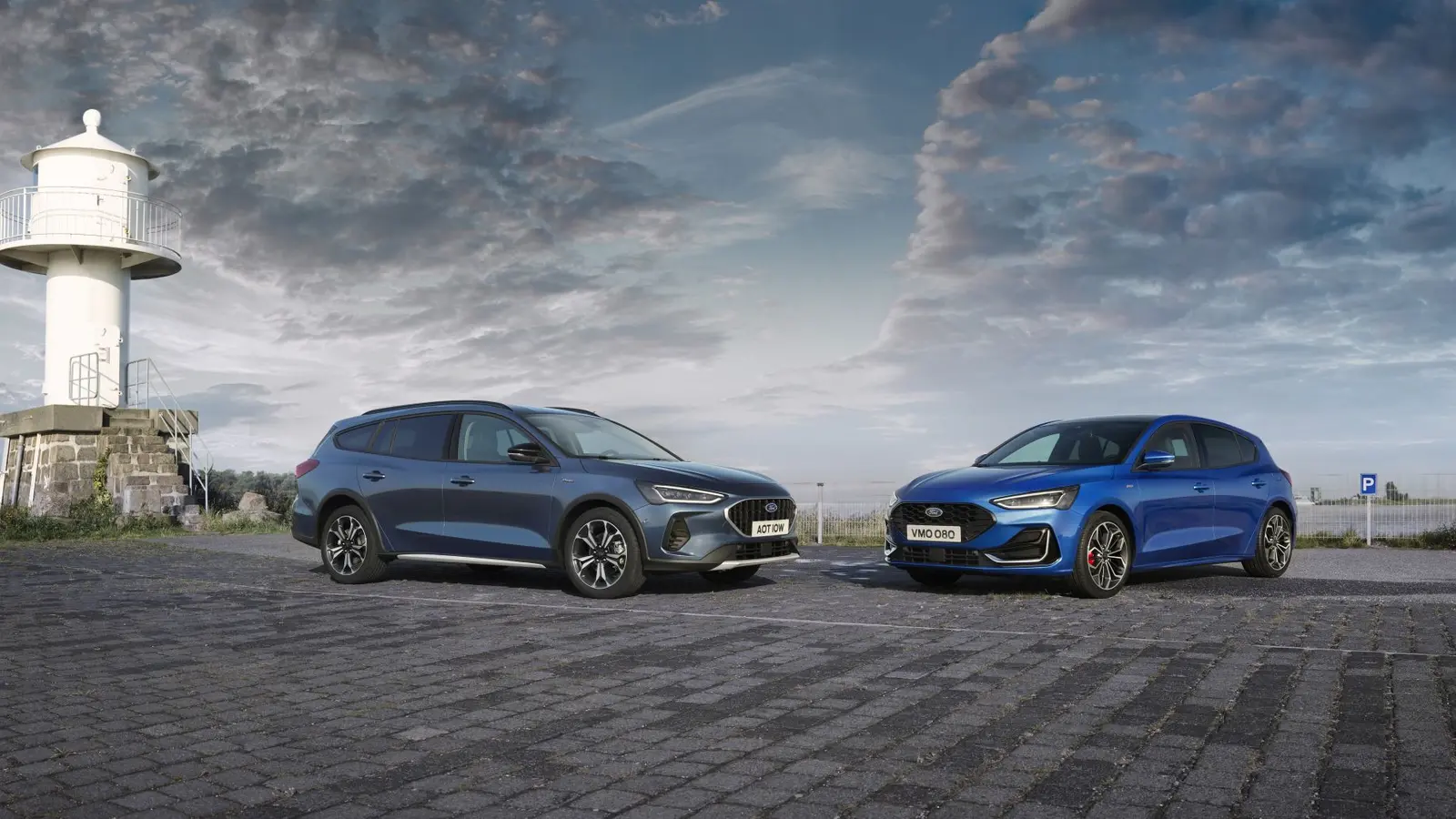
Ford's long-running compact, the Focus, reached a quiet finish in mid-November when the final example — a white five-door hatchback — rolled off the assembly line at the Saarlouis plant in Germany. After 27 years on sale and more than 12 million units produced, Ford has officially ended production of a model that became synonymous with honest driving dynamics and everyday practicality.
From Escort replacement to industry benchmark
When the first-generation Focus debuted in 1998 it did more than replace the Escort: it redefined what a compact hatchback could be. With sharp 'New Edge' styling, a remarkably sorted chassis and steering that actually felt alive, the Focus set a new benchmark for small family cars. It was one of those rare mainstream models that appealed to both enthusiasts and practical buyers — a gateway to driving pleasure for younger motorists and a reassuringly clever choice for families.
A global success story and a performance icon
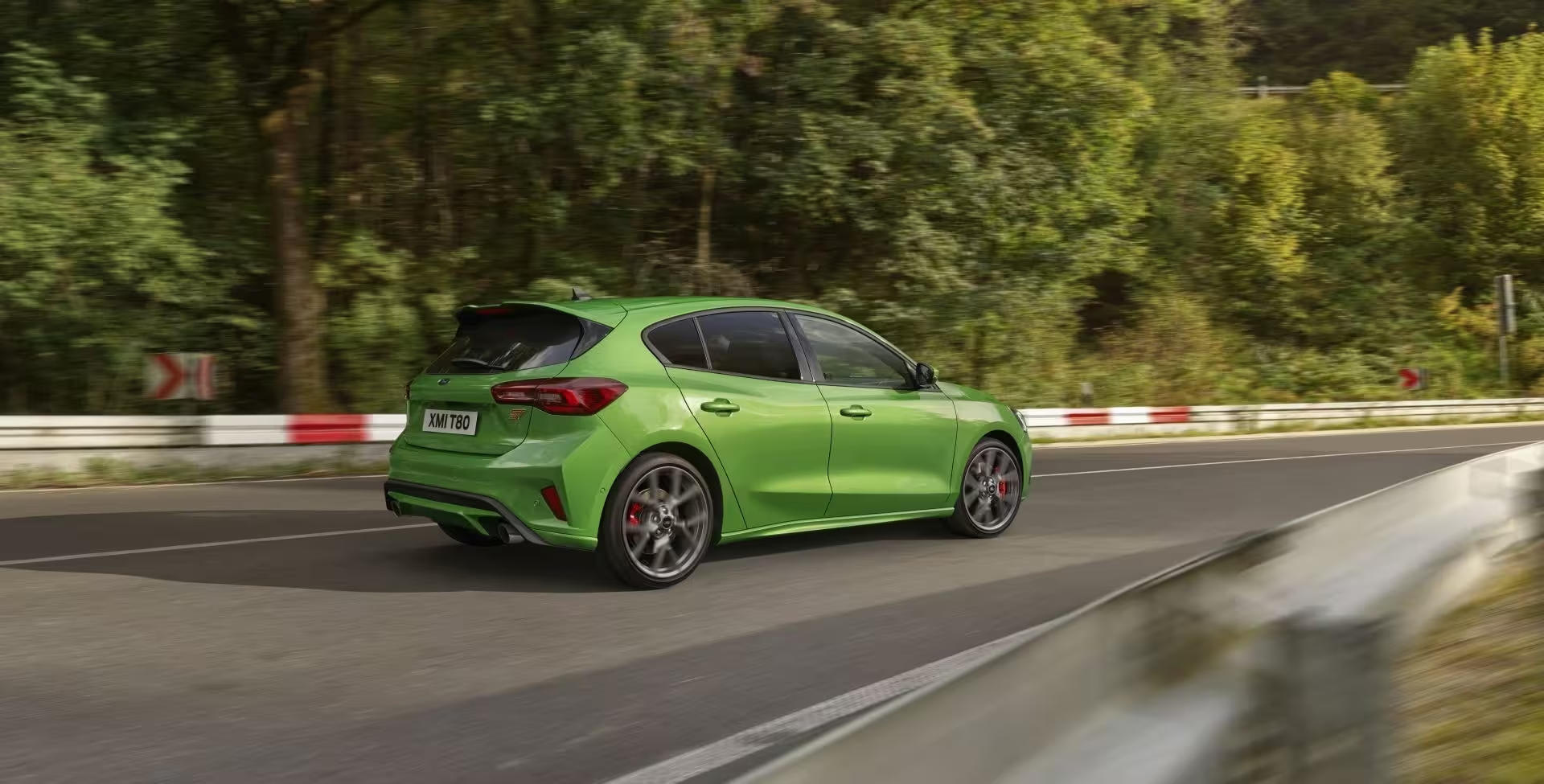
Over four generations the Focus evolved into a global nameplate. The range stretched from economical commuter trims to hot ST and RS performance variants that developed legitimate cult followings. Those high-performance versions helped cement the Focus's reputation among drivers who prized handling and steering feel. Across markets from Berlin to Boston, the Focus became a go-to compact for people who wanted a little enthusiasm with their reliability.
Why Ford pulled the plug
The end of Focus production was not abrupt. Ford announced plans to wind down the model in 2022 as the brand pivots hard toward electrification and crossovers. Rising development costs, shrinking margins on small cars and an urgent corporate push into EVs and higher-margin segments made a new, traditional Focus commercially hard to justify.
As Ford's management argues, the company is shifting away from 'boring' mass-market models toward what it calls 'iconic' vehicles that can deliver better returns. The trade-off has been evident in Europe: Ford's market share has fallen from roughly 7.2% in 2015 to about 3.3% through September 2025, a decline accelerated by dropping high-volume compact nameplates like the Focus.
What remains of the Focus legacy
Even as Ford retreats from the compact hatchback segment, the Focus leaves behind concrete achievements: engineering benchmarks in chassis tuning, several million satisfied owners and a lineup of sporty derivatives that inspired aftermarket communities and driving aficionados alike. The last car's discreet send-off — confirmed by Ford's European communications lead — had no press spectacle, just social posts from employees who witnessed the chapter close.
Impact on Saarlouis and European production
The closure of Focus production leaves the Saarlouis factory in a precarious position. The plant has produced millions of cars since the late 1960s, but with the Focus gone it currently has no confirmed new product or buyer. For workers and the local community, the silence at Saarlouis underscores the broader industrial shifts as manufacturers reallocate manufacturing capacity toward electrified platforms and crossovers.
Market realities and the rise of the hatchback elsewhere
Interestingly, European buyers have not abandoned compact hatchbacks. Models like the VW Golf, Renault Clio, Dacia Sandero, Peugeot 208, Skoda Octavia and Toyota Yaris still lead sales charts, showing that mainstream hatches and sedans retain strong demand. Other manufacturers have doubled down on the segment; Ford, for now, has chosen a different path.
Ford's next moves in Europe
Ford isn't leaving Europe entirely. Plans include a new mid-size crossover slated for 2027 that will sit alongside the Kuga and offer both hybrid and fully electric powertrains. In addition, Ford is launching two EV crossovers, the Explorer and the Capri, developed on Volkswagen's MEB architecture. These are roughly the same exterior footprint as a Focus but reflect Ford's strategic shift: vehicles designed for the current marketplace rather than a return to a classic hatchback philosophy.
To drive this transition, Ford has appointed Jim Baumbick, a former overseer of Focus and Kuga development, as its dedicated European chief. His mandate is straightforward: build cars Europeans want and recover lost market share — a tall order given Ford's slide from a top position in 2015 to a much lower rank today.
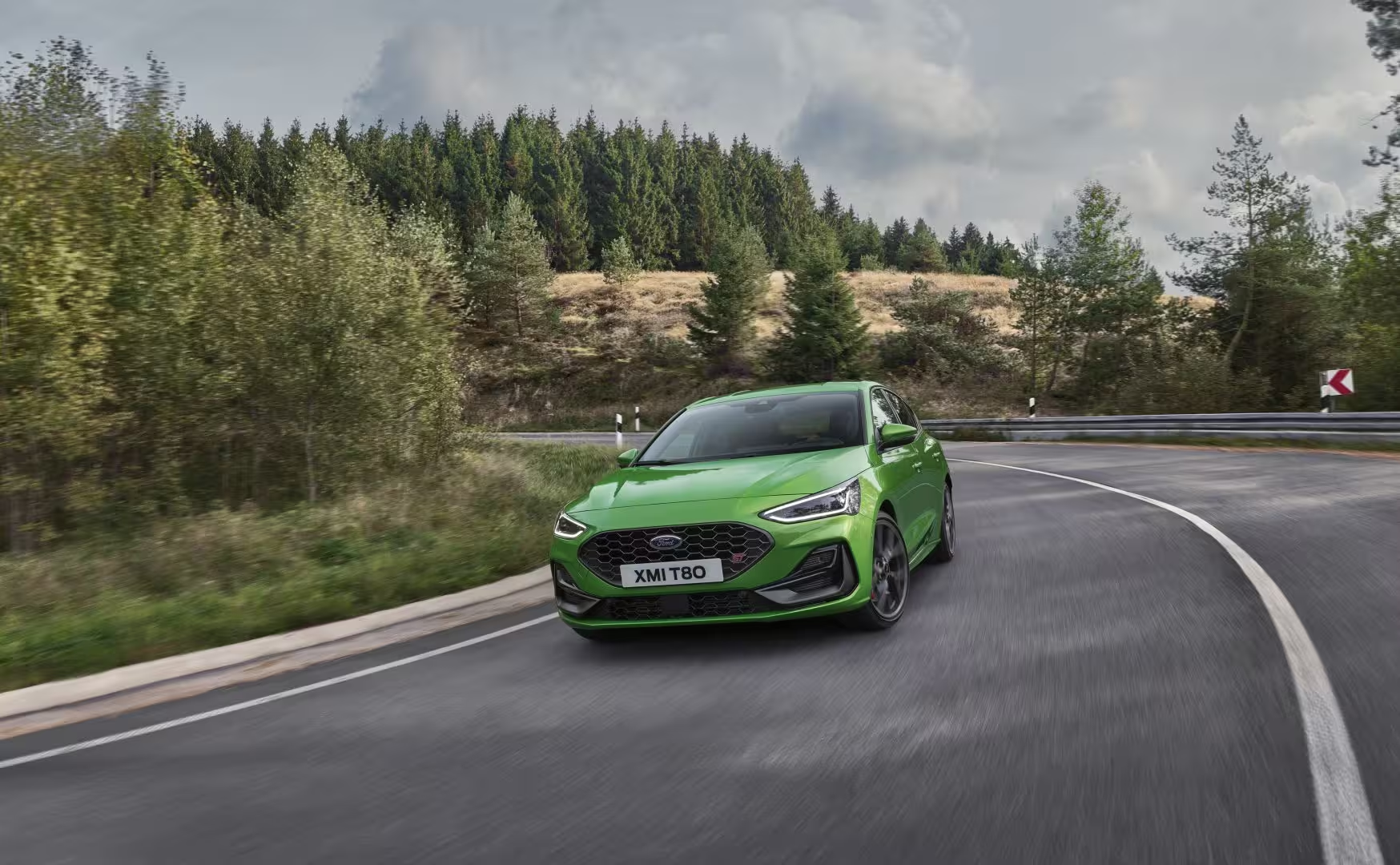
Focus: specifications and what made it special
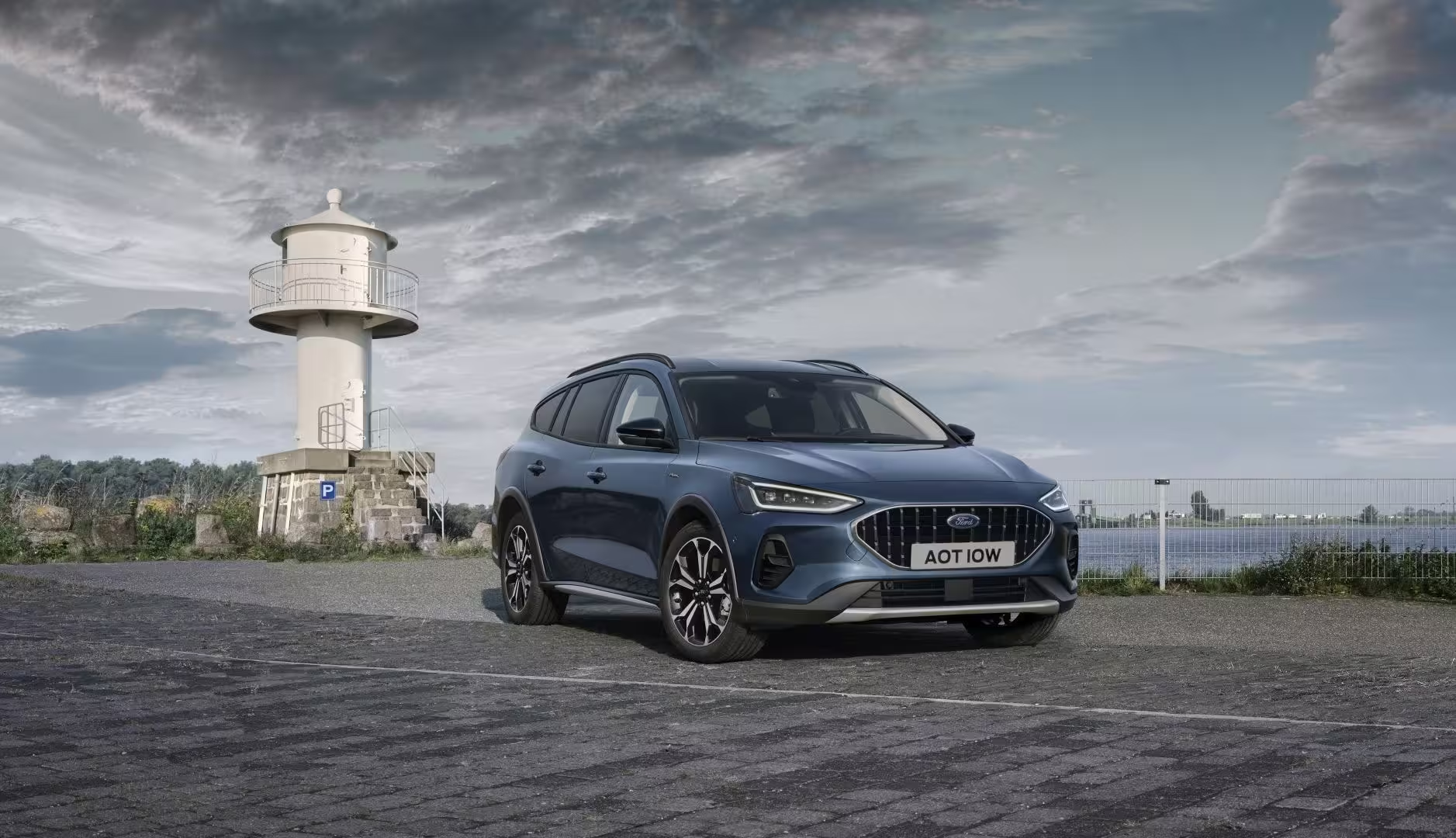
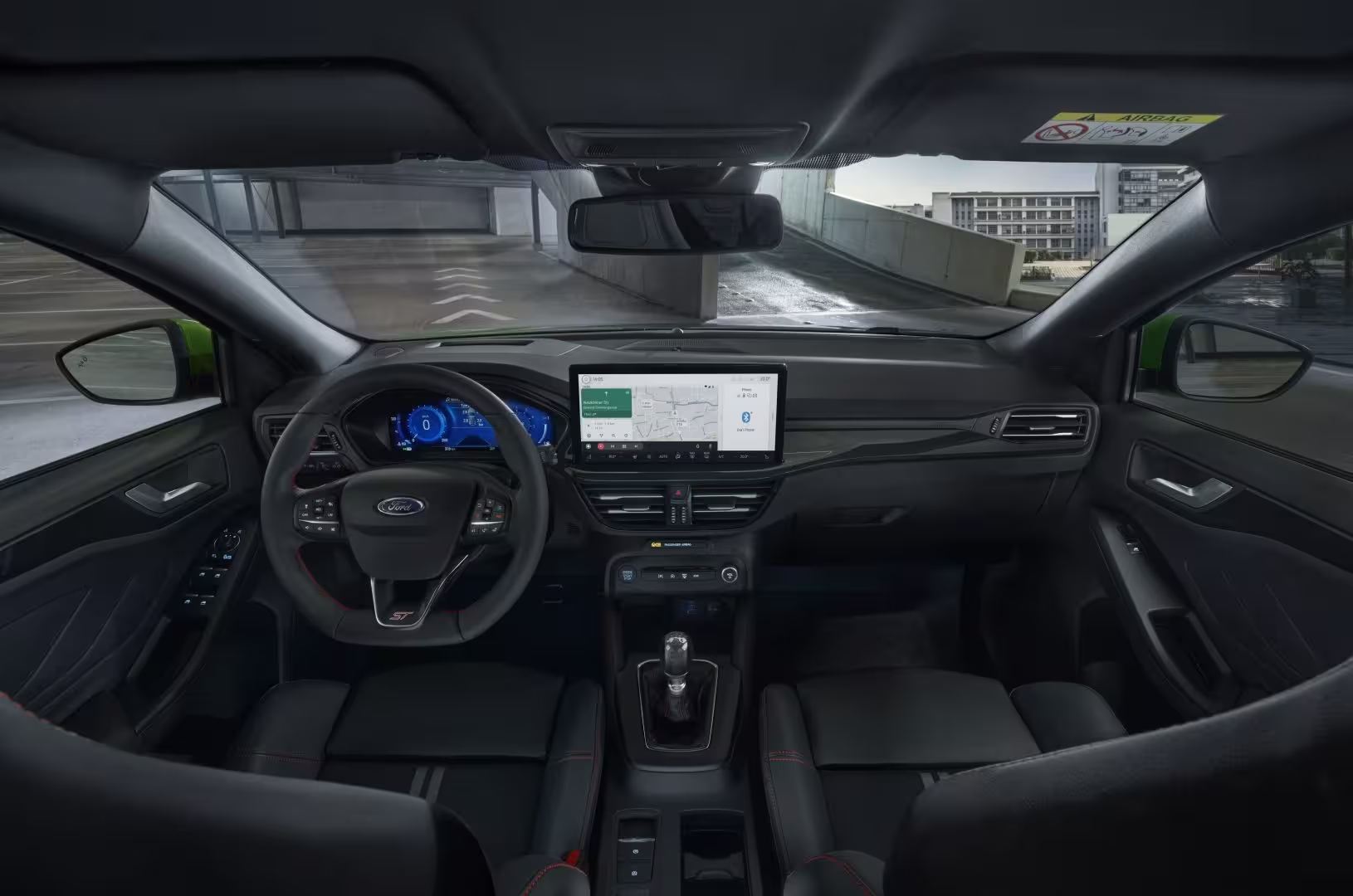
Over its lifetime the Focus offered a wide range of engine options, chassis setups and body styles: three- and five-door hatchbacks, estates and even saloons in certain markets. Highlights included:
- Sharply tuned suspension and communicative steering that made it a driver's compact.
- Performance versions like the Focus ST and RS with turbocharged engines and sporty tuning.
- Efficient EcoBoost petrol engines and later hybridised powertrains in some markets.
That combination of dynamics, practicality and value helped the Focus stay relevant across decades — until economics and the shift to EVs made its continuation untenable.
What this means for buyers and enthusiasts
For used-car buyers and enthusiasts, the Focus's departure could boost demand for well-kept examples, particularly ST and RS models that have established enthusiast value. For Ford, the challenge is preserving the brand's sporting DNA in a future dominated by SUVs and electric crossovers.
Highlights:
- Final Focus produced mid-November at Saarlouis; more than 12 million units built over 27 years.
- Ford refocused on electrification and crossovers, launching new MEB-based EV crossovers and a mid-size hybrid/EV crossover by 2027.
- Saarlouis plant currently without a confirmed successor model, creating uncertainty for local production.
The Focus ends not with fanfare but with the quietly meaningful image of an ordinary hatchback leaving the line — a fitting farewell for a car loved for its balance, steering and everyday honesty. It leaves behind a notable void in Ford's portfolio and a reminder of a time when a compact hatchback could carry a brand's hopes and make driving genuinely enjoyable.

“I cover automotive innovation, electric vehicles, and the future of mobility — where technology meets sustainability.”

Discussion
Leave a Comment