
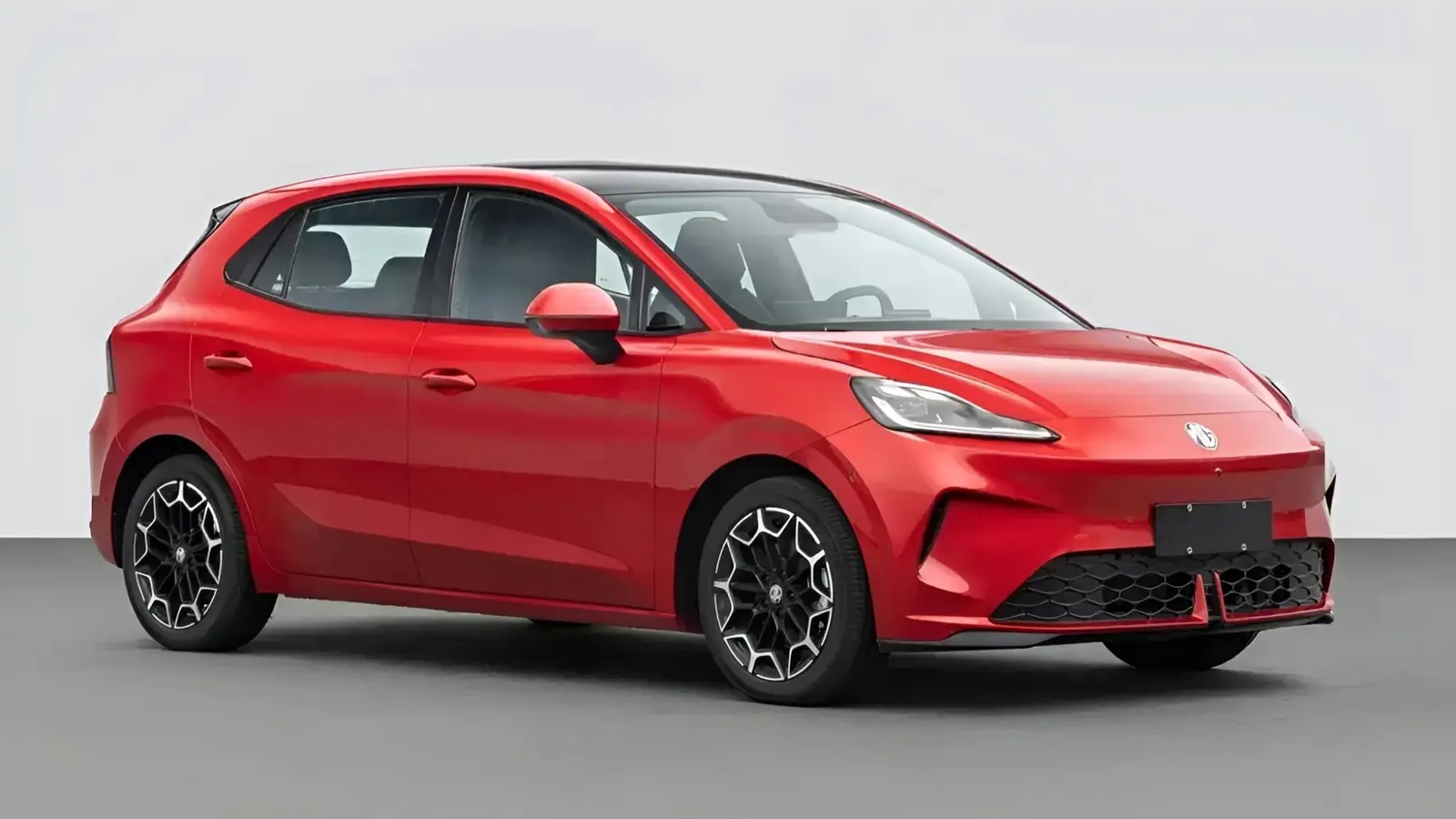
MG unveils first mass-production car with semi-solid battery
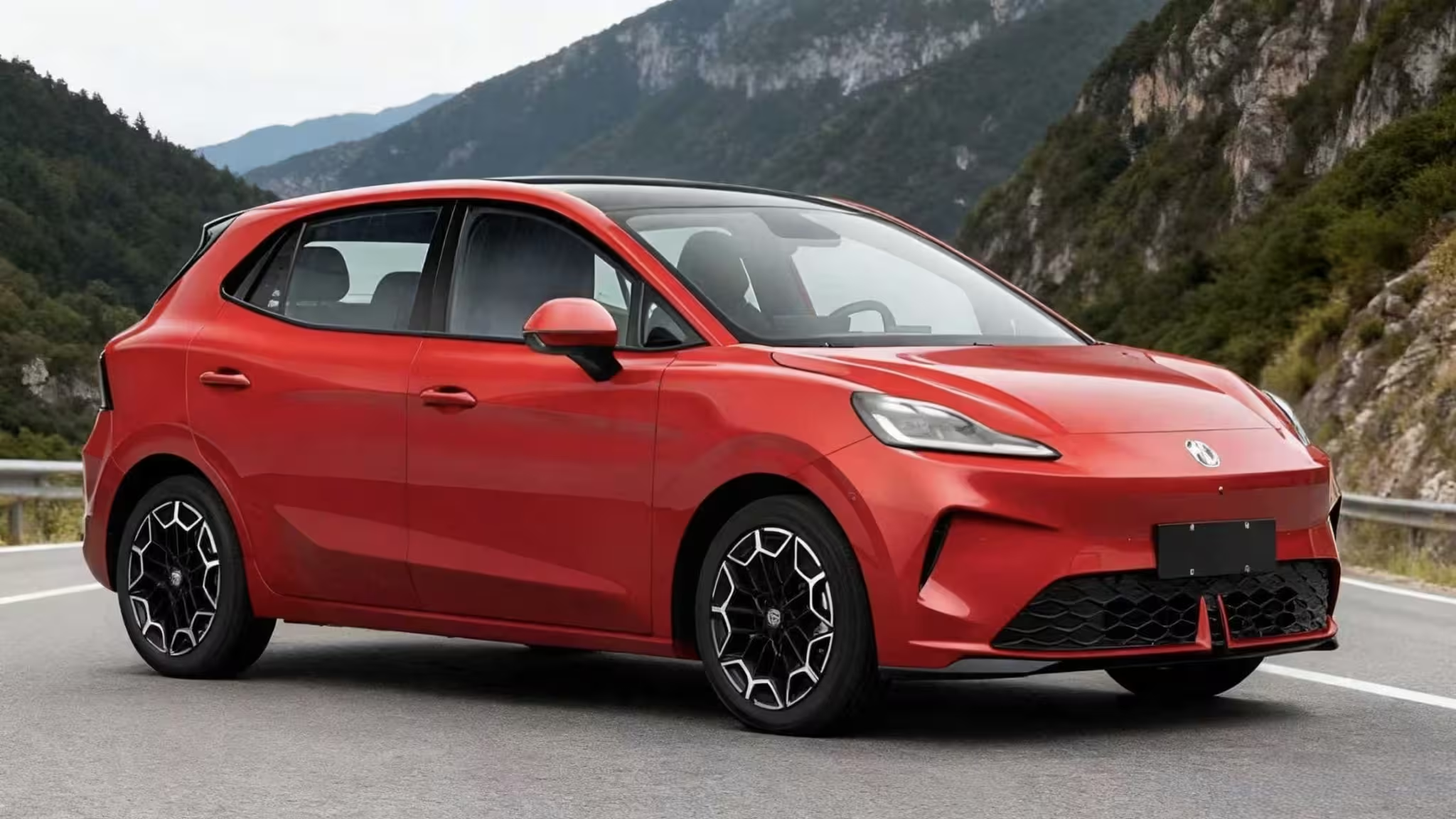
At the Guangzhou Auto Show, SAIC’s MG brand pulled a quiet tech coup: the refreshed MG4 Anxin Edition is the first volume-production electric vehicle to ship with a semi-solid-state battery (SSSB). The new pack — developed with QingTao Energy — marks a notable step between today’s mainstream LFP chemistry and tomorrow’s full solid-state ambitions.
What the new battery is — and what it isn’t
The 54 kWh manganese-based lithium-ion pack in the MG4 Anxin Edition uses a semi-solid electrolyte formulation, where solid components dominate the electrolyte structure while a small liquid fraction remains. The idea is to capture some benefits of solid-state designs — improved thermal stability and potential energy-density gains — without the manufacturing and lifecycle hurdles that still plague full solid-state cells.
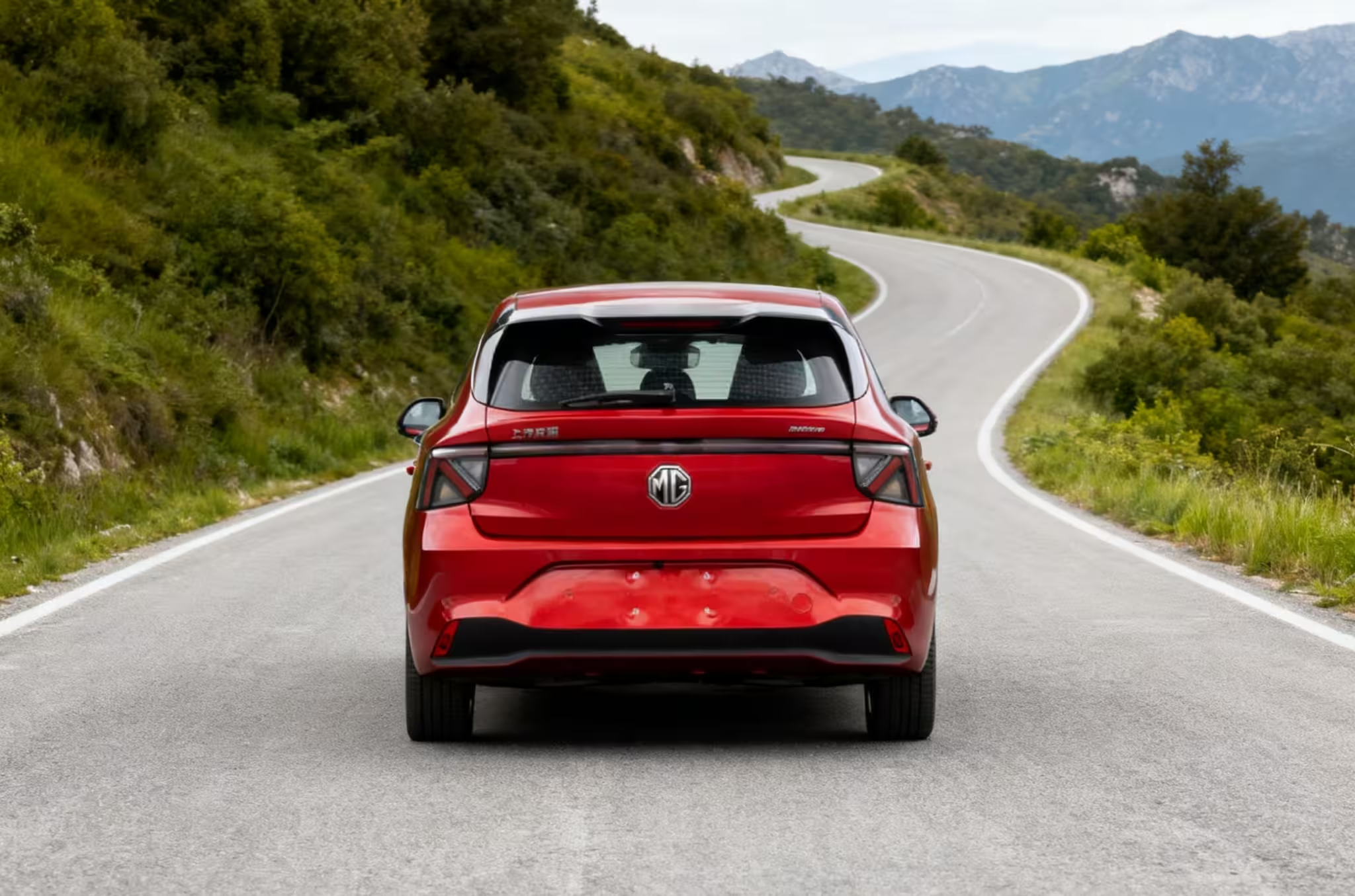
But this first-generation SSSB is not yet a performance leap over the MG4’s standard LFP battery. Range remains the same under CLTC testing, rated at 530 km (329 mi), and the new pack actually adds roughly 15 kg (33 lb) to the car. That suggests current semi-solid cells are still in an early optimization stage when it comes to gravimetric energy density.
Key specs and highlights
- Battery type: Semi-solid-state (manganese-based Li-ion)
- Capacity: 54 kWh
- Range: 530 km (CLTC)
- Weight change: +~15 kg vs. standard LFP pack
- Supplier: QingTao Energy (developed with SAIC)
Why automakers are betting on semi-solid cells
Automakers and battery makers are locked in a race to increase energy density, lower cost and improve safety. LFP (lithium iron phosphate) batteries have become the cost-effective mainstream choice due to their safety, longevity and improving energy density — but the industry is already eyeing the next decade. Full solid-state batteries promise big gains but face manufacturing scale and dendrite-related lifecycle issues.
Semi-solid-state batteries are a pragmatic bridge: they aim to improve stability and density over liquid electrolytes while avoiding some of the processing complexity of all-solid cells. Yet the MG4 Anxin Edition shows the trade-offs are real in early products — mass production readiness doesn’t immediately equal superior performance.
Market context and the road ahead
Other producers are moving on similar timelines. Svolt, for instance, will begin volume production of its first-gen semi-solid cells late next year with reported energy density near 270 Wh/kg, and it has ambitious plans to push that number above 400 Wh/kg for subsequent generations — even targeting 450 Wh/kg by 2028. Those improvements, if realized, would materially change packaging, range and weight considerations for compact EVs.
For MG, introducing the Anxin Edition with QingTao’s pack is strategic: it markets the brand as an early adopter of advanced battery tech and gives SAIC a production testbed for next-gen cells. For buyers and enthusiasts, the immediate takeaway is cautious: the MG4 Anxin Edition proves semi-solid batteries can be manufactured at scale, but real-world advantages over established LFP packs are still evolving.
"A step forward in chemistry — not yet a revolution in range or weight," says an industry engineer familiar with semi-solid cells.
Expect iterative improvements. Early adopters will help manufacturers collect the real-world data needed to refine formulations and manufacturing. The semi-solid era has begun in earnest, but the race to outperform LFP and unlock the promise of true solid-state density is only just warming up.

“Cars are evolving faster than ever. I cover electric vehicles, smart mobility, and the future of transportation worldwide.”

Discussion
Leave a Comment