
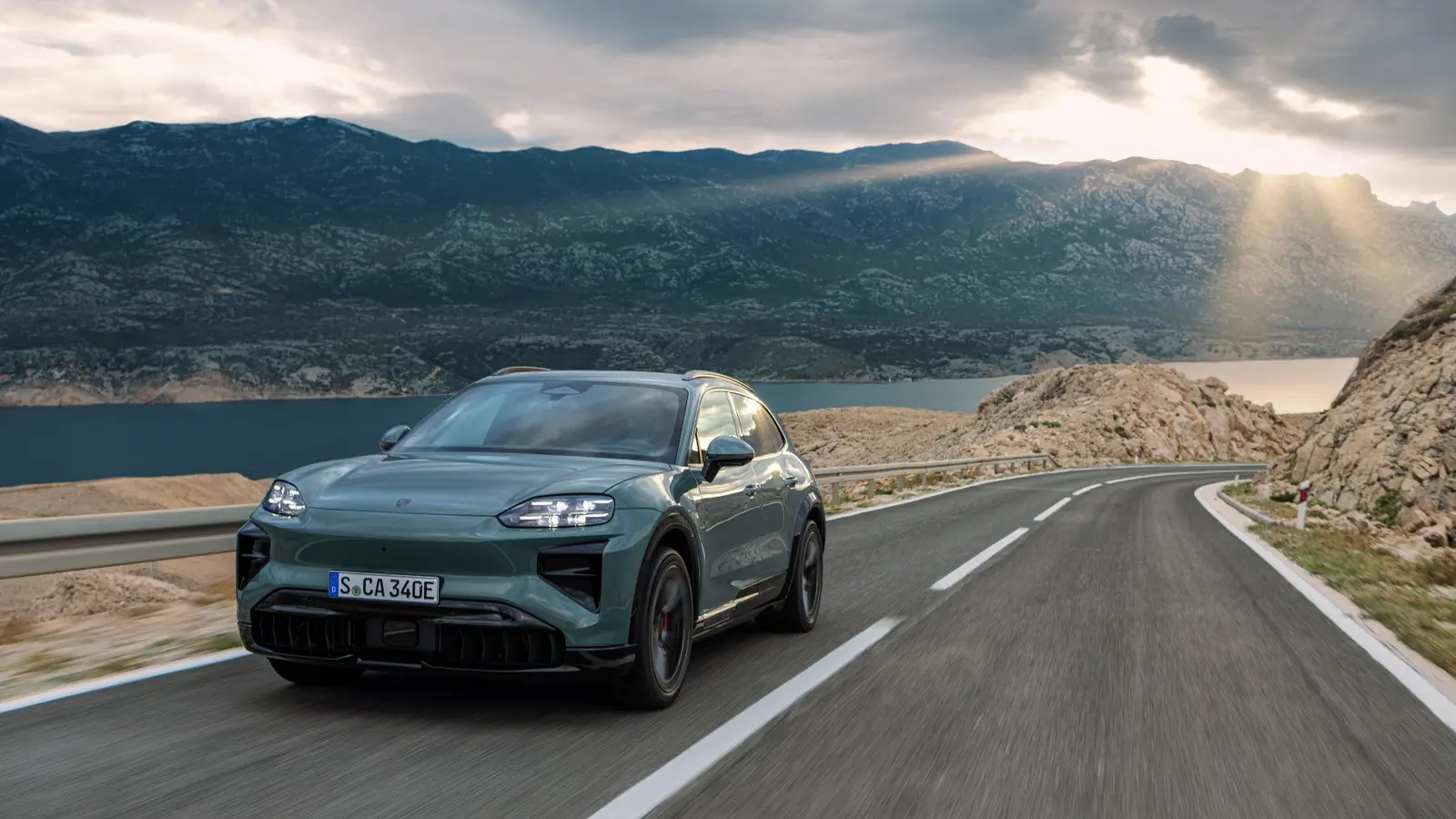
Meet the new Porsche Cayenne Electric — a performance EV that redefines the SUV benchmark
Porsche has finally unveiled the production-ready Cayenne Electric family, and the headline figures are impossible to ignore. At the top of the range is the Cayenne Turbo Electric — a zero-tailpipe-emission SUV that cranks out a staggering 1,139 horsepower and brings supercar-grade acceleration to the luxury-SUV segment. Alongside it sits the more accessible Cayenne Electric, which balances performance and everyday usability while introducing a raft of advanced EV technology derived from Porsche’s racing and Formula E programs.
Quick highlights
- 1,139 hp (with Launch Control) in the Cayenne Turbo Electric
- Up to 400 kW DC fast charging (10–80% in under 16 minutes)
- 113 kWh high-voltage battery with dual-sided cooling
- Optional inductive (wireless) charging — a first for Porsche
- 0–60 mph in 2.4 sec (Turbo Electric); 0–60 mph in 4.5 sec (Cayenne Electric)
- Drag coefficient of 0.25 and Porsche Active Aerodynamics (PAA)
Performance: hypercar numbers from an SUV
Porsche engineered the Cayenne Turbo Electric with an aggressive performance focus. Its dual-motor powertrain delivers 1,139 hp and 1,106 lb-ft (1,500 Nm) of torque when Launch Control and peak power modes are engaged. That allows sprint times more commonly associated with hypercars: 0–60 mph in just 2.4 seconds and a quarter-mile in about 9.9 seconds. Top speed is electronically limited, with the Turbo Electric capable of 162 mph (261 km/h) under optimal conditions.
When Launch Control is disengaged, the Turbo Electric still produces a generous 844 hp — enough to make it blisteringly quick in daily driving. A temporary Push-to-Pass function adds an extra 173 hp for about 10 seconds, giving drivers a short burst of additional power when needed for overtakes or track use.
The standard Cayenne Electric, meanwhile, is no slouch. Its electric motors produce roughly 402 hp and 615 lb-ft (834 Nm) of torque, delivering a 0–60 mph time of about 4.5 seconds — fast for a mid-range luxury EV while remaining more approachable and efficient than the Turbo.
Racing tech for the road
Porsche has fitted the Cayenne Electric with several technologies borrowed from motorsport. The rear electric motor benefits from direct oil cooling — a technique used in racing to maintain performance under extreme load. Energy-recovery braking systems, influenced by Porsche’s Formula E experience, can recuperate up to 60 kW, and Porsche says roughly 97% of everyday braking can be handled purely by the electric motors, reducing wear on the friction brakes.
Buyers who plan track days or spirited canyon runs can opt for Porsche Ceramic Composite Brakes (PCCB) to ensure consistent stopping performance under heavy use.
Charging, battery and range considerations
The Cayenne Electric family uses a newly developed 113 kWh high-voltage battery with dual-sided cooling for balanced thermal management under high loads. The pack supports up to 400 kW DC fast charging, which Porsche claims can recharge the battery from 10% to 80% in under 16 minutes — an industry-leading speed for an SUV of this size. That charging curve helps position the Cayenne as far more practical for long-distance travel than older EVs.
In another first for the brand, Porsche offers optional inductive (wireless) charging. Owners can simply park over a floor plate and let the car charge automatically — an added convenience that mimics the smartphone experience.
Official range figures remain under embargo from Porsche. Early estimates circulated before the launch suggested a potential WLTP-like figure up to 600 km (around 373 miles), but buyers should wait for official EPA or WLTP ratings to understand real-world range and charging performance in their market.
Chassis, ride and handling
Adaptive Air Suspension with Porsche Active Suspension Management (PASM) is standard across the range, delivering an adjustable ride that balances comfort and control. The Turbo Electric also includes Porsche Torque Vectoring Plus (PTV Plus) to improve cornering dynamics.
Rear-axle steering is available and can turn the rear wheels by up to five degrees for better low-speed maneuverability and improved high-speed stability. New to the Cayenne lineup is Porsche Active Ride, a system designed to actively counteract body motion, reduce understeer and refine the SUV’s behavior in demanding driving situations.
These systems, together with a low drag coefficient of 0.25 and Porsche Active Aerodynamics (PAA), help the Cayenne Electric feel agile for its size while improving efficiency and range at speed.
Design and practicality: familiar silhouette, fresh details
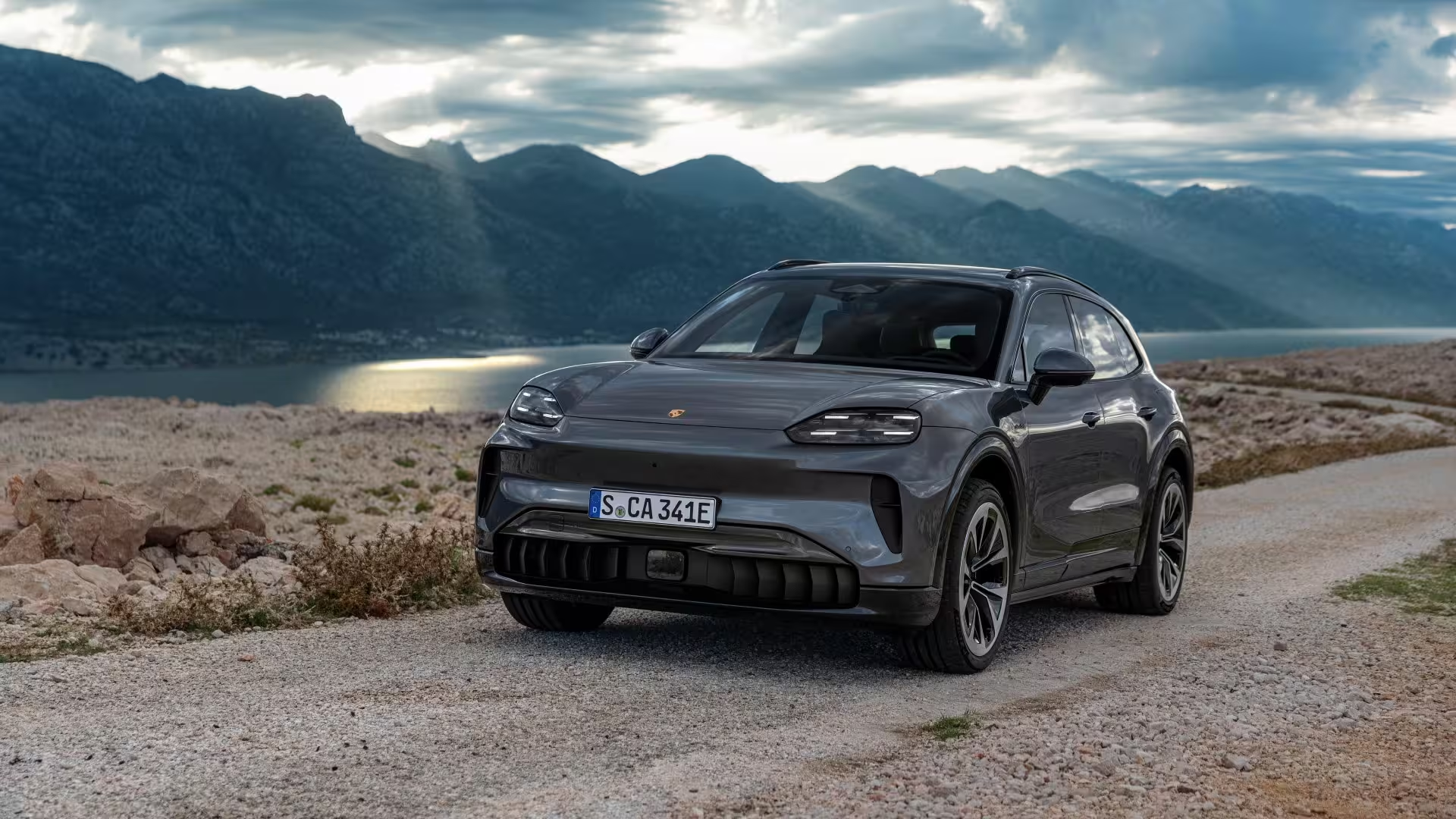
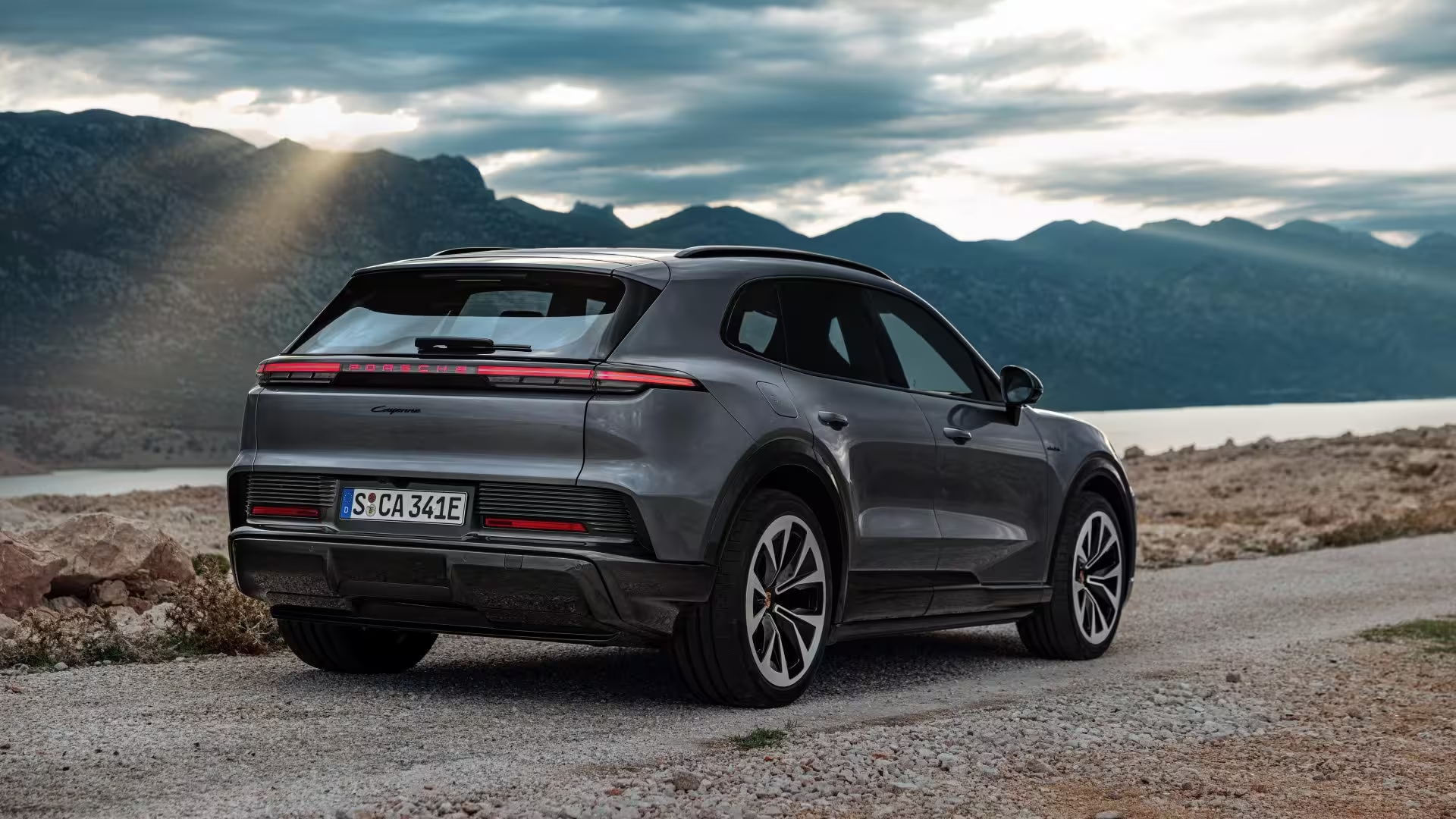
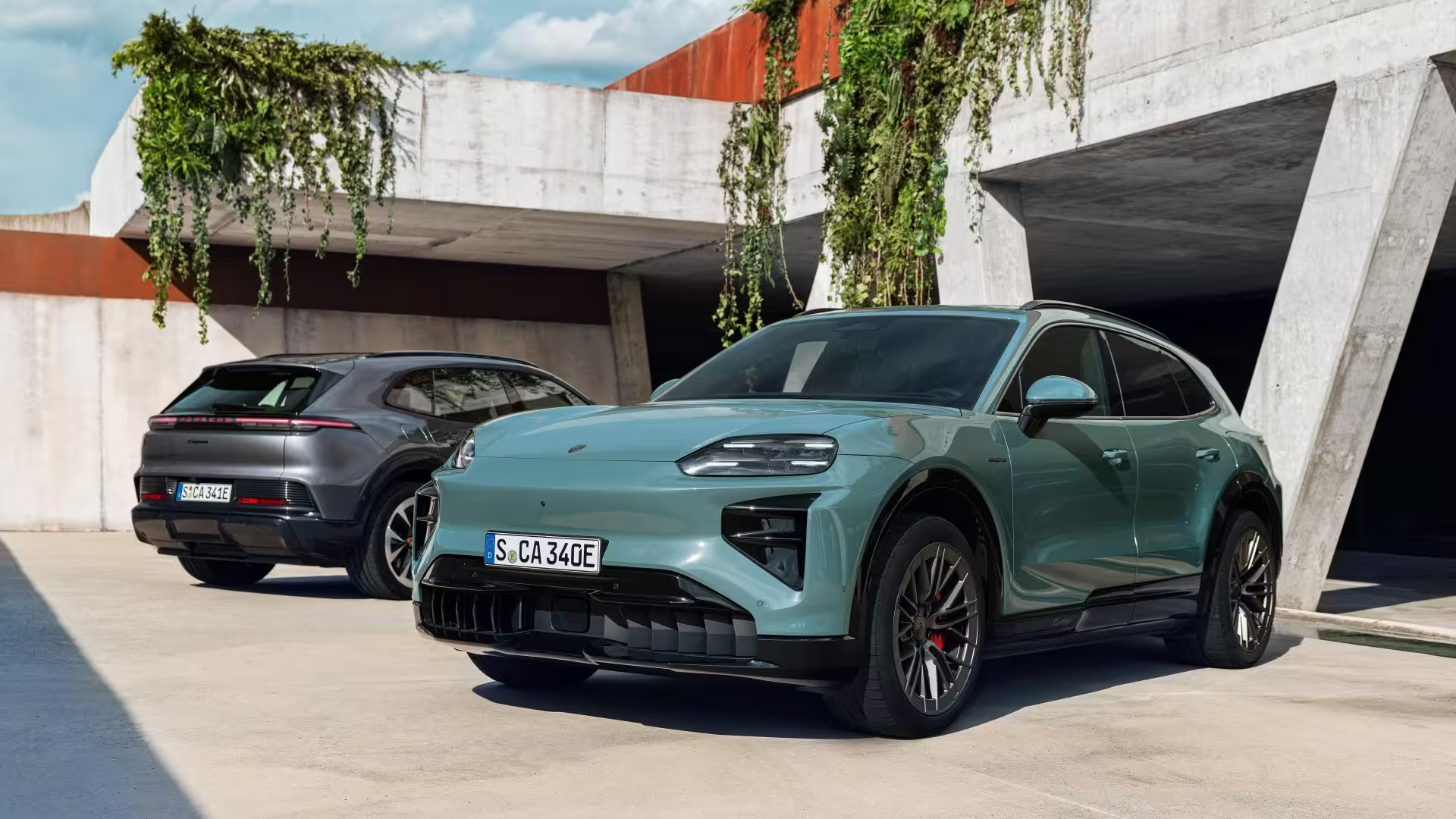
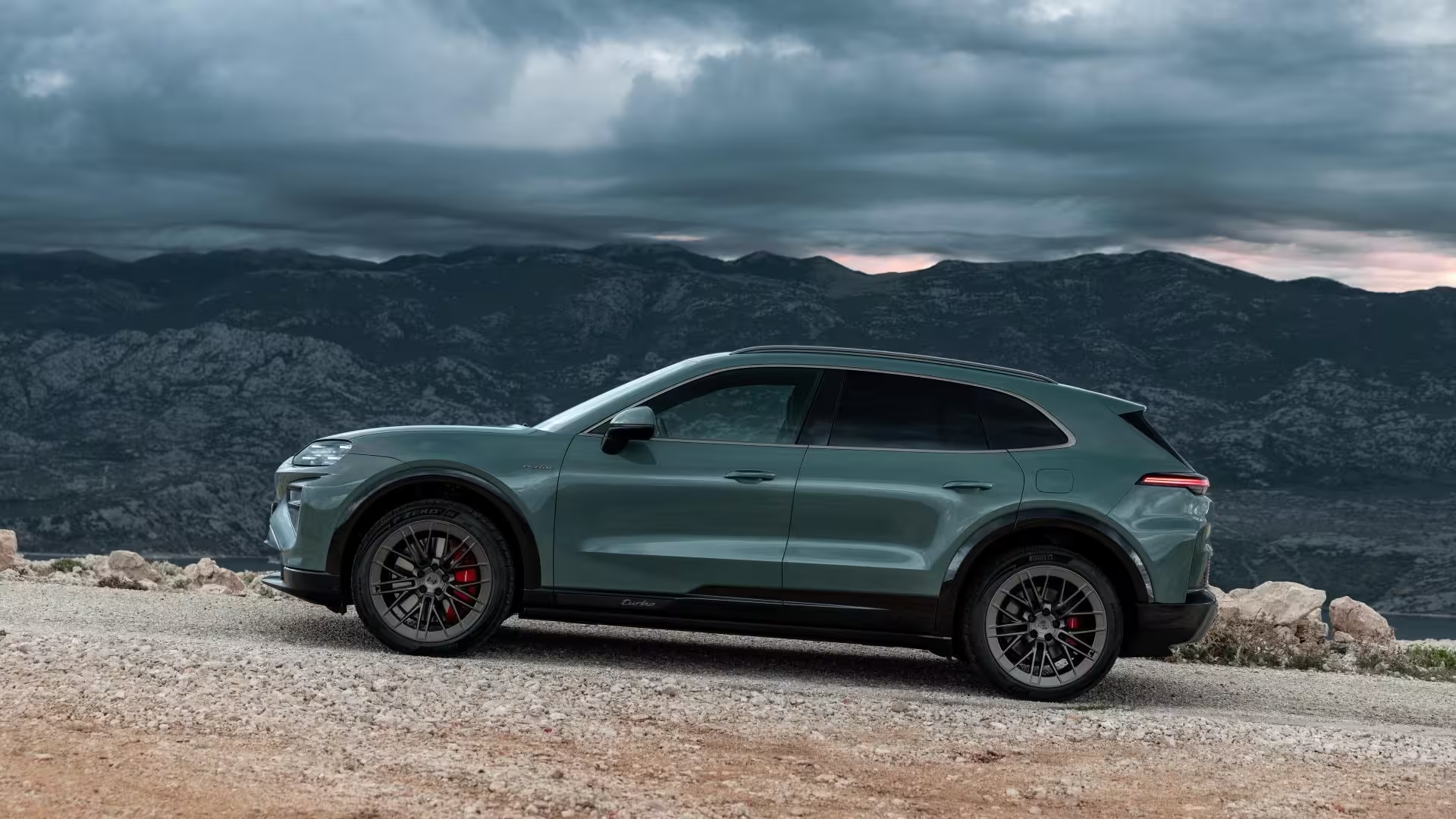
Visually, the Cayenne Electric is unmistakably a Cayenne — a familiar silhouette with Porsche proportions — but the details are all new. A lower front hood, slim Matrix Design LED headlights, frameless doors and a pronounced crease along the door panels emphasize its sporty intent. At the rear, a 3D animated light strip and illuminated Porsche lettering give the EV a distinctive, high-tech signature. Several trim elements are available in an exclusive Turbonite color for buyers who want a more dramatic look.
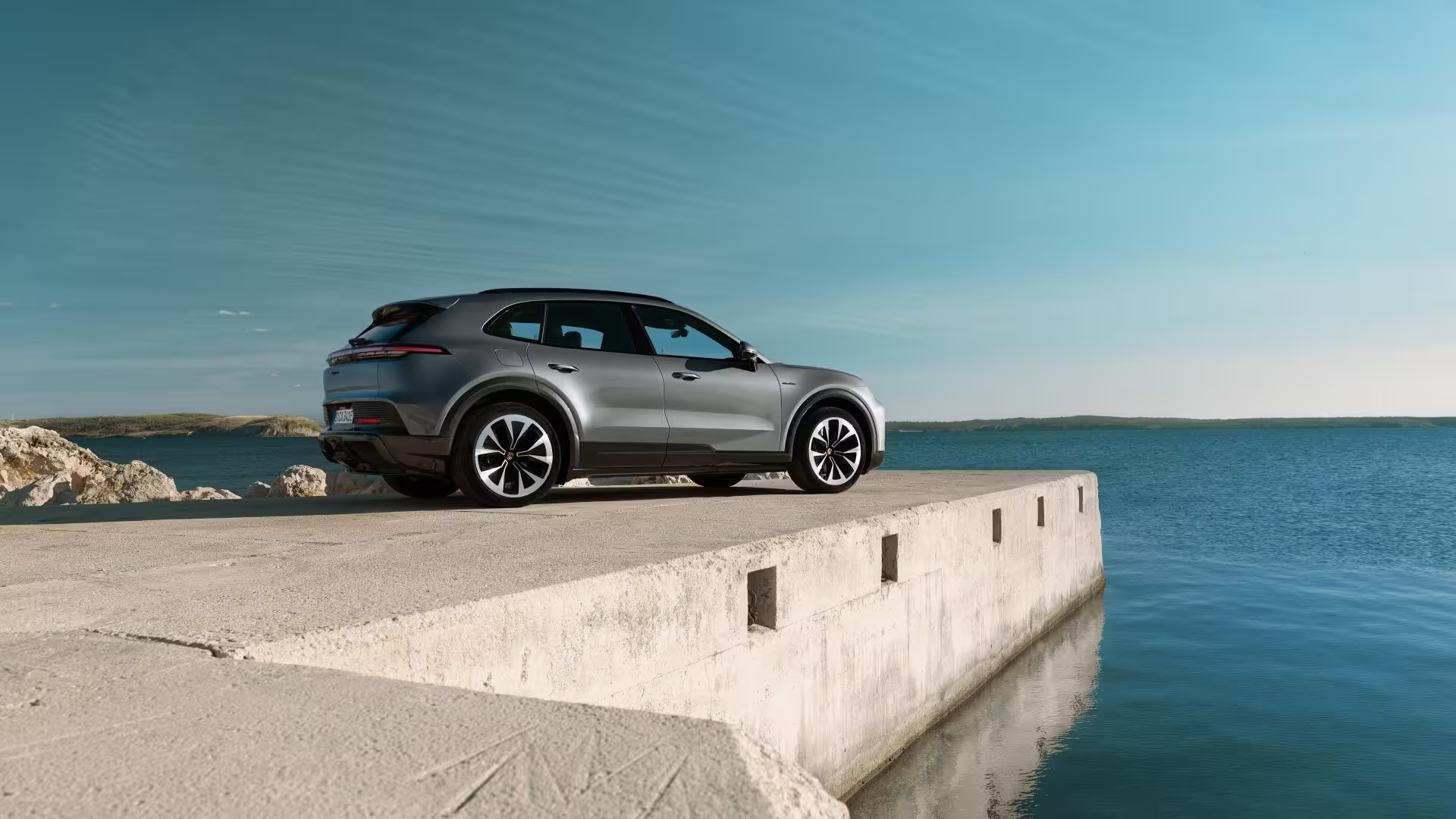
The electric Cayenne is slightly larger than the ICE counterpart: about 2.2 inches (55 mm) longer and with a 5.0-inch (130 mm) longer wheelbase, translating to extra cabin space and comfort. Luggage capacity ranges from approximately 19.5 to 56.1 cubic feet (781 to 1,588 liters), and an additional 3.2 cubic feet (90 liters) of space has been allocated in the trunk. Porsche quotes a towing capacity up to 3.5 tons (7,716 lb), so the Cayenne remains a practical tool for owners who need to tow boats or trailers.
Buyers seeking light off-road ability can order the Off-Road Design package, which adjusts the front fascia geometry and underbody protection for travel on unpaved roads and steeper, rougher terrain.
Interior tech: mood-driven cabin and high-tech displays
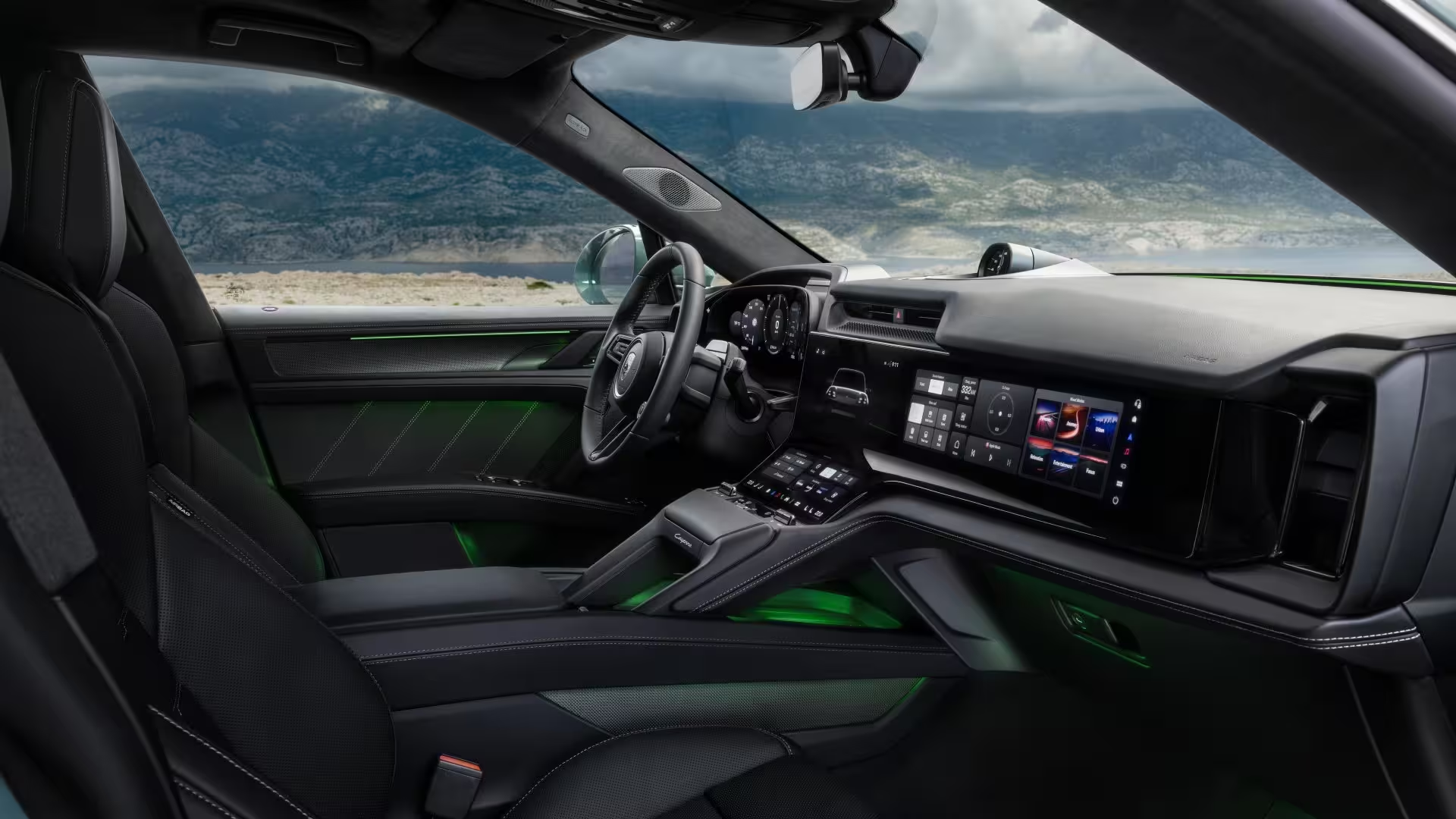
Inside, the Cayenne EV debuts a Mood Modes function that personalizes the driving environment: seat position, ambient lighting, HVAC settings, audio profiles and display layouts can be tied to the user’s selected mood or driving mode. An animated welcome light strip indicates vehicle states such as charging and readiness.
Porsche’s Flow Display — a curved OLED screen — acts as the cockpit centerpiece and is paired with physical buttons for drivers who prefer tactile controls. The instrument cluster is a 14.25-inch fully digital unit, and an optional 14.9-inch passenger display is available. Augmented Reality head-up display technology, first seen on the Macan Electric, projects relevant navigation and driver-assist information into the driver’s field of view where it’s easier to process.
Practical touches include a panoramic sunroof with Variable Light Control and heated surface areas beyond the seats (like armrests and door panels) for enhanced cabin comfort in cold climates.
Options, personalization and market positioning
Porsche knows many buyers will want to customize the Cayenne Electric. The configurator will be extensive: 13 standard colors, nine wheel designs from 20 to 22 inches, 12 interior combinations, and multiple interior packages. For collectors and bespoke clients, the Porsche Exclusive Manufaktur Paint-to-Sample program offers near-endless finish options. Even a matching Porsche-made Swiss watch can be ordered to complement the vehicle.
Price-wise the range is positioned firmly in the premium luxury segment. U.S. pricing starts at $109,000 for the base Cayenne Electric, while the range-topping Cayenne Turbo Electric begins at about $163,000. Deliveries are slated to begin at the end of summer 2026, giving customers time to configure their vehicles.
How the Cayenne Electric fits the market
Porsche has made a calculated decision: deliver headline-grabbing performance while packing the Cayenne with technology that improves daily usability. The Turbo Electric’s output challenges the boundaries between SUV and supercar, while the mid-range Cayenne Electric appeals to buyers seeking a premium EV with a sporty edge and practical charging capabilities.
Competitors in the high-performance luxury EV SUV space are multiplying, but Porsche’s blend of motorsport-derived engineering, brand prestige and a broad options palette should make the Cayenne Electric a compelling choice for buyers who want an electrified Porsche without sacrificing drama or capability.
Bottom line
The Porsche Cayenne Electric line-up is a statement of intent: Porsche will electrify its most important models without losing the performance DNA that made the brand famous. Fast charging, innovative cooling, wireless charging and advanced dynamics put the Cayenne Electric at the sharp end of the EV market. Whether buyers prioritize the jaw-dropping Turbo Electric or the more measured Cayenne Electric, Porsche has delivered an SUV that’s as practical as it is thrilling.
"Porsche has translated its race-bred know-how into an electric SUV that can actually be used every day," says one industry analyst — and the Cayenne Electric looks ready to prove that claim on the road.

“I cover automotive innovation, electric vehicles, and the future of mobility — where technology meets sustainability.”

Discussion
Leave a Comment