
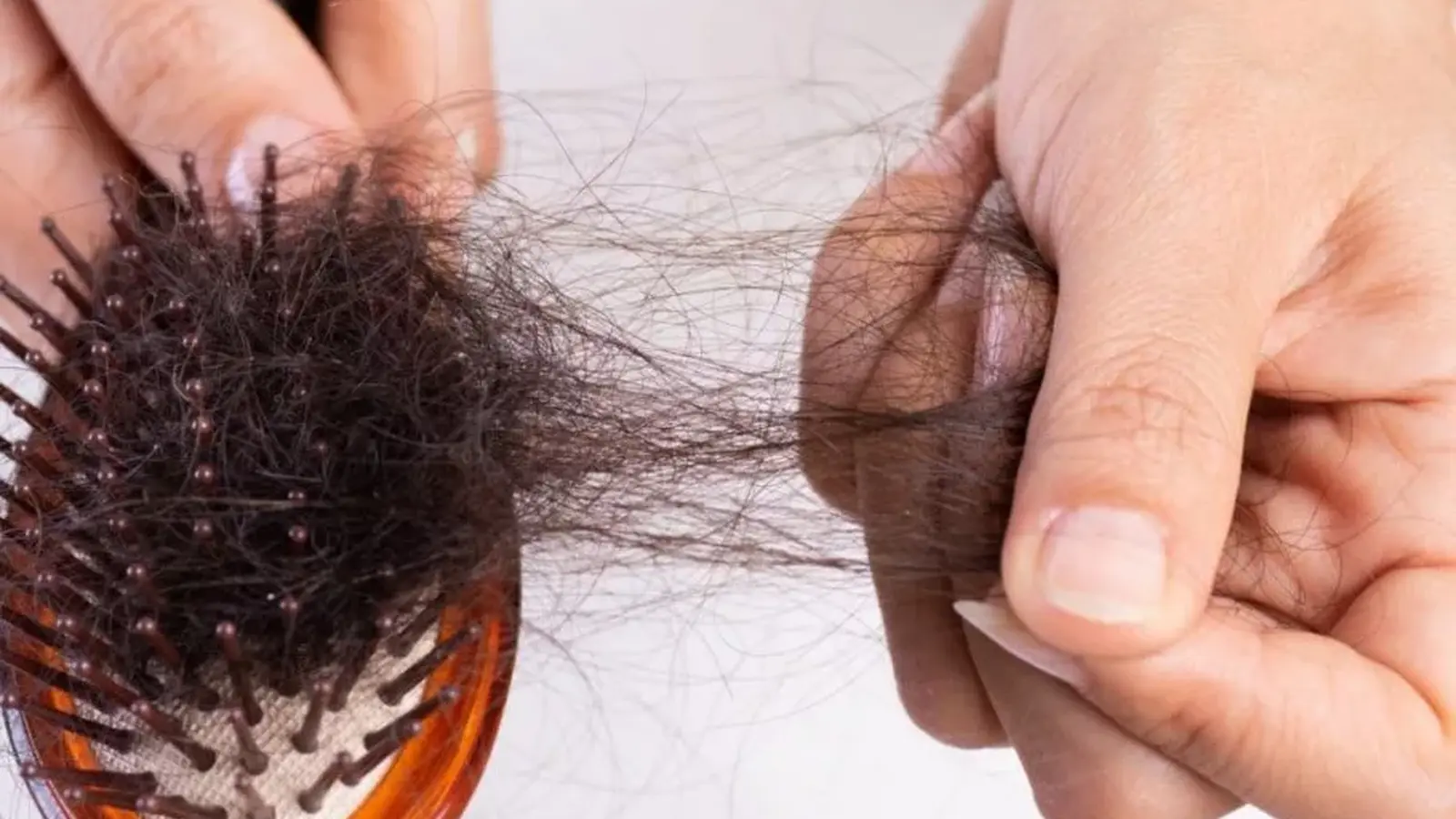
New research from Harvard reveals that a single acute stress episode can rewire the immune system and set the stage for long-term, recurring hair loss. The study maps a chain of neurological and cellular events that turn normally replaceable hair follicles into targets of lasting immune attack — offering a clearer trigger for conditions such as alopecia areata.
How a single shock reprograms immunity
Using mouse models, the researchers traced a precise pathway from acute stress to autoimmune hair loss. When an intense stressor activates the sympathetic nervous system — the body’s fight-or-flight circuit — it releases the neurotransmitter norepinephrine. That chemical surge drives calcium into follicle cells’ mitochondria. The resulting overload causes mitochondrial rupture and a form of chaotic cell death called necrosis. Unlike orderly apoptosis, necrosis produces a strong inflammatory signal that attracts immune cells.
Step-by-step mechanism
- Stress triggers sympathetic activation and norepinephrine release.
- Norepinephrine causes calcium influx into hair follicle mitochondria.
- Mitochondrial necrosis and tissue inflammation occur.
- Inflammation recruits CD8+ T cells, which begin to recognize follicles as foreign.
- Some CD8+ T cells persist as an immune memory, ready to re-activate on later inflammatory cues.
Importantly, even after the original stressor has passed, the CD8+ T cells do not disappear. These immune cells lie dormant, forming an "immune memory" that can be reawakened by minor inflammatory triggers such as a common cold. Once reactivated, they attack hair follicles again, producing recurrent patches of hair loss similar to alopecia areata.

Evolutionary context: why the body sacrifices hair
At first glance this response seems maladaptive, but researchers suggest it reflects an ancient energy-allocation strategy. Growing hair is metabolically expensive. During extreme threat, the body prioritizes vital tissues like heart and muscle and may sacrifice expendable structures to preserve stem cells and essential resources. In this view, stress-induced follicle necrosis is a defensive compromise: short-term survival at the cost of hair integrity.
Implications for treatments and broader autoimmunity
Published in Cell, the study opens new therapeutic avenues. If sympathetic signals or the receptors that mediate the calcium influx can be blocked, it may be possible to prevent the cascade that leads to necrosis and the subsequent immune mislabeling of follicles. Targeting CD8+ T cell activation or their retention as memory cells also offers a promising strategy.
Beyond hair loss, these findings could reshape our understanding of other complex autoimmune disorders such as type 1 diabetes and multiple sclerosis. In each case, an acute physiological stress might act as the initiating event that changes immune behavior long-term.
While the study was performed in mice, the mechanistic clarity provides a testable framework for human research. Researchers writing in Cell caution that genetics and environment still modulate risk: stress is a plausible trigger, not a lone cause. Still, the link between the sympathetic nervous system, mitochondrial necrosis, and immune memory gives clinicians new targets to explore for preventing or reducing stress-induced autoimmune outbreaks.


“The cosmos has always fascinated me. I write about space missions, astronomy, and the technologies pushing humanity beyond Earth.”

Discussion
Leave a Comment
Comments (2)
Is this even true for people tho? Mouse models ok, but nervous system stuff and genes, idk feels premature to say stress causes alopecia, need human data
wow, kinda wild that one freak event can rewrite immunity. my scalp tingles thinking of colds re-triggering it... hope humans match mouse data tho