
5 Minutes
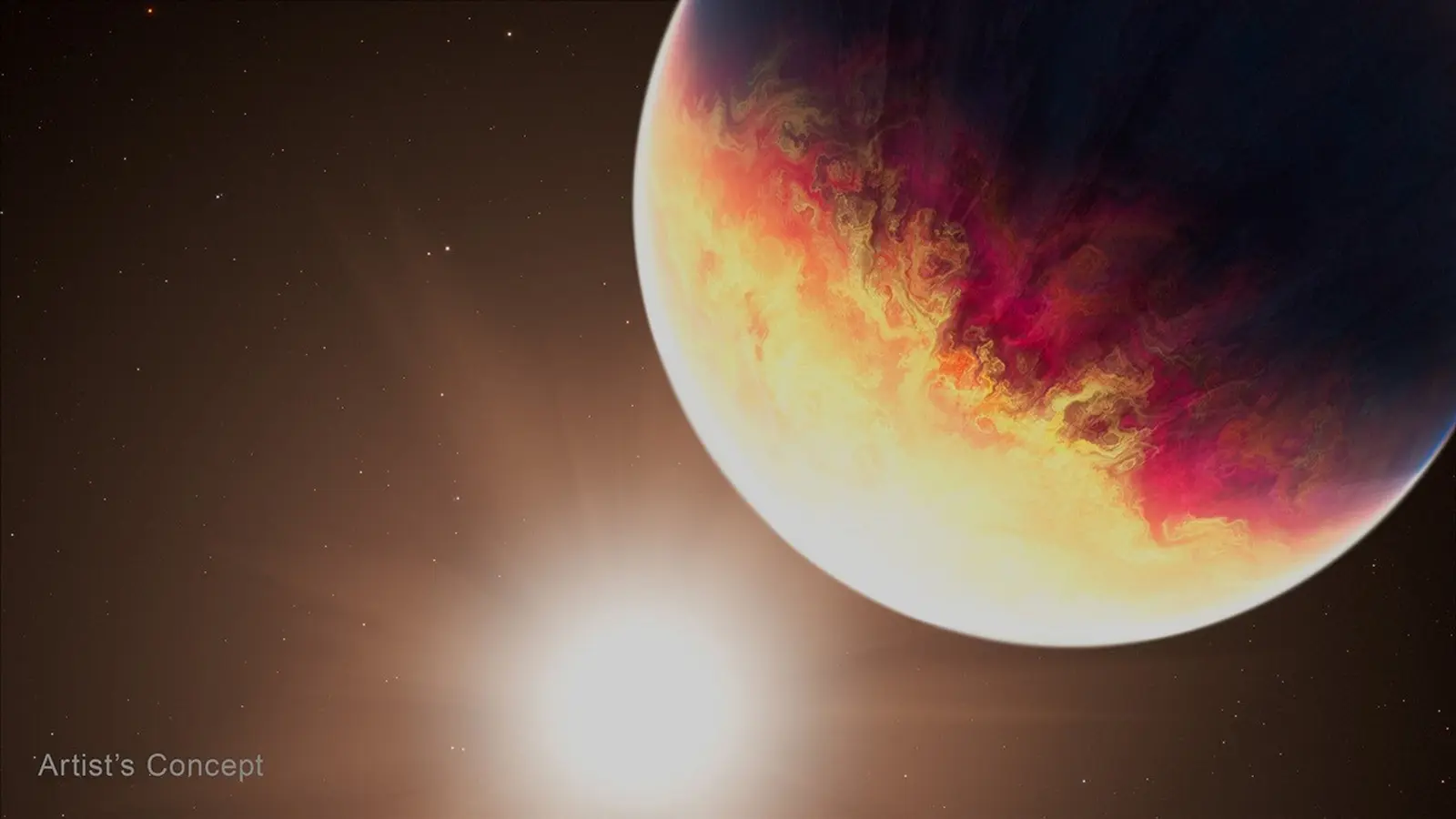
Imagine a world that swings into a star’s furnace and back again, all within the span of an orbit. That is HD 80606 b, a gas giant that lives on the ragged edge of extremes and has just offered a richer, more vivid portrait of its suffering thanks to the James Webb Space Telescope.
Close encounter with the heat
Located about 217 light-years away, HD 80606 b (also cataloged as Struve 1341 Bb and HIP 45982 b) is roughly four times the mass of Jupiter. The number that defines its drama is 0.03 astronomical units — its closest approach to its star. That distance is roughly 4,487,936 kilometers. Close enough, astronomers say, to raise the planet’s atmospheric temperature by roughly 593 degrees Celsius during periastron, the point of closest approach.

Temperature changes this large do not just nudge a world’s weather. They rip through atmospheric chemistry, rearrange clouds, and trigger winds and waves that shift on timescales of hours. Webb’s Mid-Infrared Instrument, known as MIRI, captured those shifts by splitting the planet’s light into its component wavelengths. What was once a blur of thermal emission has become a time-resolved spectrum, revealing composition, temperature structure, and motion.
What Webb saw and why it matters
Webb observed HD 80606 b during the crucial window when the planet rushes nearest to its star. The dataset contains sequences of infrared spectra taken as the planet heated and then began to cool. Those spectra show changes consistent with rapid chemical reactions in an atmosphere pushed out of equilibrium. Molecules that are stable at cooler temperatures break apart and re-form as the heat pulse passes. Clouds can evaporate and then condense on the night side. The result is a chemically dynamic atmosphere, far removed from the steady-state assumptions often used in exoplanet models.
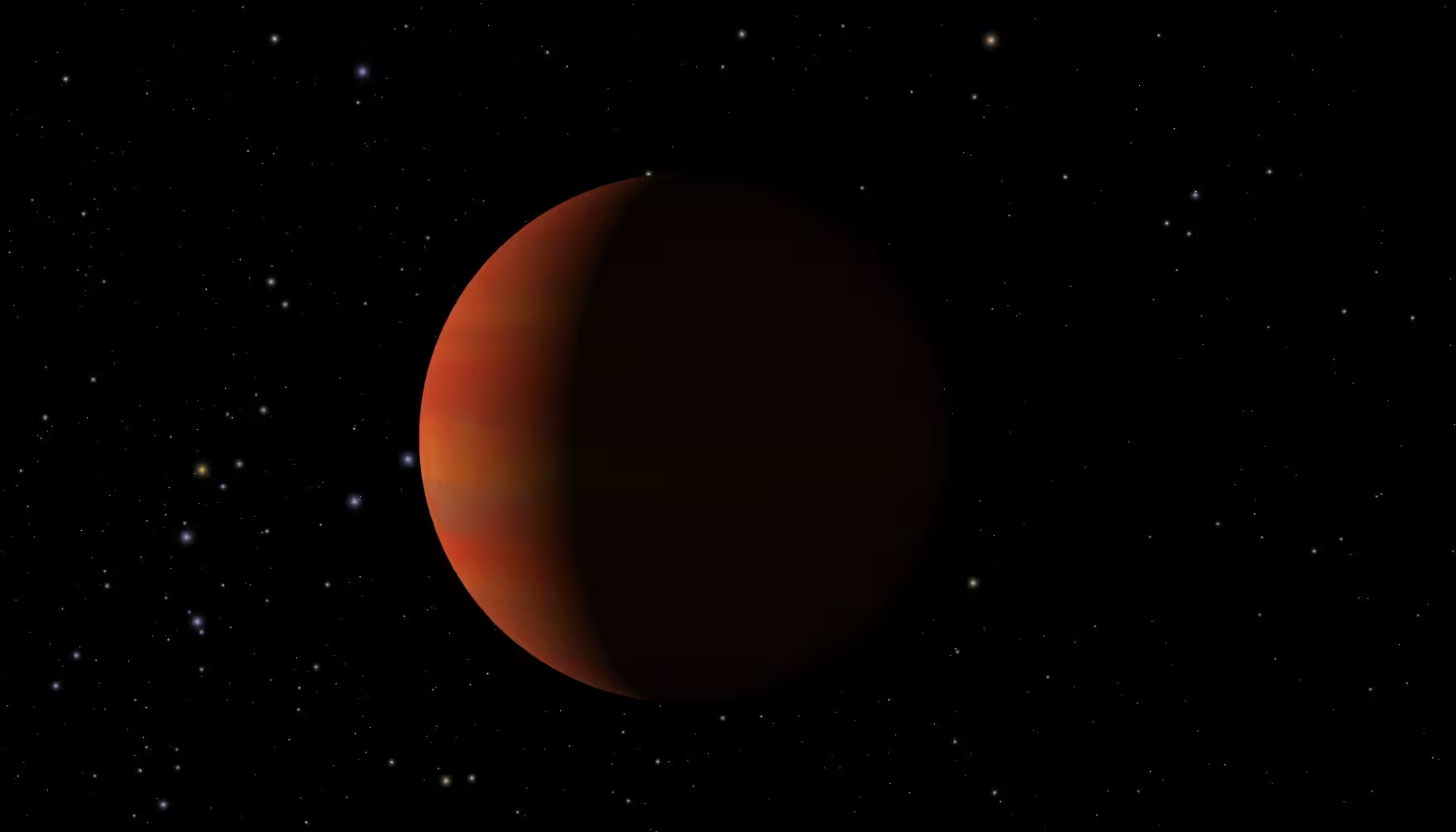
Tiffany Kataria, principal investigator on the study from NASA’s Jet Propulsion Laboratory, describes HD 80606 b as a planet being seared and then allowed to recover. Webb’s sensitivity in the mid-infrared makes it possible to track that recovery in unprecedented detail. Spectroscopy gives not only a chemical fingerprint but also a thermometric map — where the heat is, how fast it moves, and how the atmosphere responds.
Beyond being a spectacular case study, the data set acts as a laboratory for understanding atmospheric physics under extreme forcing. Techniques refined on HD 80606 b will be applicable to other eccentric and tidally heated worlds, and even to more placid exoplanets where transient events — flares, impacts, seasonal effects — perturb atmospheres.

Instruments, methods, and the next steps
The team used MIRI’s spectroscopic modes to measure flux across mid-infrared bands sensitive to key molecules such as water vapor and methane, and to broader thermal emission signatures. Time-resolved spectroscopy enables a sequence-by-sequence analysis rather than a single snapshot. That temporal resolution is essential when the planet’s conditions change on timescales comparable to the observation window.
These observations were complemented by historical datasets. Spitzer first put HD 80606 b on astronomers’ maps, but Webb adds sensitivity and wavelength coverage that reveal processes previously only hinted at. Researchers presented preliminary results at the 248th meeting of the American Astronomical Society in Pasadena, and they emphasize the richness of the dataset — there is more to mine.
Looking ahead, Webb will not be the only new eye in space. The Nancy Grace Roman Space Telescope is slated to join the arsenal with capabilities tailored for direct exoplanet imaging. Together, these observatories will let researchers compare the violent atmospheres of eccentric hot Jupiters with the subtler climates of more stable worlds.

Expert Insight
"HD 80606 b is a stress test for our models," says Dr. Laura Mendes, an exoplanet atmosphere specialist at the University of Arizona. "This planet forces us to couple dynamics, chemistry, and radiative transfer in time-dependent ways. Webb gives us the observations; the challenge now is to build models that can keep up."
Such modeling efforts require high temporal resolution, interdisciplinary teams, and computational resources. But they promise payoffs: better predictions for atmospheric variability, improved strategies for future observations, and a deeper grasp of planetary physics across a wide range of temperatures and orbital geometries.
Conclusion
HD 80606 b is more than an exotic example. It is a proving ground for tools and theories that will be applied across exoplanet science. Webb’s mid-infrared spectra have turned a single extreme planet into a dynamic experiment, and the findings will ripple through how astronomers interpret atmospheres — hot and cool alike — in the years ahead.
Source: autoevolution


Comments
astroset
Wow, a planet getting seared in hours, insane. Webb's spectra are like watching weather on steroids. Clouds vaporize, chemistry flips... mind blown, if that's real

Leave a Comment