
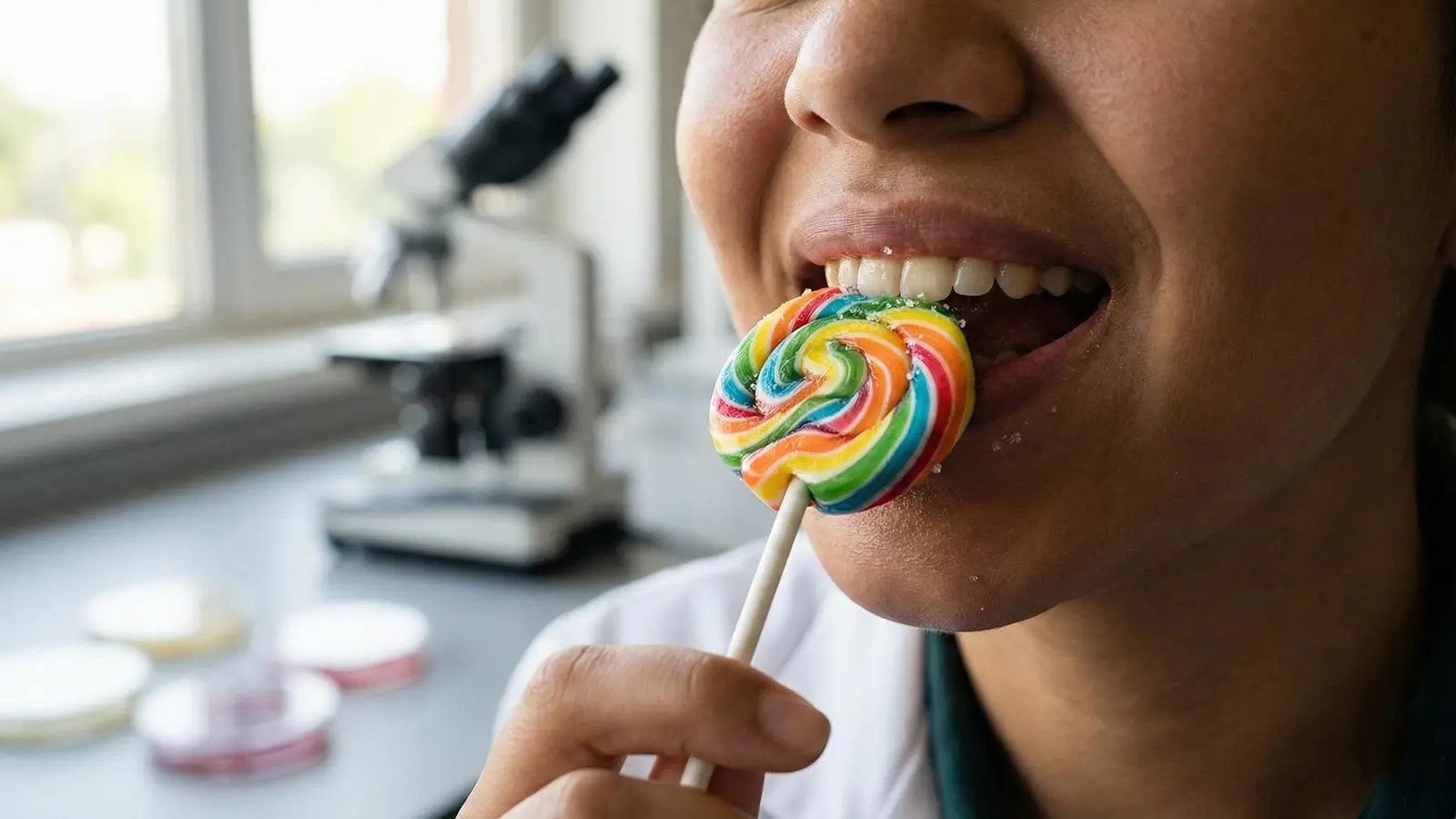
From Halloween candy to holiday desserts, modern life makes it easy to bathe your mouth in sugar. We all know that sweets are linked to cavities, but what actually happens in those first minutes after you bite into a cookie or sip a soda?
Microbiologists who study oral bacteria have mapped out this microscopic drama in detail. The story is not just about sugar and teeth, but about a complex ecosystem, bursts of acid, and tiny bacterial fortresses that can quietly erode your enamel.
From First Bite to Acid Attack
Within seconds of that first sugary mouthful, bacteria living on your teeth begin to feast. Many of these microbes, especially cavity-causing species such as Streptococcus mutans, specialize in turning simple sugars into energy. In the process, they release organic acids as waste products, including lactic acid.
Those acids rapidly change the chemistry inside your mouth. Normally, saliva keeps your oral environment close to neutral on the pH scale. But one to three minutes after you finish a sugary snack or drink, the pH can plunge into a highly acidic range. At around pH 5.5 or lower, tooth enamel — the hard, mineral-rich outer layer of the tooth made mostly of hydroxyapatite crystals — begins to dissolve. This process is called demineralization.
Fortunately, your body has built-in defenses. Saliva is constantly washing over your teeth, diluting and clearing sugars while buffering the acids produced by oral bacteria. It also supplies calcium and phosphate ions that can help repair early microscopic damage to enamel, a process known as remineralization. In addition, your mouth hosts a diverse community of bacteria, many of which compete with acid-producing species and help keep the oral microbiome in balance.
The problem arises when sugar exposure is frequent and prolonged. If you sip sweet drinks all afternoon or snack on candy between meals, you repeatedly push your oral environment into an acidic state. Over time, this favors acid-tolerant, cavity-causing bacteria and overwhelms the protective effects of saliva and beneficial microbes.
How Plaque Becomes a Bacterial Fortress
Cavity formation is not just about acid; it is also about architecture. Cavity-causing bacteria do not simply float around in saliva. They assemble themselves into complex, sticky communities called biofilms — better known as dental plaque.
Using dietary sugars, these bacteria produce glue-like polymers called extracellular polysaccharides. These sticky molecules allow them to anchor tightly to the tooth surface and to each other. Over time, this builds a dense, structured film that is extremely difficult to remove without mechanical cleaning from a toothbrush, dental floss, or professional tools at the dentist’s office.
Inside this biofilm, conditions are very different from the open mouth environment. The plaque layer acts as a physical and chemical barrier:
- It slows down the ability of saliva to reach the tooth surface and neutralize acids.
- It traps sugars close to the enamel, giving bacteria a steady fuel supply.
- It creates tiny microenvironments where acid levels can stay high for long periods.
The bacteria adapted to these conditions can thrive in low pH, while many of the more beneficial, less acid-resistant species die back. The result is a self-reinforcing cycle: more acid, more enamel damage, and a microbial community increasingly dominated by cavity-causing species.
As enamel minerals dissolve away, small subsurface lesions appear. At first, these early cavities may be invisible or painless. Eventually, the damage can break through the surface, forming visible holes. If the process continues unchecked, decay can penetrate into the softer dentin layer beneath the enamel and, ultimately, reach the tooth’s nerve-rich pulp, causing pain and infection.
Science-Backed Ways to Protect Your Teeth from Sugar
Understanding the microbiology and chemistry of your mouth points directly to practical strategies for prevention. The goal is not necessarily to eliminate sugar completely but to limit how often and how long your teeth are exposed to it, while disrupting those bacterial biofilms regularly.
Time Your Treats and Use Meals to Your Advantage
Microbiologists and dental researchers consistently recommend consuming sugary foods and drinks with meals, not as stand-alone snacks. Eating stimulates saliva production, which helps dilute and clear sugars and speeds up neutralization of acids.
If you plan to enjoy dessert, it is less harmful to eat it directly after a meal than to nibble on sweets over several hours. Constant grazing keeps your mouth in that dangerous acidic zone for much longer, giving biofilms more opportunity to grow and enamel more time to dissolve.
Cut Down on Constant Sugar Exposure
Frequent sips of sugar-sweetened beverages — such as sodas, sweetened coffees and teas, energy drinks, and fruit juices — are especially problematic. Each sip delivers a new dose of sugar to your oral bacteria, triggering another acid spike.
Choosing water between meals and limiting drinks that contain table sugar (sucrose) or high-fructose corn syrup can significantly reduce cavity risk. Even "healthier" sweeteners like honey, agave syrup, or concentrated fruit juices can feed acid-producing bacteria, so they should be treated like other sugars when it comes to dental health.
Break Up Biofilms with Daily Cleaning
No matter how careful you are with your diet, biofilms will form. The key is to disrupt them regularly before they become thick, mature bacterial fortresses. That means:
- Brushing your teeth at least twice a day with a fluoride toothpaste, especially after meals or sugary foods.
- Flossing once a day to remove plaque from between teeth and under the gumline, where toothbrush bristles cannot reach.
- Seeing a dentist regularly for professional cleanings, which can remove hardened plaque (tartar) that at-home tools cannot dislodge.
Fluoride plays a special role in this system. It can incorporate into the tooth’s mineral structure, making enamel more resistant to acid, and it helps drive remineralization of early lesions. This is why fluoride toothpastes and, in some regions, fluoridated drinking water are considered major public health tools in preventing tooth decay.
Expert Insight
"People tend to think of cavities as little holes that just appear in teeth," says Dr. Lena Morales, a microbiologist who researches the oral microbiome at a university dental school. "In reality, tooth decay is the result of a long-running microbial and chemical process. Sugar tips the balance in favor of acid-producing bacteria, and plaque gives them a protected home. If we can interrupt that cycle — by changing how often we eat sugar and how consistently we clean our teeth — we can dramatically reduce cavities."
Why This Microbial Story Matters
Tooth decay may seem like a routine childhood problem, but it is one of the most common chronic diseases worldwide. The science behind what happens in your mouth after you eat sugar is central not only to dentistry but also to broader microbiology and human health research. The oral microbiome is now being studied as a model ecosystem — a complex, densely populated biofilm system where microbial competition, chemical gradients, and host defenses are all visible on a small, accessible scale.
Next time you reach for a sugary snack, you are not just feeding yourself. You are feeding billions of microscopic organisms that can either live in balance with your body or slowly erode one of its hardest tissues. Knowing how quickly that acid plunge begins — and how strongly biofilms protect cavity-causing bacteria — gives you the tools to make smarter choices and protect your teeth for the long term.

Discussion
Leave a Comment