
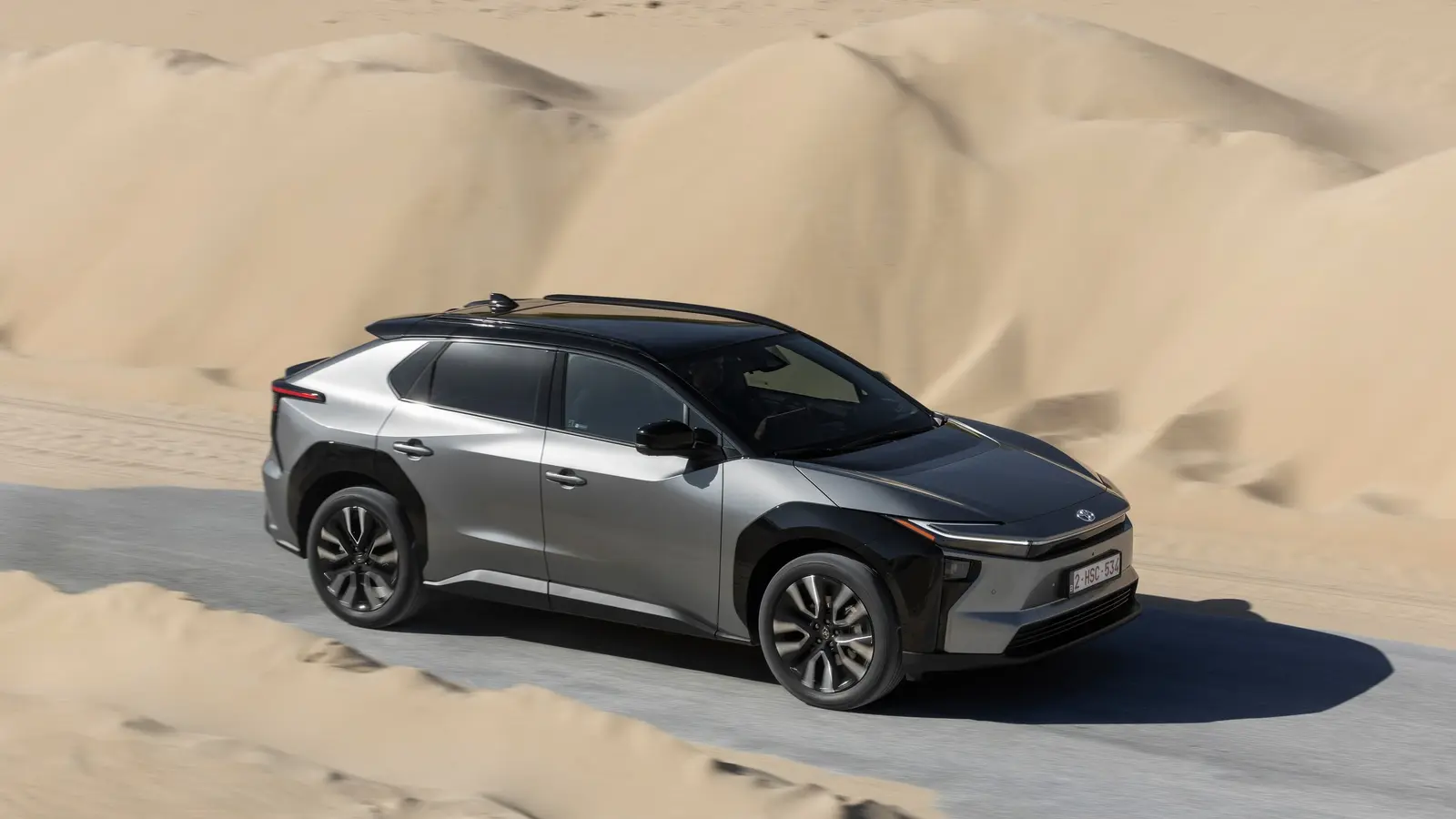
Toyota's refreshed bZ4X arrives with stronger batteries and faster charging
When Toyota launched the bZ4X in 2022 it marked the brand's first full battery-electric production car—and despite an awkward name it quickly found buyers. The SUV has already shifted roughly 150,000 units in Europe since its debut and became one of the segment's stronger sellers. Now Toyota has reworked the model for the 2026 model year with substantial mechanical, efficiency and interior upgrades that give the bZ4X a clearer identity in a crowded electric-SUV market.
What’s new mechanically?
The headline change for 2026 is a complete overhaul of the energy pack. Toyota now offers two lithium-ion battery capacities supplied by Prime Planet Energy & Solutions (PPES): a smaller 57.7 kWh pack and a larger 73.1 kWh pack. Both batteries can be specified with front-wheel drive (FWD), while the bigger pack can also be paired with an all-wheel drive (AWD) configuration.
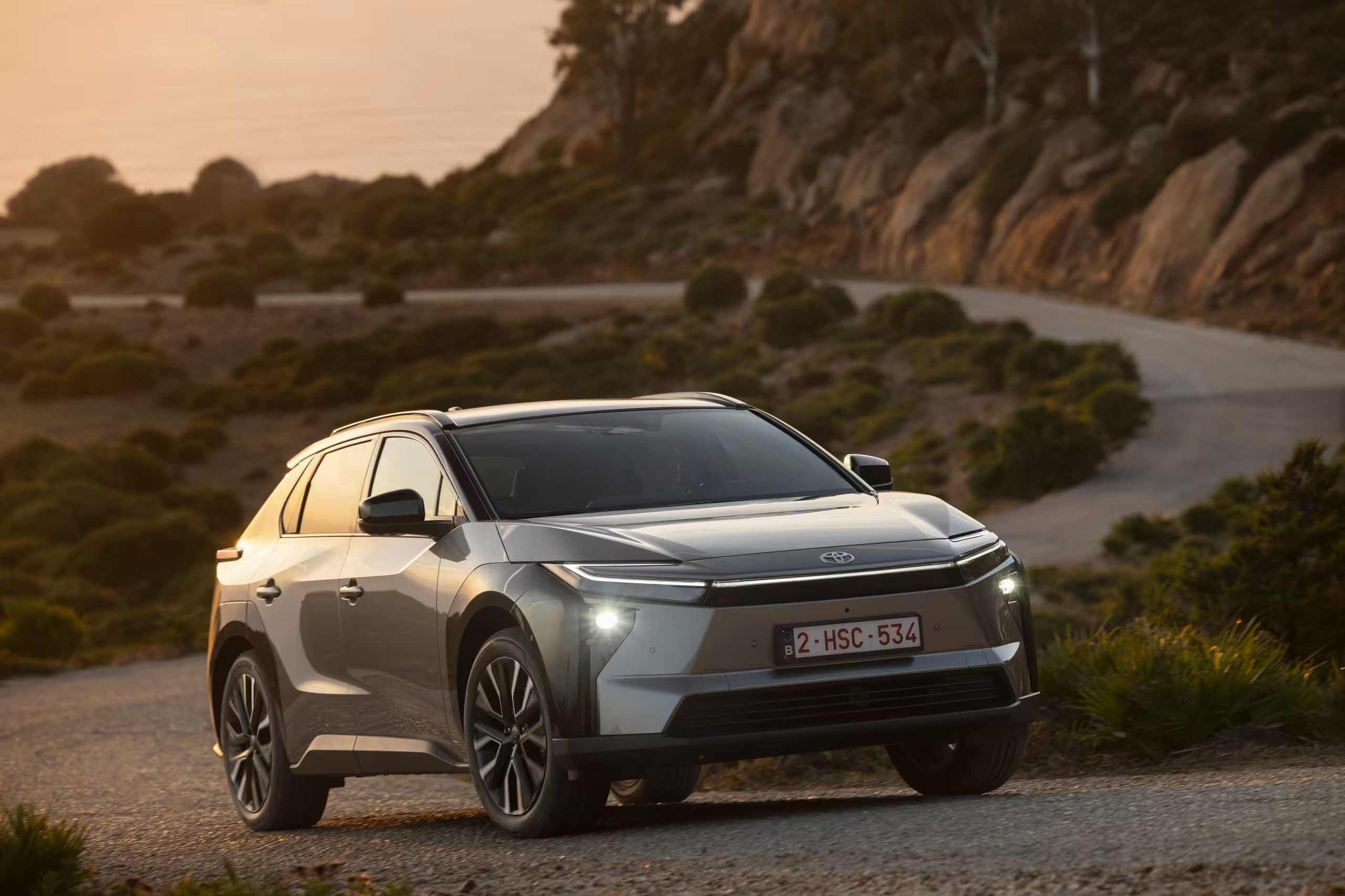
Key power and range figures:
- 57.7 kWh (FWD, mid-grade): 167 hp, up to 276 miles (444 km) range.
- 73.1 kWh (FWD): 224 hp, up to 354 miles (569 km) with 18-inch wheels.
- 73.1 kWh (AWD): combined 343 hp, up to 321 miles (516 km).
The AWD setup achieves its higher output by boosting the front motor from 201 hp to 224 hp and the rear motor from 107 hp to 117 hp—making the refreshed bZ4X “one of the most powerful Toyota models in Europe outside the GR range.” That positioning aims to give buyers a performance edge without stepping into full-bore GR performance territory.
Faster charging, smarter battery care
Toyota has also focused on real-world usability by improving charging speed through new battery preconditioning logic. The system warms or cools the battery to an optimal temperature before DC fast charging, enabling a 10–80% charge in approximately 28 minutes at DC chargers, in ambient temperatures from -10 to +25 °C (14 to 77 °F).
Charging hardware across the range is more generous than before:
- Most trims: 11 kW on-board AC charger.
- High grade: 22 kW on-board AC charger (standard).
Additionally, the High grade can be optioned with a solar roof that feeds trickle energy back into the battery. Toyota’s internal testing in Nagoya—the sunniest test region cited—claims the solar panel could add the equivalent of up to 1,118 miles (1,800 km) over long-term operation in ideal conditions. That figure is highly dependent on climate and usage patterns, but it underlines Toyota’s push to make auxiliary charging meaningful rather than marketing fluff.
Lightweight aero and subtle design tweaks
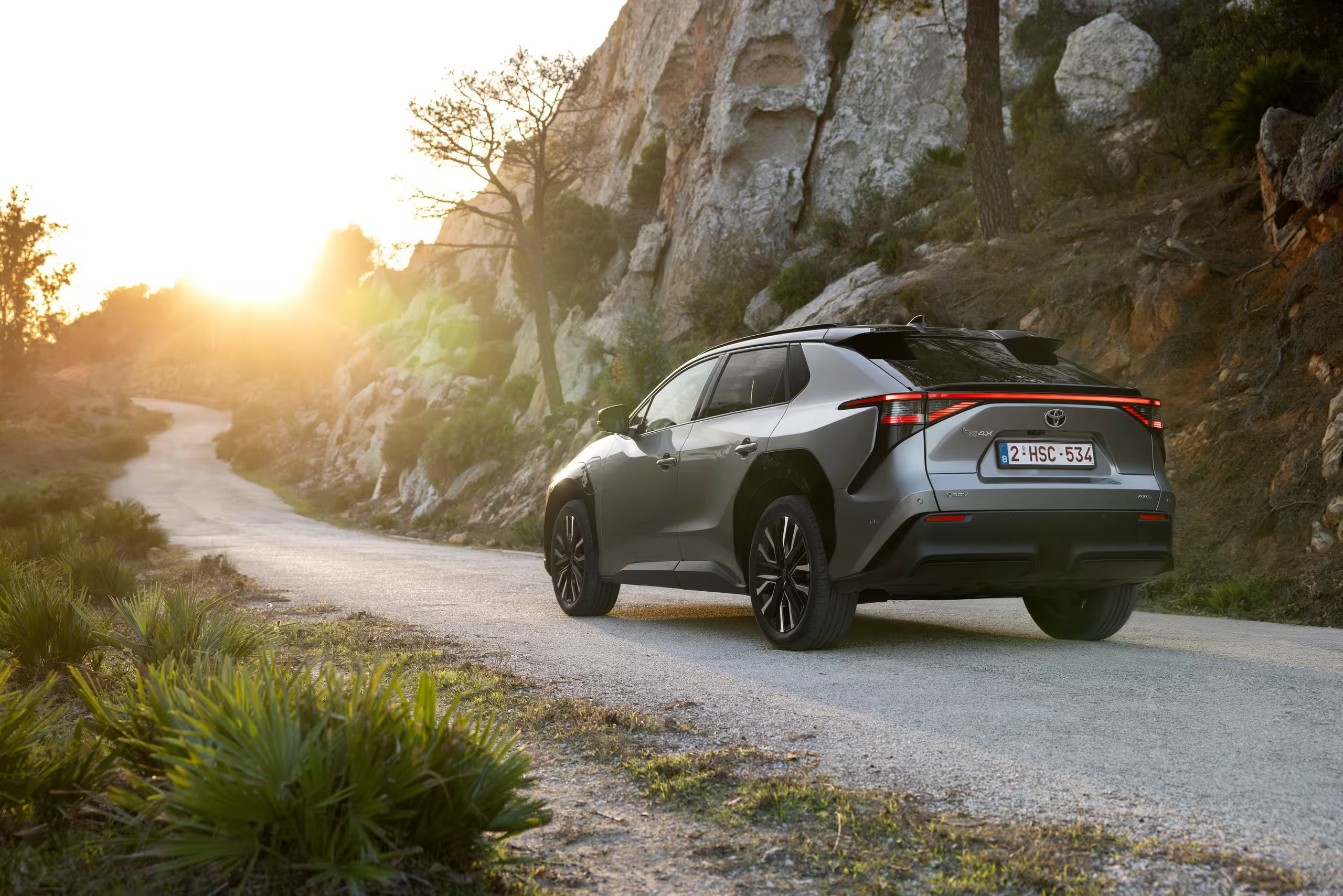
The facelift is visible too. At the front, a new central light bar modernizes the face of the SUV. Toyota offers two wheel options—18-inch aero-efficient wheels with full resin covers, or 20-inch alloy wheels with resin ornamentation—and the rear end has been redesigned with a raised ducktail on variants without a high-mounted spoiler. These refinements reduce the drag coefficient from 0.29 to 0.27, a meaningful improvement for highway economy and real-world range.
Interior: larger screen and recycled materials
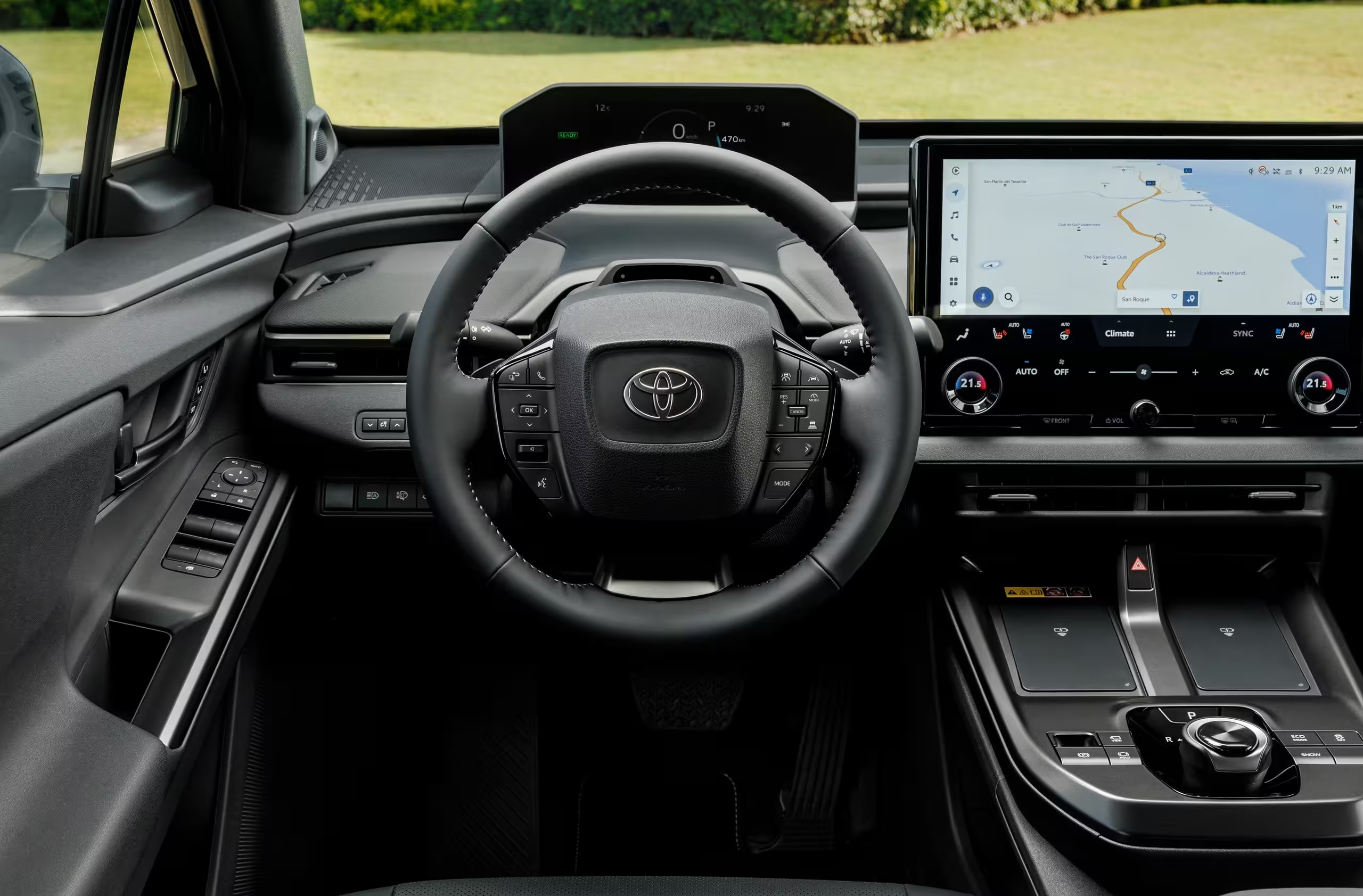
Inside, Toyota has given the bZ4X a cleaner, more contemporary cabin. Highlights include a new horizontal dashboard with a larger 14-inch multimedia display (up from 12.3 inches) and a revamped center console dubbed the digital island. The 7-inch instrument display remains but now shows additional EV-specific information such as real-time charging power, estimated time to 80%, and battery state-of-health.
Other comfort and convenience updates:
- New recycled PET upholstery options.
- Heated steering wheel and new paddle controls.
- 64-color ambient lighting.
- Optional panoramic roof that increases the glazed area by roughly 20% through structural changes.
These refinements bring the cabin closer to what buyers expect from established electric rivals while keeping Toyota’s hallmark focus on durability and ergonomics.
Market positioning and availability
Toyota has confirmed the updated bZ4X will open for orders in Europe later this month, with other markets to follow during the first two months of next year. Pricing has not been announced but is widely anticipated to be slightly higher than the outgoing model, varying by market and specification. The improvements in range, charging speed and interior technology are likely intended to justify that premium and help the bZ4X better compete with mainstream electric SUVs from Tesla, Volkswagen and Hyundai.
Bullet-point summary for quick reading:
- Two battery sizes: 57.7 kWh and 73.1 kWh (PPES).
- Best range: up to 354 miles (569 km) FWD, 73.1 kWh with 18-inch wheels.
- Top power: 343 hp in AWD tune—among Toyota's most powerful non-GR models in Europe.
- DC 10–80% in ~28 minutes with battery preconditioning (ambient -10 to +25 °C).
- 11 kW onboard charger standard; High grade gets 22 kW and optional solar roof.
- Aerodynamic upgrades cut Cd from 0.29 to 0.27.
- Larger 14-inch touchscreen, recycled cabin materials, heated wheel, 64-color ambient lighting.
Whether you’re closely tracking the EV transition or simply need a practical, efficient SUV, the revised bZ4X is a notable step for Toyota. It blends stronger range credentials, faster charging and a sharper interior with Toyota’s reputation for reliability—making it a more convincing contender in the mainstream EV segment than the original launch model. Expect dealers to begin taking orders in Europe first, and watch for pricing announcements as availability expands into other regions early next year.
Quick comparison
Against rivals in the compact electric SUV class, the bZ4X now leans more toward range and efficiency gains than outright sporty behavior. Buyers who prioritize everyday usability—long range, quicker charging, cabin comfort, and Toyota’s service network—will find the 2026 refresh particularly appealing.
If you want a deeper dive into trim-by-trim specs or regional pricing when it’s released, keep an eye on Toyota’s regional press releases and local dealer announcements over the coming weeks.

“I cover automotive innovation, electric vehicles, and the future of mobility — where technology meets sustainability.”

Discussion
Leave a Comment