
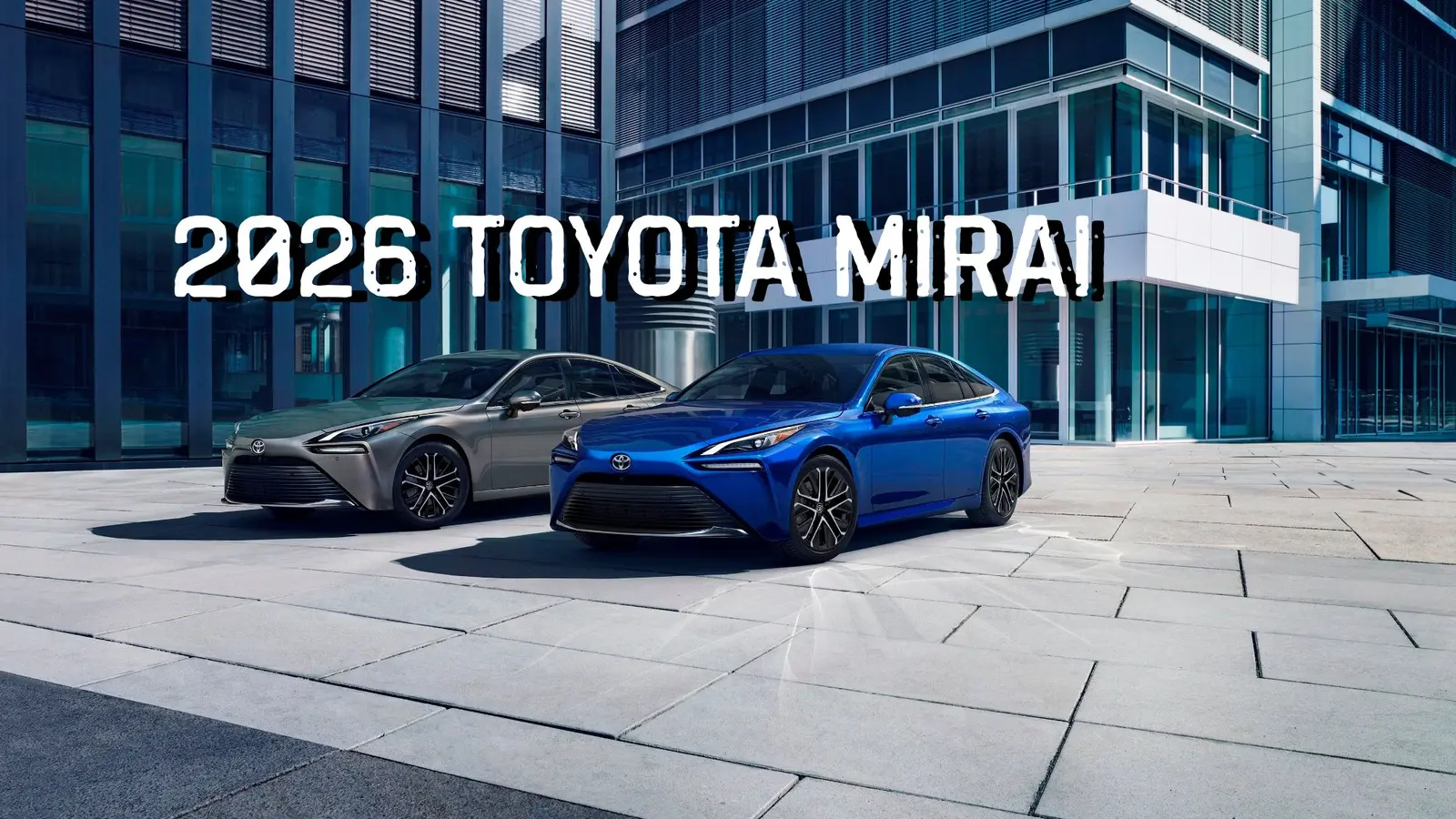
Toyota makes only one change to the 2026 Mirai
Toyota's Mirai returns for the 2026 model year with remarkably little fanfare: apart from a new set of standard wheels, the hydrogen fuel-cell sedan remains largely unchanged. For a vehicle that has struggled to gain broad appeal, the modest update feels appropriate — the Mirai continues to target a niche of environmentally minded drivers willing to adopt hydrogen fuel-cell electric vehicle (FCEV) technology. This model serves as a demonstration of hydrogen's potential in passenger cars, emphasizing range, fast refueling and near-zero tailpipe emissions while retaining Toyota's reputation for durability and refinement.
Price, availability and market position
The Mirai keeps its $51,795 starting price for 2026, with a $1,195 destination charge added to the final sticker. Toyota positions the Mirai alongside other limited-availability hydrogen passenger cars in the U.S., such as the Honda CR-V e:FCEV and the Hyundai Nexo, though those competitors are also offered in very small volumes. Sales remain tiny: Toyota Motor North America sells the Mirai only in California, and just 157 units were delivered in the U.S. from January through October 2025, reflecting both constrained regional availability and the limited hydrogen refueling network.
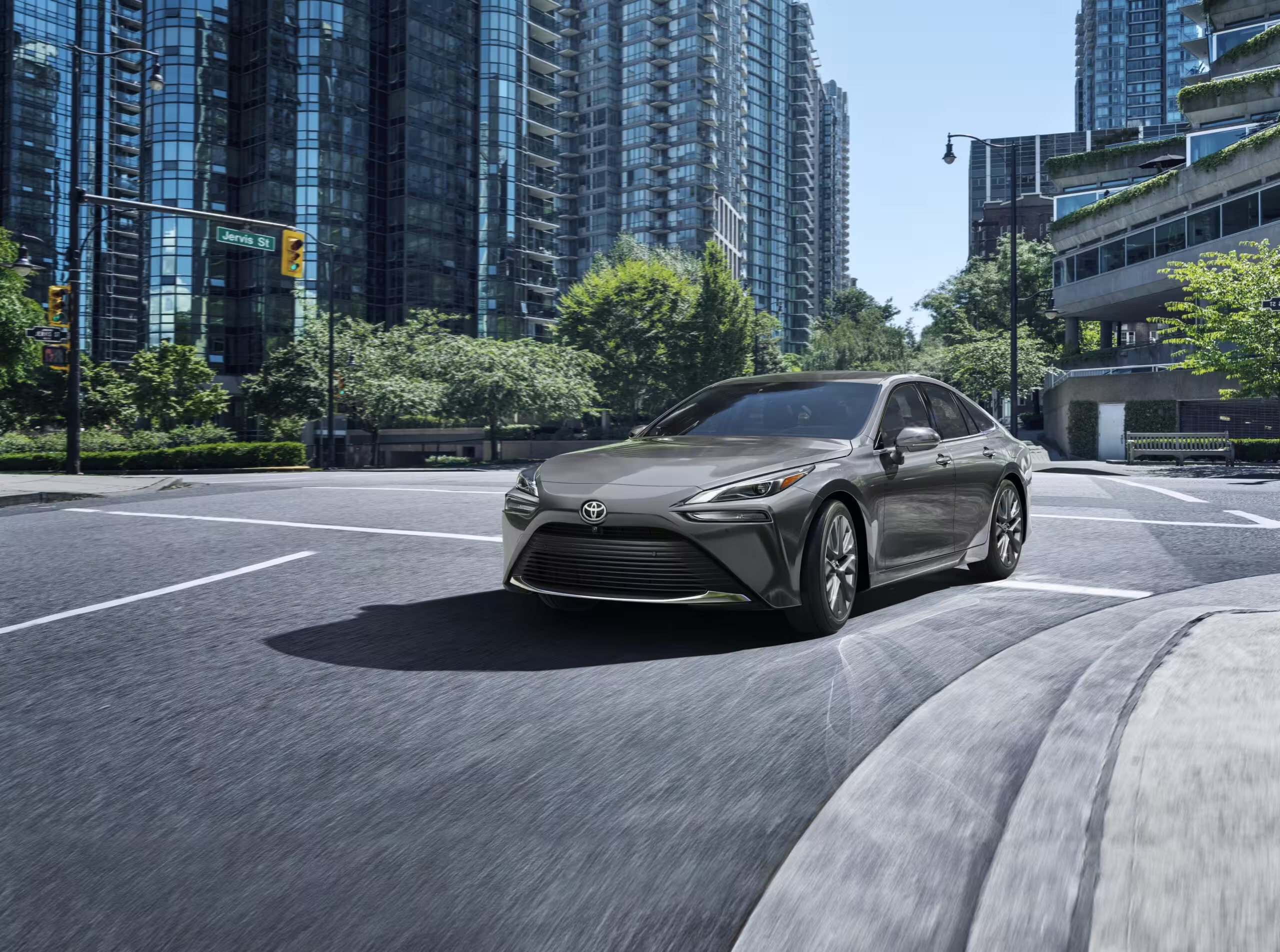
Despite low volumes, the Mirai aims to showcase what hydrogen fuel-cell electric vehicles can offer: long real-world driving range, quick refueling similar to gasoline, and a near-zero-emissions drivetrain. The Mirai's platform is shared with the 230-series Crown, which positions it more as a mid-size luxury sedan than a compact alternative, allowing Toyota to equip the Mirai with premium interior features and a comfortable ride. As an FCEV, the Mirai demonstrates key hydrogen advantages in contexts where fast turnarounds and extended driving range matter, such as long-distance commuting or fleet applications where hydrogen refueling infrastructure exists.
What’s new for 2026
The only formal change for the 2026 Mirai is the addition of standard 19-inch black machine-finish aluminum wheels. That single tweak gives the otherwise conservative design a slightly sharper visual identity without altering the vehicle's hardware, packaging, or interior features. Toyota typically makes iterative styling updates rather than major mechanical changes for the Mirai, reflecting its current role as a technology halo rather than a volume-driven model.
Highlights at a glance:
- Starting price: $51,795 (plus $1,195 destination)
- New standard 19-inch black machine-finish wheels
- Single trim for 2026: XLE
- Market availability: California only (U.S.)
For prospective buyers tracking hydrogen vehicle availability, the Mirai’s limited-market strategy and unchanged mechanical package mean the decision to buy centers more on access to hydrogen refueling, interest in advanced propulsion systems, and an appetite for a premium sedan that reduces tailpipe emissions rather than outright performance.
Fuel cell range, hydrogen capacity and performance
Toyota lists an EPA-rated driving range of 402 miles (647 km) on a full hydrogen tank — an impressive figure that underscores one of hydrogen’s chief advantages over battery electric vehicles (BEVs): extended driving range paired with refueling times comparable to gasoline. This EPA estimate gives the Mirai a competitive edge among zero-emission vehicles where long-distance travel without lengthy charging stops is a priority for some buyers.
The Mirai stores 5.6 kilograms of compressed hydrogen across three tanks, all operating at 700 bar (more than 10,100 psi). This high-pressure storage system balances volumetric energy density and safety, using robust tank materials and pressure-rated connections to meet regulatory standards. Hydrogen storage capacity and tank layout are essential design choices that determine range, crashworthiness and packaging flexibility, and Toyota’s three-tank configuration optimizes the balance between trunk space and usable onboard hydrogen capacity.
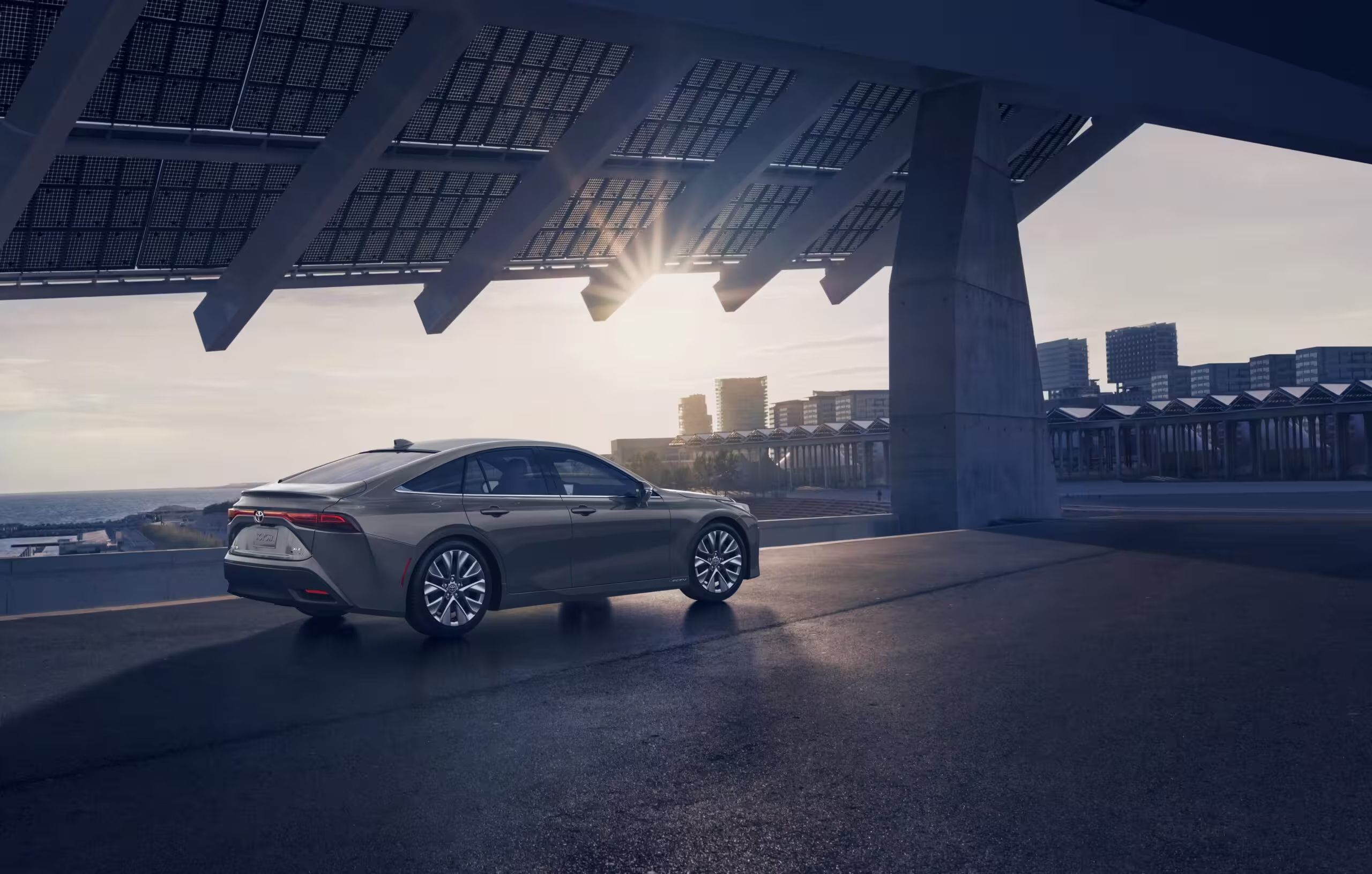
Powertrain figures are modest by sporty-car standards: the Mirai’s fuel-cell system delivers 182 horsepower and 221 lb-ft (300 Nm) of torque. That output is lower than mainstream gasoline sedans such as the Camry (which has higher peak horsepower in common trims), but FCEV ownership is often motivated by the vehicle’s energy source, driving range and technology demonstration rather than outright acceleration. In everyday driving, the Mirai delivers smooth, linear throttle response typical of electric drivetrains, with instant torque at low speeds and a quiet, refined cabin experience that aligns with its mid-size luxury positioning.
How the fuel cell works (brief technical overview): a PEM (proton exchange membrane) fuel-cell stack uses a platinum-based catalyst to separate hydrogen molecules into protons and electrons. Electrons are forced through an external circuit to produce electrical power that drives electric motors, while the remaining hydrogen ions pass through the membrane and combine with atmospheric oxygen at the cathode to form water — the only direct tailpipe emission. The fuel-cell system includes balance-of-plant components such as air compressors, humidifiers, cooling circuits and power electronics to regulate output, optimize efficiency and manage thermal loads during sustained driving.
Beyond peak power numbers, real-world performance is shaped by software calibration, regenerative braking behavior, and the small high-voltage battery pack that buffers transient loads and captures braking energy. For drivers used to BEVs, the Mirai’s driving feel will be familiar: strong low-end torque, smooth power delivery, and a quiet interior. Compared to gasoline luxury sedans its size, the Mirai may feel less focused on acceleration benchmarks and more oriented toward comfort, range and the novelty of fuel-cell propulsion.
Battery, charging and warranties
The Mirai also uses a small lithium-ion battery pack to manage energy flow between the fuel cell and the electric drive system. This battery supports peak power demands, regenerative braking, and transient energy buffering to maximize fuel-cell efficiency. Key battery specs include:
- 84 cells
- Gross energy capacity: 1.24 kWh
- Nominal voltage: 310.8 V
Because the Mirai is an FCEV rather than a pure BEV, it is not charged from the electric grid via a high-voltage charging inlet; instead, the hydrogen fuel cell generates electricity onboard from the stored hydrogen. The small battery is not a substitute for public EV chargers but is crucial for system responsiveness and electrical stability.
Toyota backs the Mirai with long-term coverage for key components, reflecting automaker confidence in fuel-cell durability and offering peace of mind to buyers exploring advanced propulsion. Warranty structures typically include eight- and ten-year coverages for the FCEV system and hybrid battery depending on region and model year. Extended warranties and roadside assistance packages may also be available, and warranty terms can affect total cost of ownership comparisons between the Mirai, BEVs and traditional combustion-engine cars.
.avif)
From an ownership perspective, buyers should evaluate hydrogen fueling access, fuel economics, and long-term service considerations. Where hydrogen prices and availability are favorable, the Mirai can offer competitive running costs and a reduced environmental footprint; where hydrogen stations are scarce, convenience and operating cost swing back in favor of BEVs or hybrids.
Trim, equipment and technology
For 2026 the Mirai is available only in XLE trim. Standard features are generous and aimed at luxury, comfort and convenience, reflecting Toyota's approach to positioning the Mirai as a premium alternative within its zero-emission portfolio. Standard equipment and technology emphasize safety, connectivity and interior refinement to appeal to buyers who expect modern amenities in addition to advanced propulsion.
- Toyota Safety Sense 3.0 active safety suite, including advanced driver-assistance features that support highway driving and collision mitigation
- Heated SofTex front seats with power adjustments, designed for comfort and easy maintenance compared with full leather
- Dual-zone automatic climate control to maintain passenger comfort in varied weather conditions while optimizing climate loads for fuel-cell efficiency
- Leather-wrapped tilt/telescoping steering wheel for a premium tactile experience
- HomeLink and auto-dimming rearview mirror to improve convenience and reduce glare on long drives
- 14-speaker JBL audio system for an immersive in-cabin listening experience
- 12.3-inch digital instrument cluster that presents driving, range and energy-flow information clearly
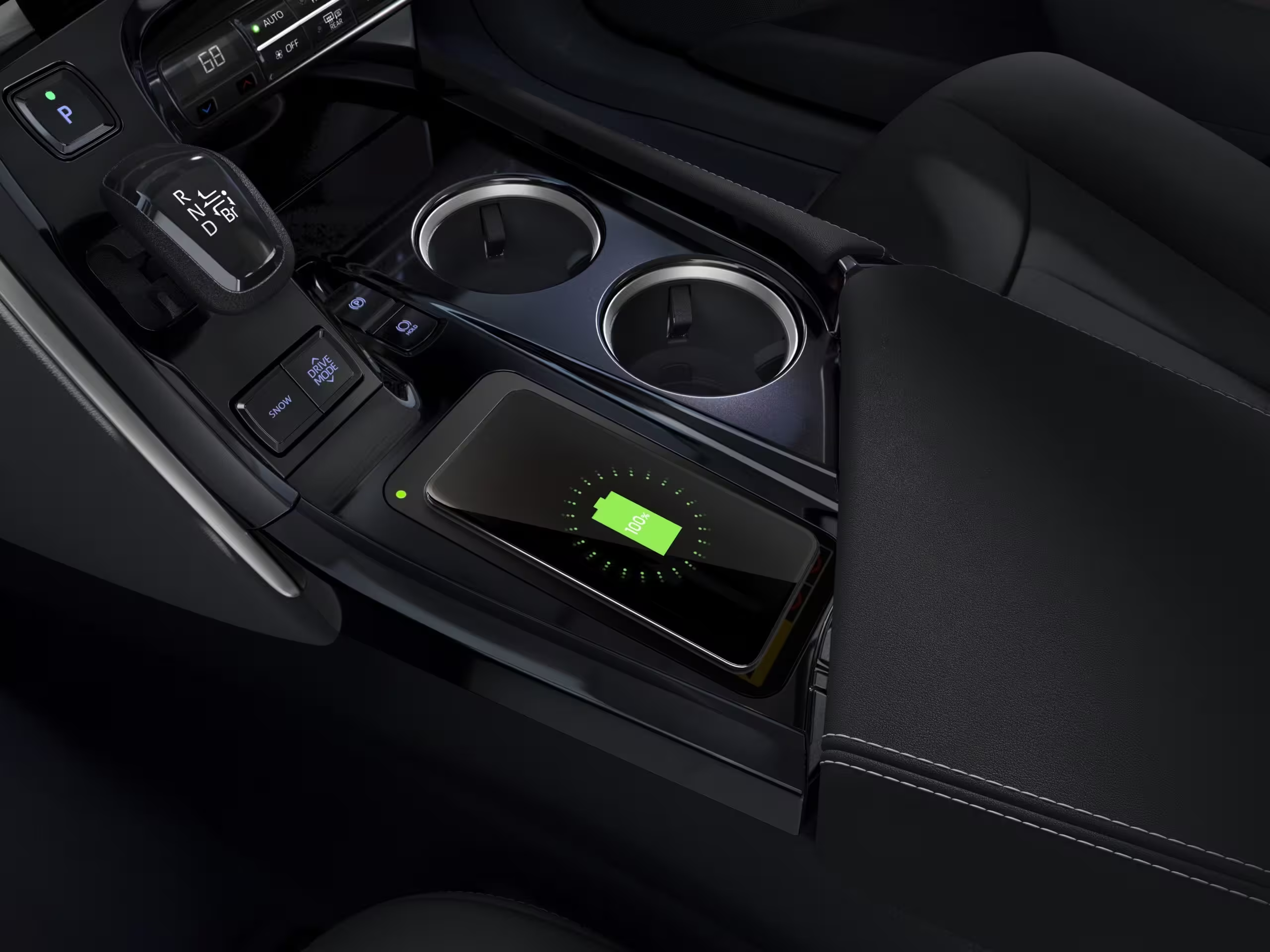
- Wireless smartphone charging pad and four USB ports to support device connectivity for driver and passengers
- Digital key capability and a three-year trial of Dynamic Navigation for connected routing and remote features
- Water-repellant side windows and footwell lighting among the comfort and visibility enhancements
Incentives and perks: current offers for earlier Mirai models have included 0% APR financing options, substantial cash incentives (notably a $35,000 promotion on some 2025 units at certain times), and generous complimentary fueling packages such as $15,000 in hydrogen fuel for three years on leases or six years on purchased vehicles. These types of incentives aim to lower the barrier to entry for an emerging technology and to encourage early adoption in regions where hydrogen infrastructure is being developed. Programs for college graduates and military buyers are sometimes available as well, and availability of such incentives can vary by dealer and region.
Why the Mirai remains niche
There are several reasons the Mirai hasn’t achieved mainstream success: limited hydrogen refueling infrastructure even in leading states such as California, restricted geographic availability, and the significant costs associated with producing fuel-cell systems and high-pressure hydrogen storage. Hydrogen station rollout remains costly and logistically complex, requiring on-site compression, storage and safety systems. Until public and private investment in hydrogen fueling grows substantially, consumer uptake will likely remain modest.
Toyota appears to be keeping the Mirai on sale primarily as a technology demonstrator and halo product rather than a mass-market volume seller. This strategy allows Toyota to refine fuel-cell technology, collect real-world operational data, and support early adopters while policymakers and industry stakeholders develop hydrogen supply chains and station networks. The Mirai functions both as a research platform and a vehicle that can influence infrastructure investment decisions by demonstrating customer interest where refueling is available.
For buyers interested in cutting-edge alternative propulsion, the Mirai offers a unique proposition: long EPA-rated range, rapid refueling comparable to gasoline, premium interior features and Toyota’s long-standing engineering pedigree. It provides practical advantages for drivers who require frequent long-distance trips and who have reliable access to hydrogen filling stations. For most mainstream buyers, however, battery-electric vehicles with broader charging networks and more extensive dealer support remain the more practical and accessible choice today.
Bottom line
The 2026 Toyota Mirai makes no dramatic moves — an update of wheels and the continuation of generous standard equipment keeps it relevant for the small group of buyers pursuing hydrogen technology. If you want hydrogen range, an advanced FCEV platform, and a well-equipped luxury sedan, the Mirai remains one of the few consumer options in the U.S. market. But until hydrogen infrastructure expands and market support grows, its role will likely remain that of a specialist offering: a technology showcase that highlights hydrogen fuel-cell benefits rather than a direct competitor to mass-market BEVs or gasoline sedans. For fleet planners, environmental early adopters and buyers within hydrogen-rich regions, the Mirai represents a compelling, practical demonstration of where zero-emission transport can go when hydrogen refueling is accessible.

“Cars are evolving faster than ever. I cover electric vehicles, smart mobility, and the future of transportation worldwide.”

Discussion
Leave a Comment