
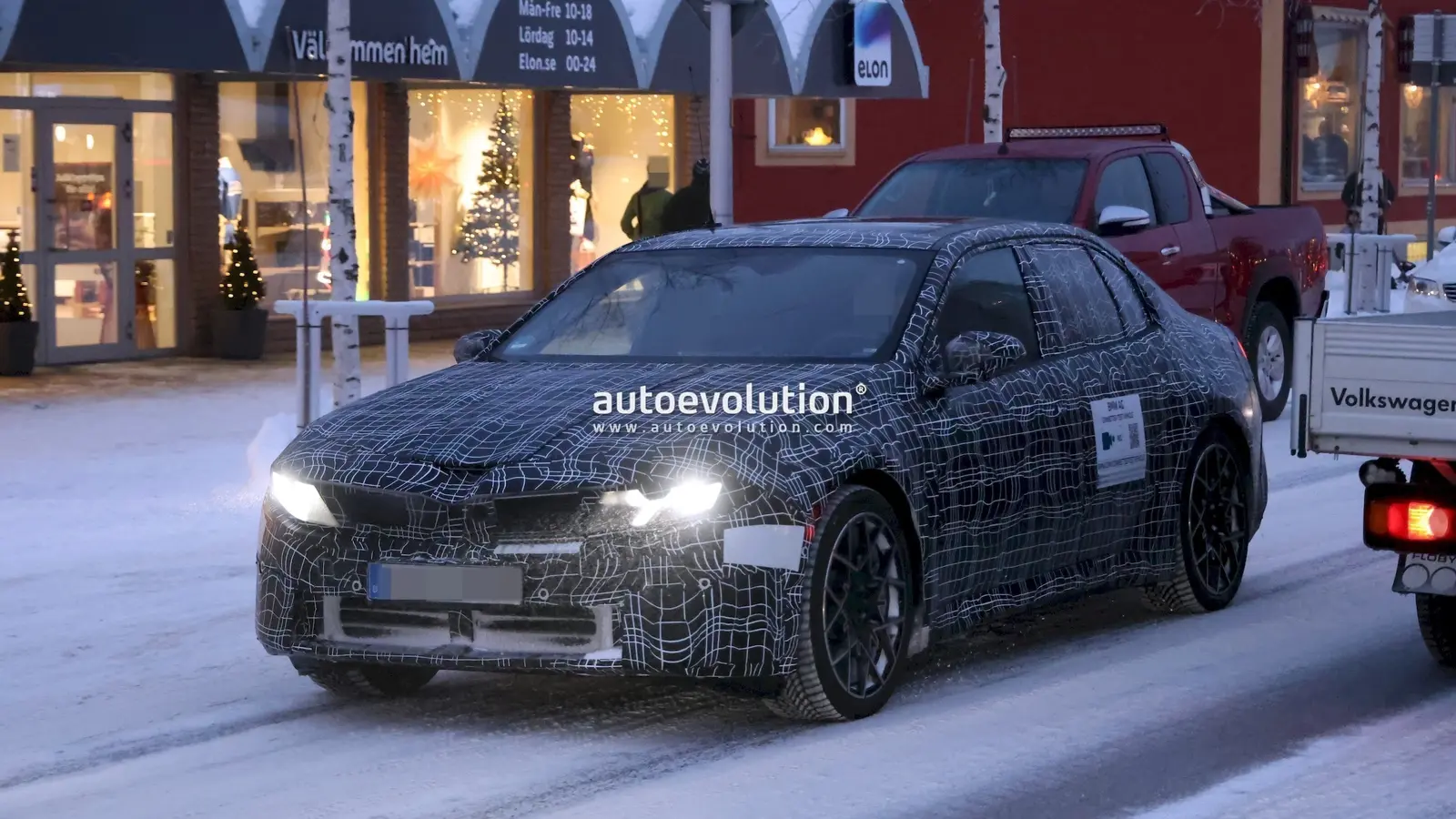
Prototype sighting: BMW tunes its next electric 3 Series
Photographers in Northern Sweden have captured a lightly camouflaged BMW i3 prototype running winter trials, giving us one of the clearest looks yet at BMW's upcoming all-electric 3 Series. With deliveries of the Neue Klasse-based iX3 already underway, the i3 sedan is now in late-stage testing — and the test mule wore a prominent sticker indicating work on driver assistance and vehicle comfort systems.
Why Sweden? Why now?
Cold-weather test runs are an industry standard for refining ADAS, traction control, and thermal management. For EVs, engineers also validate battery performance, cabin heating, and powertrain resilience in sub-zero conditions. BMW's Northern Sweden sessions are therefore about more than grip and stability — they're the final checks before production calibration.

Platform split: Neue Klasse vs CLAR
BMW continues to take an unconventional path with its next-gen 3 Series. Rather than sharing a single platform for internal-combustion and electric variants, BMW split the two: the ICE 3 Series remains on an updated CLAR architecture (code G50), while the all-electric i3 rides on the Neue Klasse architecture (code NA0). That technical divergence explains the distinct proportions and bodywork we've seen when the two cars are compared side-by-side.
Notable differences visible even under camouflage:
- Shorter front console and a more compact bonnet on the i3, reflecting the absence of a long inline engine bay
- A flatter roofline and revised rear quarter panels on the electric model
- The iconic Hofmeister kink still concealed — BMW appears to be saving some visual reveals for a later stage

Design clues from the test mule
The prototype revealed a revised headlight graphic and a reduced amount of cladding around the faux kidney grille. Aerodynamic wheel covers — apparently exclusive to the i3 — were fitted, signaling that BMW is chasing top-class drag coefficients to boost range. Those visual changes suggest the production i3 will emphasize efficiency and low Cd to compete aggressively in the EV market.
Driver assistance and comfort tuning
A large rear-door sticker notified onlookers that this car was refining driver assistance and comfort functions. In practice this covers adaptive cruise control, lane-keeping, parking assist and the suite of sensors and software that underpin semi-autonomous features. Winter runs are ideal for calibrating these systems in low-friction scenarios and poor visibility.

Powertrain and charging expectations
BMW's recent EVs have raised the bar. The sixth-generation eDrive, showcased on the iX3, combines 800-volt architecture with silicon-carbide (SiC) power electronics and 46-mm cylindrical cells to deliver fast charging and heat-resilient operation. Early indications are that the i3 will inherit this technology.
What that translates to in real-world numbers:
- Peak charging potential likely north of 400 kW
- Rapid charging rates that could add almost 200 EPA miles in roughly 10 minutes under ideal conditions
- Improved efficiency over the iX3 thanks to sleeker aerodynamics, putting the i3 in contention to beat already-impressive EPA range projections
Market positioning and what to expect next
BMW is clearly aiming for a balance of driving dynamics, range, and fast-charging convenience. With the iX3 proving BMW can deliver high charging power without thermal penalties, the i3 sedan is well positioned to be a serious player in the premium EV segment. Fans can expect further reveal stages as camouflage comes off and BMW finalizes styling and feature sets.

Highlights:
- Late-stage winter testing focused on ADAS and comfort
- Neue Klasse platform for the i3 (NA0) separates it from the ICE 3 (G50)
- Advanced 800V eDrive tech and expected very fast charging
For enthusiasts watching the EV arms race, the i3 prototype in Sweden confirms BMW's methodical approach: refine the hardware in harsh conditions, tune driver aids to feel natural, and deliver a sedan that prioritizes both range and driving engagement. More official details should follow as BMW eases off the camouflage and prepares for the i3's market debut in the 2027 model cycle.

“I cover automotive innovation, electric vehicles, and the future of mobility — where technology meets sustainability.”

Discussion
Leave a Comment